
How to Breathe While Exercising: 7 Effective Techniques
Learning how to breathe while exercising can improve workout comfort, support endurance, and help control breathlessness.
The best technique is to breathe naturally during cardio, exhale during muscular exertion, and adjust airflow to match workout intensity.
Popular fitness trends promote nasal breathing, rhythmic breathing, and 360-degree breathing for better performance.
However, effective breathing should meet your body’s oxygen demands rather than follow restrictive rules.

👉 DON’T TRY THIS “HOW TO BREATHE WHILE EXERCISING” UNTIL YOU SEE THIS
Whether you are running, lifting weights, walking, or practicing yoga, understanding proper exercise breathing techniques can help you maintain a comfortable and sustainable workout routine.
Why Is Proper Breathing Important During Exercise?
During physical activity, working muscles consume more oxygen and produce additional carbon dioxide. Your respiratory system responds by increasing breathing depth and frequency.
The diaphragm and surrounding respiratory muscles help maintain ventilation as exercise intensity rises.
Proper breathing may support movement coordination, workout comfort, muscular endurance, and recovery. It can also reduce unnecessary tension around the neck and shoulders.
However, breathing techniques alone cannot replace cardiovascular conditioning, balanced nutrition, adequate hydration, or sufficient recovery.
Should You Breathe Through Your Nose or Mouth While Exercising?
Nasal breathing filters, warms, and humidifies incoming air. It can be particularly comfortable during walking, stretching, and moderate cardiovascular activities.
Mouth breathing allows greater airflow when oxygen demands increase. During strenuous exercise, combining nasal and mouth breathing is often appropriate.
Research published in 2025 comparing breathing methods during treadmill exercise supports using oral or combined breathing during higher-intensity activities.
The best approach is to avoid restricting airflow and let breathing adapt naturally.
7 Best Breathing Techniques While Exercising
1. Diaphragmatic Breathing
Also called belly breathing, this technique encourages natural diaphragm movement and expansion of the lower ribs.
Inhale comfortably, allowing your abdomen and lower ribs to expand. Exhale gently without squeezing your stomach excessively.
Practice before workouts to develop breathing awareness and reduce unnecessary upper body tension.
👉 DON’T TRY THIS “HOW TO BREATHE WHILE EXERCISING” UNTIL YOU SEE THIS
2. Rhythmic Breathing
Rhythmic breathing synchronizes inhalation and exhalation with repetitive movements.
Runners may experiment with inhaling for three steps and exhaling for two. Faster activities may require shorter breathing cycles.
Choose a flexible rhythm rather than forcing your breathing to match a predetermined pattern.
3. Nasal Breathing
Try nasal breathing during warmups, walking, gentle cycling, and comfortable aerobic sessions.
This technique may encourage awareness of exercise intensity. However, exclusive nasal breathing is not necessary for improving fitness.
Switch to combined breathing whenever nasal airflow becomes insufficient.
4. Pursed-Lip Breathing
Inhale gently through your nose and breathe out through partially closed lips.
This technique may help certain individuals manage breathlessness during recovery periods.
Avoid deliberately slowing breathing during strenuous activity when your body requires increased ventilation.
5. 360-Degree Breathing
This popular fitness technique encourages expansion around the abdomen, lower ribs, sides, and back.
It may improve awareness of core positioning during resistance training.
Avoid excessive abdominal tension that prevents comfortable inhalation or restricts natural respiratory movement.
6. Exhale During Exertion
Breathing out during the challenging portion of resistance exercises helps coordinate movement and respiration.
For example, exhale while pushing a weight upward and inhale while lowering it.
This approach is particularly practical for beginners performing controlled repetitions.
7. Natural Breathing
Natural breathing allows the respiratory system to respond automatically to exercise demands.
Instead of constantly monitoring each breath, focus on maintaining comfortable movement.
This method is useful during vigorous workouts when structured breathing patterns become distracting or difficult.
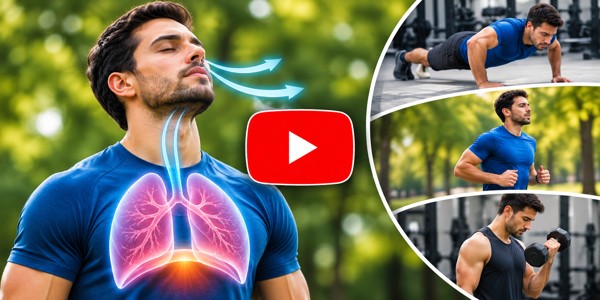
👉 DON’T TRY THIS “HOW TO BREATHE WHILE EXERCISING” UNTIL YOU SEE THIS
How to Breathe During Different Workouts
➢ Walking and Jogging
Keep your shoulders relaxed and maintain an upright posture. Breathe comfortably through your nose, mouth, or both, depending on your walking speed.
➢ Running
Establish a comfortable breathing rhythm during easy runs. Increase ventilation naturally when running uphill, accelerating, or performing demanding intervals.
➢ Weightlifting
Inhale during the lowering phase and exhale during muscular exertion. Beginners should avoid prolonged breath-holding, especially when lifting challenging weights.
➢ HIIT and Cardio
Allow faster breathing during intense intervals. Use recovery periods to gradually restore comfortable breathing rather than forcing immediate respiratory control.
➢ Yoga and Pilates
Coordinate controlled breathing with movement. Follow comfortable breathing instructions without attempting prolonged or uncomfortable breath retention.
Trending Exercise Breathing Hacks: Facts Versus Myths
➺ Nasal-Only Zone 2 Training
Fitness influencers frequently recommend nasal breathing to maintain moderate aerobic intensity.
Although this approach may help regulate pace, nasal breathing cannot identify your training zone on its own.
Heart rate measurements and perceived exertion provide additional information about exercise intensity.
➺ The Physiological Sigh Recovery Trick
This breathing trend involves two consecutive inhalations followed by a longer exhalation.
It may promote relaxation during resting recovery. However, evidence supporting substantial improvements in immediate athletic performance remains limited.
➺ Mouth Taping During Workouts
Some online fitness trends recommend mouth taping to enforce nasal breathing.
Restricting oral airflow during exercise can interfere with ventilation, particularly during demanding activities.
Avoid mouth taping while exercising, especially if you have nasal congestion or respiratory conditions.
➺ Breath-Holding for Better Stamina
Breath-holding challenges are sometimes promoted as endurance shortcuts.
However, longer breath-holding ability does not necessarily indicate improved cardiovascular fitness. Combining intense exercise with deliberate breath restriction may cause dizziness or fainting.
How to Breathe While Exercising Without Getting Tired
Managing workout fatigue requires more than changing breathing patterns.
Start with manageable exercise intensity and gradually increase your workload. Use the talk test to monitor effort.
During moderate exercise, you should generally be able to speak in sentences. During vigorous exercise, conversation becomes more difficult.
Additional strategies include:
- Warming up gradually before intense activities.
- Maintaining comfortable body posture.
- Taking appropriate recovery breaks.
- Drinking sufficient water.
- Building cardiovascular endurance consistently.
Avoid pushing through unusual breathlessness simply to complete your workout.
👉 DON’T TRY THIS “HOW TO BREATHE WHILE EXERCISING” UNTIL YOU SEE THIS
Common Breathing Mistakes During Exercise
Incorrect breathing habits can make physical activity unnecessarily uncomfortable.
Common mistakes include:
- Holding your breath during repetitive exercises.
- Forcing nasal breathing during strenuous activity.
- Taking excessively rapid, deep breaths.
- Following rigid breathing ratios despite discomfort.
- Tightening your shoulders and neck unnecessarily.
- Ignoring persistent dizziness or wheezing.
Excessive ventilation can lower carbon dioxide levels, potentially causing tingling, lightheadedness, and discomfort.
Aim for responsive breathing rather than artificially increasing or decreasing your respiratory rate.
Can Breathing Exercises Improve Lung Capacity?
Breathing exercises may improve respiratory muscle awareness, coordination, and perceived breathing comfort.
However, ordinary breathing techniques do not necessarily increase anatomical lung capacity or maximum oxygen uptake.
A 2026 study examining slow breathing after sprint interval training found no additional performance benefits from the intervention.
Regular aerobic exercise remains important for developing cardiovascular efficiency, while specialized respiratory muscle training may benefit selected individuals.
When Is Shortness of Breath During Exercise Dangerous?
Faster breathing during physical activity is normal. However, sudden or disproportionate breathlessness requires attention.
Stop exercising if you experience chest discomfort, persistent wheezing, unusual dizziness, or severe breathing difficulties.
Seek emergency medical assistance for severe breathlessness, chest pain, or fainting.
Recurring exercise-related breathing problems may indicate asthma, exercise-induced bronchoconstriction, cardiovascular conditions, or other underlying health concerns requiring medical evaluation.
People with existing respiratory or cardiovascular conditions should discuss appropriate exercise intensity with their healthcare professional.
Conclusion
Understanding how to breathe while exercising can support workout comfort, movement coordination, and sustainable endurance.
Use diaphragmatic breathing, flexible breathing rhythms, and controlled exhalation during resistance training. Allow nasal and mouth breathing whenever exercise intensity increases.
Avoid restrictive viral breathing hacks and unnecessary breath-holding. The most effective breathing technique meets your body’s changing demands while supporting comfortable, consistent, and safe physical activity.
👉 DON’T TRY THIS “HOW TO BREATHE WHILE EXERCISING” UNTIL YOU SEE THIS
References
- Wikipedia – Respiratory System
https://en.wikipedia.org/wiki/Respiratory_system
- Healthline – How to Inhale and Exhale During Exercise
https://www.healthline.com/health/fitness-exercise/when-to-inhale-and-exhale-during-exercise
- PubMed – Evidence-Based Breathing Strategies to Enhance Human Running
https://pubmed.ncbi.nlm.nih.gov/35370762/
About Us
