
Clove Water Trick for Skin: Benefits, Uses & Risks
The clove water trick for skin is a popular natural skincare trend that involves soaking or boiling cloves in water and using the resulting liquid as a homemade facial treatment.
Cloves contain naturally occurring compounds, including eugenol, that have antioxidant and antimicrobial properties in laboratory studies. However, their effectiveness and safety as a facial skincare remedy have not been firmly established through human clinical research.

👉 DON’T TRY THIS “CLOVE WATER TRICK FOR SKIN” UNTIL YOU SEE THIS
Many people are interested in clove water because they hope it will help improve their skin’s appearance, reduce excess oil, and support a clearer-looking complexion.
While these claims are popular on social media, it is important to understand what clove water can realistically do and what remains unproven.
This guide explores how the clove water trick works, its potential skincare benefits, preparation methods, possible side effects, and important precautions. It also separates scientific information from viral beauty claims to help readers make informed skincare decisions.
What Is the Clove Water Trick for Skin?
The clove water trick is a homemade skincare practice that uses water infused with dried clove buds. Cloves are aromatic flower buds obtained from the clove tree, scientifically known as Syzygium aromaticum.
They are traditionally used in cooking, oral care products, and certain herbal preparations. In skincare discussions, cloves have gained attention because they contain several naturally occurring plant compounds.
The most notable compound is eugenol, which contributes to cloves’ distinctive aroma and biological properties.
People commonly prepare clove water by:
- Soaking whole cloves in water overnight.
- Boiling cloves in water and allowing the mixture to cool.
- Filtering the liquid and using it as a facial rinse or toner.
Although these methods are widely shared online, homemade clove water is not a clinically proven treatment for acne, dark spots, wrinkles, or other skin conditions.
What Makes Cloves Interesting for Skin Health?
Cloves contain several naturally occurring compounds that have attracted scientific interest. Understanding these compounds helps explain why clove-based skincare has become popular.
1. Eugenol
Eugenol is one of the primary active compounds found in clove essential oil.
Research conducted in laboratory settings suggests that eugenol has:
- Antioxidant activity.
- Antimicrobial properties.
- Anti-inflammatory potential.
These properties make eugenol interesting for cosmetic and dermatological research. However, laboratory findings do not automatically demonstrate that applying homemade clove water produces the same effects on human skin.
2. Antioxidant Compounds
Cloves contain phenolic compounds that demonstrate antioxidant activity. Antioxidants help neutralize free radicals, which are unstable molecules associated with oxidative stress.
Oxidative stress can contribute to cellular damage and the visible signs of skin aging.
However, there is insufficient clinical evidence to establish that applying clove water directly to the face provides meaningful anti-aging protection.
3. Naturally Occurring Plant Compounds
Cloves contain additional plant compounds, including flavonoids and other phenolic substances.
These compounds contribute to the biological activity of cloves and explain their traditional use in different preparations.
Their concentration in homemade clove water can vary considerably depending on the number of cloves, preparation method, water temperature, and soaking time.
Potential Benefits of Clove Water for Skin
The following benefits are often associated with the clove water trend. Some have a scientific basis at the ingredient level, but most have not been confirmed through clinical studies of homemade clove water.
1. May Provide Antioxidant Activity
Cloves contain antioxidant compounds that have been investigated for their ability to neutralize free radicals.
Free radicals can contribute to oxidative stress caused by environmental factors such as pollution and ultraviolet radiation.
Although this makes cloves scientifically interesting, homemade clove water should not be considered a replacement for proven antioxidant skincare products.
2. May Have Antimicrobial Properties
Eugenol and other clove compounds have demonstrated antimicrobial activity in laboratory research. This is one reason cloves are frequently discussed in natural skincare communities.
However, there is no strong clinical evidence that clove water can eliminate acne-causing bacteria or reliably prevent breakouts.
People experiencing persistent acne should consider established acne ingredients rather than relying on homemade herbal treatments.
3. May Support a Fresh-Looking Appearance
Some people use diluted herbal water as a facial rinse because it feels refreshing.
Clove water may offer a temporary refreshing experience when used carefully, but this should not be confused with improving the underlying health of the skin.
It does not have established moisturizing or skin-repair benefits.
4. May Be of Interest for Inflammation Research
Eugenol has shown anti-inflammatory activity in experimental research. Inflammation plays an important role in several skin conditions, including acne and dermatitis.
Nevertheless, applying clove water to irritated skin may actually make symptoms worse in some individuals.
Its laboratory anti-inflammatory properties do not establish that it is a safe home treatment for inflamed skin.
5. May Contain Compounds Relevant to Skin Aging Research
Oxidative stress is one factor involved in the skin-aging process. Because cloves contain antioxidant compounds, researchers have investigated their potential biological effects.
However, there is currently insufficient human evidence to show that clove water reduces wrinkles, improves elasticity, or reverses visible signs of aging.
👉 DON’T TRY THIS “CLOVE WATER TRICK FOR SKIN” UNTIL YOU SEE THIS
How to Make Clove Water for Skin at Home
Preparing clove water is relatively simple. However, homemade preparations are not standardized, and their strength can vary.
If you still want to explore this traditional skincare trend, avoid making a highly concentrated mixture.
Ingredients Required
- 2–3 whole dried cloves.
- 1 cup of clean drinking water.
- A clean saucepan.
- A clean glass container.
- A fine strainer.
Preparation Method
Step 1: Clean the ingredients
Use clean, good-quality whole cloves. Check that they are free from visible dirt, moisture, or mold.
Step 2: Heat the water
Pour one cup of drinking water into a clean saucepan and bring it to a boil.
Step 3: Add the cloves
Add two or three whole cloves to the water.
Step 4: Allow the mixture to simmer
Reduce the heat and allow the mixture to simmer briefly.
Step 5: Cool and strain
Remove the saucepan from the heat. Allow the liquid to cool completely before straining out the cloves.
Step 6: Store carefully
Transfer the liquid into a clean, covered container and refrigerate it.
Because homemade clove water contains no validated preservative system, contamination and microbial growth are possible. Making a fresh, small batch is preferable to keeping it for extended periods. Discard it if its smell, appearance, or texture changes.
How to Use Clove Water on Your Face
If you decide to try clove water, apply it carefully because cloves contain compounds that may irritate sensitive skin.
Follow these precautions:
Step 1: Clean Your Face
Wash your face using a gentle cleanser suitable for your skin type. Avoid combining multiple strong skincare treatments during the same routine.
Step 2: Perform a Patch Test
Before considering facial application, test a small amount of the preparation on a limited area of skin. Observe the area for irritation, itching, redness, or swelling. A home patch test cannot guarantee that a reaction will not occur later.
Step 3: Avoid Sensitive Areas
Never apply clove water near:
- The eyes and eyelids.
- The lips and inside of the mouth.
- Open wounds or cuts.
- Areas affected by eczema or active irritation.
Step 4: Stop if Irritation Develops
If you experience burning, redness, itching, or discomfort, rinse the area with clean water and discontinue use.
Do not continue applying the mixture in the hope that your skin will eventually adjust.
Important: Clove water is not a dermatologist-approved acne treatment or a substitute for established skincare products.
Is Clove Water Good for Different Skin Types?
Not every natural skincare ingredient works equally well for everyone. Skin type, sensitivity, existing skin conditions, and individual allergies can influence how the skin responds.
Clove Water for Oily Skin
People with oily skin may be interested in clove water because of its popularity in natural skincare routines.
However, there is no reliable clinical evidence that it regulates sebum production or reduces facial oiliness. A gentle cleanser and non-comedogenic moisturizer are more dependable options.
Clove Water for Dry Skin
Dry skin generally needs hydration and support for its protective skin barrier.
Clove water is not a proven moisturizer. Its aromatic compounds may cause additional irritation or dryness in some individuals.
A moisturizer containing ceramides, glycerin, or hyaluronic acid is a more suitable choice.
Clove Water for Sensitive Skin
People with sensitive skin should be particularly cautious. Eugenol is a recognized fragrance allergen and can cause allergic contact dermatitis in susceptible individuals.
For this reason, avoiding homemade clove water is generally the safer option for people with fragrance allergies or easily irritated skin.
Clove Water for Combination Skin
Combination skin usually has both oily and dry areas.
Although clove water is sometimes promoted as a balancing facial toner, there is no established evidence that it regulates oil production while maintaining moisture.
A simple skincare routine with gentle cleansing and appropriate moisturization is preferable.
Can Clove Water Help With Acne and Pimples?
Acne is a common skin condition involving several factors, including excess sebum, clogged hair follicles, inflammation, and the activity of Cutibacterium acnes.
Cloves have demonstrated antimicrobial activity in laboratory studies. This has encouraged online discussions about their potential use for acne-prone skin.
However, there is an important difference between laboratory research and proven acne treatment.
There is currently insufficient human clinical evidence to show that clove water:
- Clears existing pimples.
- Prevents clogged pores.
- Controls excess sebum.
- Reduces acne scars.
- Prevents future breakouts.
For evidence-based acne care, commonly recommended ingredients include:
- Salicylic acid: Helps exfoliate inside pores and manage clogged pores.
- Benzoyl peroxide: Helps reduce acne-associated bacteria and inflammatory breakouts.
- Adapalene: A topical retinoid that helps prevent clogged pores.
- Azelaic acid: Can help with acne and certain forms of post-inflammatory discoloration.
Choose products based on your skin needs, and introduce active ingredients gradually.
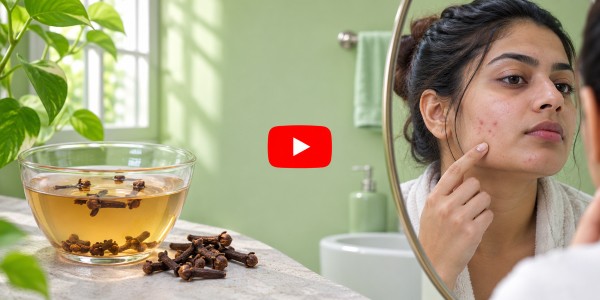
👉 DON’T TRY THIS “CLOVE WATER TRICK FOR SKIN” UNTIL YOU SEE THIS
Can Clove Water Remove Dark Spots and Pigmentation?
Dark spots can develop for several reasons, including sun exposure, hormonal changes, inflammation, and acne.
Clove water is sometimes promoted as a natural solution for pigmentation and uneven skin tone.
However, there is no convincing human clinical evidence that applying clove water fades dark spots or melasma.
For more reliable pigmentation management, consider:
Vitamin C: An antioxidant ingredient used in skincare products to improve the appearance of uneven skin tone.
Niacinamide: May help improve the appearance of discoloration and support the skin barrier.
Azelaic acid: Can help manage certain types of pigmentation and acne-related marks.
Broad-spectrum sunscreen: Helps prevent UV exposure from worsening existing discoloration.
Consistent sun protection is particularly important when managing dark spots.
Clove Water vs. Clove Oil: What Is the Difference?
Although both products come from cloves, clove water and clove essential oil are not interchangeable.
| Feature | Clove Water | Clove Oil |
| Preparation | Cloves infused in water | Concentrated essential oil |
| Strength | Variable and generally less concentrated | Highly concentrated |
| Main compound | May contain water-extracted clove compounds | Rich in eugenol |
| Skin irritation | Possible | Greater irritation and sensitization concerns |
| Cosmetic use | Homemade herbal preparation | Used in some formulated products |
Clove essential oil contains a much higher concentration of aromatic compounds than typical homemade clove water.
Applying undiluted clove essential oil directly to the face is particularly risky because it may cause irritation, chemical burns, or allergic reactions.
Neither preparation should be assumed to be safe simply because it comes from a natural plant.
Possible Side Effects of Clove Water on Skin
Natural ingredients can still cause unwanted reactions. Clove contains eugenol, which is associated with allergic contact dermatitis in some people.
Potential reactions include:
1. Skin Irritation
Some individuals may experience redness, itching, burning, or discomfort after exposure.
2. Allergic Reactions
People sensitive to eugenol or fragrance-related ingredients may develop an allergic skin reaction.
3. Increased Skin Sensitivity
Repeated exposure to irritating ingredients can interfere with the skin barrier and make the skin more reactive.
4. Contact Dermatitis
Contact dermatitis can cause redness, itching, swelling, and sometimes blistering.
If a severe reaction develops, seek medical attention. Facial swelling or difficulty breathing requires emergency medical care.
People with eczema, rosacea, damaged skin barriers, or known fragrance allergies should avoid experimenting with clove preparations on their faces.
Common Myths About the Clove Water Trick for Skin
Social media has helped popularize clove water as a natural beauty remedy. However, not every trending claim is supported by reliable research.
Let’s examine some common misconceptions.
Myth 1: Clove Water Clears Acne Overnight
Fact: Acne develops through multiple biological processes. There is no reliable clinical evidence that clove water clears pimples overnight.
Myth 2: Clove Water Removes All Dark Spots
Fact: Pigmentation has several possible causes. Clove water has not been proven to remove melasma, sunspots, or post-acne marks.
Myth 3: Clove Water Works Like a Natural Botox Treatment
Fact: There is no scientific evidence that clove water relaxes facial muscles or produces Botox-like effects.
Myth 4: Natural Ingredients Are Always Safe
Fact: Natural plant compounds can cause allergic reactions, irritation, and other unwanted effects.
Myth 5: Daily Application Gives Faster Results
Fact: More frequent exposure does not necessarily improve skincare outcomes. Repeated exposure to irritating substances may increase the risk of skin damage.
Understanding these differences helps prevent unrealistic expectations and unnecessary skincare experiments.
Common Mistakes to Avoid When Using Clove Water
People experimenting with homemade clove water should understand the mistakes that can increase the risk of skin irritation.
Avoid the following:
- Using too many cloves to create a highly concentrated mixture.
- Applying clove essential oil directly to the face.
- Using the preparation on broken or inflamed skin.
- Applying it near the eyes.
- Mixing it with lemon juice, vinegar, or other potentially irritating ingredients.
- Leaving homemade preparations stored for extended periods.
- Assuming that a lack of immediate irritation means repeated use is safe.
- Replacing prescribed acne or pigmentation treatments with herbal remedies.
A simple skincare routine is generally more predictable than experimenting with multiple homemade treatments.
What Does Science Actually Say About Cloves and Skin?
Scientific interest in cloves largely focuses on their chemical composition and the biological properties of their active compounds.
Eugenol has been investigated for antioxidant, antimicrobial, and anti-inflammatory activity in laboratory and experimental research.
These findings provide a scientific basis for studying clove-derived ingredients in cosmetic and pharmaceutical formulations.
However, three important limitations should be understood.
➣ First, laboratory results are not the same as human clinical results. A compound that shows activity in a controlled experiment may not produce the same effect when applied to human skin.
➣ Second, preparation methods matter. Clove essential oil, standardized extracts, and homemade clove water have different chemical compositions and concentrations.
➣ Third, skin safety matters. A substance with potentially beneficial biological properties may still cause irritation or allergic reactions.
More well-designed human studies are needed to determine whether topical clove preparations offer meaningful skincare benefits.

👉 DON’T TRY THIS “CLOVE WATER TRICK FOR SKIN” UNTIL YOU SEE THIS
Better Alternatives to Clove Water for Healthy Skin
If your primary goal is clearer, smoother, and healthier-looking skin, evidence-based skincare ingredients are generally more reliable.
Here are some practical alternatives.
- Gentle Facial Cleanser: Removes dirt, excess oil, and impurities without unnecessarily stripping the skin.
- Niacinamide Serum: Supports the skin barrier and may improve the appearance of uneven skin tone and oiliness.
- Hyaluronic Acid Moisturizer: Helps attract and retain water to support skin hydration.
- Broad-Spectrum Sunscreen: Protects against UVA and UVB radiation and helps prevent sun-related skin damage and worsening pigmentation.
A practical daily routine can include:
Morning
- Wash your face with a gentle cleanser.
- Apply a suitable moisturizer.
- Finish with broad-spectrum SPF 30 or higher sunscreen.
Evening
- Cleanse your face.
- Apply an appropriate skincare treatment if needed.
- Use a moisturizer to support the skin barrier.
Consistency is generally more important than adding numerous trending ingredients.
Who Should Avoid the Clove Water Trick?
Although clove water may seem like a simple homemade preparation, it is not suitable for everyone.
Avoid applying it to your face if you:
- Have a known allergy to cloves or eugenol.
- Experience frequent fragrance-related skin reactions.
- Have active eczema or irritated facial skin.
- Have open cuts, wounds, or damaged skin.
- Have recently undergone an intensive cosmetic procedure.
- Experience unexplained facial redness or inflammation.
If you are pregnant, breastfeeding, or managing a skin condition, ask a qualified healthcare professional before experimenting with concentrated herbal preparations.
If you have persistent acne, severe pigmentation, or recurring skin irritation, a dermatologist can recommend treatments based on the underlying cause.
Conclusion
The clove water trick for skin has become popular because cloves contain naturally occurring compounds such as eugenol, which laboratory research has shown to have antioxidant, antimicrobial, and anti-inflammatory properties in laboratory research.
However, these properties should not be confused with proven skincare results. There is currently insufficient clinical evidence that homemade clove water treats acne, removes dark spots, reduces wrinkles, or brightens the complexion.
Although preparing clove water is relatively simple, its concentration and cleanliness are difficult to control. It may also cause irritation or allergic contact dermatitis, particularly in people with sensitive skin.
For healthier-looking skin, the most dependable approach remains a consistent routine involving gentle cleansing, suitable moisturization, evidence-based skincare ingredients, and daily sun protection.
👉 DON’T TRY THIS “CLOVE WATER TRICK FOR SKIN” UNTIL YOU SEE THIS
References
https://en.wikipedia.org/wiki/Clove
https://www.healthline.com/health/difference-between-acne-and-pimples
https://www.webmd.com/drugs/niacinamide-nicotinamide
.
About Us
