
What Is the Vicks VapoRub Trick for COPD? Facts & Risks
The Vicks VapoRub trick for COPD is a popular home remedy that involves applying Vicks VapoRub to the chest or throat to create a cooling sensation that may make breathing feel more comfortable.
However, Vicks VapoRub does not open narrowed airways, remove mucus from the lungs, or treat chronic obstructive pulmonary disease (COPD).
People living with COPD often experience shortness of breath, persistent coughing, mucus buildup, and chest tightness.
These symptoms can make everyday activities challenging, leading many people to look for simple home remedies that promise quick relief.
Recently, social media discussions and viral home-remedy videos have increased interest in Vicks VapoRub breathing tricks, including chest rubs, nighttime applications, steam inhalation, and applying menthol products near the nose.

👉 DON’T TRY THIS “VICKS TRICK FOR COPD” UNTIL YOU SEE THIS
Understanding how Vicks VapoRub works, which online tricks are unsafe, and what medically supported breathing techniques can help is especially important for people with COPD.
What Is the Vicks VapoRub Trick for COPD?
The Vicks VapoRub trick for COPD generally refers to rubbing a small amount of the menthol-based ointment onto the chest or throat in an attempt to ease the sensation of congestion and make nighttime breathing feel more comfortable.
Vicks VapoRub contains menthol, camphor, and eucalyptus oil. These ingredients produce strong aromatic vapors and a cooling sensation that can temporarily change how people perceive airflow through the nose.
Some people use the ointment before bedtime, believing its scent will help them breathe more freely while resting.
However, COPD affects the lower respiratory system, particularly the airways and air sacs inside the lungs. Applying an ointment to the skin cannot reverse the underlying lung damage or reliably improve oxygen exchange.
Important: Vicks VapoRub is not an approved treatment for COPD, and people with sensitive airways may find that strong fragrances worsen coughing or breathing discomfort.
Why Is the Vicks VapoRub COPD Trick Trending Online?
Short-form videos and home-remedy discussions frequently promote inexpensive household products as solutions for complicated health problems.
Several claims commonly appear in COPD-related breathing hacks.
- Chest rub trick: Applying Vicks before sleep to feel less congested.
- Vicks under the nose: Using the scent to create an immediate cooling sensation.
- Hot-water vapor trick: Adding ointment to hot water and breathing in the vapors.
- Vicks on the feet: Applying the ointment to the soles and wearing socks overnight.
- Vicks and oxygen trick: Claims that menthol vapors increase oxygen levels.
These are examples of online claims, not proven COPD treatments. The popularity of a technique does not establish its effectiveness or safety.
In particular, heating Vicks or placing it in hot water is unsafe, and applying it inside or directly beneath the nostrils is not recommended.
👉 DON’T TRY THIS “VICKS TRICK FOR COPD” UNTIL YOU SEE THIS
How Does Vicks VapoRub Affect Breathing?
✅ Menthol and the Cooling Sensation
Menthol activates temperature-sensitive sensory receptors known as TRPM8 receptors. These receptors help the nervous system recognize cooling sensations.
When menthol vapors reach the nasal passages, they may create the perception of improved airflow, even without a meaningful change in airway resistance.
This explains why someone may feel their nose is clearer after smelling menthol, even without a measurable improvement in lung function.
✅ Camphor and Eucalyptus Oil
Camphor and eucalyptus oil contribute to the ointment’s distinctive aroma and sensory effects.
Although certain aromatic compounds have been studied for respiratory symptoms, their presence in a topical ointment does not mean the product can treat COPD.
For individuals with respiratory sensitivity, strong fragrances can sometimes trigger irritation, coughing, or discomfort.
Why COPD Is Different From a Stuffy Nose
A blocked nose and COPD-related breathlessness involve different parts of the respiratory system.
Nasal congestion usually involves swelling or mucus in the upper airways. COPD involves persistent airflow limitation associated with chronic bronchitis, emphysema, or both.
Menthol may affect the perception of nasal airflow, but it does not repair damaged alveoli, reverse emphysema, or replace bronchodilator medication.
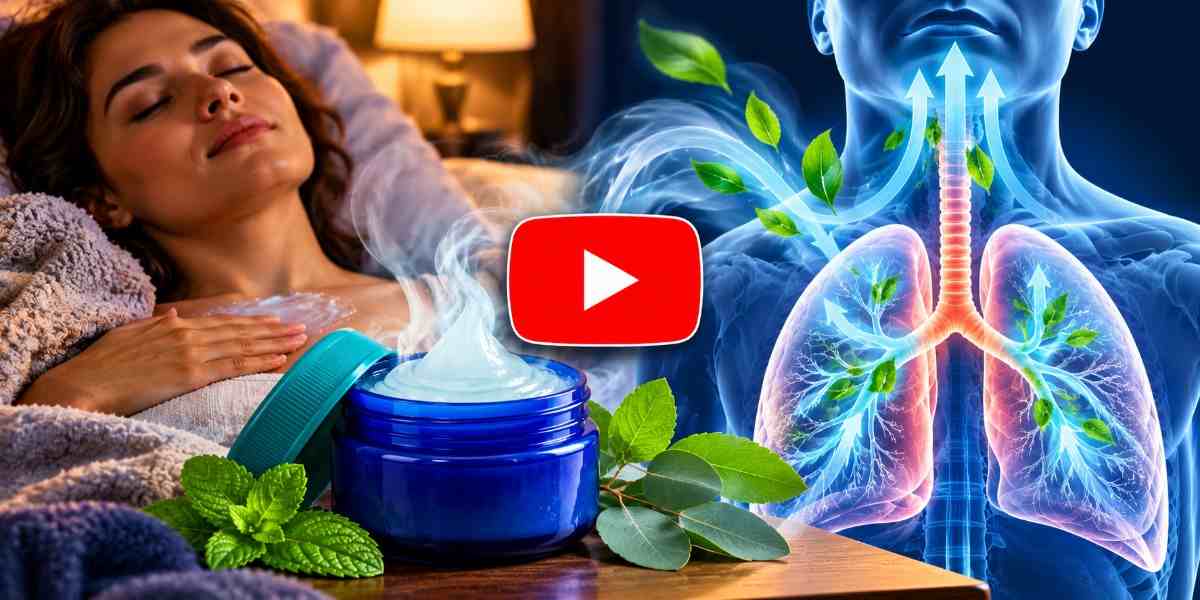
👉 DON’T TRY THIS “VICKS TRICK FOR COPD” UNTIL YOU SEE THIS
Can Vicks VapoRub Help COPD Patients Breathe Better at Night?
Some individuals enjoy the cooling scent of Vicks during a cold, but there is insufficient clinical evidence that Vicks VapoRub improves nighttime breathing, lung function, or oxygen saturation in people with COPD.
Nighttime COPD symptoms may occur because of mucus accumulation, airway narrowing, sleep-related breathing changes, or another medical condition.
If someone regularly wakes up coughing, wheezing, or struggling for air, the problem deserves medical evaluation.
Nighttime breathlessness may require adjustments to prescribed treatment, evaluation for sleep apnea, or assessment of oxygen levels.
A topical chest rub should never replace a prescribed inhaler, oxygen therapy, or a clinician’s COPD management plan.
Is the Vicks VapoRub Trick Safe for People With COPD?
Safety depends on the person’s respiratory sensitivity, other medical conditions, and how the product is used.
Vicks VapoRub is intended for specific topical uses, including temporary cough relief associated with the common cold. It has not been established as a treatment for COPD-related breathlessness.
People with COPD should consider several precautions:
- Airway irritation: Menthol and other aromatic ingredients may aggravate coughing or wheezing in sensitive individuals.
- Skin reactions: Camphor and other ingredients can cause irritation or allergic reactions.
- Incorrect application: Applying ointment inside the nostrils, on broken skin, or near the eyes is unsafe.
- Heating hazards: Heating the ointment or adding it to hot water can cause burns.
- Delayed treatment: Relying on home remedies during a COPD flare-up may delay necessary medical care.
Anyone considering a menthol chest rub should discuss its suitability with their healthcare professional, particularly if fragrances trigger respiratory symptoms.
👉 DON’T TRY THIS “VICKS TRICK FOR COPD” UNTIL YOU SEE THIS
Five Better Breathing Tricks for COPD Relief at Home
Unlike viral Vicks remedies, several breathing and lifestyle techniques are supported by respiratory care guidance.
1. Try the Pursed-Lip Breathing Trick
Pursed-lip breathing slows exhalation and may reduce the feeling of breathlessness by letting trapped air escape more easily.
How to practice:
- Sit comfortably and relax your shoulders.
- Breathe gently through your nose for approximately two seconds.
- Pucker your lips as though blowing out a candle.
- Exhale slowly for approximately four seconds without forcing the air out.
This technique can be especially helpful during walking, climbing stairs, or other activities that trigger mild breathlessness.
2. Use the Forward-Leaning Position
Sitting slightly forward with the elbows resting on the knees or a stable table may make breathing feel easier for some people.
This position supports the upper body and lets the breathing muscles work more comfortably.
Keep your shoulders relaxed and avoid compressing your chest or abdomen.
3. Practice Controlled Mucus Clearance
COPD can make it difficult to clear mucus from the airways, particularly during respiratory infections.
A technique called huff coughing involves breathing in comfortably, then exhaling through an open mouth as though gently fogging a mirror.
A respiratory therapist can demonstrate the appropriate technique and determine whether airway-clearance exercises are suitable.
4. Improve Bedroom Air Quality
A clean, smoke-free sleeping environment may reduce exposure to respiratory irritants.
Avoid scented candles, incense, aerosol sprays, cigarette smoke, and strong cleaning fumes. Maintain comfortable indoor temperatures and address excessive moisture or mold.
Good ventilation and appropriate air filtration can help reduce exposure to certain airborne particles.
5. Follow a Pulmonary Rehabilitation Plan
Pulmonary rehabilitation combines supervised exercise, breathing education, energy-conservation strategies, and personalized guidance.
It can improve exercise tolerance, daily functioning, and quality of life for many people with COPD.
Unlike an unproven home remedy, pulmonary rehabilitation is an established component of COPD management.
👉 DON’T TRY THIS “VICKS TRICK FOR COPD” UNTIL YOU SEE THIS
Viral COPD Hacks: What Actually Works?
| Popular breathing hack | Evidence-based assessment |
| Vicks chest rub | May provide a cooling sensation; no proven COPD benefit |
| Vicks on feet overnight | No reliable evidence of improved lung function |
| Vicks in hot water | Unsafe; risk of burns |
| Menthol to increase oxygen | No established oxygen-boosting effect |
| Pursed-lip breathing | Can help manage breathlessness |
| Forward-leaning posture | May ease breathing discomfort |
| Pulmonary rehabilitation | Established COPD management approach |
The main difference is that evidence-based COPD strategies target breathing mechanics, physical conditioning, or symptom management, while most viral Vicks tricks focus on temporary sensory effects.
Can Vicks VapoRub Clear Mucus From COPD Lungs?
No convincing clinical evidence shows that applying Vicks VapoRub to the chest removes mucus from the lower airways in people with COPD.
Chronic bronchitis, one of the conditions associated with COPD, can cause excess mucus production and persistent coughing.
Managing mucus may involve adequate hydration, prescribed medications, airway-clearance techniques, and treatment of respiratory infections when necessary.
Drinking enough fluids may help keep mucus properly hydrated, although excessive fluid intake isn’t appropriate for everyone, particularly those with certain heart or kidney conditions.
If mucus becomes noticeably thicker, changes color, increases substantially, or occurs alongside worsening breathlessness, seek medical advice.
Can Menthol Improve Oxygen Levels in COPD?
A common misconception is that the cooling sensation produced by menthol indicates increased oxygen delivery.
Menthol does not reliably increase blood oxygen saturation or improve lung capacity.
Research shows menthol can change the perception of airflow without corresponding improvements in measured nasal airway resistance.
For example, a study published in the Journal of Laryngology & Otology found that participants experienced increased sensations of nasal airflow after menthol exposure without consistent reductions in nasal resistance.
This distinction is especially important for people with COPD, because oxygen levels and breathing comfort are not always closely related.
Oxygen therapy should only be used according to an individualized medical prescription.
👉 DON’T TRY THIS “VICKS TRICK FOR COPD” UNTIL YOU SEE THIS
Common Mistakes to Avoid With COPD Home Remedies
People searching for natural COPD relief sometimes encounter advice that sounds convincing but lacks medical support.
One common mistake is assuming that a strong cooling sensation means the lungs are receiving more oxygen. Another is replacing prescribed inhalers with essential oils or menthol-based products.
Using Vicks in a nebulizer, humidifier, or oxygen equipment is also inappropriate and potentially dangerous. Only use solutions specifically prescribed or approved for the equipment.
Similarly, forcing deep breaths during severe breathlessness can increase discomfort. Gentle, controlled breathing is generally preferable, while sudden or severe symptoms require medical attention.
When Should COPD Patients Seek Medical Help?
COPD symptoms can worsen during an exacerbation, sometimes called a flare-up. Early recognition is essential.
Contact a healthcare professional promptly if you experience increased breathlessness, more frequent coughing, changes in mucus, fever, or reduced ability to perform normal activities.
Seek emergency medical assistance for severe difficulty breathing, blue or gray lips, confusion, chest pain, fainting, or breathlessness that does not improve with prescribed rescue treatment.
Do not attempt to manage a severe COPD flare-up using Vicks VapoRub or other viral home remedies.
Conclusion: Is the Vicks VapoRub Trick Worth Trying for COPD?
The Vicks VapoRub trick for COPD has drawn attention because it offers a familiar, inexpensive way to ease breathing discomfort. However, its benefits should not be confused with medical treatment.
Menthol can create a cooling sensation and temporarily influence how airflow is perceived, but Vicks VapoRub cannot reverse COPD, repair damaged lungs, increase oxygen levels, or replace prescribed respiratory medications.
For meaningful COPD symptom management, evidence-supported approaches such as pursed-lip breathing, pulmonary rehabilitation, avoiding respiratory irritants, and following an individualized treatment plan are more appropriate.
Final takeaway: The best COPD breathing trick is not a viral chest-rub hack. It is learning safe breathing techniques, recognizing symptom changes early, and using treatments that address the underlying respiratory condition.
👉 DON’T TRY THIS “VICKS TRICK FOR COPD” UNTIL YOU SEE THIS
References
- Wikipedia – Chronic Obstructive Pulmonary Disease (COPD) https://en.wikipedia.org/wiki/Chronic_obstructive_pulmonary_disease
- WebMD – COPD Health Information https://www.webmd.com/lung/copd/default.htm
- PubMed – The Effect of Menthol on Nasal Resistance to Air Flow https://pubmed.ncbi.nlm.nih.gov/6886530/
About Us
