
How to Identify Truly Evidence: A Guide to Reliable Facts
Health information is everywhere. From social media videos and wellness blogs to supplement advertisements and medical news headlines, people encounter countless claims about improving their health every day.
Some of these claims are supported by reliable scientific research, while others rely on exaggerated promises, personal experiences, or misleading interpretations of scientific findings.
Knowing how to identify truly evidence-based health claims is an essential skill for anyone making informed decisions about their well-being.
How to Identify Truly Evidence-Based Treatments explores how to distinguish scientifically proven treatments from misleading health claims, understand clinical research, and evaluate medical evidence. Discover the importance of clinical trials, expert recommendations, and reliable scientific studies when choosing safe and effective treatment options.


A product may promise sharper memory, improved metabolism, better sleep, or reduced inflammation. A treatment might be described as revolutionary, clinically tested, or scientifically proven.
Genuine evidence-based healthcare relies on carefully conducted research, professional expertise, and consideration of individual patient needs.
What Does Truly Evidence-Based Mean?
The term evidence-based describes an approach to healthcare that uses the best available scientific research alongside clinical expertise and individual patient preferences.
Rather than relying entirely on tradition, popularity, or personal opinion, evidence-based medicine evaluates whether a particular intervention has demonstrated meaningful benefits through appropriate scientific investigation.
A truly evidence-based health claim should be supported by research that is relevant to the specific product, treatment, population, and outcome being discussed.
For example, a supplement manufacturer might claim that a product improves memory because one of its ingredients demonstrated antioxidant activity in a laboratory experiment.
Although laboratory findings may provide useful scientific information, they do not establish that taking the supplement improves memory in humans.
To support that claim convincingly, researchers would need appropriate human studies examining cognitive outcomes, ideally with suitable comparison groups and reliable testing methods.
Three Foundations of Evidence-Based Healthcare
1. Reliable Scientific Research
Scientific evidence comes from carefully designed studies that investigate health outcomes using transparent, reproducible methods.
2. Clinical Expertise
Healthcare professionals interpret research findings in the context of medical knowledge, practical experience, and established clinical guidelines.
3. Individual Patient Needs
Personal health conditions, treatment preferences, medical history, potential risks, and individual circumstances influence which interventions may be appropriate.
Importantly, evidence-based medicine does not guarantee that every treatment will work for every person. Instead, it provides a systematic way to estimate potential benefits, understand uncertainties, and minimize unnecessary risks.
Why Is Identifying Evidence-Based Health Claims Important?
The modern wellness industry includes thousands of products and services addressing concerns such as weight management, cognitive function, aging, digestion, hormonal health, and physical performance.
While some interventions have meaningful scientific support, others are marketed using evidence that is preliminary, incomplete, or unrelated to the advertised benefits.
Protects Against Misleading Information
Terms such as clinically tested, doctor recommended, and research backed may sound reassuring, but their meaning depends on the quality and relevance of the underlying evidence.
Understanding research helps consumers recognize when scientific language is being used primarily as a marketing tool.
Supports Safer Healthcare Decisions
Unsupported health claims can encourage people to try ineffective treatments, overlook side effects, or delay appropriate medical care.
Evaluating evidence makes it easier to identify potential risks and discuss treatment options with qualified healthcare professionals.
Helps Avoid Unnecessary Spending
Health products can be expensive, especially when advertised as premium solutions requiring long-term use.
Examining the evidence before purchasing a supplement or wellness device may help consumers avoid spending money on products with uncertain benefits.
Encourages Realistic Expectations
Even well-supported treatments have limitations. Understanding the difference between modest improvements, clinically meaningful benefits, and exaggerated promises helps individuals develop realistic expectations.
Understanding the Different Types of Scientific Evidence
Researchers use different study designs to answer different questions, and each approach has strengths and limitations.
Knowing these differences is essential when learning how to identify truly evidence-based treatments.
1. Laboratory Studies
Laboratory studies investigate biological processes using cells, tissues, chemical compounds, or controlled experimental systems.
Researchers may examine how a substance interacts with cellular pathways, inflammatory markers, or other biological mechanisms.
These investigations are valuable for generating hypotheses and understanding possible mechanisms. Laboratory findings cannot establish that a treatment is effective in humans.
A compound that influences cells under laboratory conditions may behave differently when consumed, absorbed, metabolized, and eliminated by the human body.
2. Animal Studies
Animal research helps scientists explore biological mechanisms, potential toxicity, and preliminary treatment effects.
These studies can provide important information before human testing begins. Animal research should therefore be considered preliminary evidence when evaluating claims about human health.
3. Observational Studies
Observational studies examine relationships between exposures, behaviors, and health outcomes without researchers assigning the exposure.
For example, investigators might compare dietary patterns and cardiovascular outcomes across a large population.
People who follow a particular diet may also exercise more frequently, receive better healthcare, or have other characteristics that influence their health outcomes.
4. Randomized Controlled Trials
Randomized controlled trials, commonly called RCTs, are particularly valuable for evaluating whether an intervention causes a health benefit.
Participants are randomly assigned to different groups, such as a treatment group and a placebo or standard-care group.
Depending on the intervention, researchers may also use blinding so participants, investigators, or outcome assessors do not know which treatment was assigned.
5. Systematic Reviews and Meta-Analyses
Systematic reviews examine available research using a predefined, transparent method for identifying, selecting, and evaluating relevant studies.
Meta-analyses may statistically combine findings from multiple studies when doing so is appropriate. These approaches can provide a broader understanding of the evidence than a single study.
A meta-analysis combining several poorly designed studies does not automatically produce strong evidence.
The Scientific Evidence Hierarchy
The following table provides a simplified overview of common research designs.
| Evidence Type | Primary Purpose | Important Limitation |
|---|---|---|
| Systematic reviews | Evaluate the overall research | Quality depends on included studies |
| Meta-analyses | Combine compatible study results | Can be affected by bias and heterogeneity |
| Randomized controlled trials | Test treatment effects | May have limited size or generalizability |
| Observational studies | Identify real-world associations | Confounding can affect findings |
| Animal studies | Investigate preliminary effects | Results may not translate to humans |
| Laboratory studies | Explore biological mechanisms | Cannot establish clinical effectiveness |
| Expert opinions | Provide professional interpretation | May lack direct supporting evidence |
| Personal testimonials | Describe individual experiences | Cannot reliably establish causation |
A well-conducted observational study may answer certain questions more effectively than a poorly designed randomized trial, and some clinical questions cannot ethically or practically be studied through randomization.
How to Identify Truly Evidence-Based Health Claims: 12 Essential Steps
A practical checklist for evaluating health information
Step 1: Identify the Exact Health Claim
Before examining scientific evidence, determine precisely what the product or treatment claims to accomplish.
More specific claims, such as improving sleep duration or reducing a particular symptom, can be investigated using measurable outcomes.
Ask whether the advertised benefit is clearly defined and whether researchers have actually measured it.
For example, a supplement claiming to improve concentration should ideally have evidence from human studies using validated attention or cognitive performance measures.
A claim based solely on increased blood flow or antioxidant activity would not establish improved concentration.
Step 2: Examine the Original Research
Health articles and promotional websites often summarize scientific studies without explaining important limitations.
Whenever possible, locate the original research publication rather than relying entirely on marketing summaries.
Read the abstract for an overview, but examine the methods, results, and limitations before concluding.
Important questions include:
-
Who participated in the study?
-
What treatment or intervention was tested?
-
Was there a suitable comparison group?
-
How long did the investigation last?
-
What outcomes were measured?
-
Were the results statistically and clinically meaningful?
-
What limitations did the researchers acknowledge?
Scientific evidence becomes more informative when readers understand what investigators actually studied.
Step 3: Look for Human Clinical Evidence
Human research is particularly important when evaluating products intended for human consumption or medical treatment.
A manufacturer may highlight promising laboratory findings, but those results cannot substitute for clinical evidence.
For supplements, determine whether studies examined the finished formulation or only individual ingredients.
A product containing several ingredients does not automatically provide the same effects observed in studies of those ingredients separately.
Step 4: Evaluate Study Size and Duration
The number of participants and length of follow-up can significantly affect the reliability of research findings.
Small studies may produce unstable estimates and may be unable to detect uncommon adverse effects.
Short studies can provide useful information about immediate outcomes but may not establish long-term benefits or safety.
For example, a two-week investigation of a sleep supplement might offer preliminary information about short-term sleep measures.
It would not necessarily establish whether the product remains effective or safe after several months of use.
Larger, appropriately powered studies and adequate follow-up generally increase confidence when the research is otherwise well designed.
Step 5: Check Whether the Results Have Been Replicated
Results may occur because of chance, methodological limitations, selective reporting, or characteristics unique to the study population.
Replication helps researchers determine whether findings remain consistent across independent investigations.
When multiple well-conducted studies report similar outcomes, confidence in a treatment’s effects may increase.
Independent replication is especially valuable when initial studies were funded or conducted by organizations with commercial interests.

Step 6: Understand Statistical Significance
This generally means that the observed data meet a predefined statistical criterion under the assumptions of the analysis.
However, statistical significance does not automatically mean that the treatment produces an important health improvement.
A large study might detect a very small difference between treatment groups that has little practical relevance.
Readers should examine the size of the effect, confidence intervals, baseline risk, and whether the change is meaningful to patients.
For example, a measurable improvement on a laboratory marker may not translate into reduced symptoms, fewer hospitalizations, or improved quality of life.
Step 7: Identify Potential Conflicts of Interest
Industry-funded studies can be scientifically rigorous, and independently funded studies can contain methodological weaknesses.
Review whether the researchers have financial interests in the product, whether the study was independently monitored, and whether its methods were established before results were collected.
Step 8: Look for Peer-Reviewed Publications
Peer review involves evaluation of scientific manuscripts by researchers or specialists before publication
Published research can contain errors, biased methods, or conclusions that later studies fail to reproduce.
Publication status should therefore be considered alongside study quality and the broader body of evidence.
Step 9: Compare Claims With Medical Guidelines
Professional medical guidelines often evaluate multiple studies to develop recommendations for clinical practice.
Organizations such as the National Institutes of Health, established medical societies, and other reputable health institutions can provide useful evidence summaries.
However, guidelines vary in methodological quality and may require updates as new research becomes available.
A trustworthy evaluation considers the guideline’s publication date, methodology, and relevance to the specific health question.
Step 10: Evaluate Safety Evidence
A product may demonstrate a beneficial effect while also producing side effects or interacting with medications.
Safety evaluations should consider adverse events, contraindications, appropriate dosage, vulnerable populations, and long-term exposure.
This is particularly important for dietary supplements and emerging wellness treatments. The word natural does not guarantee safety.
Plant-derived substances can produce biological effects, interact with prescription medications, and cause unwanted reactions.
Step 11: Watch for Exaggerated Marketing Language
Some advertisements use emotionally persuasive language instead of balanced scientific explanations.
Common warning signs include claims that a product works for everyone, produces guaranteed results, or eliminates the need for conventional medical care.
Phrases such as “miracle cure” and “secret treatment doctors don’t want you to know about” should prompt additional scrutiny.
Credible medical information usually acknowledges uncertainty, limitations, and individual differences.
Step 12: Consult Qualified Healthcare Professionals
Scientific research provides general information about populations, but personal healthcare decisions require individual consideration.
A qualified healthcare professional can help determine whether research findings apply to a person’s medical history, symptoms, medications, and treatment goals.
Professional guidance is particularly important before starting supplements, discontinuing prescribed treatments, or pursuing interventions for persistent medical symptoms.
How to Recognize Misleading Scientific Claims
Health misinformation is not always completely fabricated. Sometimes advertisements use genuine research but present the findings in a misleading way.
Cherry-Picking Positive Studies
Cherry-picking occurs when someone highlights studies supporting a preferred conclusion while ignoring conflicting or negative research.
For example, a company may advertise one positive clinical trial while overlooking several larger investigations that found little or no benefit.
Confusing Correlation With Causation
If researchers observe that people who consume a particular food have better health outcomes, other lifestyle factors may contribute to that association.
Establishing causation requires careful consideration of study design, alternative explanations, and supporting evidence.
Exaggerating Preliminary Research
A laboratory experiment might identify a possible biological mechanism, but further research is necessary to determine whether the effect occurs in humans.
Using Testimonials as Proof
Personal experiences can be meaningful to the individuals reporting them. However, testimonials cannot reliably determine whether a treatment caused a particular improvement.
Symptoms may fluctuate naturally, other treatments may contribute to recovery, and expectations can influence perceived outcomes.
Testimonials can generate questions worth studying, but they are not substitutes for controlled research.
Misrepresenting Regulatory Approval
Regulatory terminology can also create confusion. For example, dietary supplements are generally not approved by the U.S. Food and Drug Administration for safety and effectiveness before being marketed.
Similarly, FDA registration of a facility or listing of a product does not necessarily mean that the agency has approved the product’s health claims.
Evidence-Based Medicine vs. Popular Wellness Trends
Wellness trends often become popular through social media, influencer recommendations, and consumer testimonials.
Some trends eventually receive scientific support, while others remain unproven or are contradicted by subsequent research.
| Evidence-Based Approach | Trend-Driven Approach |
|---|---|
| Evaluates multiple relevant studies | Often highlights isolated findings |
| Acknowledges uncertainty | May promise guaranteed results |
| Examines benefits and harms | Frequently emphasizes benefits alone |
| Uses measurable outcomes | May rely heavily on testimonials |
| Considers individual differences | Often promotes universal solutions |
| Updates conclusions as evidence changes | May repeat claims despite conflicting evidence |
The appropriate conclusion may be that evidence remains insufficient and further investigation is needed.
How to Evaluate Evidence-Based Supplement Claims
Consumers may encounter claims about brain health, immune support, energy, metabolism, digestion, sleep, and healthy aging.
Examine the Complete Formulation
A finished supplement may contain several vitamins, minerals, botanical extracts, or other compounds.
Research involving one ingredient does not automatically establish that the entire formulation provides the same benefit.
Interactions between ingredients, differences in dosage, and manufacturing methods can influence outcomes.
Compare Clinical Dosages
When reviewing ingredient research, determine whether the studied amount matches the quantity contained in the product.
A clinical study examining a particular dose cannot necessarily support claims about a product containing a substantially smaller amount.
The chemical form and method of administration may also matter.
Consider Product Quality
Independent quality testing can help assess whether a supplement contains the labeled ingredients and whether certain contaminants are present.
However, third-party testing for quality does not establish clinical effectiveness.
A product may be manufactured to high quality standards while still lacking convincing evidence for its advertised benefits.
Check Medication Interactions
Some supplements can interact with prescription or over-the-counter medications. Others may be inappropriate for people with particular medical conditions, during pregnancy, or before surgery.
How to Evaluate Evidence-Based Medical Devices and Wellness Technologies
Modern wellness technologies include wearable devices, red light therapy equipment, electrical stimulation products, sleep monitors, and other emerging tools.
These technologies may offer practical benefits, but their advertised capabilities should be evaluated carefully.
Determine What the Device Actually Measures
A device may measure movement, heart rate, temperature, or other physiological signals. Measuring a biological signal does not necessarily mean that the device can accurately diagnose a medical condition.
Consumers should distinguish between wellness monitoring and clinically validated diagnostic performance.
Look for Device-Specific Studies
Evidence supporting a general technology does not automatically validate every product using that technology.
For example, studies involving one light therapy device may use specific wavelengths, treatment durations, power settings, and clinical protocols.
Examine Real-World Effectiveness
A technology may perform well under controlled laboratory conditions but produce less consistent results during everyday use.
Researchers should ideally evaluate accuracy, usability, clinical outcomes, and safety in relevant real-world settings.
Verify Regulatory Claims
Different devices may be subject to different regulatory pathways. Terms such as FDA-cleared, FDA-approved, and FDA-registered have distinct meanings.
Consumers should confirm the exact regulatory status and intended use rather than assuming these terms are interchangeable.
Understanding the Difference Between Proven, Promising, and Unproven Treatments
One of the most useful skills in evaluating health information is recognizing different levels of scientific certainty.
Proven or Well-Supported Treatments
These interventions have substantial, consistent evidence supporting specific benefits in defined populations.
However, even well-established treatments may not work for everyone, and their risks still require consideration.
Promising Treatments
Promising interventions have encouraging preliminary findings but lack sufficient high-quality evidence for confident conclusions.
Unproven Treatments
Unproven interventions lack adequate, reliable evidence demonstrating their advertised benefits. This does not necessarily mean they have been proven ineffective.
Treatments With Evidence of No Meaningful Benefit
Some interventions have been studied extensively without demonstrating clinically important benefits for particular conditions.
In these cases, the evidence may support a conclusion that the treatment is unlikely to provide the claimed benefit.
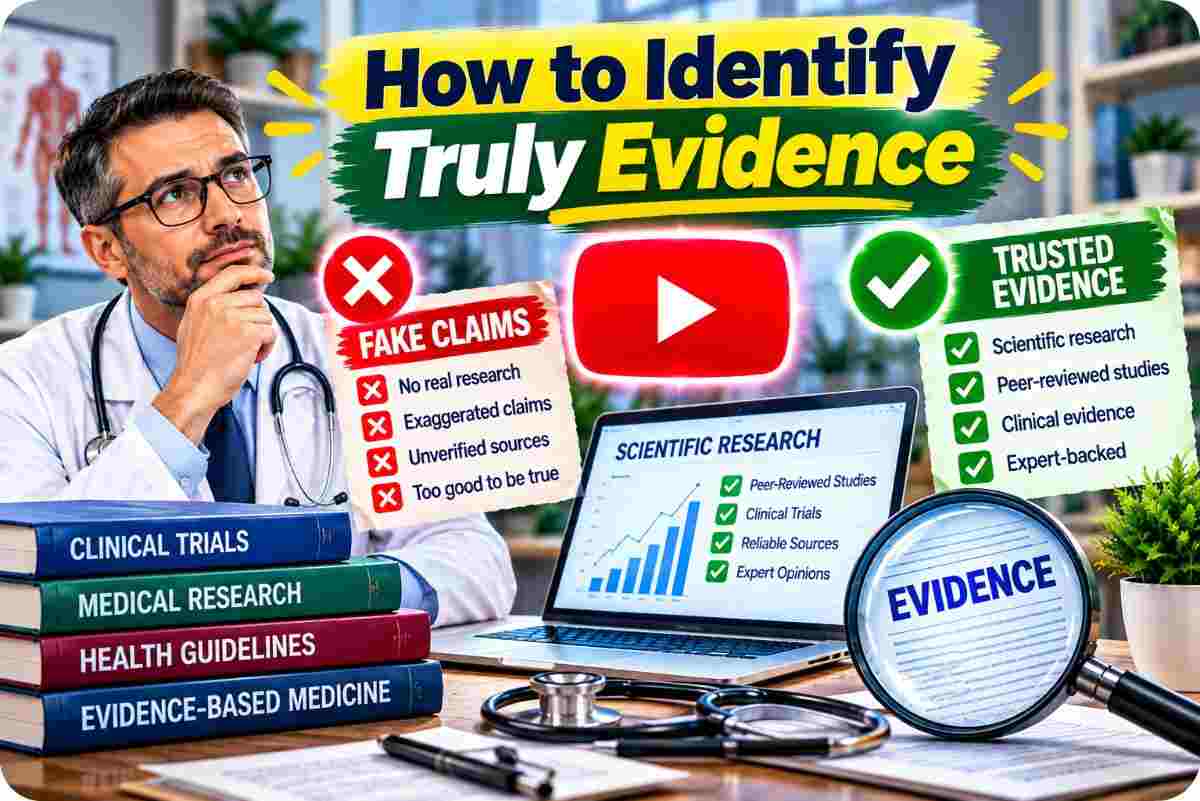
How to Find Trustworthy Medical Research Online
Several established research platforms provide scientific publications, evidence summaries, and clinical trial information.
PubMed
PubMed is a searchable database containing biomedical and life sciences literature. Readers can use it to locate clinical trials, systematic reviews, and research publications.
Cochrane Library
The Cochrane Library provides systematic reviews evaluating healthcare interventions. These reviews can help readers understand the overall state of evidence for specific treatments.
ClinicalTrials.gov
ClinicalTrials.gov contains information about registered clinical studies, including their design, recruitment status, and, when available, results.
It can help readers determine whether a treatment has been investigated in human trials. Registration alone does not establish effectiveness.
National Institutes of Health
NIH resources provide educational material, research summaries, and information about clinical investigation.
The National Center for Complementary and Integrative Health is particularly useful for evaluating complementary health approaches.
FDA Resources
FDA materials help consumers understand regulatory requirements, health claims, product safety, and the distinction between different regulatory categories.
Common Mistakes People Make When Evaluating Health Research
Even readers who actively seek scientific information can misinterpret research findings. Several mistakes occur frequently.
Assuming all published studies are equally reliable: Research quality varies significantly depending on design, methods, reporting, and potential bias.
Believing that more studies always mean stronger evidence: Numerous weak studies may provide less certainty than a smaller number of rigorous investigations.
Ignoring negative findings: Unsuccessful trials are important because they help clarify whether a treatment actually works.
Confusing biological activity with clinical benefits: A substance may influence a biological marker without improving symptoms or health outcomes.
Assuming newer treatments are automatically better: Innovation can be valuable, but new interventions require appropriate testing.
Treating scientific uncertainty as a weakness: Responsible researchers acknowledge limitations because uncertainty is an essential part of scientific investigation.
Practical Example: Evaluating a Brain Health Supplement
Imagine discovering a supplement advertised as a scientifically proven solution for memory, concentration, and cognitive performance.
The product website mentions several botanical compounds and includes testimonials from satisfied customers.
First, identify the exact promised outcome. Does the product claim to improve memory test scores, prevent cognitive decline, or simply support general brain health?
If the manufacturer cites studies involving individual ingredients, determine whether the doses and formulations are comparable.
Research involving healthy young adults may not apply directly to older individuals experiencing memory difficulties.
Study duration also matters. Short-term changes in attention tests cannot automatically establish long-term protection against cognitive decline.
Finally, review adverse effects, medication interactions, and the overall consistency of available findings.
If strong clinical evidence is unavailable, the responsible conclusion is that the product’s advertised benefits remain uncertain.
The Role of Critical Thinking in Evidence-Based Healthcare
Critical thinking does not mean rejecting every health claim. Instead, it involves examining information carefully before deciding how much confidence it deserves.
A critical reader asks whether a claim is supported by relevant evidence, whether alternative explanations exist, and whether conclusions are proportionate to the findings.
Scientific understanding also evolves. New studies may strengthen, weaken, or change previous conclusions.
An intervention considered promising today may later prove ineffective, while another treatment may gain acceptance after rigorous clinical testing.
For readers interested in preventive health, wellness technologies, supplements, and emerging treatments, scientific literacy provides a foundation for making more informed choices.
Quick Checklist: Is This Health Claim Truly Evidence-Based?
Use this checklist before trusting a treatment advertisement, health article, or supplement claim.
A treatment does not necessarily need to satisfy every item to have some scientific support. However, unanswered questions should reduce confidence in strong claims.
Final Thoughts
Understanding how to identify truly evidence-based health claims is essential for making informed decisions about personal health and wellness.
With countless supplements, treatments, and wellness products available, scientific evidence remains the most reliable foundation for evaluating their effectiveness and safety.
Before trusting any health claim, consider the quality of clinical research, the credibility of its sources, and whether independent studies support the findings.
Strong evidence comes from well-designed research, transparent results, and consistent scientific conclusions rather than marketing promises or personal testimonials.
At Modern Medicine LA, we believe that informed healthcare decisions begin with reliable information, critical thinking, and professional medical guidance.
.
.
.
.
References
https://medlineplus.gov/evaluatinghealthinformation.html
https://www.nccih.nih.gov/health/know-science
https://www.nccih.nih.gov/health/providers/litreviews
https://pubmed.ncbi.nlm.nih.gov/
.
About Us
