
7 Types of Amnesia and Their Effects on Memory Explained
Memory is one of the most essential functions of the human brain. It allows us to learn, store experiences, build identity, and make decisions in daily life.
When memory becomes impaired due to amnesia, even simple activities like recognizing familiar people, remembering conversations, or recalling recent events can become difficult.
Amnesia is not a single disease. Instead, it is a group of memory disorders that affect different parts of the brain responsible for storing and retrieving information.
Some types affect the ability to form new memories, while others erase memories or distort how information is remembered.
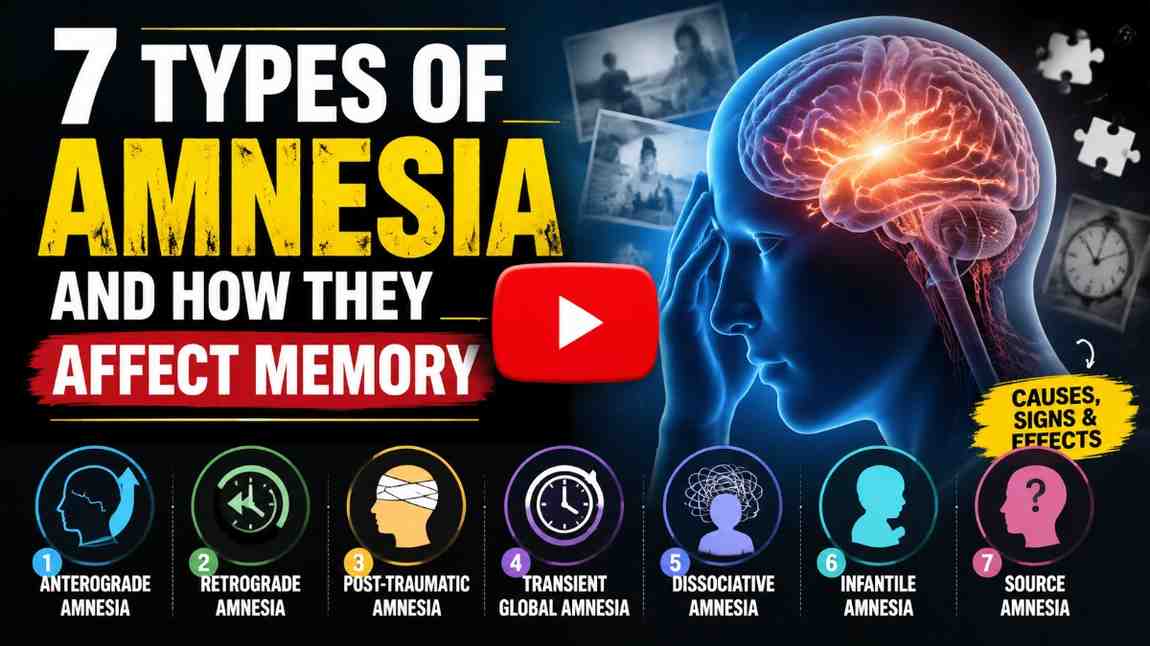

Understanding the 7 types of amnesia helps in recognizing symptoms early and improving care, diagnosis, and support.
1. Anterograde Amnesia
Anterograde amnesia is one of the most widely studied memory disorders. It refers to the inability to form new memories after the onset of brain damage or illness.
In this condition, the brain loses its ability to transfer short-term information into long-term storage. As a result, everything that happens after the condition begins is quickly forgotten.
A person with anterograde amnesia may appear normal in conversation, but within minutes, they may forget what was said or done.
How it affects memory:
- Severe difficulty forming new memories
- Short-term memory is functional but unstable
- Long-term memory from before the condition remains intact
- Repetitive questioning and confusion are common
- Difficulty learning new skills or routines
The hippocampus, a brain region responsible for memory consolidation, is often involved in this condition. Damage to this area is a common cause.
Daily life becomes challenging because every new experience feels unfamiliar almost immediately after it occurs.
2. Retrograde Amnesia
Retrograde amnesia is the opposite of anterograde amnesia. It involves the loss of existing memories formed before the condition started.
The severity can vary widely. Some people lose only a few minutes or hours of memory, while others may lose years of personal history, including relationships, education, and major life events.
How it affects memory:
- Loss of past personal experiences
- Difficulty remembering names, places, or identity details
- Older memories are often more stable than recent ones
- Ability to form new memories may remain
- Emotional disconnection from personal history
This condition often occurs after brain injuries, strokes, infections, or neurological diseases. In some cases, memory may partially return over time, but recovery is unpredictable.
Retrograde amnesia deeply affects identity because memories shape how individuals understand themselves and their life story.
3. Post-Traumatic Amnesia (PTA)
Post-traumatic amnesia occurs after a serious head injury or traumatic brain injury (TBI). It is commonly seen in accidents, falls, or sports injuries involving impact to the head.
PTA is usually temporary, but it can be frightening for both patients and families.
How it affects memory:
- Confusion about time, place, and situation
- Inability to remember the injury event
- Short-term memory failure
- Repetitive questions and disorientation
- Difficulty recognizing familiar surroundings
During this phase, the brain is in a recovery state, and memory formation is significantly disrupted.
As healing progresses, memory gradually improves. The duration of PTA is often used by doctors to assess the severity of brain injury.
4. Transient Global Amnesia
Transient global amnesia is a sudden, temporary episode of memory loss. It usually lasts a few hours and rarely more than 24 hours.
This condition is often seen in older adults and is not usually linked to permanent brain damage.
How it affects memory:
- Sudden inability to form new memories
- Repeated questioning about recent events
- Temporary confusion about surroundings
- Preservation of identity and long-term memory
- Full recovery without lasting damage
Although the exact cause is not fully understood, it may be triggered by stress, physical exertion, or sudden temperature changes.
Even though it looks alarming, most people recover completely and regain normal memory function.
5. Dissociative (Psychogenic) Amnesia
Dissociative amnesia is different from all other types because it is psychological rather than physical. It is triggered by extreme emotional stress, trauma, or psychological shock.
The brain “blocks out” certain memories as a protective response.
How it affects memory:
- Inability to recall personal or traumatic events
- Gaps in autobiographical memory
- Identity confusion in severe cases
- No impairment in general cognitive abilities
- Sudden onset after emotional trauma
In some cases, individuals may experience dissociative fugue, where they may travel or wander without remembering their identity.
Unlike neurological amnesia, brain scans typically show no physical damage.
Recovery may occur suddenly or gradually, often with therapy and psychological support.

6. Infantile (Childhood) Amnesia
Infantile amnesia is a normal phenomenon rather than a medical disorder. It refers to the inability of adults to remember early childhood experiences, usually before the age of 3 to 4 years.
How it affects memory:
- No clear recall of infancy events
- Early experiences are stored but not retrievable
- Lack of language development limits memory encoding
- Emotional impressions may still influence behavior
This happens because the brain structures responsible for long-term autobiographical memory are still developing during infancy.
Although explicit memories are not retained, early experiences still shape emotional development and personality.
7. Source Amnesia
Source amnesia occurs when a person remembers information but cannot recall where or how they learned it.
This condition affects the ability to connect memories with their origin.
How it affects memory:
- Remembering facts without context
- Confusion about information sources
- Misattributing memories to wrong events
- Increased risk of false memories
- Difficulty verifying accuracy of information
For example, someone may remember a news fact but forget whether they read it, heard it, or saw it on television.
This type of amnesia is often linked to normal aging but can also occur due to brain injury or cognitive disorders.
How Amnesia Affects Memory Systems
To understand amnesia better, it is important to know how memory works in the brain.
Memory is generally divided into:
- Short-term memory: Holds information temporarily
- Long-term memory: Stores knowledge and experiences
- Procedural memory: Skills like walking or riding a bike
Different types of amnesia affect different systems.
For example:
- Anterograde amnesia affects formation of new long-term memories
- Retrograde amnesia affects stored long-term memories
- Dissociative amnesia affects autobiographical memory
- Source amnesia affects memory organization and accuracy
Brain structures such as the hippocampus, amygdala, and frontal lobes play important roles in encoding, storing, and retrieving memories.
Damage or disruption in these areas leads to different patterns of memory loss.
Causes of Amnesia
Amnesia can develop due to several physical and psychological factors:
- Traumatic brain injury
- Stroke or oxygen deprivation
- Brain infections (encephalitis)
- Neurodegenerative diseases
- Severe psychological trauma
- Alcohol or substance abuse
- High emotional stress
The severity depends on the extent of brain involvement and how quickly treatment is provided.
Living With Amnesia
Although amnesia can be life-changing, many individuals learn to adapt with proper support.
Common coping strategies include:
- Using written reminders and digital tools
- Maintaining structured routines
- Cognitive therapy and rehabilitation
- Family and caregiver support
- Environmental organization techniques
Some people recover partially or fully, while others learn to manage long-term memory challenges.
Conclusion
Amnesia is a complex group of memory disorders that affect people in different ways. From the inability to form new memories to the loss of past experiences or confusion about information sources, each type has unique effects on the brain.
Understanding the 7 types of amnesia helps improve awareness, early diagnosis, and effective support for individuals affected by memory loss. While some forms are temporary, others require long-term adaptation and care.
With proper medical attention, therapy, and support systems, many individuals with amnesia can still lead meaningful and functional lives.
References
- https://en.wikipedia.org/wiki/Amnesia
- https://www.healthline.com/health/amnesia
- https://www.webmd.com/brain/amnesia-causes-symptoms-types
.
About Us
