Red Light Therapy for Eyes and Vision: Benefits & Risks
Red light therapy for eyes and vision is gaining attention online as researchers investigate whether specific wavelengths of light can support retinal function and improve certain visual outcomes.
The most promising clinical research focuses on photobiomodulation for selected patients with dry age-related macular degeneration (AMD), rather than general eyesight enhancement.
However, red light therapy is not a universal solution for blurry vision, nearsightedness, eye strain, or vision loss.
Some clinical studies report benefits, while a 2025 systematic review found no statistically significant improvement in several key outcomes.
Newer research published in 2026 adds to the evidence but does not establish that every red light device is effective or safe.
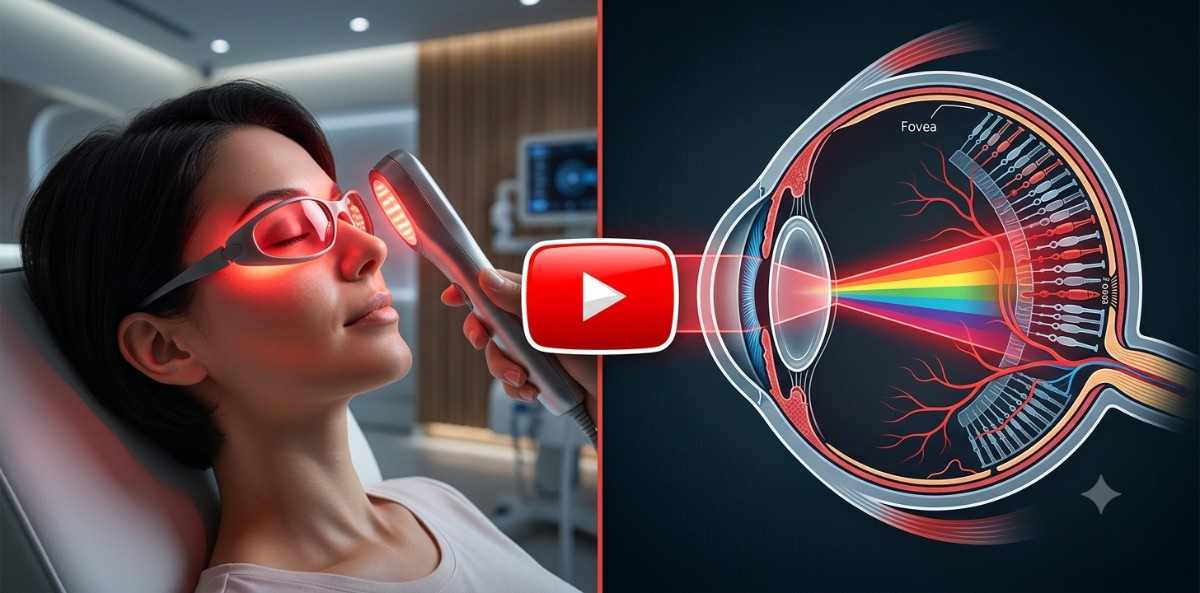

This updated guide explores the science behind red light therapy, viral eyesight claims, potential benefits, device-selection tips, risks, and practical steps to protect your vision.
What Is Red Light Therapy for Eyes and Vision?
Red light therapy, also called photobiomodulation (PBM), uses controlled light exposure to influence biological activity within cells.
Depending on the treatment, devices may use red light, near-infrared light, or a combination of wavelengths.
Researchers are particularly interested in the retina, the light-sensitive tissue at the back of the eye.
Retinal cells need energy to function, and scientists are investigating whether specific light exposures can influence cellular energy production, oxidative stress, and retinal function.
It is important to distinguish medical photobiomodulation from consumer red light products.
A facial LED mask, a red light panel, and a device developed specifically for an eye condition may have very different wavelengths, output levels, and exposure protocols.
The key point: Evidence supporting one medically studied device does not prove that all red light products improve eyesight.
How Does Red Light Therapy Work for Vision?
One proposed mechanism involves mitochondria, the structures inside cells that help produce adenosine triphosphate (ATP), a molecule that supplies energy for cellular processes.
Certain wavelengths may interact with light-sensitive cellular components and influence mitochondrial activity. Researchers are studying whether these changes can help stressed retinal cells function more effectively.
The proposed process involves three main stages:
- Light exposure: A specific wavelength and intensity are delivered according to a treatment protocol.
- Cellular response: Light may influence energy metabolism and other cellular signaling processes.
- Clinical assessment: Researchers measure outcomes such as visual acuity, contrast sensitivity, retinal structure, and patient-reported visual function.
These mechanisms are scientifically plausible, but they do not guarantee meaningful improvement in vision. The treatment’s effects depend on the condition, the device, and the quality of clinical evidence.
 DON’T TRY THIS “RED LIGHT THERAPY” UNTIL YOU SEE THIS
Potential Benefits of Red Light Therapy for Eyes
1. Supporting People With Dry Age-Related Macular Degeneration
Dry AMD affects the macula, the part of the retina responsible for detailed central vision. It can make reading, recognizing faces, and seeing fine details more difficult.
Photobiomodulation is being investigated as a potential treatment for selected patients with early or intermediate dry AMD. Some clinical studies have reported improvements in visual measurements, but results have varied.
A 2026 clinical trial reported encouraging 12-month findings in patients with early or intermediate dry AMD, including a difference in visual acuity between the treatment and sham groups.
These results are promising, but one trial cannot establish effectiveness for every patient or device.
2. Improving Contrast Sensitivity
Contrast sensitivity describes how well you distinguish objects from their backgrounds, especially when the difference between them is subtle.
Some studies of photobiomodulation for dry AMD have reported improvements in contrast sensitivity. This could matter for activities such as reading, recognizing objects, and navigating low-contrast environments.
However, results are not consistent across studies. An improvement in a particular test does not necessarily mean a person will experience a major improvement in daily life.
3. Investigating Age-Related Changes in Retinal Function
As people age, changes in retinal health can affect visual performance. Scientists are investigating whether carefully controlled exposure to red or near-infrared light may influence cellular function in the aging retina.
A small 2020 study examined exposure to 670-nanometer red light and reported improvements in some visual functions in older adults.
These findings helped encourage further research, but the study does not establish red light therapy as a general treatment for age-related eyesight changes.
4. Exploring Other Eye Conditions
Researchers are investigating light-based treatments for several eye conditions, but the evidence varies considerably by application.
For example, repeated low-level red light exposure has been studied for myopia control in children. This is a different use from photobiomodulation for dry AMD, and the safety considerations are not interchangeable.
Online discussions also mention red light therapy for dry eye, color vision problems, and digital eye strain. These claims should not be treated as established benefits without condition-specific clinical evidence.
Latest Research: Does Red Light Therapy Really Improve Vision?
One of the most important SEO opportunities is answering the question users are actually asking: Does red light therapy work, or is it just another viral health trend?
The evidence is developing, and the findings need to be interpreted carefully.
- 2025 systematic review: A review and meta-analysis of photobiomodulation studies for dry AMD found no statistically significant pooled benefit for several key outcomes, including best-corrected visual acuity and macular drusen volume. The authors called for more research.
- 2026 clinical trial: A 12-month randomized, double-masked controlled trial reported favorable differences in drusen volume and visual acuity in the treatment group compared with the sham group.
- 2026 research review: A newer review of red and near-infrared photobiomodulation for ocular aging and eye diseases noted that results vary across devices and treatment protocols. Long-term safety and the role of these treatments in routine eye care remain insufficiently established.
Taken together, these findings suggest that photobiomodulation deserves further investigation, particularly for dry AMD.
They do not justify claiming that red light therapy can reliably restore normal vision, reverse blindness, or replace standard eye care.
DON’T TRY THIS “RED LIGHT THERAPY” UNTIL YOU SEE THIS
Viral Red Light Therapy Hacks: What Is Worth Knowing?
Social media videos often turn early scientific findings into simple promises. Here are several common trends and how to evaluate them.
The Morning Red Light Eye Routine
Some videos recommend using red light immediately after waking up to improve eyesight, reduce eye fatigue, or support retinal health.
No universally established morning routine uses red light for improve vision. Clinical protocols use specific devices, wavelengths, and exposure schedules that should not be copied from a social media video.
Practical tip: If your eyes feel tired in the morning, consider sleep quality, dry eye symptoms, contact lens use, and other possible causes before assuming you need light therapy.
The Red Light Mask Trend
Red light masks have become popular for skin care, and some users wonder whether wearing one can also improve their eyes.
A facial mask designed for skin treatment isn’t automatically safe for direct eye exposure. Its light output, fit, shielding, and intended use may differ from those of an ophthalmic device studied for medical use.
Practical tip: Check the manufacturer’s instructions about eye exposure. Do not assume closing your eyes or wearing ordinary sunglasses makes an unsuitable device safe.
The “Restore Your Eyesight Naturally” Claim
Viral posts sometimes suggest that red light can remove the need for glasses or reverse age-related vision loss.
This claim goes beyond current evidence. Refractive errors, retinal disease, optic nerve damage, and digital eye strain have different causes and require different approaches.
Practical tip: If your vision worsens, get an eye exam rather than trying multiple home treatments.
The “More Light Means Better Results” Myth
Increasing exposure time or using a more powerful lamp may seem like a way to accelerate results. However, light treatments have dose-dependent effects, and excessive or inappropriate exposure can introduce risks.
Practical tip: Never increase treatment intensity, shorten the distance, or extend exposure beyond the protocol specified for the particular device.
Can Red Light Therapy Replace Glasses?
No. Red light therapy has not been shown for replace prescription glasses or contact lenses.
Nearsightedness, farsightedness, and astigmatism arise from how light is focused by the eye. A treatment studied for retinal cell function does not necessarily correct these optical problems.
If you are struggling to read, see distant objects, or use a screen comfortably, an updated prescription and an eye examination are more appropriate starting points.
DON’T TRY THIS “RED LIGHT THERAPY” UNTIL YOU SEE THIS
Red Light Therapy for Digital Eye Strain
Digital eye strain can cause tired eyes, headaches, temporary blurred vision, and discomfort after prolonged screen use. Reduced blinking during screen use can also contribute to dry eye symptoms.
Although red light therapy is promoted online as a solution, it isn’t an established routine treatment for digital eye strain.
Try these evidence-informed habits instead:
- Follow the 20-20-20 rule: every 20 minutes, look at an object approximately 20 feet away for at least 20 seconds.
- Blink regularly and take short breaks from prolonged screen work.
- Adjust screen brightness and text size for comfort.
- Reduce glare and position the screen at a comfortable distance.
- See an eye doctor if symptoms persist or your vision stays blurry.
These steps address common contributors to screen-related discomfort without exposing the eyes to an unverified light treatment.
Risks and Side Effects of Red Light Therapy for Eyes
The eyes contain sensitive structures that inappropriate light exposure can affect. A product that feels cool or looks dim isn’t necessarily safe to look at directly.
Potential concerns include:
- Retinal injury: Excessive or unsuitable exposure can damage light-sensitive tissue.
- Eye discomfort: Some people may experience irritation or light sensitivity.
- Visual disturbances: New or persistent changes in vision should be assessed rather than automatically attributed to treatment.
- Uncertain long-term safety: Repeated exposure has not been adequately studied for every device and use.
- Delayed diagnosis: Home treatment may postpone care for an underlying condition that needs prompt attention.
Clinical safety findings for a particular device should not be generalized to all consumer products.
Who Should Consult an Eye Specialist First?
Speak with an ophthalmologist before using a device intended to expose the eyes to therapeutic light, especially if you have:
- AMD, glaucoma, diabetic retinopathy, or another diagnosed eye condition.
- Recently undergone eye surgery.
- Unexplained blurred vision or light sensitivity.
- A medication that may increase light sensitivity.
- A child who is being considered for red light treatment for myopia.
Sudden vision loss, flashes with new floaters, a curtain-like shadow across the visual field, or severe eye pain warrants urgent medical attention. Do not try to manage these symptoms with red light therapy.
How to Choose a Red Light Therapy Device for Eyes
If you are considering a device, evaluate its intended use and clinical evidence before looking at marketing claims or customer testimonials.
- Check the intended medical use
Look for a device specifically intended for the eye condition you want to address. A general wellness product may not be suitable for ophthalmic treatment.
- Review wavelength and output
Check the wavelength, intensity, exposure duration, and instructions for eye protection. Do not choose a device based on color alone.
- Look for clinical evidence
Prefer published human trials relevant to the exact condition and device. Testimonials and before-and-after pictures cannot establish effectiveness.
- Verify regulatory status
Check applicable medical-device authorization for the specific intended use in your country. Approval or clearance for one purpose does not prove a product improves eyesight for another.
Avoid products promising to eliminate glasses, cure blindness, or reverse every eye condition. These claims are not supported by reliable clinical evidence.
Red Light Therapy for Eyes: Myths vs. Facts
| Common claim | What the evidence says |
| Red light therapy permanently restores eyesight. | Not established for the general population. |
| It can replace glasses. | No reliable evidence supports this claim. |
| It cures macular degeneration. | It is being studied for selected patients with dry AMD; a cure has not been established. |
| All red light devices are safe for the eyes. | Safety depends on the device and exposure protocol. |
| Longer exposure gives better results. | Unsupported and potentially unsafe. |
| Research proves home red light masks work. | Clinical findings cannot be generalized to unrelated consumer devices. |
Natural Ways to Protect Your Vision
Red light therapy is not a substitute for established eye-care practices. To support long-term eye health:
- Schedule regular eye examinations. Some eye diseases progress before obvious symptoms develop.
- Manage diabetes and high blood pressure. Follow your clinician’s advice to reduce the risk to your retina and other eye structures.
- Wear UV-protective sunglasses. Choose appropriate protection when outdoors.
- Eat a balanced diet. Include leafy greens, fruit, and other nutrient-rich foods. Ask your eye specialist whether AREDS2 supplements are appropriate if you have AMD.
- Avoid smoking. Smoking is an established risk factor for AMD.
- Address persistent symptoms. Dryness, headaches, blurred vision, and difficulty focusing may need specific treatment rather than a light-based device.
DON’T TRY THIS “RED LIGHT THERAPY” UNTIL YOU SEE THIS
Conclusion
Red light therapy for eyes and vision is an evolving area of research, with the most robust clinical evidence on photobiomodulation for selected patients with dry age-related macular degeneration.
Some studies report encouraging outcomes, while systematic reviews highlight uncertainty about meaningful clinical benefits and long-term safety.
Viral eye-health hacks are not proven treatments. Red light therapy has not been established as a general way to eliminate glasses, cure eye disease, or restore lost eyesight.
The best next step is to identify the cause of your vision concern, consult an eye-care professional, and consider light-based treatment only when there is appropriate evidence for the specific device and condition.
References
- PubMed — 2026 Clinical Trial on Photobiomodulation for Dry AMD https://pubmed.ncbi.nlm.nih.gov/42259594/
- WebMD — Eye Health https://www.webmd.com/eye-health
- Healthline — Eye Health https://www.healthline.com/health/eye-health
About Us