Heavy Cannabis Use May Impair Working Memory, Study Finds
Heavy Cannabis Use May Impair Working Memory, Study Finds: What It Means for Brain Health
Introduction
Cannabis use has become increasingly common across the United States and around the world. As legalization expands and social attitudes toward cannabis continue to evolve, researchers are paying closer attention to its effects on brain health, memory, learning, and cognitive performance.
While cannabis is often discussed for its potential therapeutic benefits, scientists are also investigating how frequent or heavy use may influence mental functioning over time.
A recent large-scale study has raised important questions about cannabis and memory. Researchers found evidence suggesting that heavy cannabis use may impair working memory, a critical cognitive system responsible for temporarily storing and manipulating information needed for everyday tasks. Working memory is essential for learning, problem-solving, decision-making, concentration, and productivity.
The findings are particularly significant because working memory affects nearly every aspect of daily life. Whether you’re studying for an exam, following instructions at work, managing finances, or participating in a conversation, working memory helps your brain process information efficiently.
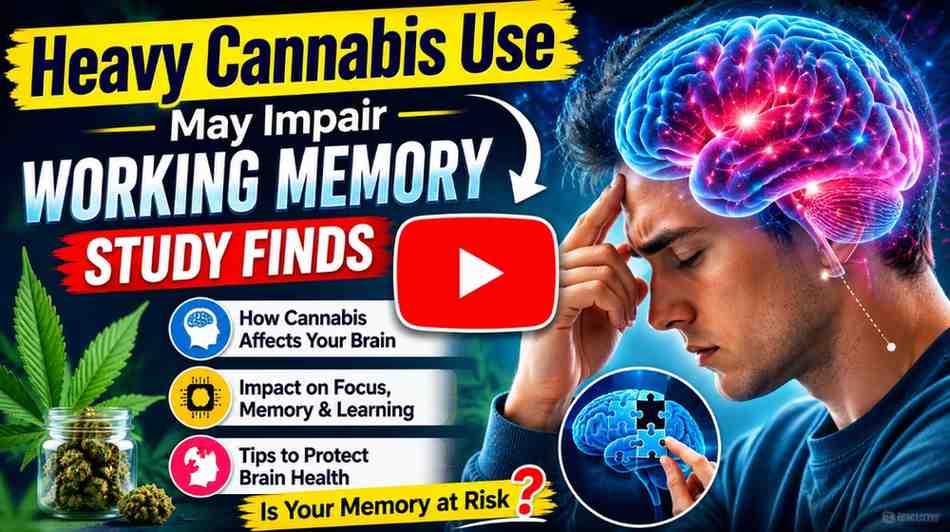

This article explores the latest research, explains the role of working memory, examines how cannabis interacts with the brain, and discusses practical ways to support long-term cognitive health.
Quick Facts About Cannabis and Memory
| Key Finding | Details |
|---|---|
| Recent Study | Large brain-imaging study involving over 1,000 adults |
| Main Concern | Heavy cannabis use linked to reduced working memory activity |
| Brain Areas Affected | Prefrontal cortex and anterior insula |
| Most Impacted Function | Working memory |
| Possible Effects | Reduced focus, learning difficulties, and slower information processing |
| Research Status | Ongoing, with more studies needed |
What Is Working Memory?
Working memory is often described as the brain’s temporary storage system. Unlike long-term memory, which stores information for extended periods, working memory holds information briefly while allowing you to use it to complete tasks.
For example, working memory is involved when you:
- Remember a phone number long enough to dial it
- Follow multi-step instructions
- Solve a math problem mentally
- Read and understand a paragraph
- Participate in conversations
- Plan daily activities
- Make decisions quickly
Working memory serves as the foundation for many higher-level cognitive skills. Researchers consider it one of the most important components of executive functioning.
Functions Supported by Working Memory
- Attention and concentration
- Learning new information
- Problem-solving
- Reasoning
- Planning and organization
- Decision-making
- Multitasking
When working memory functions well, people can process information efficiently and perform complex tasks with ease. When it becomes impaired, everyday activities may become more challenging.
Why Does Memory Matter for Everyday Life?
Memory is far more than simply recalling facts or events. It helps shape our ability to learn, work, communicate, and make informed decisions.
Working memory specifically helps individuals:
Learn More Efficiently
Students depend on working memory to connect new information with knowledge they already possess.
Stay Focused
Working memory allows people to maintain attention while filtering out distractions.
Solve Problems
Complex tasks often require holding multiple pieces of information in mind simultaneously.
Make Better Decisions
Decision-making depends on evaluating options and processing information in real time.
Improve Productivity
Strong working memory supports workplace performance and efficiency.
Because of its importance, researchers closely monitor factors that may influence working memory performance.
Cannabis Use Is Increasing Worldwide
Cannabis remains one of the most widely used psychoactive substances globally.
Several factors have contributed to its growing popularity:
- Recreational legalization
- Medical cannabis programs
- Increased availability
- Reduced social stigma
- Expanded commercial markets
Today, cannabis products come in many forms, including:
- Dried flower
- Oils
- Edibles
- Capsules
- Vapes
- Concentrates
As use becomes more widespread, understanding its effects on brain health becomes increasingly important.
Understanding the Active Compounds in Cannabis
Cannabis contains hundreds of naturally occurring compounds.
The two most well-known are:
THC (Tetrahydrocannabinol)
THC is responsible for most of the psychoactive effects associated with cannabis use. It influences mood, perception, memory, and cognition.
CBD (Cannabidiol)
CBD does not produce the same intoxicating effects as THC and is being studied for various therapeutic applications.
Researchers believe THC plays the primary role in the memory-related changes observed in many cannabis studies.
Heavy Cannabis Use May Impair Working Memory, Study Finds
A recent study published in JAMA Network Open examined brain function in more than 1,000 adults between the ages of 22 and 36.
Researchers used advanced brain imaging techniques to evaluate how cannabis use influenced various cognitive processes.
The study found that individuals with heavy cannabis use histories showed reduced brain activity during working memory tasks.
Among heavy cannabis users:
- Working memory was the most consistently affected cognitive function.
- Brain activation was lower during memory-processing tasks.
- Both recent users and long-term heavy users showed similar patterns.
Researchers observed that approximately:
| User Group | Reduced Working Memory Activity |
|---|---|
| Heavy Lifetime Users | 63% |
| Recent Cannabis Users | 68% |
These findings suggest that cannabis exposure may alter the efficiency of brain networks involved in working memory.
How Researchers Studied the Brain?
The study used Functional Magnetic Resonance Imaging (fMRI).
This technology allows scientists to observe brain activity while participants perform specific mental tasks.
Researchers measured activity during several cognitive functions, including:
- Working memory
- Language processing
- Emotional regulation
- Motor control
- Reward processing
- Social cognition
- Reasoning
Working memory demonstrated the strongest association with cannabis-related changes.
This makes the findings particularly important because working memory supports many aspects of daily functioning.
Brain Regions Linked to Memory Changes
Several key brain regions showed reduced activation among heavy cannabis users.
Prefrontal Cortex
The prefrontal cortex is responsible for:
- Planning
- Decision-making
- Attention control
- Problem-solving
- Working memory
This region is often considered the brain’s executive center.
Dorsolateral Prefrontal Cortex
This area helps individuals:
- Focus attention
- Manage tasks
- Process information
- Organize thoughts
Reduced activity here may affect cognitive efficiency.
Anterior Insula
The anterior insula contributes to:
- Attention regulation
- Emotional awareness
- Cognitive processing
- Integration of information
Researchers found reduced activation in this region during working memory tasks.
How Does Cannabis Affect the Brain?
Cannabis interacts with the body’s endocannabinoid system.
This system helps regulate:
- Memory
- Learning
- Mood
- Sleep
- Pain perception
- Emotional responses
THC binds to cannabinoid receptors located throughout the brain.
Many of these receptors are concentrated in areas involved in memory and learning.
Because THC directly influences these brain networks, repeated exposure may alter neural communication patterns over time.
Short-Term Effects of Cannabis on Memory
Research has consistently shown that cannabis can temporarily affect memory shortly after use.
Common short-term effects include:
- Difficulty concentrating
- Reduced attention span
- Forgetfulness
- Slower information processing
- Challenges in learning new information
These effects typically occur while THC remains active in the body.
The degree of impairment often depends on:
- THC concentration
- Dosage
- Frequency of use
- Individual sensitivity
Long-Term Effects on Cognitive Function
The long-term effects of cannabis remain an active area of research.
However, several studies have reported associations between heavy cannabis use and:
Reduced Working Memory Performance
Users may struggle to hold and manipulate information efficiently.
Slower Processing Speed
Tasks requiring rapid thinking may become more difficult.
Verbal Learning Challenges
Some individuals experience reduced ability to learn and recall verbal information.
Executive Function Changes
Planning, organization, and decision-making may be affected.
Researchers continue investigating whether these changes persist after prolonged abstinence.

What Counts as Heavy Cannabis Use?
Definitions vary across studies, but heavy cannabis use generally involves:
- Daily consumption
- Multiple uses per day
- Long-term regular use
- High cumulative lifetime exposure
In the recent study, heavy users reported more than 1,000 lifetime cannabis exposures.
This distinction is important because occasional use and heavy use may produce different outcomes.
Potential Real-World Consequences
Because working memory affects so many daily functions, impairment may influence multiple areas of life.
| Area | Possible Impact |
|---|---|
| Education | Learning difficulties |
| Employment | Reduced productivity |
| Driving | Slower reaction times |
| Communication | Difficulty following conversations |
| Planning | Increased mistakes |
| Problem-Solving | Reduced efficiency |
Even mild changes can become noticeable when performing demanding mental tasks.
Young Adults May Be Particularly Vulnerable
The study focused on adults aged 22 to 36 years.
This age range is important because many individuals are:
- Completing higher education
- Building careers
- Managing increasing responsibilities
- Developing advanced executive skills
Researchers continue exploring whether cannabis use during adolescence and early adulthood may influence brain development and cognitive performance later in life.
Can Working Memory Recover?
One of the biggest questions surrounding cannabis research is whether memory-related changes are reversible.
Scientists do not yet have a complete answer.
Current research suggests that:
- Some cognitive improvements may occur after abstinence.
- Recovery rates vary between individuals.
- Duration and frequency of use likely matter.
- Age and overall health may influence outcomes.
More long-term studies are needed to determine the full extent of recovery potential.
Factors That May Influence Cognitive Effects
Not everyone experiences cannabis-related cognitive changes in the same way.
Several factors can influence outcomes.
Age at First Use
Earlier exposure may affect developing brain networks differently.
THC Potency
Higher THC concentrations may produce stronger effects.
Frequency of Use
Regular use increases cumulative exposure.
Duration of Use
Long-term use may have different consequences from short-term use.
Genetics
Individual biological differences may affect susceptibility.
Mental Health
Underlying conditions can influence cognitive functioning.
Lifestyle Factors
Sleep, exercise, nutrition, and stress management all affect brain health.
Signs of Working Memory Difficulties
Individuals experiencing working memory challenges may notice:
- Frequently forgetting instructions
- Losing track of conversations
- Difficulty multitasking
- Trouble concentrating
- Forgetting recently learned information
- Increased mental fatigue
- Reduced productivity
These symptoms can arise from many causes, not just cannabis use, including stress, sleep deprivation, anxiety, depression, and medical conditions.
How to Support Healthy Working Memory?
Regardless of cannabis use status, evidence-based lifestyle habits can help maintain cognitive performance.
Prioritize Sleep
Sleep is essential for memory consolidation and brain recovery.
Aim for:
- 7 to 9 hours nightly
- Consistent sleep schedules
- Reduced screen exposure before bed
Exercise Regularly
Physical activity supports:
- Brain blood flow
- Neuroplasticity
- Cognitive function
- Memory performance
Challenge Your Brain
Keep your mind active through:
- Reading
- Learning new skills
- Puzzles
- Strategic games
- Educational courses
Manage Stress
Chronic stress can impair memory.
Helpful techniques include:
- Meditation
- Deep breathing
- Mindfulness practices
- Regular physical activity
Eat a Brain-Healthy Diet
Focus on:
- Fruits
- Vegetables
- Whole grains
- Healthy fats
- Lean proteins
Stay Socially Connected
Meaningful social interactions stimulate cognitive activity and support mental wellness.
The Importance of Ongoing Research
Cannabis research continues to evolve rapidly.
Scientists are working to better understand:
- Long-term cognitive effects
- Recovery following abstinence
- Differences between occasional and heavy use
- Effects of varying THC concentrations
- Individual risk factors
As legalization expands and cannabis products become increasingly potent, ongoing research will play a critical role in helping individuals make informed decisions about their health.
Conclusion
The latest research provides important insights into how cannabis may influence brain function. A large brain-imaging study found that heavy cannabis use was associated with reduced activity in brain regions responsible for working memory, suggesting that frequent or long-term exposure may affect cognitive performance.
Because working memory plays a central role in learning, concentration, problem-solving, and decision-making, these findings are particularly relevant for students, professionals, and anyone interested in maintaining optimal brain health.
While researchers continue exploring whether these effects are reversible, the study highlights the importance of understanding how lifestyle choices influence cognitive function.
Supporting brain health through quality sleep, regular exercise, mental stimulation, stress management, and healthy nutrition remains one of the most effective ways to protect memory and cognitive performance throughout life.
References
About Us