
What Part Of The Brain Controls Intelligence? Science Explained
Intelligence is one of the most fascinating abilities of the human brain. It allows us to solve problems, learn new information, make decisions, understand complex ideas, and adapt to changing situations.
The prefrontal cortex, located in the frontal lobe, plays a major role in intelligence. However, intelligence is not controlled by a single brain region.
Instead, it depends on communication between several interconnected areas, including the frontal and parietal lobes, temporal regions, and networks involved in memory and attention.
Understanding how these brain regions work together helps explain human reasoning, problem-solving, learning, and intellectual performance.
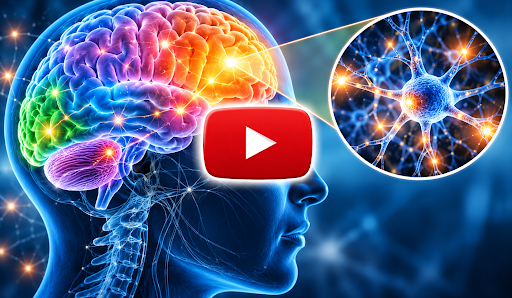
👉 DON’T TRY THIS “WHAT PART OF THE BRAIN CONTROLS INTELLIGENCE” UNTIL YOU SEE THIS
This guide explores what part of the brain controls intelligence, including the frontal lobe, prefrontal cortex, memory, reasoning, cognitive functions, and scientific evidence.
What Part of the Brain Controls Intelligence?
The frontal lobe, particularly the prefrontal cortex, is strongly associated with higher-order thinking and intelligent behavior. It supports planning, decision-making, working memory, attention, and cognitive flexibility.
However, neuroscientists recognize that intelligence involves a distributed network rather than one specific intelligence center.
Important brain regions include:
-
Prefrontal cortex: Supports reasoning, planning, and complex decisions.
-
Parietal lobe: Contributes to numerical processing, spatial awareness, and information integration.
-
Temporal lobe: Supports language comprehension, knowledge, and memory.
-
Hippocampus: Helps form and organize new memories.
-
Anterior cingulate cortex: Contributes to attention, error monitoring, and cognitive control.
These regions communicate through neural connections, allowing the brain to combine information and perform demanding mental tasks.
How Does the Brain Control Human Intelligence?
Human intelligence emerges from coordinated activity across multiple brain networks. Neurons transmit electrical and chemical signals, allowing different regions to exchange information.
When solving a mathematical problem, for example, the brain may recruit networks responsible for working memory, numerical understanding, attention, and logical reasoning.
Researchers distinguish several important cognitive abilities:
Fluid Intelligence
- Fluid intelligence describes the ability to solve unfamiliar problems, recognize patterns, and reason through situations without depending heavily on previously learned knowledge.
Crystallized Intelligence
- Crystallized intelligence involves accumulated knowledge, vocabulary, experience, and learned skills. Language-related and memory-associated regions contribute significantly to these abilities.
Executive Intelligence
- Executive functions help individuals organize behavior, resist distractions, regulate impulses, and achieve goals. The prefrontal cortex plays a central role in these processes, although executive functioning is not identical to general intelligence.
👉 DON’T TRY THIS “WHAT PART OF THE BRAIN CONTROLS INTELLIGENCE” UNTIL YOU SEE THIS
The Frontal Lobe: A Major Brain Region for Intelligence
The frontal lobe occupies the front portion of the cerebral cortex, behind the forehead.
It contributes to some of the brain’s most sophisticated cognitive functions, including planning, reasoning, judgment, and behavioral regulation.
Prefrontal Cortex and Logical Thinking
The prefrontal cortex helps people evaluate alternatives, organize information, and select appropriate responses.
Working Memory and Problem-Solving
Working memory allows the brain to temporarily hold and manipulate information. It is essential for following instructions, performing mental calculations, and understanding complicated conversations.
Decision-Making and Cognitive Flexibility
Cognitive flexibility allows people to change strategies when circumstances change. The frontal lobe contributes to this ability by helping individuals evaluate feedback, suppress ineffective responses, and adapt their behavior.
How Does the Parietal Lobe Contribute to Intelligence?
The parietal lobe is located toward the upper rear portion of the cerebral cortex. It helps integrate sensory information and contributes to spatial reasoning, attention, and mathematical processing.
Mathematical and Numerical Intelligence
Specific parietal regions, including the intraparietal sulcus, participate in numerical representation and quantity processing.
Spatial Reasoning
Spatial reasoning involves understanding shapes, distances, directions, and relationships between objects.
The Temporal Lobe and Its Role in Intelligence
The temporal lobes are located on both sides of the brain, near the ears. They contribute to auditory processing, language, recognition, and long-term knowledge.
Language and Verbal Intelligence
- Language-related temporal regions help individuals understand spoken words and access word meanings.
- These abilities contribute to verbal reasoning, reading comprehension, and communication. However, language processing depends on networks extending beyond the temporal lobes.
Memory and Knowledge Retrieval
- The medial temporal lobe contains structures involved in learning and memory. These systems help people acquire new information and connect experiences with existing knowledge.
- Memory is essential for many intellectual activities, but intelligence and memory are not interchangeable.
Does the Hippocampus Control Intelligence?
The hippocampus is a structure located deep within the medial temporal lobe. Its primary role involves forming and consolidating certain types of long-term memories.
Although the hippocampus does not independently control intelligence, it contributes to learning and the acquisition of knowledge.
For example, remembering information from a science lesson requires memory systems, while applying that information to a new problem also recruits reasoning networks.
Damage to the hippocampus may severely impair the formation of new memories without eliminating every aspect of reasoning or intellectual ability.

👉 DON’T TRY THIS “WHAT PART OF THE BRAIN CONTROLS INTELLIGENCE” UNTIL YOU SEE THIS
What Is the Parieto-Frontal Integration Theory of Intelligence?
One influential scientific explanation is the Parieto-Frontal Integration Theory, commonly called P-FIT.
Proposed by researchers Rex Jung and Richard Haier, this theory suggests that intelligence depends partly on efficient communication between frontal and parietal brain regions.
Its proposed process involves several stages:
-
Sensory regions receive and interpret information.
-
Parietal regions integrate and organize relevant information.
-
Frontal networks evaluate information and support reasoning.
-
Communication between regions enables complex cognitive performance.
P-FIT is a research model rather than a complete explanation of intelligence. Nevertheless, it provides a useful framework for understanding why multiple brain regions contribute to intellectual abilities.
Does Brain Size Determine Intelligence?
A common question is whether people with larger brains are naturally more intelligent.
Research has identified a modest statistical association between overall brain volume and intelligence test performance.
Several other factors matter, including:
-
Organization of neural networks.
-
White matter connectivity.
-
Development of cortical regions.
-
Efficiency of information processing.
-
Learning experiences and environmental influences.
The relationship between brain structure and intelligence is complex. A larger brain does not automatically mean better reasoning, creativity, or problem-solving abilities.
Which Side of the Brain Controls Intelligence?
Popular explanations sometimes describe the left hemisphere as logical and the right hemisphere as creative.
Although certain cognitive functions show hemispheric specialization, the idea that people are exclusively left-brained or right-brained is misleading.
The left hemisphere is often especially important for language processing, while the right hemisphere contributes to several aspects of spatial attention and interpretation.
The corpus callosum connects the hemispheres and enables information exchange between them. Therefore, intelligence cannot accurately be assigned to only one side of the brain.
How Do Brain Connections Affect Intelligence?
The brain contains billions of neurons that communicate through specialized connections called synapses. White matter pathways connect distant brain regions, supporting communication across neural networks.
Efficient communication may help the brain coordinate attention, memory, and reasoning during demanding tasks.
Researchers study these connections using techniques such as functional magnetic resonance imaging and diffusion MRI.
Functional imaging can reveal patterns of activity associated with cognitive tasks, while diffusion imaging provides information about the organization of white matter pathways.
Can Brain Damage Affect Intelligence?
Brain injuries can affect intellectual performance depending on their location, severity, and the networks involved.
Damage to the prefrontal cortex may interfere with planning, concentration, judgment, and behavioral control.
Neurorehabilitation, occupational therapy, speech-language therapy, and individualized support may help people recover or compensate for certain difficulties.
Sudden confusion, speech difficulty, weakness, or other new neurological symptoms require urgent medical evaluation.
Does Intelligence Change as the Brain Ages?
Brain development and aging influence different cognitive abilities in different ways. During childhood and adolescence, neural networks continue developing through learning, experience, and biological maturation.
Later in life, processing speed and certain aspects of fluid reasoning may decline, while vocabulary and accumulated knowledge can remain relatively strong.
Education, physical activity, social engagement, and management of medical conditions may support cognitive health throughout adulthood.
👉 DON’T TRY THIS “WHAT PART OF THE BRAIN CONTROLS INTELLIGENCE” UNTIL YOU SEE THIS
How to Support Brain Health and Cognitive Performance
Although no lifestyle habit guarantees a higher IQ, several evidence-informed practices support the brain’s ability to function effectively.
Get Consistent, Quality Sleep
Sleep contributes to memory consolidation, attention, emotional regulation, and learning. Adults generally benefit from approximately seven to nine hours of sleep each night, although individual needs vary.
Exercise Regularly
Physical activity supports cardiovascular health and cerebral blood flow. Regular aerobic exercise and strength training can also contribute to long-term cognitive health.
Maintain a Balanced Diet
A nutritious eating pattern provides essential nutrients involved in normal nervous system functioning. Vegetables, fruits, whole grains, legumes, nuts, and fish can form part of a brain-supportive diet.
Challenge Your Brain
Reading, learning languages, practicing musical instruments, and developing unfamiliar skills encourage continued learning.
Manage Stress and Chronic Health Conditions
Persistent stress can interfere with concentration, sleep, and memory. Managing blood pressure, diabetes, hearing difficulties, and other health conditions can also support cognitive well-being.
Common Myths About Intelligence and the Brain
Myth: Intelligence comes entirely from the frontal lobe.
Fact: Frontal regions are important, but intelligence involves distributed neural networks.
Myth: Humans use only 10% of their brains.
Fact: Different brain regions perform important functions, and brain activity extends throughout the organ.
Myth: Higher IQ always means a larger brain.
Fact: Brain volume is only one factor associated with cognitive performance.
Myth: Intelligence stops developing after childhood.
Fact: Learning and cognitive adaptation continue throughout life, although different abilities follow different developmental patterns.
Conclusion
Understanding what part of the brain controls intelligence reveals that human thinking is more complex than the activity of a single brain region.
The prefrontal cortex is especially important for reasoning, planning, and decision-making, while the parietal lobes contribute to information integration, mathematical processing, and spatial reasoning.
Maintaining healthy sleep habits, exercising regularly, eating nutritious foods, and continuing to learn can support cognitive functioning throughout life.
Ultimately, intelligence reflects the coordinated activity of multiple brain systems, shaped by biology, development, experience, and environment.
👉 DON’T TRY THIS “WHAT PART OF THE BRAIN CONTROLS INTELLIGENCE” UNTIL YOU SEE THIS
References
https://en.wikipedia.org/wiki/Human_intelligence
https://www.healthline.com/health/brain
https://pubmed.ncbi.nlm.nih.gov/17655784/
About Us
