What Happens to Your Memory When You Take Omega-3 Supplements as You Age
What Happens to Your Memory When You Take Omega-3 as You Age
Introduction
Memory changes are a natural part of aging. Many people begin to notice subtle shifts over time—misplacing items more often, taking longer to recall names, or struggling with mental clarity during busy days.
One nutrient that has gained significant attention in brain health research is omega-3 fatty acids. These essential fats, commonly found in fish oil and certain plant sources, play a key role in brain structure and function.
As we age, the body’s natural levels of omega-3s can decline, which has led researchers to explore whether supplementation may help support memory and cognitive performance.
This article explores what actually happens to your memory when you take omega-3 supplements as you age, how they interact with the brain, what the science suggests, and what realistic outcomes you can expect over time.
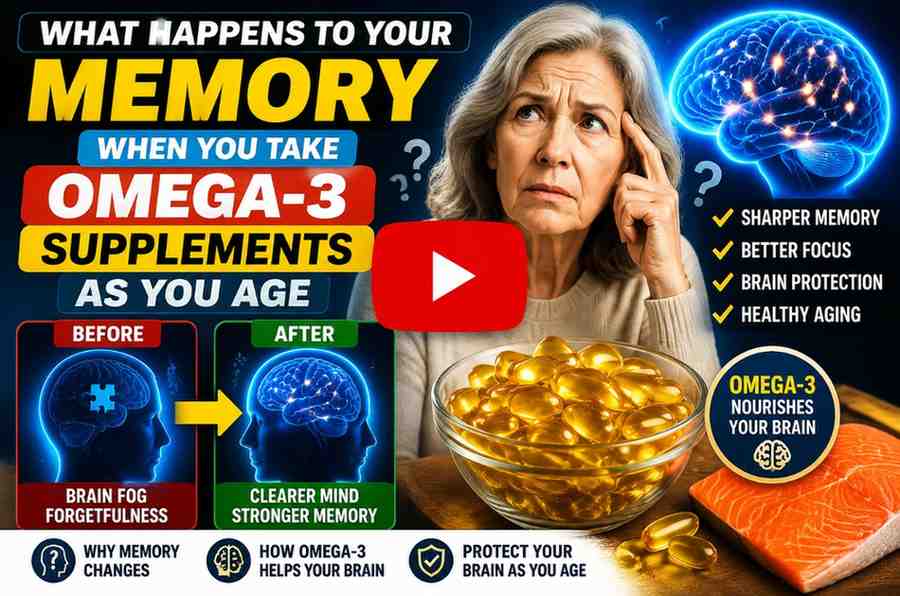

Omega-3 supplements may support brain health, memory, focus, and cognitive function as you age for better mental clarity.
Understanding How Memory Changes With Age
To understand the role of omega-3s, it helps to first understand what happens to memory as we age.
The brain does not “shut down” with age, but it does undergo gradual structural and chemical changes:
- Communication between neurons becomes less efficient
- Levels of certain neurotransmitters may decline
- Blood flow to the brain can be reduced slightly
- Inflammation levels may increase
- Brain cell membranes can become less flexible
These changes can affect different types of memory:
- Short-term memory: remembering recent events or information
- Working memory: holding and using information mentally
- Long-term memory: storing and retrieving life experiences
Normal aging does not usually erase memories, but it can slow down retrieval and processing speed. This is where nutrients like omega-3 fatty acids are believed to play a supporting role.
What Are Omega-3 Fatty Acids?
Omega-3 fatty acids are essential fats that the body cannot produce on its own. This means they must come from diet or supplementation.
The three main types include:
- EPA (Eicosapentaenoic Acid) – supports anti-inflammatory processes
- DHA (Docosahexaenoic Acid) – a major structural component of the brain
- ALA (Alpha-linolenic Acid) – found in plant sources and partially converted into EPA and DHA
DHA is particularly important for brain health. It is highly concentrated in the brain’s gray matter and plays a structural role in neuron membranes.
As people age, maintaining adequate DHA levels becomes increasingly important for preserving communication between brain cells.
How Omega-3 Supports Brain Function
Omega-3 fatty acids support the brain through several key mechanisms:1. Supporting Neuron Structure
Brain cells (neurons) rely on flexible membranes to communicate effectively. DHA helps maintain this flexibility, allowing signals to pass more efficiently between cells.
When membrane fluidity is healthy, the brain can process information faster and more clearly.
2. Improving Communication Between Brain Cells
Efficient memory depends on strong synaptic connections—the communication points between neurons. Omega-3s help support synaptic plasticity, which is the brain’s ability to adapt and form new connections.
This process is essential for learning and memory retention.
3. Reducing Age-Related Inflammation
Chronic low-grade inflammation in the brain is associated with cognitive decline. Omega-3s have natural anti-inflammatory properties that may help reduce this burden over time.
Lower inflammation supports a healthier environment for neurons to function.
4. Supporting Blood Flow to the Brain
Healthy circulation ensures that brain cells receive oxygen and nutrients. Omega-3s may help support vascular health, indirectly benefiting cognitive performance and mental clarity.
What Happens to Memory When You Take Omega-3s Regularly?
The effects of omega-3 supplementation on memory are not immediate or dramatic. Instead, they tend to develop gradually and subtly over time. Here’s what research and user experiences generally suggest:
1. Improved Recall Speed in Everyday Tasks
Many individuals report that they are able to retrieve information more quickly with consistent omega-3 intake. This does not mean perfect memory, but rather smoother access to stored information.
Examples include:
- Remembering names slightly faster
- Recalling where items were placed
- Less “mental lag” during conversations
This improvement is often linked to better neuronal communication efficiency.
2. Better Focus and Mental Clarity
Memory is closely tied to attention. If attention improves, memory encoding also improves.
Omega-3s may support:
- Longer attention span during reading or work
- Reduced mental fatigue
- Improved clarity during decision-making
As a result, information is more effectively stored in the brain in the first place.
3. Slower Cognitive Decline With Age
One of the most important areas of research is whether omega-3s can slow age-related cognitive decline.
Findings suggest that individuals with higher omega-3 intake may experience:
- More stable memory function over time
- Less steep decline in cognitive performance
- Better preservation of brain volume in aging regions
While omega-3s are not a cure for dementia or Alzheimer’s disease, they may support long-term brain resilience.
4. Improved Working Memory Capacity
Working memory is your ability to hold and manipulate information temporarily—such as remembering a phone number long enough to dial it.
Omega-3 supplementation may help:
- Improve mental multitasking
- Reduce forgetfulness during complex tasks
- Support smoother problem-solving ability
This effect is especially noticeable in older adults with lower baseline omega-3 intake.
5. Mood Stability and Memory Connection
Mood and memory are deeply connected. Stress, anxiety, and depression can significantly impair cognitive function.
Omega-3s may help support emotional balance, which indirectly benefits memory by:
- Reducing stress-related forgetfulness
- Improving sleep quality
- Supporting emotional regulation
A calmer brain often performs better in recall and learning tasks.

Memory Functions That May Be Supported by Omega-3s
Memory is not a single process. It involves multiple cognitive systems working together.
Omega-3 supplementation may potentially support several aspects of memory.
Working Memory
Working memory helps people temporarily hold and manipulate information.
Examples include:
- Remembering a phone number long enough to dial it
- Following multi-step instructions
- Solving mental calculations
Some studies suggest Omega-3 intake may support healthy working memory performance.
Episodic Memory
Episodic memory involves recalling personal experiences and events.
Examples include:
- Remembering birthdays
- Recalling conversations
- Remembering where you parked your car
Maintaining healthy brain cell communication may support this type of memory.
Learning and Information Retention
Learning new skills requires the brain to create and strengthen neural connections.
Omega-3 fatty acids may support processes involved in learning and memory consolidation.
Attention and Focus
Memory and attention are closely connected.
Difficulty focusing often leads to poor memory performance because information is never effectively encoded in the first place.
By supporting healthy cognitive function, Omega-3s may indirectly contribute to improved memory retention through better concentration.
Signs You May Not Be Getting Enough Omega-3s
While only healthcare professionals can assess nutritional status accurately, some people may not consume adequate Omega-3 fatty acids through diet alone.
Potential indicators include:
- Low fish consumption
- Highly processed dietary patterns
- Limited intake of nuts and seeds
- General concerns about brain and heart health
Many adults, especially older individuals, consume significantly less Omega-3 than recommended for optimal wellness.
Best Dietary Sources of Omega-3
Although supplements are popular, obtaining nutrients through food remains important.
Excellent dietary sources of Omega-3 fatty acids include:
Fatty Fish
- Salmon
- Sardines
- Mackerel
- Herring
- Anchovies
- Trout
Plant Sources
- Flaxseeds
- Chia seeds
- Walnuts
- Hemp seeds
Fortified Foods
Some foods are enriched with Omega-3 fatty acids, including:
- Eggs
- Dairy products
- Certain beverages
People who do not regularly consume these foods may consider discussing supplementation with a healthcare provider.
How Aging Affects Omega-3 Levels
As the body ages, several factors can reduce omega-3 availability:
- Lower dietary intake of fatty fish or healthy fats
- Reduced absorption efficiency in the digestive system
- Increased oxidative stress affects brain cells
- Higher inflammatory load in the body
These changes can gradually affect brain performance if not addressed through diet or supplementation.
Who May Benefit Most from Omega-3 Supplementation?
Omega-3 supplements may be especially helpful for:
- Adults over 40 experiencing early memory changes
- Older adults noticing cognitive slowing
- Individuals with low fish or omega-3 intake
- People under chronic stress
- Those concerned about long-term brain health
However, benefits can vary depending on diet, genetics, and overall lifestyle.
How Long Does It Take to Notice Changes?
Omega-3s are not fast-acting cognitive enhancers. They work gradually by supporting brain structure over time.
Typical timeline expectations:
- 2–4 weeks: subtle changes in focus and mental energy
- 6–12 weeks: improved recall and cognitive consistency
- 3–6 months: more noticeable stability in memory and clarity
Consistency is essential for meaningful results.
Limitations You Should Be Aware Of
While omega-3s offer promising support, they are not a miracle solution.
Important limitations include:
- They do not reverse severe cognitive disorders
- Effects vary widely between individuals
- They work best alongside healthy lifestyle habits
- Quality and dosage of supplements matter significantly
Omega-3s should be seen as one part of a broader brain health strategy.
Supporting Memory Beyond Omega-3s
For best results, omega-3 supplementation should be combined with other brain-supportive habits:
- Regular physical exercise
- Quality sleep (7–9 hours)
- Mental stimulation (reading, puzzles, learning)
- Balanced diet rich in antioxidants
- Stress management techniques
These habits work together to support long-term cognitive health.
Who May Benefit the Most From Omega-3 Supplementation
Omega-3 supplements may be particularly helpful for:
- Older adults with declining dietary intake
- Individuals with low fish consumption
- People experiencing mild memory lapses
- Those seeking long-term brain health support
- Individuals with inflammatory lifestyle patterns
They are generally considered safe for most adults when used appropriately.
Conclusion
Memory naturally changes with age, but those changes are not always fixed or irreversible in their impact. Omega-3 fatty acids play a meaningful role in maintaining brain structure, supporting neuron communication, and reducing inflammation that can affect cognitive performance.
With consistent intake over time, many people may experience better recall, improved focus, and greater mental clarity as they age. While results are gradual and vary from person to person, the overall evidence suggests that omega-3s can be a valuable part of a long-term brain health strategy.
Used alongside a healthy lifestyle, omega-3 supplementation may help support a more resilient, active, and sharp mind throughout the aging process.
References
https://www.webmd.com/diet/supplement-guide-omega-3-fatty-acids
https://www.healthline.com/nutrition/omega-3-benefits
https://en.wikipedia.org/wiki/Aging_brain
About Us