
Red Light Therapy for Neuropathy in Hands: Does It Work?
Red light therapy may help some people with neuropathy-related pain, tingling, and other symptoms, but it should not be considered a proven cure for nerve damage in the hands.
The scientific term for many therapeutic light treatments is photobiomodulation (PBM), also called low-level light therapy or low-level laser therapy.
Research suggests that photobiomodulation may influence inflammation, cellular energy production, pain signaling, and nerve recovery.
However, studies have used different wavelengths, doses, devices, and treatment schedules, making it difficult to recommend one universal home treatment.
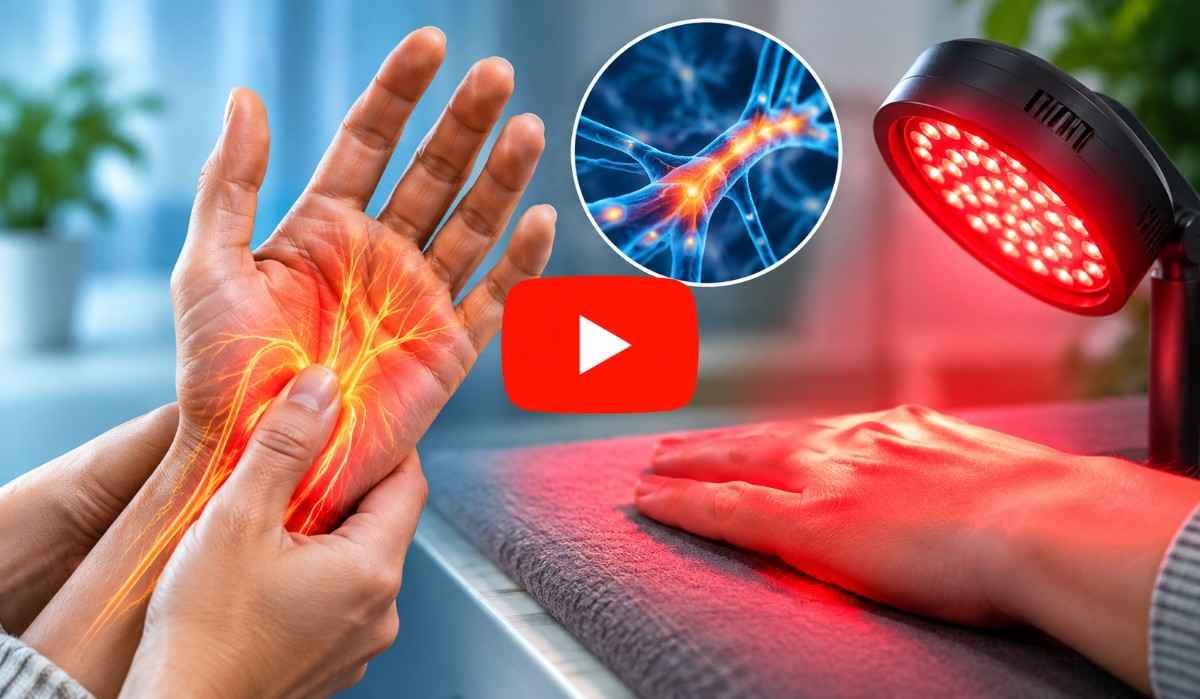

In this guide, we’ll explain how red light therapy may work for hand neuropathy, what current research shows, potential benefits and risks, common mistakes, safety considerations, and whether this treatment is worth considering.
What Is Red Light Therapy for Neuropathy?
Red light therapy uses specific wavelengths of visible red or near-infrared light directed toward the body.
Unlike ultraviolet light, therapeutic red and near-infrared light is generally intended to stimulate biological processes without intentionally damaging tissue.
For neuropathy, the treatment is usually discussed under the broader term photobiomodulation. Depending on the device, light may be delivered using LEDs or therapeutic lasers.
The goal is not simply to warm the hands. Researchers are investigating whether particular wavelengths and doses can influence cellular activity and the local environment around irritated or injured nerves.
This distinction matters because an ordinary red-colored lamp is not automatically equivalent to a medical photobiomodulation device.
Can Red Light Therapy Help Neuropathy in the Hands?
Possibly, but the evidence is still developing.
Clinical research on peripheral neuropathy has produced encouraging findings in some groups, including people with diabetic neuropathy and chemotherapy-induced peripheral neuropathy.
Some studies have reported improvements in pain, sensory symptoms, or overall neuropathy scores.
However, much of the research has focused on the feet or broader peripheral neuropathy, rather than neuropathy specifically isolated to the hands.
A 2026 pilot trial in diabetic peripheral neuropathy reported short-term reductions in neuropathic pain and some symptoms after local photobiomodulation, but the researchers emphasized the small sample size and lack of definitive evidence that PBM was superior to sham treatment.
Therefore, it is reasonable to describe red light therapy as promising but not established as a stand-alone treatment for hand neuropathy.
How Might Red Light Therapy Work on Nerves?
The proposed mechanism is one reason photobiomodulation has attracted attention in neuropathy research.
Red and near-infrared light can interact with biological tissues. Researchers have proposed that light may influence mitochondrial activity and cellular signaling, potentially affecting energy production, oxidative stress, inflammation, and tissue repair.
For peripheral nerves, researchers are also studying whether PBM can influence processes involved in nerve regeneration and functional recovery.
The important point is that these mechanisms do not mean that shining light on the hand will automatically repair damaged nerves.
The biological response depends on factors such as:
- Wavelength
- Light intensity
- Energy delivered
- Treatment duration
- Treatment frequency
- Distance from the skin
- Target tissue
- Type and cause of neuropathy
That is why simply choosing the brightest red-light device isn’t a scientifically sound approach.
Which Neuropathy Symptoms Might Improve?
If photobiomodulation helps, the goal is usually symptom improvement rather than immediate reversal of nerve damage.
Symptoms that researchers have investigated include:
✅ Burning or Tingling
Some peripheral neuropathy studies have reported reductions in neuropathic symptoms following PBM. However, results vary by study and condition.
✅ Nerve Pain
Pain reduction is one of the most frequently investigated outcomes. Recent research continues to examine whether PBM can reduce chronic neuropathic pain.
✅ Numbness and Altered Sensation
Numbness is more complicated. A reduction in pain does not necessarily mean that damaged nerves have fully recovered.
Some studies have measured sensory changes using clinical tests, but evidence remains insufficient to promise restoration of normal sensation in the hands.
✅ Hand Discomfort
People sometimes explore red light therapy when hand neuropathy interferes with typing, gripping objects, sleeping, or everyday activities.
Assess improvement based on actual function, not just how warm or relaxed the hands feel after treatment.
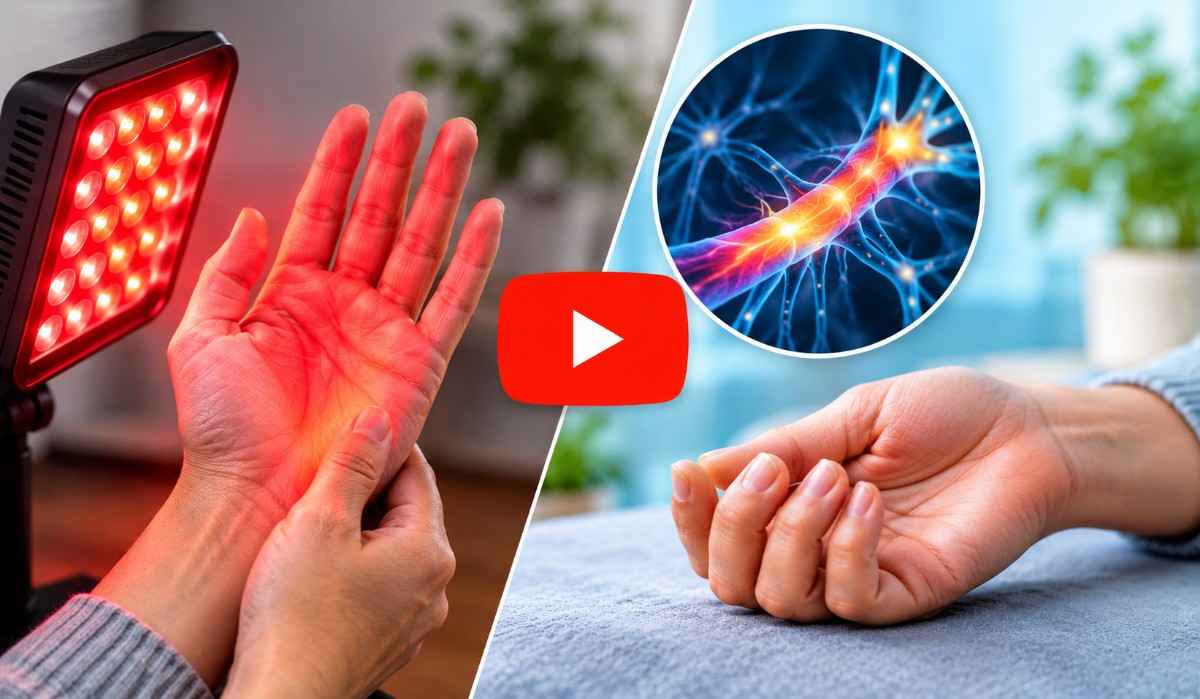
Red Light vs. Near-Infrared Light for Neuropathy
One common online misconception is that all red light therapy is the same.
It is not.
Photobiomodulation research has used both visible red and near-infrared wavelengths. Near-infrared light can behave differently in tissue because wavelength influences how deeply light penetrates.
For example, clinical PBM studies have investigated wavelengths around the 630–660 nm range as well as near-infrared wavelengths such as approximately 800–900 nm.
That does not mean that one wavelength is universally best for hand neuropathy.
No simple rule says a specific wavelength will repair every type of peripheral nerve damage.
What Does the Research Actually Show?
The evidence is mixed enough that cautious language is important.
A randomized controlled trial involving people with chemotherapy-induced peripheral neuropathy found significant improvements in neuropathy scores among participants receiving PBM compared with sham treatment.
This suggests that photobiomodulation deserves further investigation.
Other studies have produced less convincing results. For example, a randomized trial investigating monochromatic infrared photoenergy for diabetic peripheral neuropathy found no significant improvements in several major outcomes.
More recent research continues to produce encouraging but preliminary findings.
A 2026 pilot study of diabetic peripheral neuropathy found reductions in pain and selected symptoms, but the authors noted limitations, including the small sample size and short follow-up.
This pattern explains the current evidence well: there are promising signals, but not enough consistency to call red light therapy a proven cure for neuropathy.
Does Red Light Therapy Repair Damaged Nerves?
This is one of the most important questions to answer carefully.
Laboratory and experimental research suggests that photobiomodulation may influence nerve regeneration and recovery.
Some systematic reviews have also reported potentially beneficial effects on injured peripheral nerves.
But evidence from laboratory models cannot automatically be applied to people with chronic neuropathy.
Nerve damage can result from diabetes, chemotherapy, compression, nutritional deficiencies, alcohol exposure, autoimmune disorders, infections, injuries, and other conditions.
Treating the light-responsive biological environment is not the same thing as removing the cause of nerve damage.
Therefore, claims such as “red light permanently regenerates damaged nerves” or “red light reverses neuropathy” go beyond what current evidence can confidently establish.
Could Red Light Therapy Help Carpal Tunnel Symptoms?
This is another area where people may confuse different conditions.
Carpal tunnel syndrome involves compression of the median nerve at the wrist. It can cause numbness, tingling, burning, or weakness in parts of the hand.
Although photobiomodulation has been investigated for pain and musculoskeletal conditions, evidence for using a consumer red-light device as a definitive treatment for carpal tunnel syndrome is not strong enough to replace established evaluation and treatment.
If hand symptoms are concentrated in the thumb, index finger, middle finger, and part of the ring finger, particularly when symptoms worsen at night, carpal tunnel syndrome is one possible explanation.
A clinician can help determine whether nerve compression, generalized neuropathy, or another condition is responsible.
How to Use Red Light Therapy for Hand Neuropathy Safely
There is no universally accepted home protocol specifically for hand neuropathy.
Clinical studies use carefully defined wavelengths, energy densities, treatment durations, and schedules. A consumer device may have very different specifications.
If someone chooses to try a red-light device, several precautions are sensible:
- Follow the manufacturer’s instructions rather than creating an aggressive schedule.
- Avoid assuming that longer exposure produces better results.
- Protect the eyes when the device instructions recommend eye protection.
- Stop if treatment causes significant pain, burning, skin irritation, or worsening symptoms.
- Do not use a device over damaged skin unless appropriate medical guidance has been provided.
- Keep track of symptoms and hand function rather than judging effectiveness immediately after a session.
People with reduced sensation need extra caution because they may not accurately feel excessive heat or irritation.
Common Mistakes People Make
Mistake 1: Using Any Red Lamp
A decorative red bulb is not necessarily a therapeutic photobiomodulation device.
Mistake 2: Assuming More Light Is Better
PBM follows dose-dependent biological principles. Increasing exposure indefinitely is not automatically better.
Mistake 3: Treating the Symptom Without Finding the Cause
Neuropathy can have many causes. Treating only the discomfort may allow an underlying problem to continue unnoticed.
Mistake 4: Expecting Immediate Nerve Regrowth
Nerves do not simply regenerate overnight because they are exposed to light. Any potential neurological improvement should be evaluated over an appropriate period.
Mistake 5: Stopping Necessary Treatment
Red light therapy should not be used as a reason to stop prescribed medications, diabetes management, physical therapy, or treatment for an underlying neurological condition.
Is Red Light Therapy Safe for Neuropathy?
Red light therapy is generally considered to have a relatively favorable safety profile when appropriately used, but “natural” or “noninvasive” does not mean risk-free.
Potential problems can include temporary skin irritation, discomfort, eye-related concerns from inappropriate exposure, or excessive heat depending on the device.
People taking medications that increase light sensitivity should ask a healthcare professional whether phototherapy is appropriate.
Extra caution is also reasonable for people with significant loss of sensation because they may not recognize excessive warmth or irritation.
Importantly, home devices vary considerably. FDA clearance or registration of a device for a particular purpose should not be interpreted as proof that it cures every type of neuropathy.
Red Light Therapy and Diabetes-Related Neuropathy
Diabetes is one of the most common causes of peripheral neuropathy.
High blood glucose over time can contribute to nerve damage and changes in the blood vessels that supply nerves. Symptoms may include burning, tingling, numbness, pain, and altered sensation.
For someone with diabetic neuropathy in the hands, controlling the underlying diabetes remains fundamental.
Photobiomodulation may eventually become a useful complementary therapy, but it should not replace blood glucose management, foot and hand protection, appropriate medications, or regular medical monitoring.
Research into PBM for diabetic neuropathy is still developing, including newer randomized studies.
What About Viral Claims and “Miracle” Red Light Devices?
Social media has made red light therapy increasingly popular, but marketing claims often outpace clinical evidence.
Be cautious when a product claims that its light can:
- Completely reverse neuropathy
- Regrow every damaged nerve
- Cure diabetic neuropathy
- Eliminate the need for medication
- Permanently restore sensation
- Work equally well for every cause of neuropathy
These statements are much stronger than the current evidence supports.
A better question is not “Does red light cure neuropathy?” but “Could a properly administered photobiomodulation treatment help reduce symptoms or support recovery in my specific type of neuropathy?”
That question lets the evidence, not advertising, guide the decision.
When Should You See a Doctor for Hand Neuropathy?
Persistent numbness or tingling should not automatically be attributed to aging or poor circulation.
Medical evaluation is particularly important when symptoms are:
- New or rapidly worsening
- Affecting strength or coordination
- Associated with significant weakness
- Causing frequent dropping of objects
- Spreading to other areas
- Associated with severe pain
- Occurring with other neurological symptoms
Sudden weakness or numbness, particularly when accompanied by facial drooping, speech difficulty, severe dizziness, or other sudden neurological changes, requires urgent medical attention.
Finding the cause can make a much bigger difference than choosing a particular light device.
The Bottom Line: Is Red Light Therapy Worth Trying?
Red light therapy for neuropathy in the hands is an emerging area of research. Photobiomodulation may help reduce pain or other neuropathy symptoms in some people, and clinical studies have produced encouraging results.
However, the evidence is not strong enough to say that red light therapy reliably repairs damaged nerves or cures hand neuropathy.
The biggest limitation is that studies use different devices, wavelengths, doses, and patient populations. Research focused specifically on neuropathy isolated to the hands is also more limited than research on general peripheral neuropathy.
For that reason, red light therapy is best viewed as a potential complementary approach, not a replacement for proper diagnosis and evidence-based treatment.
If you are considering it, choose a device with clearly stated specifications, follow its safety instructions, avoid excessive exposure, and discuss the treatment with a healthcare professional if you have significant neuropathy or an underlying medical condition.
The most important takeaway is simple: Red light therapy may have potential for neuropathy symptoms, but current science supports cautious optimism—not miracle-cure claims.
References
- Wikipedia – Low-Level Laser Therapy / Photobiomodulation
https://en.wikipedia.org/wiki/Low-level_laser_therapy
- Healthline – What Is Red Light Therapy and Is It Safe?
https://www.healthline.com/health/red-light-therapy
- WebMD – Red Light Therapy: Effectiveness, Treatment, and Risks
https://www.webmd.com/skin-problems-and-treatments/red-Light-therapy
About Us
