
Memory Tests for Alzheimer’s: Does It Really Work?
Memory changes are a common part of aging, but noticeable problems with remembering information, completing familiar tasks, or managing daily activities may require closer attention.
Memory Tests for Alzheimer’s are designed to evaluate different areas of brain function, including memory, thinking ability, attention, language skills, and problem-solving.
These assessments help healthcare professionals understand whether memory changes are related to normal aging, mild cognitive impairment, Alzheimer’s disease, or other health conditions.


Memory Tests for Alzheimer’s help identify memory changes linked to aging, brain health concerns, and potential contributors to cognitive decline.
Alzheimer’s disease is a progressive neurological condition that affects brain cells responsible for memory, communication, and reasoning.
Early evaluation can help individuals and healthcare providers better understand cognitive changes and make informed decisions about further assessments and care options.
Cognitive screening tests are usually one part of a broader evaluation that may include medical history, physical examinations, laboratory tests, and brain imaging when needed.
Understanding how memory tests work, what they measure, and when they may be recommended can help individuals and families recognize important changes and seek appropriate medical guidance.
What Are Memory Tests for Alzheimer’s?
Memory Tests for Alzheimer’s are structured assessments used to measure how well a person’s brain processes, stores, and recalls information.
These tests are commonly used by doctors, neurologists, and healthcare professionals when someone experiences concerns related to memory loss or changes in thinking abilities.
These assessments do not work as a single test that confirms Alzheimer’s disease. Instead, they provide information about cognitive performance and help determine whether additional evaluation is needed.
A complete Alzheimer’s assessment usually combines memory testing with other medical information to create a clearer understanding of a person’s cognitive health.
Memory tests may evaluate several important brain functions, including:
- Short-term memory
- Long-term memory
- Attention and concentration
- Language and communication skills
- Problem-solving ability
- Visual and spatial understanding
- Planning and decision-making skills
Healthcare professionals use these results to identify patterns of cognitive changes that may be associated with Alzheimer’s or other conditions affecting brain health.
👉 DON’T TRY THIS “MEMORY TESTS FOR ALZHEIMER’S” UNTIL YOU SEE THIS
Why Are Memory Tests Important for Alzheimer’s Detection?
Memory tests matter because early cognitive changes can appear before major difficulties affect everyday life. Identifying these changes helps healthcare providers better understand a person’s condition and recommend appropriate next steps.
Some people may notice occasional forgetfulness, such as misplacing objects or forgetting names. These experiences can happen for many reasons, including stress, sleep problems, medication effects, vitamin deficiencies, or normal aging.
Memory testing can help assess:
📍Identifying Early Cognitive Changes: One of the main purposes of memory tests is to recognize changes in thinking and memory abilities that may require further evaluation. Early screening can help healthcare providers track changes over time.
📍Understanding Memory Performance: Different tests examine different aspects of memory. Some focus on recalling information, while others assess attention, organization, and reasoning skills.
📍Supporting Medical Evaluation: Results from cognitive assessments provide valuable information that doctors can combine with medical history, neurological examinations, and other tests. No single memory test alone can diagnose Alzheimer’s disease.
What Causes Memory Problems Related to Alzheimer’s?
Memory problems can develop because of changes in the brain over time. Alzheimer’s disease is associated with progressive damage to brain cells and changes in communication between neurons.
Brain Cell Changes
🔹Alzheimer’s disease involves changes inside the brain that affect how nerve cells communicate. Over time, these changes can interfere with areas involved in learning, memory, and decision-making.
Age-Related Changes
🔹Aging naturally affects the brain. Some people may experience slower recall or occasional forgetfulness as they get older. However, significant changes that interfere with daily activities may require further evaluation.
Family History and Genetics
🔹A family history of Alzheimer’s disease may increase the likelihood of developing the condition. Certain genetic factors can influence how the disease develops.
Lifestyle and Health Factors
🔹Overall health can influence brain function. Conditions affecting heart health, blood circulation, sleep quality, and metabolic health may also be connected with cognitive changes.
Other Medical Conditions
Memory problems may also occur due to conditions unrelated to Alzheimer’s, including:
- Thyroid problems
- Vitamin deficiencies
- Depression or anxiety
- Certain medications
- Sleep disorders
- Infections or other illnesses
Because many conditions can affect memory, healthcare professionals often perform a detailed evaluation before determining the possible cause.
Common Signs That May Lead to Memory Testing
A healthcare professional may recommend memory testing when someone experiences noticeable changes such as:
- Frequent Forgetfulness: Repeatedly forgetting recent conversations, appointments, or important information may warrant an evaluation of memory function.
- Difficulty Completing Familiar Tasks: Problems completing routine activities that were previously easy may indicate changes in cognitive abilities.
- Trouble Finding Words: Some individuals may experience increasing difficulty expressing thoughts or following conversations.
- Confusion About Time or Place: Getting lost in familiar locations or becoming confused about dates and events may require evaluation.
- Changes in Problem-Solving Ability: Difficulty managing finances, planning activities, or making decisions may reflect changes in executive function.
Types of Memory Tests for Alzheimer’s
Healthcare professionals use different types of cognitive assessments to evaluate memory, thinking abilities, and other areas of brain function. The choice of test depends on the person’s symptoms, medical history, age, education level, and overall health.
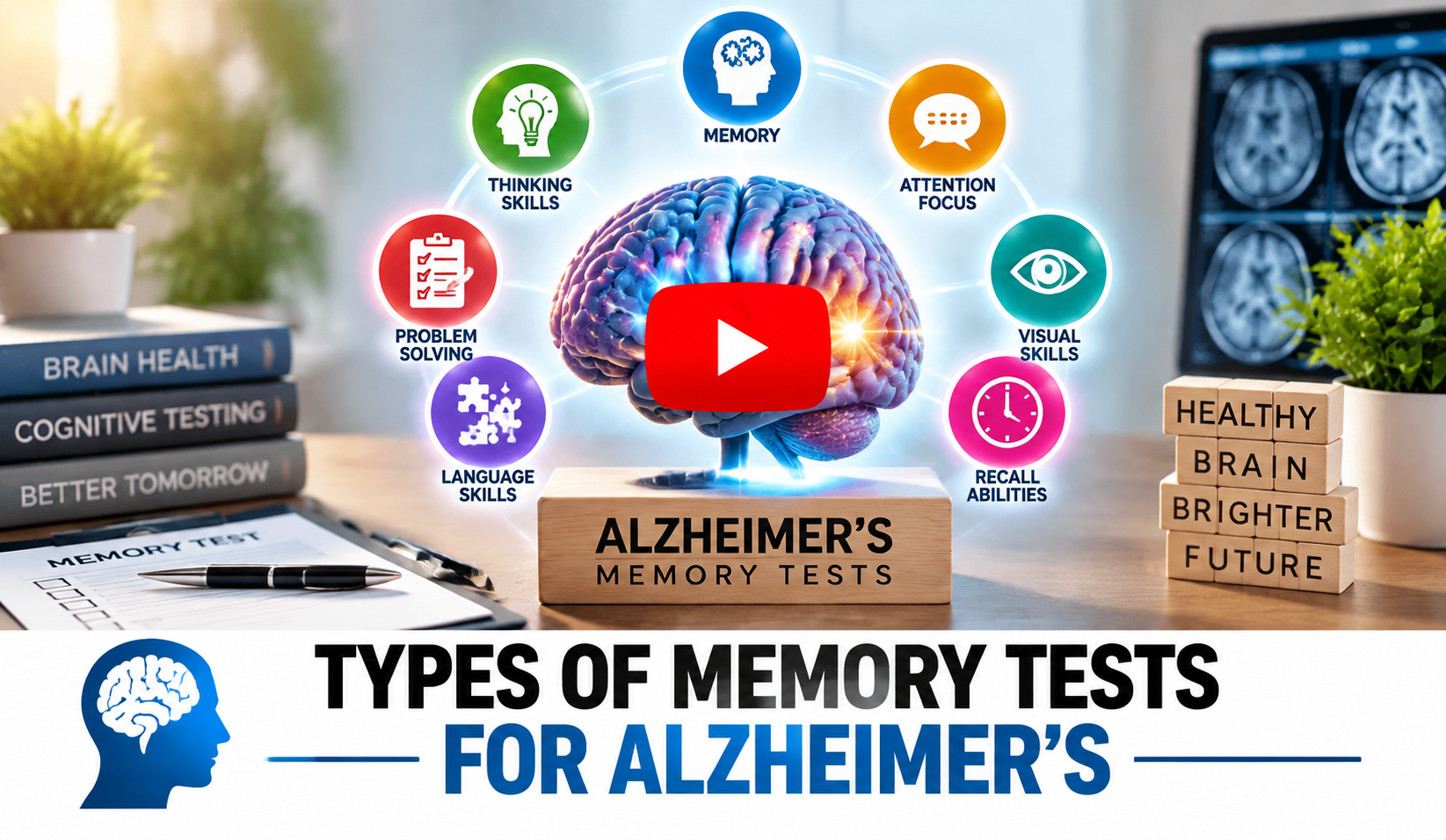
Some commonly used Memory Tests for Alzheimer’s include:
⬩➤ Mini-Mental State Examination (MMSE)
The Mini-Mental State Examination (MMSE) is one of the most widely used cognitive screening tools for evaluating memory and thinking abilities.
During this assessment, a healthcare professional may ask questions and provide simple tasks that measure different cognitive skills, including:
- Orientation to time and place
- Short-term memory recall
- Attention and concentration
- Language abilities
- Following instructions
- Basic problem-solving skills
For example, a person may be asked to remember a short list of words, answer questions about the current date, or complete simple written tasks.
The MMSE provides a general overview of cognitive function. However, clinicians usually use it alongside other medical information because results can be influenced by factors such as education, language, and cultural background.
⬩➤ Montreal Cognitive Assessment (MoCA)
The Montreal Cognitive Assessment (MoCA) is another commonly used screening test that evaluates several areas of thinking and memory.
The MoCA focuses on identifying subtle cognitive changes that may not always appear in basic memory screenings.
This assessment may examine:
- Short-term memory
- Attention
- Concentration
- Language skills
- Visuospatial abilities
- Executive functions
- Abstract thinking
A healthcare professional may ask the individual to complete tasks such as recalling words, drawing shapes, identifying similarities between objects, and completing patterns.
⬩➤ Clock Drawing Test
The Clock Drawing Test is a simple assessment that examines several cognitive skills at the same time.
During this test, an individual may be asked to draw a clock showing a specific time. The healthcare provider evaluates different aspects of the drawing, including:
- Understanding instructions
- Visual-spatial awareness
- Planning ability
- Organization skills
- Attention to detail
Although it appears simple, drawing a clock requires multiple areas of the brain to work together. Changes in performance may provide useful information during a cognitive evaluation.
⬩➤ Saint Louis University Mental Status Examination (SLUMS)
The Saint Louis University Mental Status Examination (SLUMS) is a screening tool used to evaluate memory and cognitive abilities.
The assessment includes questions and activities related to:
- Memory recall
- Attention
- Calculation skills
- Language
- Reasoning
- Everyday problem-solving
Healthcare professionals may use SLUMS as part of a broader evaluation process to understand changes in cognitive function.
⬩➤ Self-Administered Gerocognitive Examination (SAGE)
The Self-Administered Gerocognitive Examination (SAGE) is a written cognitive assessment that allows individuals to complete certain memory and thinking questions independently.
The test evaluates areas such as:
- Memory
- Language
- Calculation
- Reasoning
- Problem-solving
After completion, healthcare professionals review the answers to better understand possible cognitive changes.
SAGE can be useful as an initial screening tool, but professional interpretation is important because many factors can affect memory performance.
⬩➤ Neuropsychological Testing
Neuropsychological testing provides a more detailed evaluation of cognitive abilities. These assessments are usually longer and performed by trained specialists.
Unlike short screening tests, neuropsychological evaluations examine multiple areas of brain function in greater depth.
They may assess:
- Learning ability
- Memory storage and recall
- Attention control
- Processing speed
- Language skills
- Decision-making
- Emotional and behavioral factors
These tests can help healthcare providers understand specific patterns of cognitive strengths and challenges.
How Do Memory Tests for Alzheimer’s Work?
Memory tests typically involve a series of questions and activities designed to measure different cognitive abilities.
The testing process may include several steps:
Step 1: Reviewing Medical History
Before performing memory testing, healthcare professionals usually review:
- Current symptoms
- Medical conditions
- Medications
- Family history
- Lifestyle factors
- Changes noticed in daily activities
This information helps provide context for the test results.
Step 2: Completing Cognitive Tasks
During the assessment, individuals may complete activities involving:
- Remembering words or information
- Answering questions
- Solving simple problems
- Identifying objects
- Following instructions
- Completing drawings or patterns
Each task evaluates different areas of brain function.
Step 3: Reviewing Test Results
After testing, healthcare professionals analyze the results and compare them with expected cognitive abilities based on factors such as age and education.
The results may help determine whether memory changes appear consistent with:
- Normal aging
- Mild cognitive changes
- Possible cognitive impairment
- Need for additional evaluation
A memory test score alone does not provide a complete diagnosis. Doctors consider the full health picture when interpreting results.
👉 DON’T TRY THIS “MEMORY TESTS FOR ALZHEIMER’S” UNTIL YOU SEE THIS
What Do Memory Test Results Mean?
Memory test results provide information about cognitive performance, but a qualified healthcare professional should always interpret them.
A lower score does not automatically mean someone has Alzheimer’s disease. Many temporary or treatable factors can influence memory and concentration.
Possible factors affecting test performance include:
- Poor sleep
- Stress
- Anxiety
- Depression
- Hearing difficulties
- Vision problems
- Medication effects
- Fatigue
- Language differences
Memory Tests vs Normal Forgetfulness: Understanding the Difference
Occasional forgetfulness is common and does not always indicate a serious memory condition.
Examples of normal age-related memory changes may include:
- Occasionally forgetting a name but remembering it later
- Misplacing everyday items sometimes
- Taking slightly longer to recall information
More concerning changes may include:
- Repeating the same questions frequently
- Forgetting important recent events
- Difficulty managing familiar tasks
- Becoming confused in familiar places
- Struggling with everyday decisions
When memory changes begin affecting daily activities, a professional evaluation may help.
When Should Someone Consider Memory Testing?
Consider memory testing when an individual or family member notices ongoing changes in thinking or memory.
Common reasons to seek evaluation include:
- Increasing forgetfulness
- Difficulty managing daily responsibilities
- Changes in communication skills
- Problems with organization
- Concerns from family members
- A noticeable decline compared with previous abilities
Early assessment provides valuable information and allows healthcare providers to better understand what may be contributing to cognitive changes.
How to Prepare for Memory Tests for Alzheimer’s
Preparing for a memory assessment can help create a more accurate understanding of cognitive abilities. While no special training is required before a memory test, certain steps can help individuals feel comfortable and provide useful information to healthcare professionals.
Bring Medical Information
Before the appointment, it can be helpful to prepare information about:
- Current medications and supplements
- Existing health conditions
- Previous medical history
- Family history of memory-related conditions
- Recent changes in memory or behavior
This background information helps healthcare providers understand factors that may influence cognitive function.
Share Observed Changes
Many people may not notice all changes in their memory or thinking abilities. Family members, friends, or caregivers may provide valuable observations about changes in:
- Daily routines
- Communication
- Mood
- Organization skills
- Independence with regular activities
These details can help create a more complete picture.
Get Proper Rest Before Testing
Sleep and energy levels can influence attention and concentration. Having adequate rest before an assessment may help an individual perform more naturally during testing.
Be Honest During the Assessment
Memory tests are designed to evaluate current cognitive abilities. Trying to guess answers or hide difficulties may make results less accurate. Honest responses help healthcare professionals identify areas that may need attention.
How Accurate Are Memory Tests for Alzheimer’s?
Memory tests are valuable tools for evaluating cognitive abilities, but they are only one part of the Alzheimer’s evaluation process.
The accuracy of these tests depends on several factors, including:
- Type of assessment used
- Person’s age and education level
- Language ability
- Overall health condition
- Testing environment
- Healthcare professional’s interpretation
A memory test can identify possible cognitive concerns, but it cannot diagnose Alzheimer’s disease on its own.
Healthcare providers typically combine memory test results with other evaluations, such as:
- Medical history review
- Physical and neurological examination
- Laboratory testing
- Brain imaging when appropriate
- Assessment of daily functioning
This combined approach helps provide a more complete understanding of cognitive health.
Can Memory Tests Detect Alzheimer’s Early?
Memory tests can help identify early changes in memory and thinking abilities that may require additional evaluation.
In some cases, cognitive changes can appear before a person experiences major difficulties in daily life. Early assessment may help individuals and healthcare providers monitor changes and understand possible causes.
However, early memory problems can occur for many reasons, including:
- Stress
- Sleep issues
- Medication effects
- Nutritional deficiencies
- Other medical conditions
Because of this, healthcare professionals evaluate the overall situation rather than relying only on test results.
What Happens After a Memory Test?
After completing a cognitive assessment, a healthcare professional reviews the results and discusses the next steps.
Depending on the findings, the next steps may include:
Monitoring Cognitive Changes
If results suggest mild concerns, healthcare providers may recommend tracking changes over time through regular follow-up assessments.
Additional Testing
Some individuals may benefit from additional evaluations to understand the cause of memory changes.
These may include:
- Blood tests
- Brain imaging
- More detailed cognitive assessments
- Neurological evaluations
Creating a Care Plan
If significant cognitive changes are identified, healthcare providers can discuss available support options, lifestyle approaches, and strategies for maintaining quality of life.
👉 DON’T TRY THIS “MEMORY TESTS FOR ALZHEIMER’S” UNTIL YOU SEE THIS
Factors That Can Affect Memory Test Results
Memory performance can change based on many temporary or ongoing factors. Understanding these influences helps healthcare professionals interpret results more accurately.

- Sleep Quality: Poor sleep may affect concentration, attention, and the ability to recall information.
- Stress and Emotional Health: Stress, anxiety, and emotional challenges can make it harder to focus and remember information.
- Medications: Certain medications may influence alertness, concentration, or memory performance. Healthcare providers may review medications when evaluating cognitive concerns.
- Hearing and Vision: Difficulty hearing instructions or seeing test materials may affect performance during cognitive assessments.
- Education and Language: Some memory tests may be influenced by educational background, language skills, and cultural factors. Healthcare professionals consider these factors when interpreting results.
Supporting Brain Health and Memory Function
While memory tests help evaluate cognitive changes, maintaining healthy daily habits can support overall brain wellness.
Stay Physically Active
Regular physical activity supports overall health and healthy blood circulation, which are important for brain function.
Activities such as:
- Walking
- Swimming
- Cycling
- Strength exercises
can be included as part of a balanced lifestyle.
Follow a Balanced Eating Pattern
A nutritious eating pattern that includes a variety of whole foods can support general health.
Many brain-health approaches focus on including:
- Fruits and vegetables
- Whole grains
- Healthy fats
- Protein-rich foods
Maintain Social Connections
Regular interaction with family, friends, and community groups can support emotional well-being and mental engagement.
Challenge the Brain
Activities that encourage learning and problem-solving may help keep the mind engaged.
Examples include:
- Reading
- Learning new skills
- Playing strategy games
- Practicing hobbies
Prioritize Quality Sleep
Good sleep habits support concentration, memory processing, and overall health.
Helpful sleep practices include:
- Maintaining a regular sleep schedule
- Creating a comfortable sleep environment
- Limiting distractions before bedtime
Conclusion
Memory Tests for Alzheimer’s are important tools that help evaluate changes in memory, thinking, and cognitive abilities. These assessments provide valuable information about brain function and help healthcare professionals determine whether additional evaluation is needed.
Memory changes can happen for many reasons, and experiencing forgetfulness does not always mean Alzheimer’s disease. However, ongoing changes that affect daily activities should be discussed with a healthcare professional.
Early evaluation allows individuals and families to better understand cognitive health, explore possible causes, and make informed decisions about future care.
Combined with healthy lifestyle habits, regular medical guidance, and ongoing monitoring, memory assessments can play an important role in supporting brain health throughout life.
.
.
.
.
Reference
- https://www.webmd.com/brain/memory-loss
- https://www.healthline.com/health/alzheimers-disease
- https://en.wikipedia.org/wiki/Mild_cognitive_impairment
.
.
.
About Us
