
Massage Gun Recovery Trick: Benefits, Tips & Safety Guide
The massage gun recovery trick is a popular technique for easing post-workout muscle tightness, improving short-term flexibility, and helping tired muscles feel more relaxed.
It involves using a handheld percussive massage device to apply controlled pulses to selected muscle groups after exercise or physical activity.
Massage guns have become increasingly popular among athletes, fitness enthusiasts, and people who experience muscle stiffness from everyday activities. Their appeal comes from convenience: instead of arranging a professional massage, users can apply targeted pressure at home.
Discover the massage gun recovery trick for post-workout muscle relief. Learn how it works, its benefits, proper techniques, safety tips, and common mistakes.
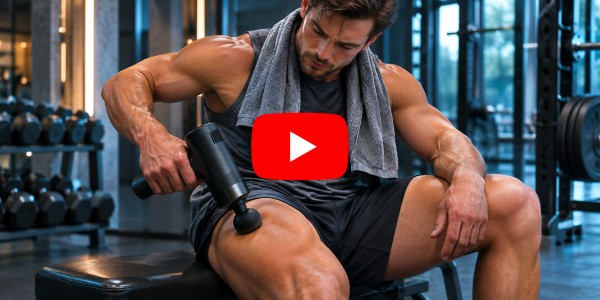
👉 DON’T TRY THIS “MASSAGE GUN RECOVERY TRICK” UNTIL YOU SEE THIS
However, there is an important distinction between temporary muscle relief and actual muscle recovery. A massage gun may help reduce perceived soreness and improve range of motion, but it does not instantly repair damaged muscle fibers or replace proper recovery habits.
Understanding how this technique works, when to use it, and which mistakes to avoid can help people use massage guns more effectively and safely.
What Is the Massage Gun Recovery Trick?
The massage gun recovery trick is a simple muscle-relaxation technique that uses rapid, repetitive movements to stimulate soft tissues.
A massage gun has a motorized head that moves back and forth against the body. This action is commonly called percussive therapy.
The device delivers short pulses to the muscles, creating mechanical stimulation that may influence how the body perceives discomfort and muscle tightness.
People commonly use this technique after:
- Strength training and weightlifting.
- Running, cycling, and other cardio workouts.
- High-intensity interval training.
- Long periods of sitting or standing.
- Physically demanding daily activities.
The goal is to reduce muscle stiffness and improve comfort after physical exertion.
How Does a Massage Gun Work?
Massage guns use percussive movements to deliver repeated mechanical stimulation to soft tissues.
When the massage head contacts a muscle, it produces rapid pressure changes. These movements stimulate sensory receptors in the skin and underlying tissues.
This stimulation may temporarily change how the nervous system processes sensations associated with tightness and discomfort.
The Science Behind Percussive Therapy
Several physiological mechanisms may help explain why massage guns provide temporary relief.
Sensory stimulation
Repeated pressure activates sensory receptors. This may influence pain perception and make areas of muscle discomfort feel less noticeable.
Temporary improvements in flexibility
Research on percussive therapy suggests that massage guns can produce short-term improvements in range of motion in some situations.
Muscle relaxation
Gentle, controlled stimulation may help reduce the sensation of muscle tightness after exercise.
Local tissue stimulation
Mechanical pressure temporarily stimulates the treated area. However, claims that massage guns dramatically increase circulation or accelerate muscle repair should be interpreted cautiously.
These effects vary depending on the individual, treatment duration, pressure, and type of physical activity.
What Are the Benefits of the Massage Gun Recovery Trick?
Massage guns can be useful additions to a recovery routine when used appropriately. Their most realistic benefits relate to temporary comfort, flexibility, and muscle relaxation.
1. May Improve Short-Term Muscle Flexibility
One of the better-supported uses of massage guns is improving short-term range of motion.
Percussive stimulation may help muscles feel less restricted, making certain movements more comfortable.
This can be useful for people who experience tight calves, hamstrings, quadriceps, or shoulders after exercise.
2. May Reduce the Feeling of Muscle Tightness
After intense exercise, muscles can feel stiff and uncomfortable. A gentle massage gun session may temporarily reduce the sensation of tightness by stimulating sensory receptors and changing how discomfort is perceived.
However, feeling less tight does not necessarily mean the underlying muscle tissue has fully recovered.
3. Supports a Convenient Recovery Routine
Massage guns are portable and easy to use at home or in the gym. They can be incorporated into a recovery routine without requiring complicated equipment or extensive preparation.
4. May Provide Temporary Soreness Relief
Some research suggests that percussive massage can temporarily reduce perceived muscle discomfort.
However, findings are mixed. A systematic review published in 2023 found potential improvements in flexibility and certain recovery-related outcomes, while a controlled study published in 2024 found little improvement in physical recovery following strenuous calf exercise.
5. Can Help Prepare Muscles for Movement
When used gently before exercise, a massage gun may help improve short-term mobility.
For example, someone with tight calves may find ankle movements more comfortable after brief treatment.
It should complement, rather than replace, a proper warm-up involving gradual movement and activity-specific preparation.
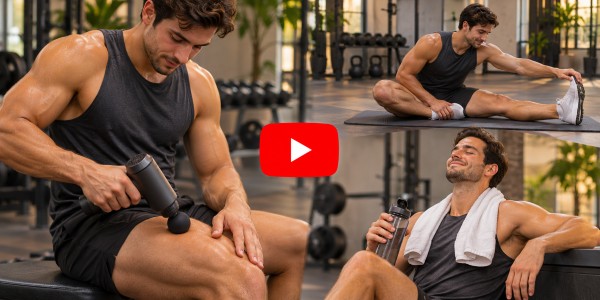
👉 DON’T TRY THIS “MASSAGE GUN RECOVERY TRICK” UNTIL YOU SEE THIS
How to Use a Massage Gun for Muscle Recovery
Using a massage gun correctly is more important than choosing the highest speed or applying maximum pressure.
The objective is comfortable muscle stimulation, not forcing the device deep into the tissue.
Step 1: Choose the Appropriate Attachment
Most massage guns include different attachment heads.
Common options include:
- Ball attachment: Suitable for general muscle groups such as thighs and calves.
- Flat attachment: Useful for broad muscle areas.
- Bullet attachment: Designed for targeted pressure, but requires extra caution.
- Fork attachment: Intended for use around certain muscle areas while avoiding direct contact with the spine or other sensitive structures.
Beginners can start with a soft, rounded attachment.
Step 2: Start at the Lowest Speed
Turn on the massage gun at its lowest comfortable setting. Starting slowly allows you to understand how your muscles respond without immediately applying intense stimulation.
Increase the speed only if the treatment remains comfortable.
Step 3: Move Slowly Across the Muscle
Place the massage head against the muscle belly and move it gradually. Avoid holding the device in one place for an extended period.
Use light pressure and keep the device moving rather than forcing it into sensitive areas.
Step 4: Limit the Treatment Duration
Start with about 15–30 seconds on a small muscle area, and adjust based on comfort and the device’s instructions.
A brief session is generally preferable to prolonged, aggressive treatment.
There is no universally established massage gun recovery protocol, so longer treatment should not automatically be considered more effective.
Step 5: Finish With Gentle Movement
After using the massage gun, try comfortable movements such as:
- Walking for a few minutes.
- Gentle calf raises.
- Controlled leg swings.
- Comfortable shoulder movements.
- Light mobility exercises.
These movements help transition the body back into normal activity.
When Is the Best Time to Use a Massage Gun?
Timing depends on your goals and the type of exercise you perform.
| Timing | Potential purpose |
| Before exercise | Short-term mobility support |
| After exercise | Temporary muscle relaxation |
| On rest days | Managing perceived tightness |
| After prolonged sitting | Improving movement comfort |
Before a Workout
A brief session may help people who feel stiff before exercising.
However, massage guns should not replace dynamic warm-ups, and aggressive treatment immediately before strength or explosive activity may be counterproductive.
After a Workout
Some people prefer using a massage gun after training to relax muscles.
Keep the pressure gentle, particularly after demanding workouts.
On Rest Days
A massage gun can be used as an optional comfort tool on rest days when muscles feel tight.
It should not be used to push through pain or mask symptoms of an injury.
Which Muscle Groups Can You Massage?
Massage guns are designed for soft-tissue application, but not every body area is appropriate.
Common muscle groups include:
- Quadriceps: The muscles at the front of the thighs.
- Hamstrings: The muscles at the back of the thighs.
- Calves: The muscles in the lower legs.
- Glutes: The large muscles around the hips.
- Upper trapezius: The muscular area around the upper shoulders.
- Forearms: The muscles involved in gripping and wrist movement.
Always follow the device manufacturer’s instructions and avoid direct pressure on bones, joints, the neck, and other sensitive structures.
👉 DON’T TRY THIS “MASSAGE GUN RECOVERY TRICK” UNTIL YOU SEE THIS
Massage Gun Recovery Trick vs. Foam Rolling
Both massage guns and foam rollers are popular tools for managing muscle tightness.
However, they work differently.
| Feature | Massage Gun | Foam Roller |
| Application | Percussive stimulation | Rolling pressure |
| Operation | Motorized | Manual |
| Targeting | Local muscle areas | Larger muscle areas |
| Convenience | Easy to target specific areas | Requires more body positioning |
| Main purpose | Temporary comfort and mobility | Temporary comfort and mobility |
Neither method is universally superior.
A massage gun may be more convenient for targeted treatment, while a foam roller can be useful for covering larger muscle groups.
The better choice depends on personal comfort, accessibility, and the type of activity.
Common Massage Gun Mistakes to Avoid
Using a massage gun incorrectly may cause discomfort, bruising, or unnecessary irritation.
Avoid these common mistakes:
- Applying too much pressure: More pressure does not necessarily produce better results.
- Using the highest speed immediately: Beginners should start with a lower setting.
- Staying in one location too long: Prolonged pressure can irritate sensitive tissues.
- Treating painful injuries: A massage gun is not an appropriate treatment for unexplained or acute pain.
- Using it directly over bones: Focus on soft muscle tissue rather than bony structures.
- Ignoring discomfort: Stop immediately if you experience sharp pain, numbness, tingling, or unusual sensations.
- Replacing proper recovery: Massage guns cannot compensate for inadequate sleep, nutrition, hydration, or training rest.
Massage Gun Recovery Myths and Facts
Social media frequently presents massage guns as a solution for almost every type of muscle problem.
It is important to separate realistic benefits from exaggerated claims.
| Popular claim | What the evidence suggests |
| Massage guns eliminate soreness instantly | They may temporarily change perceived discomfort |
| They repair damaged muscles | No convincing evidence supports instant muscle repair |
| Higher speed produces better recovery | More intensity is not necessarily better |
| They remove lactic acid | This is an oversimplification of exercise physiology |
| They replace stretching | They may complement mobility exercises but do not replace them |
| They guarantee faster athletic performance recovery | Evidence remains limited and mixed |
The most reasonable expectation is temporary improvement in comfort or mobility, rather than a dramatic biological recovery effect.
Are Massage Guns Safe? Risks and Precautions
Massage guns are generally intended for soft-tissue use, but improper application can cause problems.
Excessive pressure or prolonged use may result in:
- Bruising or skin irritation.
- Temporary tenderness.
- Increased discomfort in sensitive muscles.
- Irritation around an existing injury.
- Aggravation of certain underlying conditions.
Who Should Avoid Using Massage Guns?
Some people should seek medical advice before using percussive massage devices.
Extra caution is appropriate for individuals with:
- Blood clotting disorders or a history of blood clots.
- Osteoporosis or fragile bones.
- Recent surgery or significant injuries.
- Varicose veins.
- Reduced skin sensation or nerve-related problems.
- Significant swelling or unexplained pain.
- Certain circulatory or bleeding conditions.
Pregnant individuals and people taking blood-thinning medications should also seek appropriate professional guidance before using these devices.
Never use a massage gun over an open wound, suspected blood clot, fracture, or acutely injured area.
If you experience persistent pain, substantial swelling, weakness, or unusual symptoms after exercise, seek medical assessment rather than attempting to treat the problem with a massage gun.
What Does Scientific Research Say About Massage Gun Recovery?
Scientific evidence provides a more balanced picture than many viral fitness videos suggest.
A systematic review published in 2023 examined 11 studies and found that massage guns may improve short-term flexibility and certain range-of-motion measurements. However, the researchers also identified limitations in the available evidence.
A 2024 controlled study involving 65 physically active adults investigated five minutes of massage gun treatment after strenuous lower-body exercise. Researchers found little improvement in measured physical recovery outcomes compared with the control condition.
More recent evidence also highlights the uncertainty.
A 2026 systematic review and meta-analysis of 12 randomized controlled trials found possible improvements in explosive performance recovery, but did not establish clear benefits for maximum muscle strength recovery or delayed-onset muscle soreness. The certainty of several findings was low or very low.
Overall, research supports the potential use of massage guns for short-term mobility and comfort, but stronger studies are still needed to establish their effectiveness as a muscle recovery treatment.
How to Improve Muscle Recovery Naturally
A massage gun works best as an optional part of a broader recovery routine. Several basic habits have a more established role in supporting normal muscle recovery.
1. Prioritize Quality Sleep
- Sleep supports tissue maintenance, hormonal regulation, and normal physiological recovery.
- Most adults should aim for approximately seven to nine hours of sleep each night.
2. Eat Enough Protein
Protein supplies amino acids that the body uses to maintain and repair muscle tissue.
Include protein-rich foods such as:
- Eggs.
- Fish.
- Chicken.
- Greek yogurt.
- Beans and lentils.
- Milk and other dairy products.
3. Stay Hydrated
- Drink enough fluids throughout the day, especially after sweating during exercise.
- Hydration supports normal muscle function and helps maintain fluid balance.
4. Include Active Recovery
- Walking, gentle cycling, and comfortable mobility exercises can help maintain movement between demanding workouts.
- Keep the intensity low enough that the activity does not create additional fatigue.
5. Allow Enough Rest Between Workouts
- Training the same muscle groups intensely without sufficient recovery can contribute to excessive fatigue.
- Adjust your exercise schedule according to training intensity, soreness, and individual recovery needs.
👉 DON’T TRY THIS “MASSAGE GUN RECOVERY TRICK” UNTIL YOU SEE THIS
Is the Massage Gun Recovery Trick Worth Trying?
The massage gun recovery trick can be a useful option for people who want a convenient way to manage temporary muscle tightness after exercise.
Its biggest advantages are ease of use, targeted application, and the potential for short-term improvements in flexibility and movement comfort.
However, it is important to understand what this technique cannot do.
It does not guarantee faster muscle repair, eliminate delayed-onset muscle soreness, or replace the body’s natural recovery processes.
For beginners, a low-speed setting, gentle pressure, and short treatment sessions are sensible starting points. People with medical conditions or existing injuries should obtain appropriate professional guidance before using one.
Conclusion
The massage gun recovery trick is a practical approach to temporary muscle relaxation and mobility support, particularly for people who regularly exercise, lift weights, run, or experience muscle tightness from everyday activities.
Its percussive movements stimulate soft tissues and may help improve short-term range of motion and perceived muscle comfort.
Scientific research supports some of these benefits, although evidence for faster muscle recovery and reduced post-workout soreness remains inconsistent.
The key is to use the device correctly, avoid excessive pressure, and understand its limitations.
Ultimately, a massage gun can be a helpful addition to a balanced fitness recovery routine, but it should complement proper sleep, nutrition, hydration, and adequate rest rather than replace them.
Consistent recovery habits remain the foundation of better muscle health and long-term exercise performance.
👉 DON’T TRY THIS “MASSAGE GUN RECOVERY TRICK” UNTIL YOU SEE THIS
References
https://www.healthline.com/health/fitness/best-massage-guns
https://www.mayoclinic.org/diseases-conditions/osteoporosis/symptoms-causes/syc-20351968
https://en.wikipedia.org/wiki/Muscle
.
About Us
