Hume Band vs Whoop 5.0: Which Health Tracker Is Better?
Wearable health trackers have evolved far beyond basic step counting. Modern devices can monitor heart rate, sleep, heart rate variability, recovery, physical activity, stress, blood oxygen trends, skin temperature, and other wellness-related signals throughout the day.
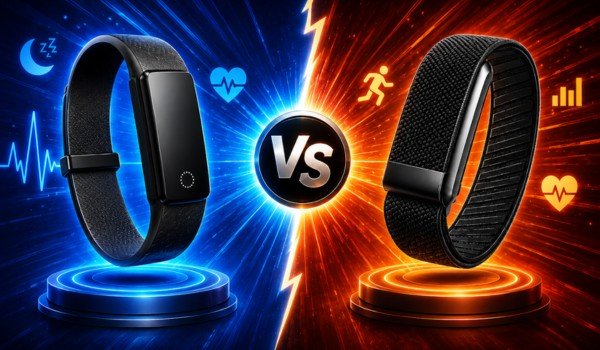
Two screen-free wearables that have attracted attention are the Hume Band and Whoop 5.0. At first glance, they may seem similar because both are minimalist wrist-worn devices designed for continuous health monitoring. However, they are built around somewhat different goals.
The Hume Band focuses heavily on everyday health, metabolic wellness, sleep, recovery, resilience, and longevity-oriented insights. Whoop 5.0, meanwhile, has traditionally focused on athletic performance, training strain, recovery, sleep optimization, and personalized fitness guidance.
Hume Band suits wellness and longevity tracking, while Whoop 5.0 excels in recovery, strain, sleep, and performance insights for active users.
Whoop has also expanded beyond sports by adding long-term health and longevity features, while Hume continues to strengthen its fitness and recovery tracking. This means the difference between the two is not simply “health tracker versus fitness tracker.”
So, which wearable should you choose?
For people who want general wellness and longevity insights without a mandatory subscription, Hume Band may offer better overall value. For athletes and highly active users who want advanced training, strain, recovery, and performance analytics, Whoop 5.0 is likely the stronger option.
Hume Band vs Whoop 5.0: Quick Answer
The Hume Band is better suited for people who want to understand overall health, recovery, sleep, metabolic wellness, and long-term lifestyle trends without a continuous paid membership for basic tracking.
Whoop 5.0 suits serious fitness enthusiasts, runners, cyclists, gym users, competitive athletes, and people who want detailed information on training strain, recovery readiness, sleep requirements, and cardiovascular performance.
Both devices are designed for continuous wear and offer around two weeks of battery life. Neither has a traditional smartwatch screen, so most health information appears in the accompanying smartphone app.
One of the largest differences is the business model. Hume Band can provide core health information without a mandatory recurring subscription, while Whoop relies much more heavily on its membership system.
Hume Band vs Whoop 5.0 at a Glance
| Feature | Hume Band | Whoop 5.0 |
|---|---|---|
| Main Focus | Wellness, metabolism, recovery, longevity | Fitness, recovery, strain, performance |
| Screen | No | No |
| Heart Rate | Yes | Yes |
| HRV Tracking | Yes | Yes |
| Sleep Tracking | Yes | Yes |
| Sleep Stages | Yes | Yes |
| Recovery Tracking | Yes | Yes |
| Blood Oxygen Trends | Yes | Yes |
| Skin Temperature | Yes | Yes |
| Activity Tracking | Yes | Yes |
| Steps | Yes | Yes |
| Strain Tracking | Yes | Yes |
| VO2 Max | Not a primary focus | Yes |
| Longevity Insights | Yes | Yes |
| AI Coaching | Optional premium features | Available within membership ecosystem |
| Battery Life | Up to around 14 days | Around 14+ days |
| Subscription Required | No for core features | Yes |
| Best For | Everyday wellness | Athletes and performance users |
What Is the Hume Band?
The Hume Band is a screen-free wearable health tracker that collects physiological and lifestyle information continuously throughout the day and night.
Unlike many traditional fitness trackers that focus heavily on steps, calories, and workout duration, Hume emphasizes how daily behaviors may influence sleep, recovery, metabolic health, resilience, and long-term wellness.
The Band can monitor signals such as heart rate, heart rate variability, blood oxygen trends, respiratory rate, movement, sleep stages, activity levels, skin temperature, recovery, and physical strain.
The Hume Health app then processes this information, allowing users to review daily and long-term health trends.
Hume also emphasizes proprietary wellness measurements designed to help users understand whether their habits are moving their health in a positive direction.
Instead of focusing only on questions such as, “How many calories did I burn today?”
🔹 Hume aims to help answer broader questions such as:
- Am I recovering adequately?
- Is my sleep quality improving?
- Are my habits supporting better health?
- Is my body adapting well to stress?
- Are my activity and recovery levels balanced?
- Are my long-term wellness trends moving in the right direction?
That approach makes the Hume Band attractive to users who are interested in more than traditional fitness statistics.
However, Hume Band is primarily a consumer wellness device. Its measurements are meant for tracking trends and supporting healthy lifestyle decisions, not diagnosing medical conditions.
✅ Click to Buy Hume Band at a Discounted Price!
What Is Whoop 5.0?
Whoop 5.0 is the latest generation of Whoop’s screen-free wearable platform, designed primarily around continuous physiological monitoring. Whoop has built a strong reputation among athletes, runners, cyclists, gym enthusiasts, coaches, and performance-focused users.
Rather than behaving like a traditional smartwatch, Whoop operates quietly in the background. It does not focus on messages, calls, social-media notifications, watch faces, or apps. Instead, it continuously collects physiological data and turns it into health and performance insights in the Whoop app.
🔹 Three major concepts have traditionally formed the foundation of Whoop:
🔹 Sleep
Whoop monitors sleep quantity, sleep quality, sleep stages, and other overnight patterns.
🔹 Recovery
Recovery estimates how prepared the body appears to be for physical and physiological stress.
🔹 Strain
Strain represents the cardiovascular load accumulated during exercise and throughout everyday activity.
Whoop 5.0 also provides activity tracking, steps, heart-rate-zone information, cardiovascular fitness estimates, stress monitoring, and additional health-related insights depending on the selected membership.
Recent generations have also expanded into longevity and Healthspan tracking, making Whoop relevant even for users who are not professional athletes.

Hume Band vs Whoop 5.0: Design and Comfort
Both wearables follow a similar minimalist philosophy. Neither device includes a large digital display. For many people, this is actually an advantage.
Traditional smartwatches constantly compete for attention by displaying notifications, messages, calls, reminders, and applications.
Hume Band and Whoop 5.0 avoid that distraction. Instead, the sensor quietly gathers health information while the wearer continues with normal daily activities.
🔹 Hume Band Design
Hume Band is designed to be lightweight, discreet, and comfortable enough for continuous wear. Because many of its most useful measurements depend on overnight data, users are encouraged to keep it on while sleeping. Its adjustable strap keeps the sensor in contact with the skin during everyday movement and rest.
🔹 Whoop 5.0 Design
Whoop 5.0 also uses a compact sensor attached to a fabric-style band. The latest hardware is smaller than the previous generation, helping reduce bulk during sleep, exercise, and everyday activities.
Whoop also offers more ways for wear its sensor through compatible accessories, which may appeal to athletes who don’t always want a tracker directly on the wrist.
🔹 Design Winner: Tie
Both devices are well suited to people who dislike bulky smartwatches. Whoop may have an advantage for athletes because of its wider accessory ecosystem, while Hume offers a straightforward, comfortable solution for everyday health monitoring.
Hume Band vs Whoop 5.0: Health Tracking
Both products track many of the same physiological signals.
🔹 The Hume Band can track or analyze information related to:
- Continuous heart rate
- Heart rate variability
- Blood oxygen trends
- Respiratory rate
- Skin temperature
- Physical activity
- Sleep
- Recovery
- Movement
- Strain
Whoop also tracks heart rate, HRV, resting heart rate, respiratory rate, sleep, skin temperature, blood oxygen trends, activity, recovery, and cardiovascular strain.
So the biggest difference isn’t simply which signals the devices measure. The difference lies in how those signals are interpreted. Hume organizes data around wellness, metabolic health, resilience, recovery, and longevity.
Whoop organizes the same types of physiological signals around training readiness, sleep requirements, strain, physical performance, and recovery.
🔹 Best for General Health: Hume Band
Hume’s broader health philosophy may appeal more to people whose main objective is overall wellness.
🔹 Best for Performance Analysis: Whoop 5.0
Whoop’s mature performance ecosystem gives athletes significantly more training-related context.
✅ Click to Buy Hume Band at a Discounted Price!
Hume Band vs Whoop 5.0: Sleep Tracking
Sleep is one of the strongest features of both wearables. Because they offer long battery life and do not require charging every night, users can wear them consistently while sleeping.
That consistency is particularly valuable because sleep data becomes more meaningful when trends are observed across several weeks rather than one night.
🔹 Hume Band Sleep Tracking
🔹 Hume can monitor information such as:
- Total sleep duration
- Light sleep
- Deep sleep
- REM sleep
- Awake periods
- Sleep efficiency
- Overnight heart rate
- HRV trends
- Recovery patterns
The system can help users understand how their sleep habits relate to recovery and overall wellness. For example, someone who regularly goes to bed late may notice poorer recovery scores or changes in overnight physiological measurements. This can encourage healthier routines.
🔹 Whoop 5.0 Sleep Tracking
Sleep has always been one of Whoop’s strongest areas. Whoop does more than simply show how many hours someone slept. Its sleep system estimates how much sleep a person may need based on factors such as recent exercise, accumulated strain, recovery, and previous sleep patterns.
🔹 The result is an interconnected feedback cycle:
Training Strain → Sleep Need → Sleep Performance → Recovery → Recommended Activity
This makes sleep information particularly useful to athletes.
🔹 Sleep Tracking Winner: Whoop 5.0
Both devices provide useful sleep tracking, but Whoop’s deep integration between sleep, recovery, and training gives it a slight advantage for performance-focused users.
Hume Band vs Whoop 5.0: Recovery Tracking
Recovery is another key feature both wearables share. Recovery tracking can help users understand whether their body seems prepared for intense activity or whether additional rest may help.
🔹 Hume Band Recovery
Hume evaluates recovery within a broader wellness framework. Rather than focusing only on workout readiness, its system tries to show how sleep, lifestyle habits, physical stress, and other factors may affect overall resilience.
This may be especially useful for everyday users who exercise but are equally concerned about energy, sleep quality, stress management, and long-term health.
🔹 Whoop 5.0 Recovery
Recovery is central to the Whoop ecosystem. Whoop considers several physiological signals, including HRV, resting heart rate, sleep patterns, respiratory rate, skin temperature, and blood oxygen information.
The resulting Recovery score helps users decide how much physical strain is appropriate that day. For competitive athletes, this can be extremely useful.
A strong Recovery score may suggest that the body is ready for a demanding training session, while a poor score may encourage lighter activity or rest.
🔹 Recovery Winner for Athletes: Whoop 5.0
🔹 Recovery Winner for Everyday Wellness: Hume Band
Hume Band vs Whoop 5.0 for Fitness and Exercise
Fitness tracking is one area where Whoop has a clearer advantage. Whoop was originally designed around athletic performance, and that heritage remains obvious in Whoop 5.0. Its Strain system calculates cardiovascular workload across the entire day.
🔹 Users can accumulate strain through activities such as:
- Running
- Cycling
- Weight training
- HIIT workouts
- Swimming
- Hiking
- Team sports
- Cross-training
- Physically demanding jobs
- Everyday movement
Whoop then evaluates that strain alongside Recovery and Sleep. This can help athletes understand whether they are training appropriately, doing too little, or potentially accumulating more stress than their body can recover from.
Whoop also provides heart-rate-zone analysis, fitness estimates, workout detection, and support for many different activities. Hume Band can track physical activity and workout-related strain, but its platform is less focused on competitive performance.
🔹 Fitness Winner: Whoop 5.0
For users who train frequently and want detailed exercise guidance, Whoop is the stronger option.
Hume Band vs Whoop 5.0 for Longevity
Longevity is an increasingly important category in modern wearable technology. Hume has made long-term health a central part of its platform.
The Hume ecosystem focuses on measurements and scores designed to help people understand how their lifestyle may affect long-term wellness.
🔹 Its approach emphasizes areas such as:
- Metabolic health
- Recovery
- Sleep
- Daily activity
- Resilience
- Long-term health trends
- Lifestyle consistency
This differs from conventional trackers that often focus almost exclusively on daily steps or workout calories. Whoop has also expanded into longevity through its Healthspan-related features.
These tools are designed to help users understand whether lifestyle patterns are supporting healthier aging. Whoop can incorporate information related to physical activity, cardiovascular fitness, resting heart rate, strength exercise, sleep consistency, and daily movement.
🔹 Longevity Winner: Hume Band for Everyday Users
Longevity is central to Hume’s core identity.
🔹 Longevity Winner for Athletes: Whoop 5.0
Whoop’s longevity features may appeal more to people who want to combine long-term health analysis with advanced fitness metrics.
Battery Life: Hume Band vs Whoop 5.0
Battery life is important because continuous health tracking depends on continuous wear. A device that frequently needs charging may create missing data during sleep or exercise. Fortunately, both products perform well in this area.
🔹 Hume Band Battery Life
Hume Band can provide up to around 14 days of battery life, depending on actual usage. That is significantly longer than many traditional smartwatches.
🔹Whoop 5.0 Battery Life
Whoop 5.0 also provides approximately 14 days or more of battery life under typical conditions. Whoop’s charging system is particularly convenient because compatible battery accessories let users keep wearing the device while it charges.
🔹 Battery Winner: Tie
Both products are excellent options for people who dislike charging a smartwatch every day.
✅ Click to Buy Hume Band at a Discounted Price!
Hume Band vs Whoop 5.0: Water Resistance
Water resistance is important for users who want to wear their tracker continuously. According to its published specifications, Hume Band offers water resistance suitable for common everyday exposure and limited submersion.
Whoop 5.0 provides stronger stated water resistance and is designed for users who frequently train in wet environments. That can make Whoop a more attractive choice for swimmers and endurance athletes.
🔹 Water Resistance Winner: Whoop 5.0
Regular swimmers may prefer Whoop because of its stronger published water-resistance specifications.
Hume Band vs Whoop 5.0 App Experience
The smartphone app is arguably more important than the wearable itself. The sensor collects data, but the app determines whether that information becomes understandable and actionable.
🔹 Hume Health App
The Hume Health app organizes health information around wellness and long-term trends. Users can review data involving sleep, activity, recovery, metabolic wellness, and other health measurements.
Hume also offers optional premium features that provide more advanced insights and personalized guidance. The key advantage is that core information remains accessible without forcing every user into an ongoing premium membership.
🔹 Whoop App
Whoop’s app is one of the strongest parts of its platform.
🔹 Instead of presenting users with hundreds of disconnected measurements, the interface organizes data around understandable categories such as:
- Sleep
- Recovery
- Strain
- Stress
- Health trends
- Training
- Long-term performance
Whoop can also provide personalized coaching based on recorded patterns. For athletes, this creates a more actionable experience.
Instead of simply saying your heart rate was elevated yesterday, Whoop tries to explain how recent activity may affect today’s recovery and how much training strain is appropriate.
🔹 App Experience Winner: Whoop 5.0
Whoop has the more mature performance-focused software ecosystem.
Subscription Comparison
The subscription model is one of the biggest differences between the Hume Band and Whoop 5.0.
🔹 Hume Band Subscription
Hume Band does not require a mandatory subscription for basic use and core health tracking. Users can buy the wearable and keep monitoring key information without paying indefinitely.
Premium services are available for people who want additional AI-powered coaching and deeper personalized analysis. This gives users more flexibility.
🔹 Whoop 5.0 Subscription
Whoop operates through a membership model. The wearable and software services are closely linked to the subscription. Different membership levels may include different combinations of fitness, recovery, stress, health, longevity, and advanced insights.
The membership system can be worthwhile for people who actively use Whoop’s analytics every day. However, users who dislike recurring fees may prefer Hume.
🔹 Subscription Winner: Hume Band
For long-term ownership without mandatory recurring payments, Hume has the advantage.
Hume Band vs Whoop 5.0 Accuracy
No consumer wrist wearable should be treated as perfectly accurate in every situation.
🔹 Optical sensors can be affected by several factors, including:
- Strap position
- Sensor contact
- Wrist movement
- Exercise type
- Skin temperature
- Sweat
- Environmental conditions
- Individual physiology
Both Hume and Whoop are most useful for monitoring long-term trends.
For example, if someone’s HRV gradually improves over several months while their sleep habits and exercise routine also improve, that trend may be more meaningful than one isolated reading.
The same applies to resting heart rate and recovery. Neither device should replace professional medical testing when medical-grade accuracy is necessary.
🔹 Accuracy Winner: No Clear Winner
Both devices can be valuable for consistent lifestyle tracking, but users should avoid interpreting consumer wearable measurements as medical diagnoses.
Hume Band vs Whoop 5.0 for Weight Management
Neither Hume Band nor Whoop 5.0 directly causes weight loss. However, they may support better awareness of lifestyle behaviors associated with healthy weight management.
🔹 Hume Band for Weight Management
Hume’s metabolic wellness focus may appeal to people trying to understand how sleep, physical activity, recovery, and lifestyle consistency fit together.
When combined with broader body-composition information, users may gain a more complete picture of how their habits are changing over time.
🔹 Whoop 5.0 for Weight Management
Whoop focuses more heavily on physical activity, cardiovascular strain, sleep, and recovery. This can help people manage exercise volume and avoid repeatedly training hard while poorly recovered.
🔹 Winner for Metabolic Focus: Hume Band
🔹 Winner for Exercise-Focused Weight Management: Whoop 5.0
Hume Band vs Whoop 5.0 for Beginners
For someone purchasing their first advanced wearable, Hume may be easier to justify. The device offers broad wellness tracking without requiring a long-term membership commitment.
A beginner can monitor sleep, recovery, activity, and health trends without getting deeply involved in advanced athletic metrics.
Whoop is still beginner-friendly, but many of its strongest features become more valuable when someone exercises regularly. A person who rarely trains may not fully benefit from detailed Strain and Recovery recommendations.
🔹 Beginner Winner: Hume Band
✅ Click to Buy Hume Band at a Discounted Price!
Hume Band vs Whoop 5.0 for Athletes
For athletes, Whoop 5.0 is the stronger recommendation.
🔹 The platform is designed to answer performance-oriented questions such as:
- How hard did I train?
- How well did I recover?
- Should I reduce today’s workload?
- How much sleep do I need?
- Is my cardiovascular fitness improving?
- Am I accumulating too much strain?
Those insights can be valuable for runners, cyclists, swimmers, strength athletes, team-sport competitors, and other highly active users.
Hume can track many of the same basic physiological signals, but it does not place the same emphasis on competitive performance.
🔹 Athlete Winner: Whoop 5.0
Hume Band Pros
- No mandatory subscription for core tracking
- Long battery life
- Heart-rate monitoring
- HRV tracking
- Sleep-stage tracking
- Recovery insights
- Blood oxygen trends
- Skin-temperature monitoring
- Metabolic wellness focus
- Longevity-oriented insights
- Screen-free design
- Suitable for everyday health users
- Optional premium coaching
Hume Band Cons
- Less established among competitive athletes
- Some proprietary scores may take time to understand
- Advanced coaching may require premium access
- Fewer performance-focused tools than Whoop
- No traditional smartwatch display
- Not intended to replace medical testing
Whoop 5.0 Pros
- Excellent recovery system
- Detailed Strain analysis
- Strong sleep tracking
- Long battery life
- Heart-rate-zone tracking
- Cardiovascular fitness insights
- Automatic activity detection
- Stress tracking
- Longevity features
- Personalized coaching
- Strong athletic ecosystem
- Suitable for serious training
- Good water resistance
Whoop 5.0 Cons
- Requires an ongoing membership
- Long-term subscription costs can add up
- Some advanced health features require higher plans
- May be unnecessarily detailed for casual users
- No smartwatch display
- Advanced medical-style features are not available on every Whoop model
Who Should Choose the Hume Band?
🔹 Hume Band may be the better choice if you:
- Want everyday health tracking
- Care about longevity
- Want metabolic wellness insights
- Want sleep tracking
- Want recovery monitoring
- Prefer a screen-free wearable
- Do not want a mandatory subscription
- Are not a competitive athlete
- Want long-term lifestyle trends
- Prefer simpler wellness-focused guidance
Who Should Choose Whoop 5.0?
🔹 Whoop 5.0 may be better if you:
- Exercise frequently
- Are a competitive athlete
- Want detailed workout strain analysis
- Want advanced recovery information
- Want heart-rate-zone guidance
- Want cardiovascular fitness insights
- Want detailed sleep recommendations
- Want automatic workout detection
- Want personalized training feedback
- Do not mind paying for an ongoing membership
Hume Band vs Whoop 5.0: Which Offers Better Value?
The answer depends largely on how you use the tracker. Someone who exercises occasionally and mainly wants to understand sleep, recovery, activity, and long-term health may find Hume Band more economical.
The absence of a mandatory subscription makes it easier to continue using over several years without increasing the total ownership cost significantly. Whoop is different. Its value comes primarily from the software ecosystem rather than the sensor alone.
Serious athletes may use its Recovery, Strain, Sleep, and coaching features every day. For those users, the recurring membership may be justified. For casual users, however, paying continually for advanced performance analytics may not provide enough additional benefit.
🔹 Best Long-Term Value: Hume Band
🔹 Best Performance Value: Whoop 5.0
Hume Band vs Whoop 5.0: Final Verdict
The Hume Band vs Whoop 5.0 comparison does not have one universal winner because the devices serve different types of users.
Hume Band is the better choice for people primarily interested in everyday wellness, metabolic health, sleep, recovery, longevity, and long-term health trends. Its biggest practical advantage is that users can access core health information without a mandatory recurring membership.
Whoop 5.0 is the stronger choice for athletes and highly active users. Its sophisticated Strain, Recovery, Sleep, heart-rate-zone, and coaching systems are designed to help users make smarter decisions about training intensity and rest.
Whoop has also become more appealing to general wellness users by introducing long-term health and longevity features. However, the strongest Whoop experience remains closely tied to its paid membership model.
For an average health-conscious person who wants useful insights without paying continuously, the Hume Band may offer better overall value.
For a runner, cyclist, gym enthusiast, competitive athlete, or anyone who takes performance optimization seriously, Whoop 5.0 is likely the better investment.
The simplest way to choose is to ask yourself what you want from your wearable. If your priority is long-term health and wellness, choose Hume Band. If your priority is training, recovery, and athletic performance, choose Whoop 5.0.
✅ Click to Buy Hume Band at a Discounted Price!
Frequently Asked Questions
Is Hume Band Better Than Whoop 5.0?
Hume Band may be better for everyday wellness, metabolic health, longevity, sleep, and users who want to avoid mandatory subscriptions. Whoop 5.0 is generally better for advanced fitness and athletic performance tracking.
Does Hume Band Track Sleep?
Yes. Hume Band monitors sleep duration, sleep stages, sleep quality, and several overnight physiological signals to help users understand rest and recovery patterns.
Does Whoop 5.0 Track Sleep?
Yes. Sleep is one of Whoop’s core features, and its platform connects sleep information with Recovery and Strain to provide personalized guidance.
Does Hume Band Track HRV?
Yes. Heart rate variability is one of the physiological measurements Hume Band uses to provide information about recovery and overall wellness trends.
Does Whoop 5.0 Track HRV?
Yes. HRV is a major part of Whoop’s Recovery system and is considered alongside resting heart rate, sleep, and other signals.
Does Hume Band Require a Subscription?
No mandatory subscription is required for core health information. Premium features may be available separately for users who want additional coaching and analysis.
Does Whoop 5.0 Require a Subscription?
Yes. Whoop 5.0 is primarily offered through the Whoop membership ecosystem, and available features vary by membership level.
Which Is Better for Athletes?
Whoop 5.0 is generally better for athletes because its platform is heavily focused on Strain, Recovery, Sleep, cardiovascular fitness, and personalized training guidance.
Which Is Better for Everyday Health?
Hume Band may be better for people primarily interested in general wellness, sleep, recovery, metabolic health, and long-term lifestyle trends.
Which Has Better Battery Life?
Both offer roughly two weeks of battery life under typical conditions, making them considerably more convenient than many traditional smartwatches.
Which Is Better for Sleep Tracking?
Both provide useful sleep information, but Whoop 5.0 has an advantage for athletes because sleep data is directly connected to Recovery and training recommendations.
Which Is Better for Recovery?
Whoop 5.0 offers stronger, performance-oriented recovery analysis, while Hume Band frames recovery within a broader wellness and longevity context.
Which Is Better for Weight Management?
Hume may appeal more to users interested in metabolic wellness, while Whoop may be better for people whose weight-management strategy is centered around exercise and fitness performance.
Is Hume Band Worth It?
Hume Band may be worth considering for users who want continuous wellness, recovery, sleep, and longevity-oriented tracking without paying a mandatory subscription indefinitely.
Is Whoop 5.0 Worth It?
Whoop 5.0 can be worth the cost for athletes and highly active users who regularly use its training, recovery, strain, and sleep guidance. Casual users may not need all of its advanced features.
Hume Band vs Whoop 5.0: Which Should I Buy?
Choose Hume Band if you prioritize everyday health, longevity, metabolic wellness, and lower long-term ownership costs. Choose Whoop 5.0 if you prioritize athletic performance, training strain, recovery optimization, and advanced fitness analytics.

Click To Learn More About Hume Band
Reference
https://en.wikipedia.org/wiki/Fitness_tracker
https://www.webmd.com/fitness-exercise/compare-workout-trackers-devices
https://www.healthline.com/nutrition/best-fitness-tracker
https://mcpress.mayoclinic.org/living-well/benefits-of-a-smart-wearable-for-your-health/
About Us