
Hume Band vs Polar H10: Which Heart Rate Tracker Wins?
Choosing between the Hume Band and Polar H10 can be confusing because both devices track heart-related data, yet they are designed for very different purposes.
The Hume Band is primarily a 24/7 wrist-worn health, sleep, recovery, and activity tracker, while the Polar H10 is a specialized chest-strap heart rate sensor designed to capture heart rate accurately during exercise.
This means the better device depends less on which product has the longest feature list and more on what you actually want to measure.
Hume Band is better for 24/7 wellness, sleep, and recovery, while Polar H10 excels in accurate heart-rate tracking during workouts.
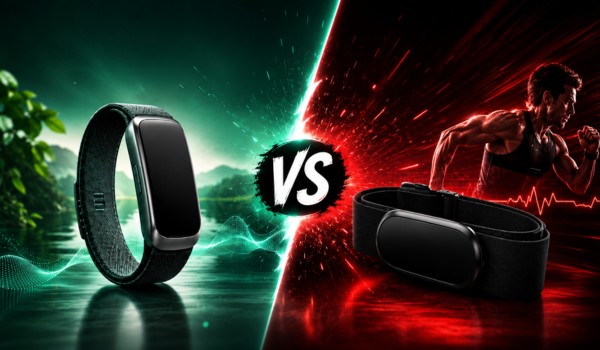
Someone looking to understand sleep, daily activity, HRV, recovery, blood oxygen, and long-term wellness trends may find the Hume Band more useful.
A runner, cyclist, athlete, or gym enthusiast who cares about accurate heart rate during intervals and high-intensity workouts may benefit more from the Polar H10.
In this detailed Hume Band vs Polar H10 comparison, we will examine heart-rate accuracy, sensor technology, workouts, HRV, sleep tracking, recovery, comfort, battery life, connectivity, water resistance, apps, and overall usefulness to help you decide which device better matches your needs.
Hume Band vs Polar H10: Quick Comparison
| Feature | Hume Band 2.0 | Polar H10 |
|---|---|---|
| Device Type | Wrist-worn health tracker | Chest-strap heart rate sensor |
| Primary Purpose | 24/7 wellness, recovery and activity tracking | Precise exercise heart-rate tracking |
| Heart Rate Technology | Optical sensors | Electrical chest electrodes |
| Continuous Daily Tracking | Yes | No, primarily workout-focused |
| Heart Rate | Yes | Yes |
| HRV | Yes | Yes, depending on compatible recording platform |
| Sleep Tracking | Yes | No native sleep tracking |
| Sleep Stages | Yes | No |
| Blood Oxygen | Yes | No |
| Skin Temperature | Yes | No |
| Recovery Insights | Yes | Requires compatible Polar ecosystem/tools |
| Activity Tracking | Yes | Not designed as a daily activity tracker |
| Steps | Yes | No standard standalone step tracking |
| Workout HR Accuracy | Good for general monitoring | Excellent for training |
| High-Intensity Training | Suitable | Better choice |
| Battery | Up to 14 days | Up to 400 training hours |
| Battery Type | Rechargeable | Replaceable CR2025 |
| Bluetooth | Yes | Yes |
| ANT+ | Not listed as a primary feature | Yes |
| Internal Workout Memory | Not its main purpose | One training session |
| Water Resistance | IP68; manufacturer states up to 1 meter for up to 2 hours | WR30 / up to 30 meters |
| Best For | Everyday health and recovery monitoring | Athletes and precise workout HR |
What Is the Hume Band?
The Hume Band 2.0 is a screen-free wrist wearable designed to continuously collect health and activity information throughout the day and night. Unlike a conventional smartwatch centered around notifications and apps, the Hume Band focuses heavily on interpreting physiological trends.
Hume says Band 2.0 uses five LEDs and four photodiodes to collect optical signals from the wrist. These sensors contribute to metrics including heart rate, heart rate variability, blood oxygen, skin temperature, activity levels, strain, recovery status, and sleep stages.
The device is meant to be worn throughout the day and while sleeping, letting users see trends instead of relying only on measurements collected during exercise. The Hume Health app then organizes this information into scores and longer-term wellness insights.
Hume also emphasizes longevity-related metrics such as Metabolic Momentum, Metabolic Capacity, Biological Age, Pace of Aging, and recovery information. These are proprietary interpretations produced from the data collected within the Hume ecosystem rather than independent clinical diagnoses.
The free Hume Health app provides access to core metrics, while an optional Premium membership adds more personalized AI-driven coaching and analysis. A Premium subscription is optional, not required for basic use of the Band.
What Is the Polar H10?
The Polar H10 is very different. Instead of being a wrist-worn wellness tracker, it is a chest-strap heart rate sensor designed specifically for measuring heart rate during physical activity.
The sensor sits against the chest using Polar’s Pro Strap. Electrical electrodes detect signals associated with each heartbeat and transmit heart-rate information to compatible phones, watches, cycling computers, gym machines, and fitness applications.
This electrical measurement approach is one of the biggest reasons chest straps remain popular among competitive athletes. Wrist wearables typically estimate pulse using optical signals that measure changes in blood flow underneath the skin. Optical tracking is convenient, but motion can make signal interpretation harder during demanding exercise.
Polar H10 supports Bluetooth Low Energy, ANT+, and Polar GymLink 5 kHz, giving it significantly broader sports-device connectivity than many standard wellness bands.
It can also store one training session internally, with Polar stating that a stored session can contain more than 30 hours of heart-rate data recorded once per second.

Hume Band vs Polar H10: Heart Rate Tracking Technology
The fundamental difference between these devices begins with how they measure heart rate.
The Hume Band uses optical sensors on the wrist. LEDs shine light into the skin while photodiodes detect changes associated with blood volume. Algorithms then translate those signals into heart rate and related measurements.
This method is practical because it allows continuous monitoring without requiring a chest strap. You can wear the Hume Band while walking, working, relaxing, exercising, and sleeping.
The Polar H10 uses electrical electrodes on the chest. Because the chest strap detects electrical activity associated with heart contractions instead of estimating pulse from blood-flow changes at the wrist, it can respond particularly well during rapid changes in exercise intensity.
Neither approach is automatically superior for every situation. Optical monitoring has a major advantage in convenience and long-duration everyday use. Electrical chest sensing has an advantage when accurate and responsive heart-rate measurements during training are the priority.
Hume Band vs Polar H10 Accuracy
For workout heart-rate accuracy, the Polar H10 is the stronger choice.
That does not mean a Hume Band cannot provide useful heart-rate information. Its optical sensors are appropriate for monitoring everyday trends, resting periods, sleep, general activity, and many steady-state workouts. However, wrist-based optical measurements can be affected by movement and sensor contact, especially when the intensity of an activity changes rapidly.
Research comparing wrist optical monitors with chest-based measurements has repeatedly found that optical devices can perform well under many conditions while showing more variability during certain forms of exercise. Chest straps are therefore often preferred when precise exercise HR measurement is particularly important.
Polar specifically designed the H10 around this requirement. Its strap stays in contact with the chest, while silicone areas help reduce movement. This becomes especially useful for interval running, cycling, HIIT, rowing, and sports involving large arm movements.
However, don’t claim that Polar H10 has been proven more accurate than Hume Band unless a controlled head-to-head validation study is available.
The comparison is based mainly on their different measurement technologies and intended applications, not a direct clinical test of Hume versus Polar.
🔹 Accuracy Winner: Polar H10
For precise heart-rate measurement during serious exercise, the H10 has the advantage.
Hume Band vs Polar H10 for Running
Runners will often find the Polar H10 particularly attractive because heart rate can change quickly during intervals, hill repeats, tempo sessions, and race efforts.
Accurate readings help athletes stay within intended heart-rate zones and evaluate how hard they are actually working. Because the Polar H10 can transmit data to compatible watches and running platforms, athletes can continue using their preferred training display while obtaining heart-rate information from the chest sensor.
The Hume Band takes a broader approach. It can track heart rate and activity while running, but its greater advantage comes before and after the workout. Sleep quality, HRV, recovery, strain, and longer-term trends provide context for how the body is handling training.
Therefore, runners primarily interested in live workout HR accuracy may prefer Polar H10, while runners interested in whole-day recovery trends may find the Hume Band more informative.
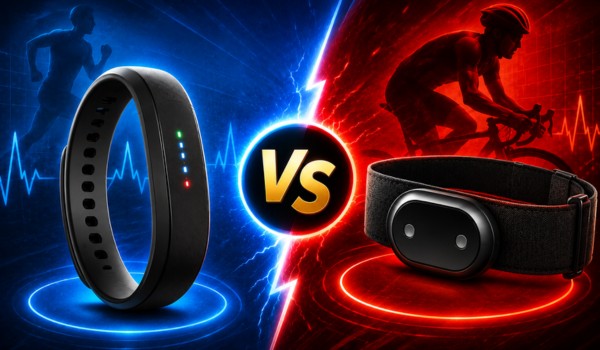
Hume Band vs Polar H10 for HIIT and Interval Training
High-intensity interval training is another category where Polar H10 has a clear purpose.
During intervals, heart rate may increase quickly during a work period and fall rapidly during recovery. Optical wrist sensors sometimes take longer to reflect abrupt changes, especially with significant wrist or arm movement.
Because the H10 detects electrical heart activity from the chest, it is designed to respond quickly to changing heart rates. Polar specifically highlights high-intensity exercise as a situation where its ECG-style electrical sensing system excels.
For someone building workouts around exact heart-rate zones, that responsiveness may matter more than dozens of extra wellness metrics.
🔹 HIIT Winner: Polar H10
Hume Band vs Polar H10 for Sleep Tracking
This category goes strongly in the opposite direction. The Hume Band is the clear winner for sleep tracking because it is designed to remain on your wrist overnight.
🔹 Hume reports tracking sleep stages including:
- Light sleep
- Deep sleep
- REM sleep
- Awake periods
The Hume Health platform combines these signals with other physiological data to provide sleep and recovery information. This lets users see whether changes in bedtime, activity, stress, or routines align with changes in their sleep patterns.
Polar H10 is not designed as an overnight sleep tracker. Technically, a chest sensor can capture cardiac signals for long periods, but wearing an H10 overnight does not automatically turn it into the kind of sleep-analysis system offered by a 24/7 wearable.
🔹 Sleep Tracking Winner: Hume Band
HRV and Recovery Tracking
Heart rate variability, commonly abbreviated HRV, describes variation in the time interval between heartbeats. Fitness ecosystems commonly use it as a signal related to recovery and autonomic nervous-system activity.
The Hume Band automatically integrates HRV into its broader 24/7 health and recovery experience. This makes HRV easier for everyday users because they don’t necessarily need to take a separate measurement each morning.
Hume can combine HRV with sleep, activity, strain, heart rate, temperature, and other signals to generate recovery-oriented information.
The Polar H10 can also be extremely useful for HRV measurement because of the electrical signals captured from the chest. However, the H10 itself is a sensor rather than a complete screen-equipped recovery wearable. What you see and how the data are analyzed depend partly on the software or compatible platform being used.
If your goal is effortless daily recovery monitoring, Hume Band is easier.
If your priority is obtaining high-quality beat-to-beat cardiac data for specialized training or compatible HRV applications, Polar H10 may be preferable.
✅ Click to Buy Hume Band at a Discounted Price!
Activity and Everyday Health Tracking
Hume Band wins easily for everyday activity monitoring.
It is meant to stay on your body throughout normal daily life and can automatically monitor heart rate, steps, distance, active-zone minutes, activity patterns, and calories.
That creates a more complete picture of what happens outside structured exercise sessions. Someone trying to become generally more active may care as much about walking, sleep, recovery, and consistency as they do about a single gym session.
Polar H10 is intentionally more specialized. It doesn’t try to replace a smartwatch or everyday activity band. You normally put it on when you are ready to train, connect it to an appropriate device or app, work your, and remove it afterward.
🔹 Everyday Tracking Winner: Hume Band
Blood Oxygen and Skin Temperature
Hume Band includes additional sensors and algorithms that expand the number of health-related metrics it can monitor.
Hume lists blood oxygen levels (SpO2) and skin temperature among Band 2.0 measurements. The goal is to track trends over time rather than simply display heart rate during workouts.
Polar H10 does not provide these measurements. Its narrow focus is one of its strengths: instead of trying to become an all-purpose health tracker, it concentrates heavily on heart-rate sensing for sports.
Therefore, users who want a broader collection of wellness signals will get considerably more information from Hume.
Comfort and Wearability
Comfort depends heavily on when you intend to use the device.
A lightweight wristband is generally easier to wear all day and night. That makes the Hume Band the practical choice for continuous monitoring.
You can wear it while sleeping, working, walking, relaxing, and exercising without constantly removing and reattaching a chest strap.
Polar H10 requires the strap to sit snugly around your chest. The electrode areas should contact the skin correctly, and Polar advises moistening them before use.
Polar’s Pro Strap uses soft textile material, a secure buckle, and non-slip silicone areas. These features are designed to keep the sensor stable during movement.
For a 60-minute training session, many athletes may find that completely acceptable. For 24-hour wear, Hume is substantially more practical.
🔹 All-Day Comfort Winner: Hume Band
🔹 Workout Stability Winner: Polar H10
Battery Life
Battery comparison is interesting because the two devices use completely different power systems.
Hume Band 2.0 uses a rechargeable battery. Hume advertises up to 14 days on a charge, with charging generally taking approximately 20 to 80 minutes depending on the remaining battery level.
That is impressive for a device intended to track data day and night.
Polar H10 uses a replaceable CR2025 coin-cell battery rather than an internal rechargeable battery. Polar lists approximately 400 hours of operation.
If someone trains for approximately one hour per day, that could theoretically represent well over a year of workout use before reaching 400 hours, although real-world battery life can vary depending on usage and wireless settings.
Hume requires regular recharging but tracks your day continuously. Polar requires occasional battery replacement but is usually used only during exercise.
🔹 Workout Battery Winner: Polar H10
🔹 Continuous Wear Convenience: Hume Band
✅ Click to Buy Hume Band at a Discounted Price!
Water Resistance
Hume states that Band 2.0 has an IP68 rating and is water-resistant at depths of up to about one meter for up to two hours.
Polar H10 carries a WR30 rating, and Polar lists water resistance up to 30 meters. However, connectivity behaves differently underwater.
Polar’s manual notes that Bluetooth and ANT+ transmission do not operate underwater in the normal manner, while Polar’s GymLink technology can be used for compatible water activities.
Users should always follow the manufacturer’s specific care instructions rather than interpreting a water-resistance rating as permission for every type of aquatic use.
Connectivity
Polar H10 is the clear winner for sports connectivity.
🔹 It supports:
- Bluetooth Low Energy
- ANT+
- Polar GymLink 5 kHz
- Compatible sports watches
- Smartphones
- Fitness applications
- Cycling computers
- Compatible gym equipment
It can broadcast through Bluetooth and ANT+ simultaneously, and you can also enable dual-Bluetooth functionality for compatible use cases.
Hume Band uses Bluetooth Low Energy primarily to communicate with the Hume Health application and receive firmware updates. Its focus is creating a unified Hume Health experience instead of acting as a universal external heart-rate sensor for numerous sports platforms.
🔹 Connectivity Winner: Polar H10
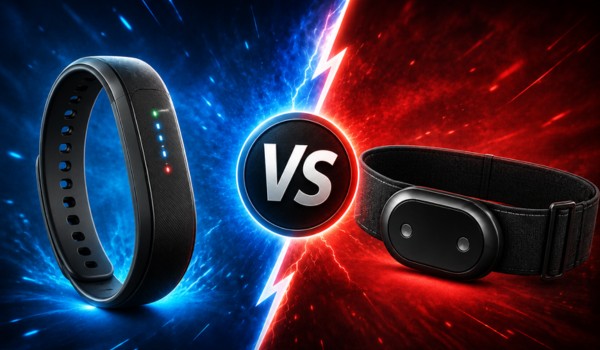
Hume Health App vs Polar Flow
Software is another area where the products’ different purposes become obvious.
The Hume Health app is designed around wellness patterns. It organizes metrics such as recovery, HRV, sleep, health scores, activity information, and Hume’s proprietary metabolic and longevity-focused indicators.
The core application is available to Hume Band users without requiring a subscription. Hume also offers an optional Premium membership for more advanced AI-generated insights, coaching, and deeper analysis.
Polar Flow, by comparison, is heavily oriented toward exercise and training. When you connect the Polar H10 within the Polar ecosystem, heart-rate data can contribute to detailed workout analysis.
Polar H10 also works beyond Polar Flow because its widely supported connectivity standards let it communicate with many third-party training devices and apps.
Hume therefore provides a broader daily wellness experience, while Polar provides a more sports-oriented ecosystem.
Which Is Better for Weight Management?
Neither Hume Band nor Polar H10 directly causes weight loss. Both can, however, provide data that may help users better understand physical activity.
Polar H10 may be useful when exercise intensity is an important part of a structured fitness routine. More responsive workout heart-rate data can help users determine whether training sessions are at their intended intensity.
Hume Band provides more information outside the gym. It combines activity, sleep, recovery, steps, heart rate, and other wellness trends, which may be more useful for someone trying to improve overall consistency.
For general lifestyle and activity awareness, the Hume Band offers the broader toolkit. For accurate heart rate measurement during calorie-burning workouts, Polar H10 has the specialized advantage. Treat wearable calorie estimates as estimates, not exact measurements of energy expenditure.
✅ Click to Buy Hume Band at a Discounted Price!
Can You Use Hume Band and Polar H10 Together?
For serious fitness enthusiasts, the most interesting answer may be that you do not necessarily have to choose only one. The devices perform different jobs.
You could wear a Hume Band throughout the day and night to monitor sleep, activity, HRV, recovery, and wellness trends, then put on a Polar H10 for running, cycling, HIIT, or other key workouts.
The Polar H10 could provide precise exercise heart-rate data through a compatible training device or application, while Hume continues serving as your everyday health wearable.
However, users should not assume that Polar H10 heart-rate data can automatically replace the Hume Band’s heart-rate readings inside the Hume Health app. Always confirm compatibility between two separate ecosystems before buying them for direct data integration.
Who Should Choose the Hume Band?
🔹 The Hume Band may be better for people who want:
- 24/7 wearable tracking
- Heart-rate trends
- Automatic HRV monitoring
- Sleep tracking
- Sleep-stage information
- Recovery insights
- Blood oxygen tracking
- Skin-temperature trends
- Steps and daily activity
- Long-term wellness information
- A screen-free wearable
- Up to 14 days of rechargeable battery life
- A broader health picture rather than workout HR alone
It is particularly suited to someone asking, “How is my body responding to my overall lifestyle?”
Who Should Choose the Polar H10?
🔹 Polar H10 may be better for:
- Runners
- Cyclists
- Triathletes
- HIIT enthusiasts
- Competitive athletes
- Heart-rate-zone training
- Interval workouts
- Indoor cycling
- Rowing
- Sports involving significant wrist movement
- Users who already own a sports watch
- People wanting Bluetooth and ANT+ compatibility
- Anyone prioritizing exercise HR accuracy over everyday wellness metrics
Its main question is simpler: “What is my heart rate doing during this workout?”
✅ Click to Buy Hume Band at a Discounted Price!
Hume Band vs Polar H10: Pros and Cons
🔹 Hume Band Pros
- Comfortable for continuous wrist wear
- Tracks heart rate throughout the day
- Provides automatic HRV information
- Tracks sleep and sleep stages
- Includes recovery metrics
- Tracks blood oxygen
- Monitors skin temperature
- Tracks steps and everyday activity
- Up to 14-day rechargeable battery
- Core application does not require a mandatory subscription
🔹 Hume Band Cons
- Optical wrist monitoring may be less ideal for rapidly changing workout heart rates
- Less sports-device connectivity than Polar H10
- Requires periodic recharging
- Many advanced wellness scores are proprietary interpretations
- Not primarily designed as a professional training heart-rate sensor
🔹 Polar H10 Pros
- Excellent choice for accurate workout heart rate
- Electrical chest measurement
- Responsive during intense exercise
- Strong Bluetooth support
- ANT+ compatibility
- Polar GymLink support
- Works with numerous sports devices
- Stores one training session
- Up to 400 hours of battery life
- Replaceable battery
- Strong choice for heart-rate-zone training
🔹 Polar H10 Cons
- Requires a chest strap
- Not designed for all-day wear
- No native sleep-stage tracking
- No blood oxygen measurement
- No skin-temperature monitoring
- No conventional daily step tracking
- Does not replace a complete fitness tracker or smartwatch
- Less useful by itself for holistic wellness tracking
Hume Band vs Polar H10: Which Is Better?
There is no universal winner because these products solve different problems.
For everyday wellness tracking, sleep, recovery, HRV trends, activity, and 24/7 monitoring, the Hume Band is the more complete device.
For accurate heart-rate measurements during running, cycling, HIIT, and demanding workouts, the Polar H10 is the stronger choice.
The distinction can be summarized simply: Choose Hume Band if you want to understand your day. Choose Polar H10 if you want to understand your workout.
Someone who exercises casually several times per week may appreciate Hume’s convenience because the device keeps gathering useful information before, during, and after exercise.
A performance-focused athlete is more likely to value the H10 because highly responsive heart-rate measurement can matter more than sleep stages, steps, or temperature readings during a training session.
Final Verdict: Hume Band vs Polar H10
The Hume Band vs Polar H10 comparison shows why specifications alone don’t determine which wearable is better. Hume Band 2.0 and Polar H10 belong to overlapping but fundamentally different categories.
Hume Band is designed around continuous health awareness. It collects information throughout the day and night and brings heart rate, HRV, sleep, activity, blood oxygen, skin temperature, strain, and recovery into one wellness-focused platform.
Polar H10 has a much narrower mission, but it performs that mission extremely well. Its electrical chest sensing, stable contact, Bluetooth and ANT+ connectivity, long replaceable-battery life, and broad compatibility make it an excellent tool for people who prioritize heart-rate information during exercise.
If you are comparing the two specifically for heart-rate accuracy during workouts, Polar H10 gets the advantage. If you are comparing them as an everyday wearable health tracker, Hume Band is clearly more versatile.
For serious athletes who want both perspectives, these devices could even complement one another: Hume Band for continuous wellness and recovery trends, and Polar H10 for important training sessions.
Ultimately, the right choice depends on the question you want your wearable to answer. For a broad view of sleep, activity, recovery, and everyday physiology, choose Hume Band. For focused, responsive, and highly accurate workout heart-rate tracking, choose Polar H10.
Frequently Asked Questions
Is Hume Band better than Polar H10?
Hume Band is better for 24/7 wellness, sleep, activity, recovery, and health-trend tracking. Polar H10 is better when precise heart-rate measurement during exercise is the main priority.
Is Polar H10 more accurate than a wrist heart rate tracker?
Electrical chest straps generally have advantages during demanding exercise because wrist-based optical sensors can be affected by motion. The Polar H10 is designed for highly accurate, responsive workout heart-rate tracking.
Does Hume Band track sleep?
Yes. Hume Band 2.0 tracks sleep and reports stages including light, deep, REM, and awake periods alongside other recovery information.
Does Polar H10 track sleep?
Polar H10 is primarily a training heart-rate sensor rather than a dedicated sleep wearable. Users who want automatic overnight sleep stages and daily recovery information are generally better served by a continuous wrist wearable.
Can Polar H10 measure HRV?
The electrical heart signals captured by the H10 can support HRV analysis when used with compatible software or devices. The H10 is commonly selected when users need detailed cardiac timing information during specialized monitoring or training.
Does Hume Band measure HRV?
Yes. Hume lists heart rate variability among the health biomarkers monitored by Band 2.0 and uses the information within its broader recovery and wellness platform.
Is Polar H10 good for running?
Yes. The Polar H10 is especially suitable for runners who want accurate heart-rate zones, intervals, tempo workouts, and other sessions with rapid intensity changes.
Is Hume Band good for fitness tracking?
Yes. Hume Band tracks everyday activity, heart rate, steps, strain, recovery, and several additional wellness metrics. It is better suited to broad fitness and lifestyle monitoring than specialized heart-rate-only tracking.
Do I need a subscription for Hume Band?
You don’t need a subscription to use the Band or access its core data. Hume offers an optional Premium membership for additional AI-driven analysis and personalized coaching.
Which is better for athletes: Hume Band or Polar H10?
For athletes who prioritize workout heart-rate accuracy, Polar H10 is usually the stronger choice. The Hume Band becomes more attractive when sleep, daily activity, recovery, and longer-term wellness trends matter more than heart-rate accuracy.

Click To Learn More About Hume Band
References
https://en.wikipedia.org/wiki/Heart_rate_monitor
https://www.webmd.com/heart/what-is-heart-rate-variability
https://www.healthline.com/health/fitness/heart-rate-monitor
https://www.mayoclinic.org/healthy-lifestyle/fitness/in-depth/exercise-intensity/art-20046887
About Us
