Hume Band vs Apple Watch: Which Is Better for Health in 2026?
Wearable technology has evolved far beyond basic step counting. Today, people use smartwatches and health bands to monitor sleep, heart rate, workouts, recovery, stress patterns, cardiovascular trends, daily movement, and overall wellness.
Two devices that attract attention for different reasons are the Hume Band and the Apple Watch.
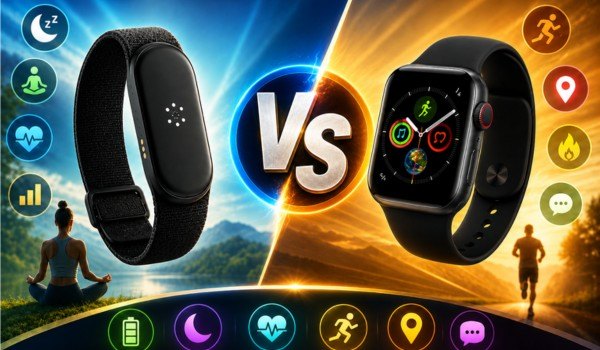
The Hume Band vs Apple Watch comparison is especially interesting because these products approach wearable health technology differently..
Hume Band 2.0 is primarily designed as a continuous health and wellness tracker. It focuses on collecting physiological data and turning that information into understandable insights about sleep, recovery, activity, metabolic health, and long-term wellness.
Hume Band vs Apple Watch: Which Wearable Is Right For You?
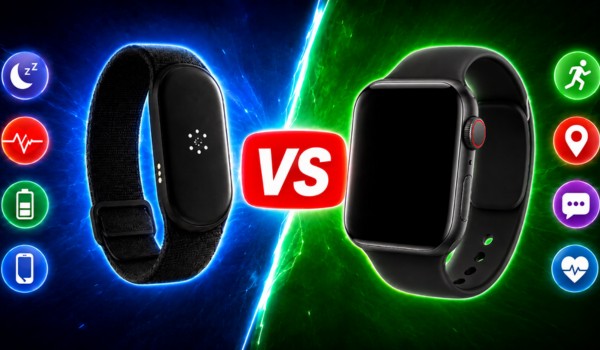
The Apple Watch, on the other hand, combines health monitoring with the features of a complete smartwatch. It offers fitness tracking, GPS, notifications, apps, calls, messages, safety features, and integration with the Apple ecosystem.
For this comparison, the Hume Band 2.0 is compared mainly with the Apple Watch Series 11, one of Apple’s current mainstream smartwatch models.
So, which wearable is better?
The answer depends on what you expect from the device. If your priority is continuous wellness tracking, long battery life, sleep, and recovery, Hume Band may have the advantage. If you want an advanced smartwatch with health and fitness features, Apple Watch offers a much broader experience.
Hume Band vs Apple Watch: Quick Comparison
| Feature | Hume Band 2.0 | Apple Watch Series 11 |
|---|---|---|
| Primary Purpose | Health, recovery, sleep, wellness tracking | Health, fitness, communication, smartwatch functions |
| Heart Rate Tracking | Yes | Yes |
| Heart Rate Variability | Yes | Yes |
| Blood Oxygen Tracking | Yes | Available on supported models/regions |
| Temperature Tracking | Yes | Yes |
| Sleep Tracking | Yes | Yes |
| Recovery Tracking | Strong focus | Available through multiple health metrics |
| ECG | Not a primary listed feature | Yes |
| GPS | Not a primary feature | Built-in GPS |
| Calls & Messages | No full smartwatch functionality | Yes |
| Apps | Primarily Hume Health ecosystem | Extensive app ecosystem |
| Battery Life | Up to around 14 days | Around 24 hours in normal use |
| Android Support | Yes | No |
| iPhone Support | Yes | Yes |
| Subscription Required | No for core features | No for standard features |
| Best For | Sleep, recovery, health trends | Fitness, GPS, health, apps, communication |
What Is the Hume Band?
The Hume Band 2.0 is a health-focused wearable that continuously monitors physiological signals throughout the day and night.
Unlike traditional smartwatches, the Hume Band does not primarily function as an extension of your smartphone. Instead, it focuses on health-related information and organizes it into simple wellness insights.
The band monitors metrics such as heart rate, heart rate variability, blood oxygen levels, skin temperature, sleep stages, activity, recovery, and strain.
Its companion app then analyzes these measurements to help users better understand their daily habits and overall wellness patterns.
Hume also emphasizes broader measurements such as Metabolic Capacity, Metabolic Momentum, and Health Score. These are designed to give users a simplified picture of how sleep, activity, recovery, and lifestyle habits may be affecting overall wellness.
Rather than displaying endless notifications on your wrist, the Hume Band is designed to work quietly in the background. This approach may appeal to people who want continuous health data without wearing another bright screen.
However, the Hume Band should be considered a wellness device, not a diagnostic medical device. Measurements from a consumer wearable should not replace professional medical tests, blood pressure monitoring, medical evaluation, or advice from a healthcare professional.
✅ Click to Buy Hume Band at a Discounted Price!
What Is the Apple Watch?
The Apple Watch is a full-featured smartwatch that combines everyday technology with fitness and health monitoring.
Apple Watch Series 11 includes advanced sensors that can monitor heart rate, workouts, movement, sleep, temperature-related trends, and other health measurements.
It also includes ECG monitoring, high- and low-heart-rate alerts, irregular-rhythm notifications, sleep information, fitness metrics, and various cardiovascular insights. However, health monitoring represents only part of what an Apple Watch can do.
🔹 Users can also:
- Receive messages
- Answer calls
- View notifications
- Use navigation
- Listen to music
- Access apps
- Use timers
- Set alarms
- Track workouts
- Make payments
- Use voice assistance
- Access safety features
- Use GPS
- Control compatible Apple devices
That makes Apple Watch considerably more versatile.
In simple terms, the Apple Watch is a smartwatch with strong health features, whereas the Hume Band is primarily a health-tracking wearable.

Hume Band vs Apple Watch for Health Tracking
Health tracking is one of the most important areas to consider when comparing these two devices.
🔹 Hume Band Health Tracking
Hume Band is designed around continuous physiological monitoring.
🔹 Depending on available software features, the band can track information such as:
- Continuous heart rate
- Heart rate variability
- Blood oxygen
- Skin temperature
- Daily activity
- Sleep stages
- Sleep quality
- Recovery
- Strain
- Movement patterns
- Calories
- Activity zones
- General wellness trends
The biggest advantage of Hume is how this data is presented. Instead of focusing only on individual numbers, the platform combines different measurements into broader health and recovery insights.
For example, a user may have slept for eight hours but still have a low recovery score because heart rate variability, resting heart rate, or sleep quality differed from their usual patterns. This type of interpretation may help people understand how their lifestyle influences their overall wellness.
🔹 Apple Watch Health Tracking
Apple Watch also provides extensive health-tracking capabilities.
🔹 Depending on the model and region, health features may include:
- Continuous heart-rate measurements
- Resting heart rate
- Heart-rate variability
- ECG
- Irregular rhythm notifications
- High heart-rate alerts
- Low heart-rate alerts
- Sleep tracking
- Sleep stages
- Wrist temperature
- Cardio fitness information
- Blood oxygen features
- Activity monitoring
- Workout tracking
- Respiratory information
- Overnight vitals
- Hypertension-related notifications
Apple Watch therefore has an advantage for people looking for a broader combination of health monitoring and smartwatch functionality. Its ECG feature is especially notable because it adds a heart-focused function that isn’t a central feature of the Hume Band.
🔹 Health Tracking Winner
There is no absolute winner. Hume Band may be better for recovery, sleep, and long-term wellness interpretation. The Apple Watch may be better for users who want a wider range of health tools alongside fitness and smartwatch functionality.
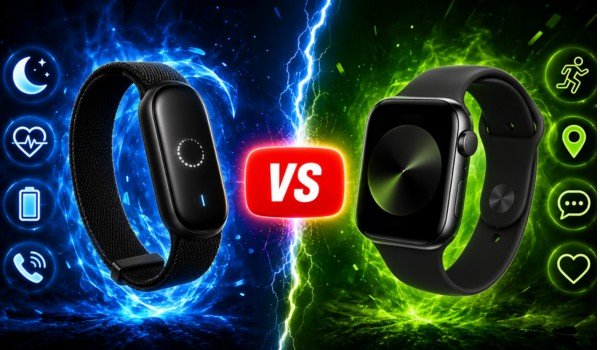
Hume Band vs Apple Watch for Sleep Tracking
Sleep tracking has become one of the most popular reasons people wear health devices overnight. Both Hume Band and Apple Watch can monitor sleep, but they approach the experience differently.
Hume Band tracks sleep duration and different sleep stages, including lighter sleep, deeper sleep, and REM-related patterns. It also combines sleep information with other physiological measurements to estimate recovery.
This is useful because total sleep time alone does not always tell the full story. Two people could both sleep eight hours but wake up feeling completely different depending on sleep quality, stress, activity, and recovery.
The Hume platform brings these factors together. Apple Watch also provides detailed sleep tracking.
🔹 Users can monitor:
- Total sleep time
- Awake periods
- Core sleep
- Deep sleep
- REM sleep
- Overnight heart rate
- Respiratory trends
- Temperature-related information
- Sleep score on supported software
One practical advantage of Hume Band is battery life. A wearable that lasts many days between charges is easier to keep on your wrist every night. With Apple Watch, users generally need to develop a regular charging routine.
Although modern Apple Watch models support faster charging, Hume still has the advantage for people who want to wear their device continuously.
🔹 Sleep Tracking Winner: Hume Band
Hume Band has an edge for uninterrupted overnight tracking because of its longer advertised battery life and recovery-focused software.
✅ Click to Buy Hume Band at a Discounted Price!
Hume Band vs Apple Watch for Fitness
For dedicated fitness tracking, Apple Watch is likely the stronger choice.
🔹 Apple Watch supports many exercise modes, including:
- Walking
- Running
- Cycling
- Swimming
- Strength training
- High-intensity interval training
- Yoga
- Pilates
- Rowing
- Hiking
- Dance
- Multisport activities
The built-in GPS is particularly valuable for runners, cyclists, walkers, and hikers. It allows users to track pace, distance, speed, and routes without relying entirely on smartphone GPS.
Apple Watch also displays workout information directly on the wrist, making it convenient to check pace, heart rate, distance, workout zones, and other measurements while exercising.
Hume Band takes a different approach. It tracks activity and movement but is more focused on how exercise affects recovery and strain.
🔹 That means Hume may answer questions such as:
- Did I recover adequately from yesterday’s training?
- Am I placing too much strain on my body?
- Did poor sleep affect my recovery?
- Should I reduce training intensity today?
For casual fitness enthusiasts, that may be enough. However, dedicated runners and athletes who want detailed, live workout information will probably prefer the Apple Watch.
🔹 Fitness Winner: Apple Watch
Hume Band vs Apple Watch Battery Life
Battery life is one of the biggest differences between the two devices. Hume Band is advertised as offering up to approximately 14 days of battery life, depending on usage.
That means many users can wear the device continuously for several days and nights before worrying about charging. This is particularly helpful for sleep tracking and recovery analysis because fewer charging periods mean fewer gaps in health data.
The Apple Watch Series 11 offers about 24 hours of normal battery life, though Low Power Mode may extend it. Apple also provides fast charging, which can reduce inconvenience. Even so, users generally need to charge an Apple Watch much more frequently than a Hume Band.
🔹 Battery Life Winner: Hume Band
For people who dislike daily charging, Hume has a significant advantage.
Hume Band vs Apple Watch Design
The two devices also look and feel very different. Apple Watch has a bright touchscreen display.
🔹 Users can interact with:
- Apps
- Notifications
- Fitness information
- Messages
- Timers
- Maps
- Music
- Watch faces
- Health measurements
It functions like a small computer on the wrist. Hume Band is much more minimalist. Its purpose is primarily to collect data rather than encourage constant wrist interaction.
Many detailed measurements are viewed through the Hume Health app on a smartphone. This design may appeal to people who already spend too much time looking at screens. A dedicated band can continuously collect information without constantly asking for attention.
🔹 Design Winner
Apple Watch wins for interactivity. Hume Band wins for simplicity and minimal distraction.
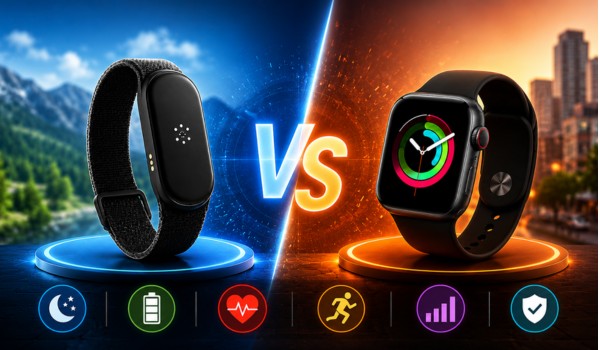
Hume Band vs Apple Watch for Recovery
Recovery is one area where Hume Band stands out. The device combines multiple measurements, including heart rate, HRV, sleep, and activity, to provide recovery-related information.
This may help users understand whether their body seems ready for intense exercise or whether additional rest might help.
🔹 For example, someone may notice that their recovery score decreases after:
- Poor sleep
- Heavy training
- Increased stress
- Travel
- Alcohol consumption
- Illness
- Major routine changes
Tracking these patterns over time may help users make more informed lifestyle decisions. Apple Watch also collects recovery-relevant information.
Its health ecosystem can show overnight measurements such as heart rate, respiratory rate, wrist temperature, sleep duration, and other vitals. The key difference is presentation.
Hume makes recovery one of the central parts of the user experience. Apple distributes similar information across health, fitness, vitals, and activity features.
🔹 Recovery Winner: Hume Band
Smart Features: Apple Watch Has the Advantage
If you want your wearable to do more than track health, Apple Watch wins easily.
🔹 Depending on the model and setup, Apple Watch can support:
- Ca
- nectivity
Safety features are another important advantage. Modern Apple Watch models may include functions such as Fall Detection, Crash Detection, and Emergency SOS. Hume Band does not attempt to compete in this category. It is designed primarily to gather and interpret health information.
🔹 Smart Features Winner: Apple Watch
Hume Band vs Apple Watch for Android Users
Android compatibility is another major difference. Apple Watch requires an iPhone for normal setup and use. Therefore, Android phone owners cannot realistically choose Apple Watch as their primary wearable.
Hume Band supports both compatible Android and iPhone devices. This gives Hume a clear advantage for people who want more flexibility.
🔹 Compatibility Winner: Hume Band
If you use Android, Hume Band is the practical choice of the two.
Subscription Costs
Subscriptions have become increasingly common in the wearable technology industry. Fortunately, Hume says you don’t need a paid subscription to access the Band’s core features.
Users can access basic health metrics and scores through the standard Hume ecosystem. An optional Premium membership may provide additional coaching, AI-generated insights, and more detailed interpretation.
Apple Watch also does not require a subscription for its standard health, fitness, and smartwatch features. Optional services such as Apple Fitness+ are separate.
🔹 Subscription Winner: Tie
Both devices provide their core functionality without requiring users to continually pay for a health-data subscription.
✅ Click to Buy Hume Band at a Discounted Price!
Hume Band vs Apple Watch Price
Price is another important consideration. Hume Band is generally positioned as a lower-cost dedicated health wearable. Depending on current promotions and configurations, its price may be around the $199 to $249 range.
Apple Watch Series 11 starts at a higher price, with cost increasing based on materials, size, cellular capability, and band selection. The higher price of Apple Watch reflects its broader functionality.
You are not only purchasing a health tracker. You are also purchasing GPS, a display, apps, communication tools, advanced sensors, safety functions, and deep integration with Apple’s ecosystem.
So evaluate the price based on what you actually plan to use it for. If you only want continuous health monitoring, Hume may provide better value. If you want a complete smartwatch, Apple Watch may justify the extra cost.
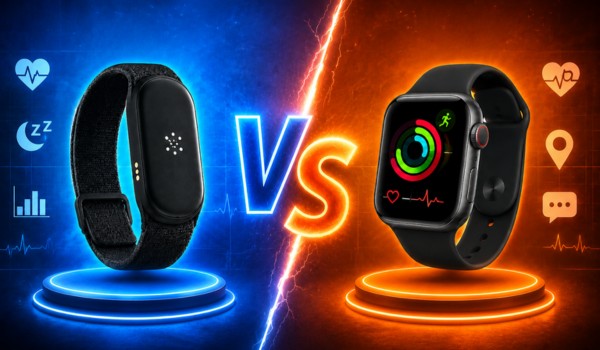
Hume Band Pros and Cons
🔹 Pros
- Long advertised battery life
- Continuous health tracking
- Strong recovery focus
- Sleep monitoring
- Heart-rate tracking
- HRV monitoring
- Blood-oxygen tracking
- Temperature-related tracking
- Wellness scores
- Minimalist design
- Android compatibility
- iPhone compatibility
- No required subscription for core features
- Less distracting than a traditional smartwatch
🔹 Cons
- Not a complete smartwatch
- Limited wrist-based interaction
- No extensive app ecosystem
- Less suitable for GPS-focused athletes
- Most detailed insights require a phone
- Some advanced coaching may require Premium access
- Consumer health measurements should not replace medical testing
Apple Watch Pros and Cons
🔹 Pros
- Advanced health tracking
- ECG functionality
- Detailed workout tracking
- Built-in GPS
- Sleep monitoring
- Heart-rate tracking
- Large app ecosystem
- Calls and messages
- Notifications
- Maps and navigation
- Music controls
- Apple Pay
- Emergency features
- Excellent iPhone integration
- Optional cellular connectivity
🔹 Cons
- Much shorter battery life
- Requires frequent charging
- Works only with iPhone
- Higher starting price
- More distracting than a minimalist band
- Some users may never use many smartwatch features
✅ Click to Buy Hume Band at a Discounted Price!
Who Should Choose the Hume Band?
Hume Band is best suited for people who primarily care about health, sleep, recovery, and long-term wellness trends.
🔹 You may prefer Hume Band if you:
- Want long battery life
- Track sleep every night
- Care about HRV
- Want recovery insights
- Prefer fewer notifications
- Use Android
- Want a lightweight health wearable
- Prefer wellness scores and trends
- Do not need smartwatch apps
- Want continuous monitoring
Hume may also appeal to users who already wear a traditional watch and want health tracking on another wrist.
Who Should Choose the Apple Watch?
The Apple Watch is better for people who want a single device that combines fitness, health, safety, communication, and everyday technology.
🔹 Apple Watch may be right for you if you:
- Own an iPhone
- Run regularly
- Cycle
- Swim
- Hike
- Want GPS
- Want ECG functionality
- Need workout information on your wrist
- Want messages and calls
- Use Apple Pay
- Want navigation
- Need smartwatch apps
- Value emergency safety features
For users already heavily invested in Apple’s ecosystem, Apple Watch offers a particularly seamless experience.
Hume Band vs Apple Watch for Heart Health
Both devices provide useful heart-related information, although their capabilities differ. Hume Band continuously monitors heart rate and heart rate variability.
Wellness and fitness platforms commonly use HRV to track changes in recovery, stress, and physical readiness. The device may also provide blood-oxygen and blood-pressure-related trend information. Apple Watch offers a wider collection of dedicated cardiovascular features.
🔹 These may include:
- Heart-rate monitoring
- ECG
- High heart-rate notifications
- Low heart-rate notifications
- Irregular-rhythm notifications
- Cardio-fitness information
- Hypertension-related notifications
For people who specifically want more heart-focused smartwatch features, Apple Watch has the stronger feature set.
However, neither device should be used to self-diagnose chest pain, fainting, severe shortness of breath, abnormal blood pressure, or suspected heart conditions.
Wearable information can be useful, but professional medical evaluation remains essential whenever concerning symptoms occur.
Hume Band vs Apple Watch for Long-Term Health Tracking
Long-term health tracking depends heavily on consistency. The more consistently a device is worn, the more information it can collect about normal patterns.
This gives Hume an important advantage. Its longer battery life means users can collect several consecutive days and nights of data without repeatedly removing the band.
🔹 This can be useful when identifying changes in:
- Sleep
- Resting heart rate
- HRV
- Activity
- Recovery
- Wellness trends
Apple Watch can also provide extensive long-term health history. The Apple Health ecosystem can store years of activity, sleep, heart rate, workout, and health information.
The main difference is the philosophy behind each platform. Hume focuses strongly on understanding recovery and long-term wellness patterns. Apple focuses on combining health information with fitness, safety, apps, and everyday smartwatch functionality.
✅ Click to Buy Hume Band at a Discounted Price!
Is Hume Band More Accurate Than Apple Watch?
Accuracy is difficult to summarize with a simple winner because different sensors and algorithms may perform differently depending on the measurement being examined.
🔹 Wearable measurements can also be influenced by:
- Wrist placement
- Movement
- Skin contact
- Device fit
- Sweat
- Tattoos
- Temperature
- Exercise intensity
- Individual physiology
Neither product should be considered perfectly accurate for every user or every metric.
A wearable is generally most useful for observing personal trends over time rather than treating every reading as a clinical measurement.
For example, noticing that your resting heart rate has been higher than your usual baseline for several consecutive days may be more useful than focusing too much on a single measurement.
Is Hume Band Better Than Apple Watch for Weight Management?
Neither device directly causes weight loss, but both can support healthier daily habits. Hume Band focuses more on sleep, recovery, activity, and metabolic wellness patterns.
Apple Watch emphasizes workouts, activity goals, calorie estimates, and movement reminders. Hume may suit users who want broader lifestyle and recovery insights.
Apple Watch may be better for people motivated by exercise and daily fitness targets. Sustainable weight management still depends on nutrition, activity, sleep, and consistent lifestyle choices.
Hume Band vs Apple Watch: Which Is Better for Beginners?
Both devices are beginner-friendly, but they provide different experiences. Hume Band is simpler because it mainly tracks health, sleep, recovery, and activity through its app.
Apple Watch includes more features such as workouts, GPS, apps, notifications, and calls. This broader functionality may take beginners a bit longer to learn.
The Hume Band may be better for users who want simple, health-focused tracking. Apple Watch may feel more natural for beginners who already use an iPhone and other Apple devices.
Hume Band vs Apple Watch: Which Is Better Overall?
There is no universal winner because the devices are designed for different priorities.
The Hume Band is particularly appealing for users who want health tracking, sleep information, recovery insights, minimal distraction, Android compatibility, and long battery life.
The Apple Watch is better for users who want health monitoring plus advanced fitness tracking, GPS, apps, calls, messages, payments, navigation, safety tools, and iPhone integration.
If health and recovery are your main priorities, Hume deserves serious consideration.
If you want one device capable of handling health, fitness, communication, and everyday smartwatch tasks, Apple Watch offers significantly more functionality.
Conclusion
In conclusion, Hume Band vs Apple Watch is less about choosing the device with the longest feature list and more about choosing the wearable that matches your lifestyle.
Hume Band 2.0 stands out for its health-focused approach, long battery life, sleep monitoring, HRV tracking, recovery information, and simplified wellness insights. It may be particularly suitable for people who want to understand daily health patterns without wearing a full smartwatch.
Apple Watch is the more powerful all-around wearable. It combines sophisticated health monitoring with GPS, workout tracking, communication, apps, navigation, safety features, and close integration with the iPhone.
For people focused primarily on sleep, recovery, continuous monitoring, and battery life, I would lean toward the Hume Band.
For people focused on fitness, GPS, heart-health features, communication, and smartwatch functionality, the Apple Watch is likely the better choice.
Ultimately, the most useful wearable is the one you are comfortable wearing consistently and whose information encourages healthier, more informed daily habits.
✅ Click to Buy Hume Band at a Discounted Price!
Frequently Asked Questions
Is Hume Band better than Apple Watch?
Hume Band may be better for sleep, recovery, long battery life, and continuous wellness monitoring. Apple Watch is better for GPS, fitness tracking, apps, communication, and smartwatch functions.
Does Hume Band work with iPhone?
Yes. Hume Band is designed to work with compatible iPhones through its companion app.
Does Hume Band work with Android?
Yes. Android compatibility is one of Hume Band’s advantages over Apple Watch.
Does Hume Band require a subscription?
No. You can use core Hume Band features without a subscription, though optional Premium features may be available.
Which has better battery life?
Hume Band has the clear advantage. Its advertised battery life can reach around 14 days, while Apple Watch generally requires much more frequent charging.
Which is better for sleep?
Hume Band is particularly attractive for sleep tracking because its longer battery life makes overnight use easier and more consistent.
Which is better for running?
Apple Watch is generally better for running because it provides built-in GPS, live workout information, route tracking, pace, distance, and additional fitness features.
Does Apple Watch have ECG?
Yes. Supported Apple Watch models provide ECG functionality where the feature is available.
Can Hume Band replace Apple Watch?
It can replace Apple Watch for users who mainly want health, sleep, recovery, and activity tracking. It cannot replace Apple Watch’s apps, calls, messaging, GPS, payments, and extensive smartwatch functions.
Is Hume Band a medical device?
Hume Band is designed as a wellness and health-tracking wearable, not a replacement for professional medical equipment or diagnosis.
Which wearable is worth buying in 2026?
Hume Band is worth considering for health-focused users prioritizing recovery and battery life. The Apple Watch is the stronger choice for users who want an advanced smartwatch with comprehensive fitness and health features.

Click To Learn More About Hume Band
References
https://en.wikipedia.org/wiki/Apple_Watch
https://www.webmd.com/fitness-exercise/compare-workout-trackers-devices
https://www.mayoclinic.org/healthy-lifestyle/fitness/in-depth/walking/art-20047880
https://www.healthline.com/nutrition/best-fitness-tracker
About Us