
How Wernicke-Korsakoff Syndrome Affects the Brain
How Wernicke-Korsakoff Syndrome Affects the Brain
Wernicke-Korsakoff syndrome is a severe neurological condition that develops due to a deficiency of vitamin B1 (thiamine), which is essential for normal brain energy metabolism.
When the brain is deprived of thiamine, it cannot properly convert glucose into energy, leading to widespread cellular dysfunction and, eventually, structural brain damage.
This condition is actually a combination of two closely related disorders: Wernicke encephalopathy (the acute phase) and Korsakoff syndrome (the chronic phase).
Understanding how this syndrome affects the brain is crucial because early intervention can reverse some of the damage, while delayed treatment often results in permanent cognitive impairment.

Understanding the Role of Thiamine in Brain Function
The human brain is one of the most energy-demanding organs in the body, consuming nearly 20% of total glucose-derived energy. Thiamine plays a central role in converting glucose into usable energy through enzymatic reactions.
When thiamine levels drop:
- Brain cells cannot efficiently produce ATP (energy)
- Neurons become metabolically stressed
- Oxidative damage increases
- Cell death begins in vulnerable brain regions
Over time, this energy failure leads to selective brain damage, especially in areas responsible for memory, coordination, and emotional regulation.
What Is Wernicke-Korsakoff Syndrome?
Wernicke-Korsakoff syndrome typically develops in individuals with long-term malnutrition or chronic alcohol misuse, although it can also occur in people with eating disorders, cancer, prolonged vomiting, or after bariatric surgery.
The syndrome progresses in two stages:
1. Wernicke Encephalopathy (Acute Stage)
This is a medical emergency characterized by sudden brain dysfunction due to severe thiamine depletion.
2. Korsakoff Syndrome (Chronic Stage)
If untreated, the acute phase evolves into long-term brain damage, primarily affecting memory and learning abilities.
The transition between these stages can happen quickly, sometimes within days or weeks.
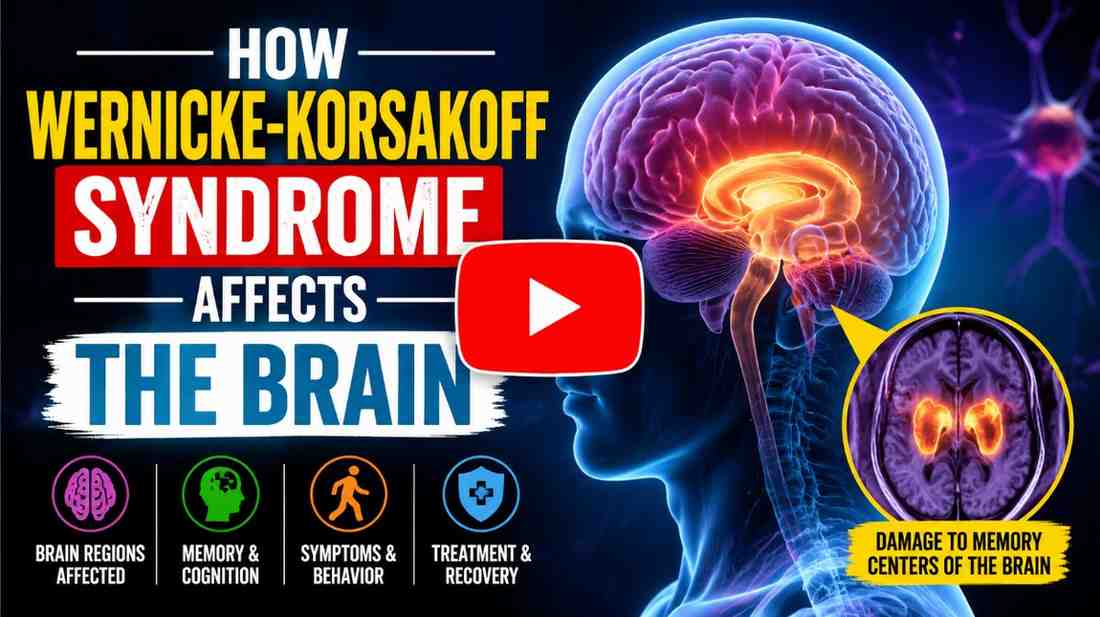
How the Brain Is Affected: Key Regions of Damage
Wernicke-Korsakoff syndrome does not affect the entire brain equally. Instead, it targets specific structures that are highly sensitive to thiamine deficiency.
Mammillary Bodies
- These small structures deep within the brain are critical for memory formation. Damage here leads to severe short-term memory loss and difficulty forming new memories.
Thalamus
- The thalamus acts as a relay station for sensory and cognitive signals. Damage disrupts communication between brain regions, causing confusion and disorientation.
Hypothalamus
- This region regulates autonomic functions such as hunger, sleep, and hormone balance. Damage can lead to irregular sleep cycles and metabolic disturbances.
Cerebellum
- Responsible for coordination and balance, cerebellar involvement leads to ataxia (unsteady movement) and difficulty walking.
5. Frontal Lobes
- The frontal cortex controls decision-making, planning, and emotional regulation. Damage contributes to apathy, poor judgment, and behavioral changes.
The Brain Mechanism of Damage
The underlying process behind Wernicke-Korsakoff syndrome involves a cascade of metabolic failure:
Step 1: Thiamine Depletion
The body’s thiamine reserves are rapidly exhausted due to poor intake, absorption issues, or chronic alcohol use.
Step 2: Energy Failure in Neurons
Without thiamine, glucose metabolism slows, and neurons cannot generate sufficient ATP.
Step 3: Oxidative Stress
Energy failure leads to the accumulation of toxic byproducts that damage cell membranes and DNA.
Step 4: Blood-Brain Barrier Dysfunction
The protective barrier becomes compromised, allowing harmful substances to enter brain tissue.
Step 5: Neuronal Death
Vulnerable brain regions begin to shrink due to irreversible cell loss.
This cascade explains why early treatment is critical—once neurons die, they cannot be replaced.
Wernicke Encephalopathy: The Acute Brain Crisis
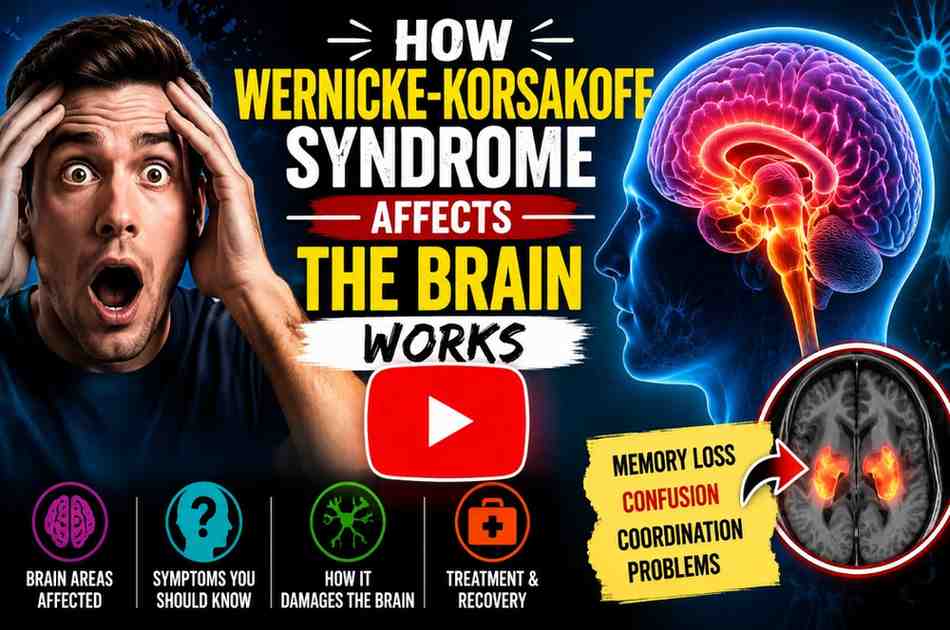
The first stage of the syndrome is characterized by a triad of symptoms:
- Confusion or mental disorientation
- Loss of coordination (ataxia)
- Abnormal eye movements (ophthalmoplegia or nystagmus)
However, not all patients present with all three symptoms, making diagnosis challenging.
Brain Effects in This Stage
During this acute phase:
- The thalamus and hypothalamus are highly stressed
- Cerebellar dysfunction leads to balance problems
- Cognitive processing slows dramatically
- Patients may appear confused, withdrawn, or agitated
Without immediate thiamine replacement, brain damage progresses rapidly.
Korsakoff Syndrome: Chronic Memory Dysfunction
Korsakoff syndrome represents long-term brain injury resulting from untreated Wernicke encephalopathy.
It is primarily characterized by profound memory impairment, including:
- Inability to form new memories (anterograde amnesia)
- Loss of memories (retrograde amnesia)
- Confabulation (fabricating stories unknowingly)
- Reduced insight into memory deficits

Why Memory Is So Severely Affected
Memory formation depends heavily on the limbic system, especially:
- Mammillary bodies
- Hippocampus
- Thalamic nuclei
Damage to these structures disrupts the brain’s ability to encode and retrieve information.
Cognitive and Behavioral Effects
Beyond memory loss, Wernicke-Korsakoff syndrome also affects broader cognitive and behavioral functions.
Cognitive Effects:
- Poor attention and concentration
- Reduced problem-solving ability
- Slowed thinking
- Difficulty learning new information
Behavioral Changes:
- Apathy or lack of motivation
- Emotional flatness
- Irritability or mood swings
- Social withdrawal
Executive Dysfunction:
- Impaired decision-making
- Poor judgment
- Difficulty planning daily activities
These changes significantly affect independence and quality of life.
Emotional and Psychological Impact
Brain damage caused by this condition also alters emotional regulation.
Patients may experience:
- Depression
- Anxiety
- Emotional instability
- Lack of awareness of their condition (anosognosia)
This emotional disconnect is often linked to frontal lobe dysfunction, which reduces self-awareness and behavioral control.
Diagnosis: How Brain Damage Is Identified
Diagnosing Wernicke-Korsakoff syndrome involves a combination of clinical evaluation and imaging studies.
Common Diagnostic Tools:
- Neurological examination
- Blood thiamine levels
- MRI brain scans
- Cognitive assessments
MRI Findings:
- Shrinkage of mammillary bodies
- Thalamic lesions
- Cerebellar atrophy
- Ventricular enlargement
Early detection is essential to prevent irreversible brain injury.
Treatment and Brain Recovery
The primary treatment is immediate thiamine replacement, often administered intravenously in acute cases.
Treatment Steps:
- High-dose thiamine supplementation
- Nutritional rehabilitation
- Electrolyte correction
- Alcohol cessation (if applicable)
- Cognitive rehabilitation therapy
Brain Recovery Potential:
- Early stage (Wernicke): Some reversal of symptoms is possible
- Chronic stage (Korsakoff): Damage is often permanent but manageable
Neuroplasticity allows partial adaptation, but severely damaged memory circuits may not fully recover.
Long-Term Outlook
The prognosis depends heavily on how early treatment begins.
- Early treatment: Significant improvement possible
- Delayed treatment: Partial recovery, persistent memory issues
- Untreated cases: Severe and permanent cognitive impairment
Patients often require long-term support for daily functioning, especially in severe Korsakoff cases.
Prevention: Protecting the Brain from Thiamine Deficiency
Preventing Wernicke-Korsakoff syndrome involves maintaining healthy thiamine levels.
Key prevention strategies include:
- A balanced diet rich in whole grains, legumes, and nuts
- Limiting alcohol consumption
- Early treatment of gastrointestinal disorders
- Vitamin supplementation in high-risk individuals
- Monitoring nutritional status in chronic illness
Because the brain is highly sensitive to thiamine deficiency, prevention is far more effective than treatment.
Why This Condition Is Often Missed
One of the major challenges with this syndrome is underdiagnosis.
Reasons include:
- Symptoms overlap with alcohol intoxication
- Early signs are subtle and nonspecific
- Memory issues are mistaken for aging or dementia
- Lack of awareness among caregivers
This delay in recognition often leads to progression from reversible brain dysfunction to permanent damage.
Conclusion
Wernicke-Korsakoff syndrome is a serious brain disorder that highlights the critical importance of nutrition in neurological health. It begins as an acute energy crisis in the brain and can progress into long-lasting structural damage if not treated promptly.
The condition primarily affects memory systems, coordination centers, and cognitive control regions of the brain, leading to confusion, amnesia, and behavioral changes.
While early intervention with thiamine can reverse some symptoms, delayed treatment often results in permanent impairment.
Understanding how this syndrome affects the brain emphasizes a simple but powerful truth: brain health depends heavily on metabolic balance.
Proper nutrition, early medical attention, and awareness of risk factors can prevent irreversible damage and preserve cognitive function.
References
https://en.wikipedia.org/wiki/Wernicke%E2%80%93Korsakoff_syndrome
https://www.healthline.com/health/wernicke-korsakoff-syndrome
https://www.webmd.com/brain/wernicke-korsakoff-syndrome
About Us
