
How Obstructive Sleep Apnea Affects Brain Function?
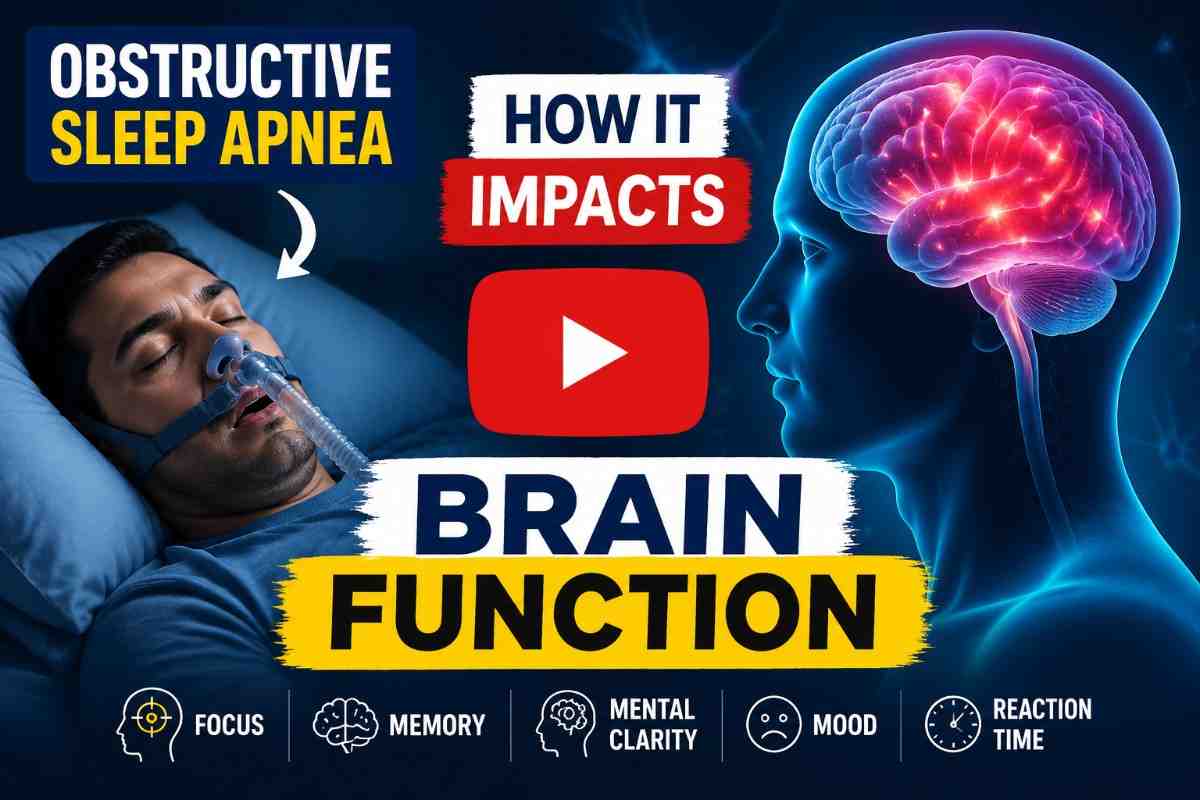
How Obstructive Sleep Apnea Impacts Brain Function?
Obstructive Sleep Apnea (OSA) is far more than a sleep disorder that causes loud snoring or pauses in breathing at night. It is increasingly recognized as a neurological and cognitive health condition that can significantly affect brain function over time.
When breathing repeatedly stops and starts during sleep, the brain is exposed to cycles of oxygen deprivation, sleep fragmentation, and physiological stress that directly influence memory, attention, decision-making, and long-term brain health.
This article explores in detail how OSA affects brain function, the mechanisms behind these changes, and why early diagnosis and treatment are critical for protecting cognitive health.

Understanding Obstructive Sleep Apnea and the Brain Connection
Obstructive Sleep Apnea occurs when the upper airway becomes partially or completely blocked during sleep. These blockages can happen dozens of times per hour, leading to repeated drops in oxygen levels and frequent awakenings.
The brain depends on a stable oxygen supply and uninterrupted sleep cycles to perform essential restorative processes. When this balance is disrupted:
- Oxygen delivery to the brain tissue decreases
- Sleep architecture becomes fragmented
- Stress hormones rise
- Neural communication becomes less efficient
Research shows that OSA is strongly associated with neurocognitive dysfunction, affecting multiple domains of brain performance, including attention, memory, learning, and executive function.
How Oxygen Deprivation Affects Brain Cells
One of the most damaging effects of OSA is intermittent hypoxia, meaning repeated episodes of low oxygen during sleep.
Each apnea episode briefly reduces oxygen flow to the brain. Over time, this can lead to:
1. Neuronal stress and injury
Brain cells are highly sensitive to oxygen levels. Repeated oxygen drops can impair cellular energy production, leading to oxidative stress and inflammation.
2. Blood vessel dysfunction
Low oxygen triggers vascular stress, affecting the small blood vessels that supply brain regions responsible for cognition.
3. Reduced neural efficiency
When oxygen is inconsistent, neurons cannot communicate effectively, slowing down brain processing speed.
Studies suggest that these oxygen fluctuations are a key driver behind long-term cognitive decline in untreated OSA.
Sleep Fragmentation and Memory Disruption
Healthy sleep is not just about duration—it is about continuous, structured sleep cycles. OSA disrupts these cycles through repeated micro-awakenings.
This fragmentation interferes with:
- Deep sleep (slow-wave sleep) is essential for memory consolidation
- REM sleep is critical for emotional processing and learning
- Glymphatic clearance, the brain’s waste removal system
As a result, the brain struggles to properly “organize and store” new information. This is why many people with OSA report:
- Forgetfulness
- Difficulty learning new tasks
- Poor recall of names or details
- Reduced mental clarity (“brain fog”)
Even if total sleep time appears normal, fragmented sleep prevents the brain from completing full restorative cycles.
Cognitive Functions Most Affected by Sleep Apnea
OSA does not impact all brain functions equally. Some cognitive domains are more vulnerable than others.
1. Attention and concentration
People with OSA often experience reduced vigilance and slower reaction times. This affects work performance, driving safety, and multitasking ability.
2. Memory (short-term and working memory)
The hippocampus—central to memory formation—is particularly sensitive to oxygen deprivation and sleep disruption.
3. Executive function
This includes planning, decision-making, problem-solving, and impulse control. These skills become less efficient in untreated OSA.
4. Processing speed
Brain signaling slows down, making thinking feel “foggy” or delayed.
5. Emotional regulation
OSA can also contribute to irritability, anxiety, and mood instability due to disrupted sleep and hormonal changes.
Clinical studies consistently show measurable cognitive impairment in individuals with untreated OSA, especially in attention and executive function domains.
Structural Changes in the Brain Linked to OSA
Beyond functional impairment, research has shown that OSA may also be associated with structural changes in the brain.
Neuroimaging studies have found:
- Reduced gray matter volume in the frontal cortex
- Changes in parietal lobe regions involved in attention
- Alterations in hippocampal structure related to memory
- Disrupted connectivity between brain networks
The frontal and hippocampal regions are especially important because they control higher-level thinking and memory formation.
In severe cases, these changes may resemble patterns seen in early neurodegenerative conditions, although not all damage is permanent, and some changes may improve with treatment.
The Role of Inflammation and Hormonal Stress
OSA does not only affects oxygen levels, but it also triggers systemic biological stress responses.
Chronic inflammation
Repeated oxygen drops activate inflammatory pathways, which can harm neurons and blood vessels over time.
Elevated cortisol levels
Sleep disruption increases stress hormones such as cortisol, which has been linked to reduced memory performance and impaired learning ability.
Oxidative stress
An imbalance between free radicals and antioxidants further contributes to cellular damage in brain tissue.
These combined processes create a long-term environment that is harmful to optimal brain function.

Risk of Cognitive Decline and Dementia
One of the most concerning long-term impacts of untreated OSA is its association with mild cognitive impairment and dementia risk.
Large-scale studies suggest that a significant portion of adults with OSA experience measurable cognitive decline, with prevalence estimates approaching one-third or more, depending on severity .
OSA has also been linked to:
- Increased risk of mild cognitive impairment (MCI)
- Faster age-related cognitive decline
- Higher likelihood of Alzheimer’s disease-related changes in the brain
This does not mean OSA directly causes dementia in every case, but it is increasingly recognized as a modifiable risk factor for long-term brain health.
How OSA Affects Daily Life and Productivity
The effects of OSA on are brain are not limited to clinical testing—they are noticeable in everyday functioning.
People with untreated sleep apnea often experience:
- Difficulty focusing at work or school
- Slower thinking and reaction times
- Increased mistakes and forgetfulness
- Reduced motivation and mental stamina
- Daytime sleepiness and fatigue
These symptoms can significantly impact academic performance, workplace efficiency, and even driving safety.
Can Brain Function Improve After Treatment?
The encouraging news is that many cognitive effects of OSA are partially reversible with treatment.
The most common treatment, Continuous Positive Airway Pressure (CPAP), helps:
- Keep the airway open during sleep
- Restore oxygen levels
- Reduce sleep fragmentation
- Improve sleep architecture
Studies show that after several months of consistent CPAP use, patients often experience:
- Improved attention and vigilance
- Better memory performance
- Enhanced executive function
- Reduced daytime sleepiness
While some long-standing structural changes may take longer to recover—or may not fully reverse—early treatment significantly improves outcomes.
Who Is Most at Risk for Brain Effects?
Certain groups are more vulnerable to OSA-related cognitive decline:
- Adults with untreated moderate to severe OSA
- Older individuals
- People with obesity or metabolic syndrome
- Individuals with hypertension or diabetes
- Those with chronic sleep deprivation or shift work schedules
The severity and duration of oxygen deprivation largely determine the extent of brain damage.
Why Early Diagnosis Matters
One of the biggest challenges with OSA is that many people remain undiagnosed for years. Symptoms like fatigue, snoring, or poor concentration are often mistaken for stress or lifestyle issues.
However, untreated OSA allows brain changes to progress silently over time.
Early diagnosis through a sleep study is essential because:
- Cognitive effects worsen with duration
- Cardiovascular risks increase
- Brain recovery becomes slower with long-term damage
Conclusion
Obstructive Sleep Apnea is not just a nighttime breathing disorder—it is a condition that directly affects brain function, cognition, and long-term neurological health.
Through repeated oxygen deprivation, sleep fragmentation, inflammation, and hormonal stress, OSA can impair attention, memory, decision-making, and processing speed.
The good news is that, in many cases, these effects are not inevitable or permanent. With early diagnosis and proper treatment, brain function can significantly improve, and long-term cognitive risks can be reduced.
Protecting sleep health is ultimately protecting brain health. Recognizing and addressing OSA early is one of the most important steps toward preserving cognitive performance and overall quality of life.
References
About Us
