
Funny Bone and Ulnar Nerve Pain in the Elbow – Explained
Funny Bone and Ulnar Nerve Pain in the Elbow – Understanding the “Funny Bone” and Why It Hurts
Most people have experienced that sudden, sharp, electric-shock-like pain when they accidentally hit their elbow against a hard surface. This sensation is commonly called the “funny bone” pain, but despite its name, there is nothing funny about it.
The funny bone is not actually a bone. It refers to the ulnar nerve, one of the main nerves that runs from the neck, travels down the arm, and passes behind the inner part of the elbow.
At this location, the nerve sits very close to the skin and rests in a narrow groove in the bone with minimal protection. Because of this exposed position, even a light bump can trigger intense discomfort.
When the ulnar nerve is struck or compressed, it sends a sudden “tingling,” “zinging,” or “electric shock” sensation down the arm into the ring and little fingers. This is because the ulnar nerve is responsible for sensation in these parts of the hand.


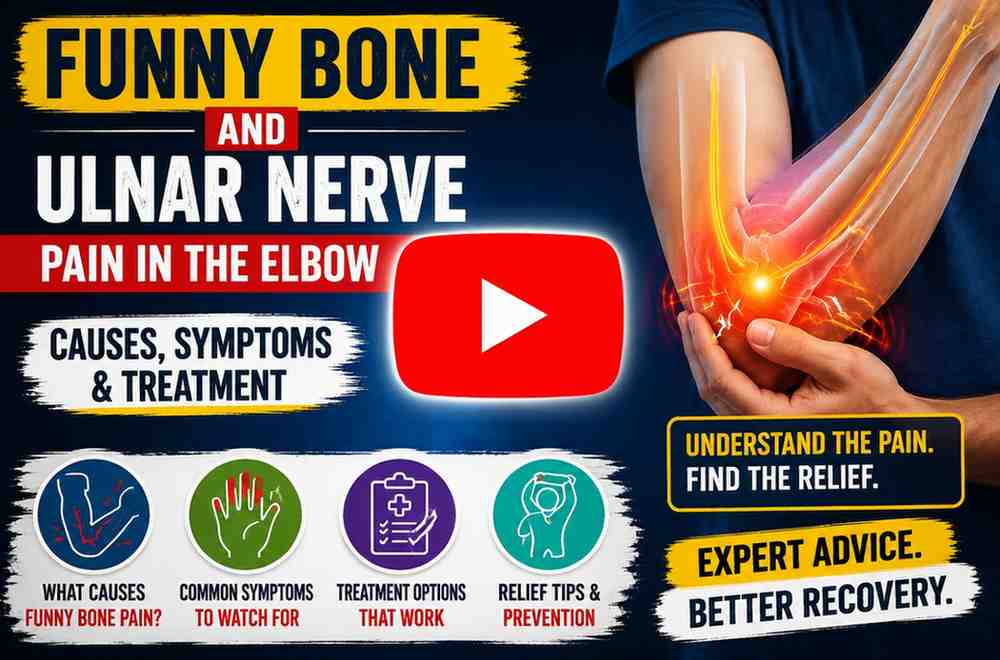
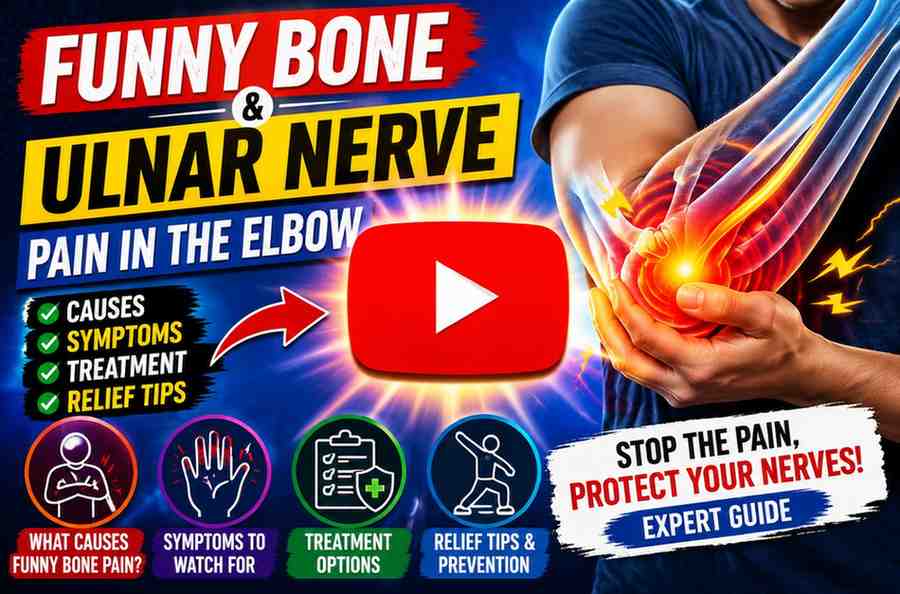
Funny bone – ulnar nerve pain happens when the nerve at the elbow is irritated, causing sharp tingling, numbness, or electric shock sensations.
Anatomy of the Ulnar Nerve in the Elbow
To understand ulnar nerve pain, it helps to look at its pathway.
The ulnar nerve originates from the neck and travels down the arm through the shoulder and forearm before reaching the hand. At the elbow, it passes through a narrow passage called the cubital tunnel, located behind the bony bump on the inner side of the elbow.
This area is commonly referred to as the “funny bone” region. Because the nerve is superficial here, it is highly vulnerable to:
- Direct impact (hitting the elbow)
- Repetitive bending of the elbow
- Prolonged pressure (leaning on elbows)
- Swelling or inflammation in surrounding tissues
The ulnar nerve controls sensation in the pinky finger and half of the ring finger and also supports fine motor control in the hand.
What Is Ulnar Nerve Pain?
Ulnar nerve pain occurs when the nerve becomes irritated, compressed, or inflamed. The most common condition affecting this nerve at the elbow is called cubital tunnel syndrome.
This condition occurs when the ulnar nerve is compressed as it passes through the cubital tunnel on the inner side of the elbow.
It can lead to symptoms ranging from mild tingling to severe pain and weakness in the hand.
 DON’T TRY THIS “FUNNY BONE AND ULNAR NERVE PAIN” UNTIL YOU SEE THIS
Causes of Funny Bone and Ulnar Nerve Pain
Ulnar nerve irritation can develop suddenly or gradually. The most common causes include:
1. Direct Impact on the Elbow
Striking the inner elbow triggers a shock-like sensation due to the nerve being compressed against bone.
2. Repetitive Elbow Bending
Frequent bending (such as using a phone, driving, or sleeping with bent elbows) can stretch and irritate the nerve.
3. Leaning on Elbows
Long periods of pressure on hard surfaces can compress the ulnar nerve.
4. Injury or Trauma
Fractures, dislocations, or swelling around the elbow can affect nerve function.
5. Arthritis or Bone Spurs
Degenerative changes in the elbow joint may reduce space for the nerve.
6. Anatomical Variations
Some people naturally have less space in the cubital tunnel, making nerve compression more likely.
Symptoms of Ulnar Nerve Pain in the Elbow
Symptoms depend on how severely the nerve is irritated. Common signs include:
Tingling and Numbness
- Ring finger and little finger often feel “asleep”
- Symptoms may come and go, especially at night
Electric Shock Sensation
- Sudden pain when the elbow is bumped
Burning or Aching Pain
- Pain inside the elbow or down the forearm
Weakness in the Hand
- Difficulty gripping objects
- Reduced finger coordination
Clumsiness in Hand Movements
- Dropping items more often
- Trouble with fine motor tasks like buttoning shirts
In advanced cases, long-term compression may lead to muscle wasting in the hand.
Cubital Tunnel Syndrome: A Deeper Look
Cubital tunnel syndrome is one of the most common causes of chronic ulnar nerve pain. It occurs when the nerve becomes repeatedly compressed or stretched at the elbow joint.
The condition often worsens when:
- The elbow is bent for long periods
- Pressure is applied to the inside of the elbow
- Repetitive arm movements are performed
As the nerve becomes irritated, it may become inflamed, making symptoms more persistent over time.
How Ulnar Nerve Pain Is Diagnosed
Doctors diagnose ulnar nerve issues using:
Physical Examination
Checking elbow tenderness, sensation, and grip strength.
Tinel’s Test
Tapping over the nerve to see if it triggers tingling sensations.
Nerve Conduction Studies
Measuring how fast electrical signals move through the nerve.
Imaging Tests
X-rays or MRI may be used to check for bone or structural issues.
DON’T TRY THIS “FUNNY BONE AND ULNAR NERVE PAIN” UNTIL YOU SEE THIS
Treatment Options for Funny Bone and Ulnar Nerve Pain
Treatment depends on severity. Most cases improve without surgery.
1. Lifestyle Changes
- Avoid leaning on elbows
- Reduce prolonged bending
- Adjust sleeping positions
2. Bracing or Splints
Wearing a night splint helps keep the elbow straight and reduces nerve pressure.
3. Physical Therapy
Exercises may help:
- Improve nerve mobility
- Reduce inflammation
- Strengthen surrounding muscles
4. Medications
Anti-inflammatory drugs may reduce swelling and pain.
5. Surgery (Severe Cases)
If symptoms persist, surgical options may include:
- Releasing pressure in the cubital tunnel
- Repositioning the nerve to a safer location

Home Remedies for Relief
Mild cases of ulnar nerve pain can often be managed at home:
Cold Compress
Reduces swelling after irritation.
Elbow Protection
Use cushioning when resting elbows on surfaces.
Posture Correction
Maintain proper arm positioning during work.
Activity Modification
Avoid repetitive elbow bending activities.
Prevention Tips
Preventing ulnar nerve pain involves protecting the elbow:
- Avoid resting elbows on hard desks
- Keep elbows straight when sleeping
- Take breaks during repetitive arm activities
- Use ergonomic desk setups
- Strengthen arm and shoulder muscles
Small changes in daily habits can significantly reduce nerve irritation.
DON’T TRY THIS “FUNNY BONE AND ULNAR NERVE PAIN” UNTIL YOU SEE THIS
When to See a Doctor
You should seek medical help if you experience:
- Persistent numbness or tingling
- Increasing hand weakness
- Symptoms lasting more than a few weeks
- Difficulty performing daily tasks
Early treatment helps prevent long-term nerve damage.
Final Thoughts
References
About Us
