Peripheral Neuropathy and MS: Symptoms, Causes & Differences
Peripheral neuropathy and multiple sclerosis (MS) are two neurologically complex conditions that often appear similar in early stages due to overlapping symptoms such as numbness, tingling, weakness, and pain.
However, they originate in completely different parts of the nervous system and involve distinct biological mechanisms.
While peripheral neuropathy affects the peripheral nerves outside the brain and spinal cord, MS is a central nervous system autoimmune disorder that damages myelin in the brain and spinal cord.
Because both systems work together, disruption in either can create similar functional impairments, making diagnosis challenging without advanced testing.
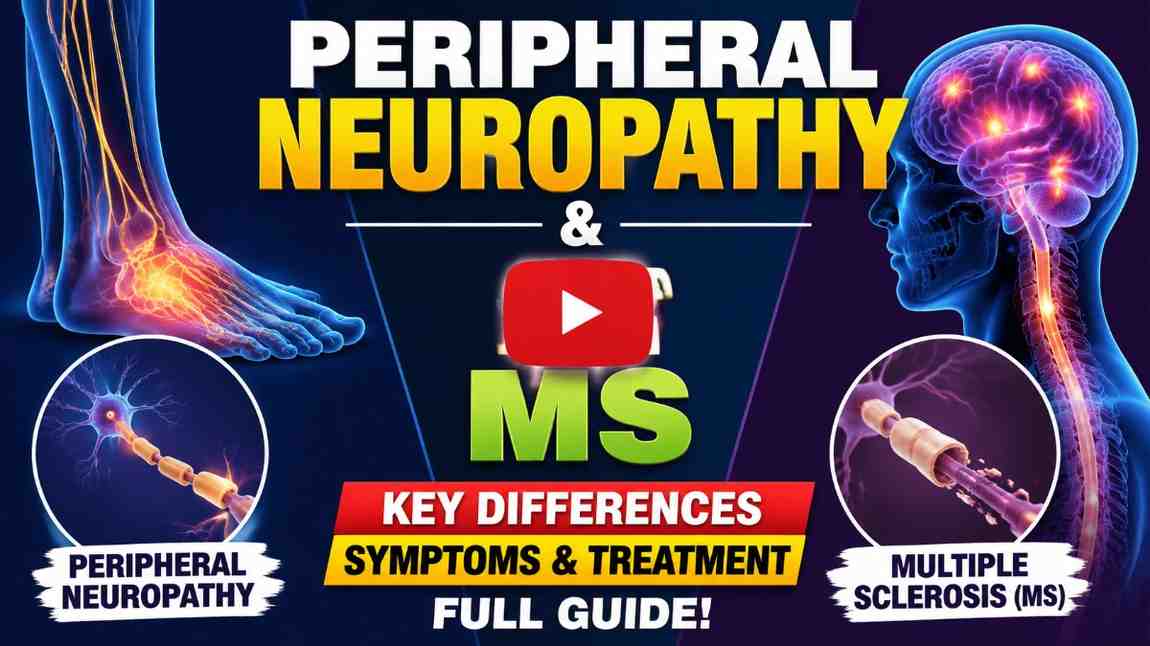

This expanded guide provides a deep clinical understanding of both conditions, including how they develop, how they differ, why misdiagnosis happens, and how modern medicine approaches treatment.
Understanding the Nervous System in Context
To understand peripheral neuropathy and MS, it is essential to understand how nerve signaling works in the body.
The nervous system is divided into:
- Central Nervous System (CNS): brain and spinal cord
- Peripheral Nervous System (PNS): nerves that extend throughout the body
The CNS acts as the command center, while the PNS acts as communication pathways connecting organs, muscles, and sensory receptors to the brain.
When these pathways are disrupted:
- In the PNS → peripheral neuropathy occurs
- In the CNS → MS develops
This distinction is critical because it determines symptoms, prognosis, and treatment strategies.
What is Peripheral Neuropathy?
Peripheral neuropathy refers to damage or dysfunction of peripheral nerves. These nerves control:
- Sensation (touch, temperature, pain)
- Motor function (muscle movement)
- Autonomic functions (heart rate, digestion, sweating)
When these nerves are damaged, signals between the brain and body become distorted or blocked.
Types of Peripheral Neuropathy
- Sensory neuropathy – affects sensation
- Motor neuropathy – affects muscle control
- Autonomic neuropathy – affects involuntary body functions
- Mixed neuropathy – combination of types
Clinical Pattern
- Starts in feet and hands
- Gradual upward progression (“stocking-glove pattern”)
- Symmetrical involvement
- Burning, tingling, or stabbing pain
Peripheral neuropathy is often chronic and progressive depending on the underlying cause.
👉 DON’T TRY THIS “PERIPHERAL NEUROPATHY AND MS” UNTIL YOU SEE THIS
What is Multiple Sclerosis (MS)?
Multiple Sclerosis is a chronic autoimmune condition where the immune system mistakenly attacks myelin, the protective covering of nerve fibers in the brain and spinal cord.
Myelin is essential for fast and efficient nerve communication. When it is damaged:
- Nerve signals slow down
- Messages become distorted
- Neurological functions become impaired
Disease Mechanism
MS is characterized by:
- Demyelination (loss of myelin)
- Inflammation in CNS tissue
- Formation of lesions or plaques
- Axonal damage in advanced stages
Clinical Course
- Relapsing-remitting MS (most common)
- Secondary progressive MS
- Primary progressive MS
Symptoms vary widely depending on lesion location in the CNS.
Peripheral Neuropathy vs MS: Core Differences
| Feature | Peripheral Neuropathy | MS |
| Affected system | Peripheral nerves | Brain and spinal cord |
| Cause | Metabolic, toxic, diabetic, autoimmune | Autoimmune demyelination |
| Symmetry | Usually symmetrical | Often asymmetrical |
| Reflexes | Reduced or absent | Increased reflexes |
| Vision issues | Rare | Common (optic neuritis) |
| Disease pattern | Gradual progression | Relapsing or progressive |
Understanding these differences is essential for accurate diagnosis.
Why Symptoms Overlap
Both conditions disrupt nerve signaling, which explains overlapping symptoms such as:
- Numbness
- Tingling sensations
- Burning pain
- Muscle weakness
- Balance issues
However, the origin of disruption differs:
- Peripheral neuropathy → faulty peripheral nerve transmission
- MS → faulty central processing and signal transmission
This difference often leads to misdiagnosis in early stages.
Pathophysiology of Peripheral Neuropathy (Deeper Insight)
Peripheral neuropathy occurs when nerve fibers are damaged due to:
1. Metabolic Damage
High blood sugar in diabetes leads to:
- Nerve ischemia
- Oxidative stress
- Mitochondrial dysfunction
2. Toxic Injury
Exposure to toxins or medications damages nerve membranes.
3. Immune-Mediated Damage
Autoimmune activity attacks peripheral nerves.
4. Nutritional Deficiencies
Vitamin B12 deficiency disrupts myelin maintenance in peripheral nerves.
Over time, damaged nerves fail to regenerate properly, leading to chronic symptoms.

Pathophysiology of MS (Deeper Insight)
In MS, immune cells cross the blood-brain barrier and attack CNS myelin.
Key immune components involved:
- T cells
- B cells
- Macrophages
Process:
- Immune activation
- Blood-brain barrier disruption
- Myelin destruction
- Inflammatory lesion formation
- Axonal injury (in advanced stages)
Unlike peripheral neuropathy, MS is primarily inflammatory and autoimmune in origin.
Diagnostic Challenges and Misdiagnosis
Because early symptoms overlap, misdiagnosis can occur.
Common diagnostic confusion scenarios:
- Early MS mistaken for peripheral neuropathy
- Diabetic neuropathy mistaken for spinal MS lesions
- Fibromyalgia confusion due to widespread pain
Why misdiagnosis happens:
- Symptom similarity
- Non-specific early neurological signs
- Lack of early MRI changes in MS
- Subtle nerve conduction changes in mild neuropathy
Correct diagnostic tools:
- Nerve conduction studies (PN)
- Electromyography (PN)
- MRI brain/spine (MS)
- Cerebrospinal fluid analysis (MS)
Autonomic Nervous System Involvement
Peripheral neuropathy can affect autonomic nerves leading to:
- Blood pressure instability
- Digestive problems
- Abnormal sweating
- Heart rate variability
MS can also affect autonomic functions but typically due to spinal cord involvement rather than peripheral nerve damage.
👉 DON’T TRY THIS “PERIPHERAL NEUROPATHY AND MS” UNTIL YOU SEE THIS
Risk Factors Comparison
Peripheral Neuropathy Risk Factors:
- Diabetes
- Alcohol abuse
- Chemotherapy
- Vitamin deficiencies
- Chronic kidney disease
MS Risk Factors:
- Genetic predisposition
- Epstein-Barr virus exposure
- Low vitamin D levels
- Smoking
- Female gender (higher prevalence)
Advanced Treatment Approaches
Peripheral Neuropathy Treatments
Treatment focuses on addressing the root cause:
- Blood sugar control in diabetes
- Vitamin supplementation
- Pain management (neuropathic pain medications)
- Physical therapy
- Lifestyle changes
In some cases, nerve regeneration is possible if treated early.
MS Treatments
Treatment aims to slow disease progression:
- Disease-modifying therapies (DMTs)
- Corticosteroids for acute relapses
- Plasma exchange in severe cases
- Immunotherapy targeting B cells or T cells
These treatments significantly reduce relapse frequency and disability progression.
Rehabilitation and Recovery Strategies
Both conditions benefit from supportive rehabilitation:
Physical Therapy
- Improves balance and strength
- Reduces fall risk
- Enhances mobility
Occupational Therapy
- Helps with daily activities
- Improves hand coordination
Neurological Rehabilitation
- Retrains nerve pathways
- Improves motor control
- Supports neuroplasticity
Prognosis: How Do They Differ Long-Term?
Peripheral Neuropathy Prognosis:
- Depends on cause
- Reversible in early stages (nutritional/metabolic cases)
- Chronic if nerve damage is severe
MS Prognosis:
- Highly variable
- Many patients live normal life spans
- Disease-modifying therapies improve long-term outcomes significantly
Living with Peripheral Neuropathy and MS
Both conditions require long-term adaptation:
- Regular neurological monitoring
- Lifestyle modifications
- Pain and symptom management
- Emotional and psychological support
Patients often benefit from multidisciplinary care involving neurologists, physiotherapists, and primary care physicians.
Key Clinical Insight
Although peripheral neuropathy and MS share similar symptoms, they are fundamentally different diseases:
- One is peripheral nerve dysfunction
- The other is central nervous system autoimmune demyelination
Accurate diagnosis is essential because treatment strategies differ completely.
Conclusion
Peripheral neuropathy and MS represent two major neurological conditions that often intersect in symptom presentation but diverge significantly in cause, progression, and treatment.
Understanding their differences helps ensure early diagnosis and better management outcomes.
With advancements in neurology, both conditions can now be managed more effectively than ever before, improving quality of life and long-term prognosis.
References
- https://en.wikipedia.org/wiki/Signs_and_symptoms_of_multiple_sclerosis
- https://www.mayoclinic.org/diseases-conditions/multiple-sclerosis
- https://pmc.ncbi.nlm.nih.gov/articles/PMC5841750/
.
About Us