The phrase “cheapest weight loss injections” in 2026 sounds straightforward, but in reality, pricing is fragmented across insurance systems, telehealth programs, pharmaceutical savings cards, and compounded medication networks.
There is no single universal price for GLP-1 weight loss injections like semaglutide or tirzepatide.
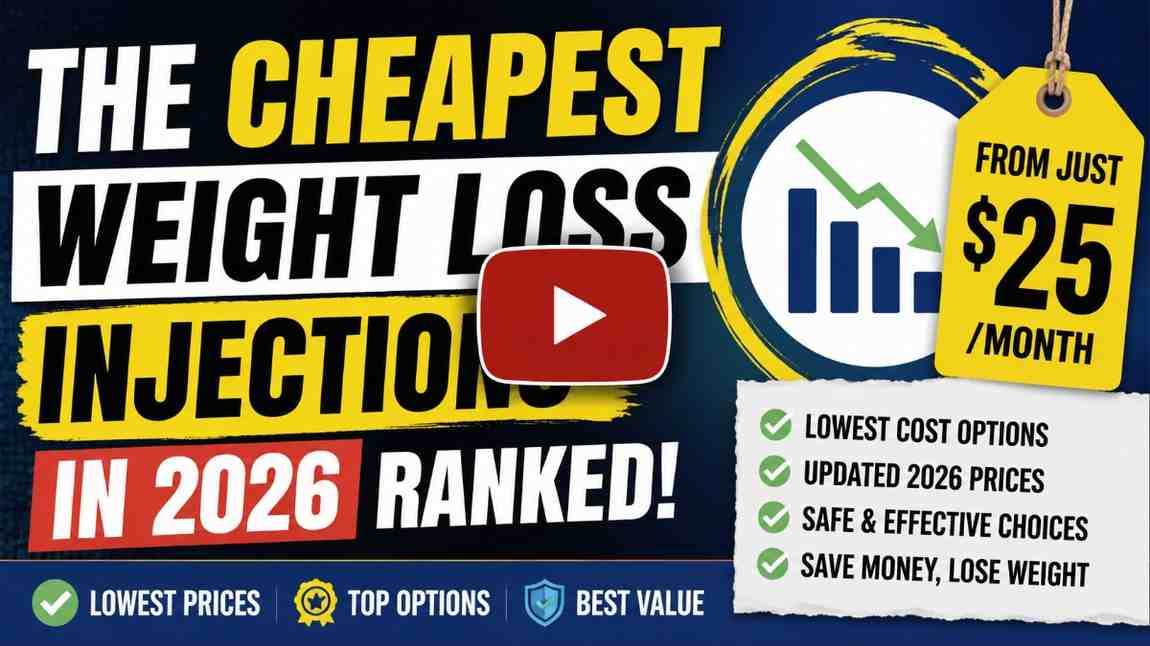
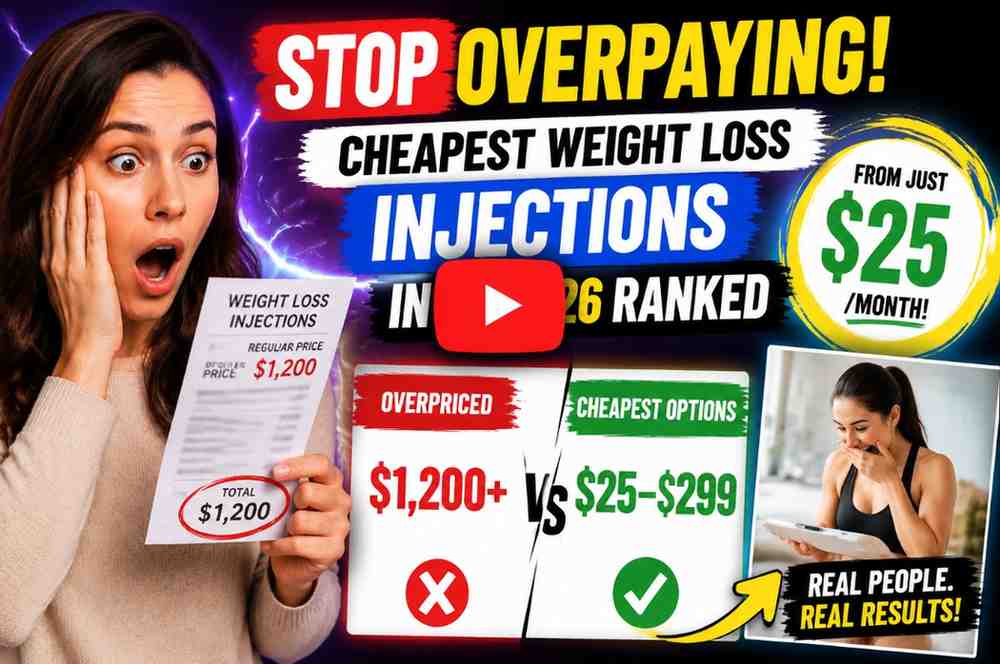
Instead, patients encounter a wide pricing spectrum ranging from as low as $25 per month under insurance programs to over $1,000 per month for full retail prescriptions without discounts.
This variation is caused by several factors:
- Insurance coverage differences across U.S. states and employers
- Manufacturer coupon eligibility rules
- Medication dosage escalation over time
- Brand-name vs compounded formulations
- Clinical supervision and telehealth service bundles
In this guide, we rank the cheapest weight loss injections in 2026 from lowest to highest cost, while also explaining what each price tier actually includes, who qualifies, and what trade-offs exist at each level.
1. The Absolute Cheapest Tier — $25/month (Insurance-Supported Access)
At the very bottom of the pricing scale is the highly subsidized insurance tier, where eligible patients may pay as little as $25 per month for GLP-1 medications.
This pricing is typically associated with:
- Wegovy (semaglutide)
- Zepbound (tirzepatide)
- Mounjaro (tirzepatide, diabetes indication use)
How this price is achieved
This ultra-low cost is not the standard retail price. It results from:
- Insurance formulary coverage
- Manufacturer savings cards
- Employer-sponsored health plans
Eligibility requirements
To qualify, patients usually must:
- Have commercial insurance (not Medicare/Medicaid in most cases)
- Meet BMI requirements (typically ≥30 or ≥27 with comorbidities)
- Receive prior authorization from a healthcare provider
Real-world limitation
Although this is the cheapest option on paper, in practice:
- Many insurance plans do NOT cover weight loss drugs
- Prior authorization denial rates remain high
- Availability depends heavily on employer health plans
Key takeaway
This is the lowest possible cost tier, but also the least accessible.
2. Entry-Level Oral GLP-1 Programs — $149 to $199/month
A growing category in 2026 is oral GLP-1 therapy programs, which offer an alternative to injections.
These programs typically include:
- Oral semaglutide-based treatments
- Early-stage GLP-1 receptor agonist formulations
- Telehealth consultation bundles
Pricing structure
- Starting dose: $149/month
- Maintenance dose: $199–$299/month
Why oral options are cheaper
Oral GLP-1 therapies reduce costs due to:
- Lower manufacturing complexity compared to injectables
- No injection device requirements
- Easier distribution logistics
Benefits of this tier
- No needles required
- Easier adherence for beginners
- Lower entry barrier for first-time users
Limitations
- Absorption variability compared to injections
- Less consistent appetite suppression for some users
- Still under evolving clinical optimization in some cases
Key takeaway
This tier is best described as the “affordable entry point” into GLP-1 therapy without injections.
3. Compounded GLP-1 Injections — $99 to $299/month (Most Popular Budget Option)
Compounded GLP-1 injections dominate the “cheap injections” category in 2026.
These are not brand-name drugs but instead:
- Pharmacy-compounded semaglutide formulations
- Compounded tirzepatide alternatives
- Telehealth-prescribed injectable programs
Pricing breakdown
- Entry offers: $99/month promotional pricing
- Standard pricing: $149–$299/month
- Higher-dose programs: can exceed $350/month
Why this tier is cheaper
Costs are reduced because:
- No brand-name patent pricing
- Bulk-compounded pharmacy production
- Subscription-based telehealth models
Who typically uses this tier
- Uninsured patients
- Cash-pay customers
- Users unable to access insurance coverage
- Patients seeking lower upfront cost entry
Important clinical context
While widely used, compounded medications:
- Are not FDA-approved finished drug products
- Depend heavily on pharmacy quality standards
- Vary in consistency depending on supplier
Why it’s popular
Despite limitations, this tier is popular because it:
- Provides real injectable GLP-1 access at lower cost
- Includes telehealth supervision in most cases
- Offers flexibility in dosage and scheduling
Key takeaway
This is currently the most widely used “budget injection” category in the U.S.
4. FDA-Approved Cash Pay Programs — $299 to $499/month
This tier represents a major step up in safety and regulatory oversight.
It includes:
- Wegovy self-pay programs
- Zepbound manufacturer cash plans
- Direct pharmacy pricing without insurance
Pricing structure
- Starting dose: $299/month
- Standard dose: $399/month
- Higher dose: $499/month or more
Why this tier exists
Pharmaceutical companies introduced these programs to:
- Expand access to uninsured patients
- Compete with compounded medication markets
- Maintain brand safety standards while offering discounts
Advantages
- FDA-approved medications
- Consistent dosing and quality
- Direct manufacturer oversight
Limitations
- Still expensive compared to compounded options
- No insurance = full out-of-pocket burden
- Long-term affordability concerns
Key takeaway
This tier is the best balance between safety and affordability without insurance.
5. Retail Brand Pricing — $500 to $1,000+ per month
This is the true “full price” cost of GLP-1 medications in 2026.
Typical pricing
- Semaglutide injections: $900–$1,300/month
- Tirzepatide injections: $1,000–$1,100+/month
Why it is so expensive
Several factors drive high costs:
- Biologic drug manufacturing complexity
- Patent protections
- High global demand
- Limited production scalability
Who pays this price
- Cash-pay patients without discounts
- Patients with insurance denial
- International buyers in restricted markets
Clinical reality
Despite the cost, this tier represents:
- The highest consistency in drug quality
- The strongest regulatory oversight
- The most predictable clinical outcomes
Key takeaway
This is the baseline pharmaceutical cost before discounts or insurance reductions.
6. Hybrid Telehealth + Medication Programs — $200 to $600/month Total Cost
Many modern weight loss platforms bundle medication with healthcare services.
These programs include:
- Medication supply
- Medical consultations
- Nutrition coaching
- Progress monitoring
Total monthly cost range
- Low-tier programs: $200–$300/month
- Premium programs: $400–$600/month
Why total cost varies
Even if medication is cheaper, programs add:
- Physician oversight
- Digital tracking tools
- Behavioral coaching systems
Advantage
These programs improve:
- Adherence rates
- Weight loss consistency
- Safety monitoring
Key takeaway
These are not the cheapest medication-only options, but they may deliver better long-term results for some users.
7. Full Ranking: Cheapest Weight Loss Injections in 2026
Here is the final ranked list from lowest to highest cost:
- $25/month — Insurance + manufacturer savings (best but rare)
- $149–$199/month — Oral GLP-1 entry programs
- $99–$299/month — Compounded injectable GLP-1 (most popular budget option)
- $299–$499/month — FDA-approved cash-pay programs
- $500–$1,000+ — Full retail brand-name pricing
- $200–$600/month — Full-service telehealth bundles
8. What Actually Determines Your Final Cost
Even within the same medication category, real-world pricing depends on:
Insurance status
Insurance remains the biggest cost reducer if available.
Dosage escalation
Most GLP-1 users increase dosage over time, raising monthly cost.
Medication type
- Semaglutide = lower-cost entry
- Tirzepatide = higher effectiveness, higher price
Provider structure
Some clinics include:
- Consultations
- Labs
- Coaching
Which increases total monthly expense.
9. Semaglutide vs Tirzepatide Cost Comparison
Two dominant GLP-1 drugs define pricing in 2026:
Semaglutide
- Lower starting cost
- Widely available
- Strong weight loss results
Tirzepatide
- Higher average weight loss
- More expensive at all tiers
- Rapidly growing demand
Market trend
Tirzepatide is increasingly positioned as the premium option, while semaglutide remains the budget-friendly entry drug.
10. Safety vs Affordability Trade-Off
The cheapest option is not always the best medical choice.
Lower-cost tiers may involve:
- Compounded medication variability
- Less regulatory oversight
- Telehealth-only supervision
Higher-cost tiers offer:
- FDA approval consistency
- Standardized dosing
- Strong clinical trial backing
Key insight
The “best value” depends on:
- Health condition
- Budget stability
- Long-term treatment goals
Conclusion: The Real Cheapest Option in 2026
The cheapest weight loss injections in 2026 exist on a sliding scale rather than a single price point.
While $25/month remains the absolute lowest theoretical cost, most people realistically fall into:
- $99–$299/month for compounded injections
- $299–$499/month for FDA-approved cash programs
- $500+ for full retail pricing
Ultimately, the cheapest option is not just about price; it is about access, safety, and long-term sustainability. Choosing the right tier requires balancing affordability with clinical reliability and personal health goals.

References
.