
Vicks Nasal Spray for Blocked Ears: Does It Really Work?
Blocked ears can be uncomfortable, especially when they cause muffled hearing, pressure, popping sensations, or a feeling of fullness inside the ear.
These symptoms often develop during a cold, sinus infection, allergy flare-up, or sudden change in air pressure.
Many people search for Vicks nasal spray for blocked ears because they want a convenient way to relieve ear pressure without using ear drops or visiting a healthcare professional.
Vicks Nasal Spray for Blocked Ears explores how nasal congestion affects ear pressure and whether nasal sprays can provide relief.

👉 DON’T TRY THIS “VICKS NASAL SPRAY FOR BLOCKED EARS” UNTIL YOU SEE THIS
Vicks offers nasal spray products designed to relieve nasal congestion. Some formulations contain decongestant medications that temporarily reduce swelling inside the nasal passages.
Understanding how Vicks nasal spray works, when it might help, and when it should be avoided can make it easier to choose an appropriate treatment.
This guide explains the relationship between nasal congestion and ear blockage, the potential benefits of nasal decongestants, proper usage, possible side effects, and safer alternatives for managing uncomfortable ear symptoms.
What Is Vicks Nasal Spray for Blocked Ears?
Vicks nasal spray refers to a range of products designed to relieve nasal congestion caused by conditions such as colds, allergies, or sinus irritation.
Some Vicks nasal sprays contain oxymetazoline, a topical nasal decongestant that temporarily narrows swollen blood vessels in the nasal lining.
The reason involves the Eustachian tubes, which connect the middle ear to the back of the nose and upper throat.
When inflammation interferes with these tubes, pressure may build up inside the middle ear, creating a blocked sensation.
Reducing nasal swelling might improve comfort in certain situations, but research has not established nasal decongestant sprays as a reliable treatment for Eustachian tube dysfunction.
Vicks nasal spray should only be used inside the nose according to its product instructions, never directly inside the ear.
👉 DON’T TRY THIS “VICKS NASAL SPRAY FOR BLOCKED EARS” UNTIL YOU SEE THIS
How Does Vicks Nasal Spray Work for Blocked Ears?
To understand whether Vicks nasal spray can help blocked ears, it is important to understand the connection between nasal congestion and middle-ear pressure.
The Eustachian tubes are narrow passages connecting the middle ear to the back of the nose. They help regulate air pressure, drain normal secretions, and maintain proper middle-ear function.
This swelling can interfere with pressure equalization, resulting in uncomfortable sensations such as ear fullness, popping, or temporary muffled hearing.
Oxymetazoline nasal sprays work by constricting blood vessels in the nasal lining. This action reduces swelling and temporarily improves airflow through the nose.
When nasal congestion contributes to ear discomfort, relieving nasal obstruction may make breathing easier and improve overall comfort.
The effectiveness of a nasal spray therefore depends on the underlying cause of the blocked sensation rather than the presence of ear pressure alone.
Common Causes of Blocked Ears
Blocked ears can develop for several reasons. Identifying the cause is important because treatments that help nasal congestion may not work for other ear conditions.
1. Nasal Congestion and Common Colds
Swelling near the Eustachian tube openings may interfere with normal pressure regulation, causing the ears to feel plugged.
2. Sinus Inflammation
Sinus inflammation can occur with viral infections or allergies. It may be accompanied by nasal obstruction, facial pressure, and ear fullness.
Treating the underlying nasal condition may improve comfort, although symptoms do not always resolve immediately.
3. Seasonal Allergies
Allergic rhinitis can cause sneezing, congestion, a runny nose, and swelling around the Eustachian tubes.
4. Earwax Buildup
Nasal sprays cannot remove earwax because the ear canal is anatomically separate from the nasal passages.
5. Middle-Ear Infections
Middle-ear infections may cause pain, fever, reduced hearing, or fluid accumulation behind the eardrum.
6. Air Pressure Changes
Flying, diving, or traveling through mountainous areas can create pressure differences between the middle ear and surrounding environment.
Can Vicks Nasal Spray Actually Unblock Your Ears?
Vicks nasal spray may relieve nasal congestion that occurs alongside blocked ears, but it is not a proven solution for every type of ear blockage.
For example, someone experiencing nasal congestion during a cold may notice that their nose feels clearer after using an appropriate decongestant spray.
A person with earwax buildup is unlikely to experience any improvement in ear blockage from a nasal spray.
Similarly, fluid behind the eardrum, an ear infection, or sudden hearing loss requires a different approach.
Research reviews have found insufficient evidence that decongestants consistently improve Eustachian tube dysfunction or middle-ear fluid.
Potential Benefits of Vicks Nasal Spray
Temporary Nasal Congestion Relief
Medicated decongestant sprays can quickly reduce swelling inside the nasal passages, making breathing through the nose easier during short-term congestion.
Improved Nasal Airflow
By reducing nasal obstruction, an appropriate spray may improve comfort when a cold or allergy episode makes breathing difficult.
Convenient Application
Nasal sprays are generally easy to administer and provide medication directly to the nasal passages without requiring oral tablets.
Short-Term Symptom Management
When used according to the label, certain medicated sprays can provide temporary relief during episodes of nasal congestion.
Possible Indirect Ear Comfort
Some individuals may feel more comfortable as their nasal symptoms improve, although direct relief of Eustachian tube dysfunction is not established.

👉 DON’T TRY THIS “VICKS NASAL SPRAY FOR BLOCKED EARS” UNTIL YOU SEE THIS
How to Use Vicks Nasal Spray Safely
Correct application helps ensure that the medication reaches the nasal passages while reducing unnecessary irritation.
Step 1: Check the Product Label
Identify the active ingredient and recommended dosage before use. Vicks products differ, and not every nasal spray contains the same medication.
Step 2: Gently Clear Your Nose
Blow your nose gently to remove excess mucus. Avoid forceful blowing because it may increase pressure and discomfort.
Step 3: Position the Spray Correctly
Keep your head upright or slightly forward. Insert the nozzle into one nostril and aim slightly outward, away from the nasal septum.
Step 4: Apply the Recommended Dose
Use the number of sprays stated on the packaging. Breathe in gently during application rather than sniffing forcefully.
Step 5: Follow the Duration Limit
For oxymetazoline-containing sprays, do not exceed three consecutive days unless a healthcare professional specifically directs otherwise.
Longer use can cause rebound congestion, making the nose feel increasingly blocked.Do not spray the medication into the ear or share the applicator with another person.
How Long Does Vicks Nasal Spray Take to Work?
Oxymetazoline-containing nasal sprays are designed to act quickly, and some Vicks Sinex formulations advertise relief beginning within seconds.
Ear pressure may improve gradually as inflammation resolves, but there is no established timeline for Vicks nasal spray to unblock the ears.
Repeatedly using additional sprays is not recommended because exceeding the instructed dosage increases the risk of side effects.
👉 DON’T TRY THIS “VICKS NASAL SPRAY FOR BLOCKED EARS” UNTIL YOU SEE THIS
Vicks Nasal Spray Side Effects and Precautions
Although medicated nasal sprays are available without a prescription, they can cause unwanted effects.
Common possible side effects include:
-
Temporary burning or stinging inside the nose
-
Sneezing or increased nasal discharge
-
Nasal dryness or irritation
-
Rebound congestion after prolonged use
-
Occasional headache or discomfort
People with certain medical conditions should consult a healthcare professional before using oxymetazoline.
These include high blood pressure, heart disease, diabetes, thyroid disorders, and difficulty urinating due to an enlarged prostate.
Pregnant or breastfeeding individuals should also seek professional advice before using the medication.
Rebound congestion is particularly important. Frequent or prolonged use may cause nasal obstruction to return or worsen after the medication wears off.
This can encourage repeated spraying and make congestion increasingly difficult to manage. Following the product’s recommended dosage and duration is essential.
Vicks Nasal Spray vs. Other Treatments for Blocked Ears
Different causes of ear blockage require different approaches. The following comparison explains when commonly used treatments may be appropriate.
| Treatment | Main Purpose | Effect on Blocked Ears |
|---|---|---|
| Vicks medicated nasal spray | Temporarily reduces nasal congestion | No proven direct benefit |
| Saline nasal spray | Moisturizes and rinses nasal passages | May improve nasal comfort |
| Steroid nasal spray | Controls nasal inflammation | May help allergies, but not reliably Eustachian tube dysfunction |
| Earwax removal drops | Softens accumulated earwax | May help wax-related blockage |
| Swallowing or yawning | Encourages pressure equalization | May help mild pressure changes |
| Medical ear examination | Identifies underlying ear problems | Guides appropriate treatment |
The best treatment depends on whether the problem originates in the nasal passages, Eustachian tubes, ear canal, or middle ear.
👉 DON’T TRY THIS “VICKS NASAL SPRAY FOR BLOCKED EARS” UNTIL YOU SEE THIS
Natural Ways to Relieve Blocked Ears
Several gentle approaches may help mild ear pressure, particularly when symptoms develop during a cold or after changes in altitude.
1. Swallowing Frequently
Drinking water or swallowing repeatedly may help equalize pressure when the ears feel temporarily blocked.
2. Yawning
Yawning can encourage Eustachian tube opening and may produce a popping sensation as pressure equalizes.
3. Chewing Gum
Chewing stimulates repeated swallowing and jaw movement, which may help with pressure changes during takeoff or landing.
4. Using Saline Nasal Spray
It does not contain the same vasoconstricting medication as oxymetazoline, so it does not cause the same medication-related rebound congestion.
5. Trying Gentle Pressure Equalization
Some adults can relieve mild pressure by pinching the nose, closing the mouth, and blowing very gently.
Never force this maneuver, especially when experiencing significant pain, an ear infection, or ear discharge.
6. Applying a Warm Compress
A comfortably warm compress placed against the outside of the ear may soothe discomfort.It does not remove trapped fluid or cure an infection, but it may provide temporary comfort.
7. Staying Hydrated
Adequate fluid intake supports normal hydration and may make thick nasal mucus easier to manage. Drinking extra water has not been shown to directly unblock the Eustachian tubes.
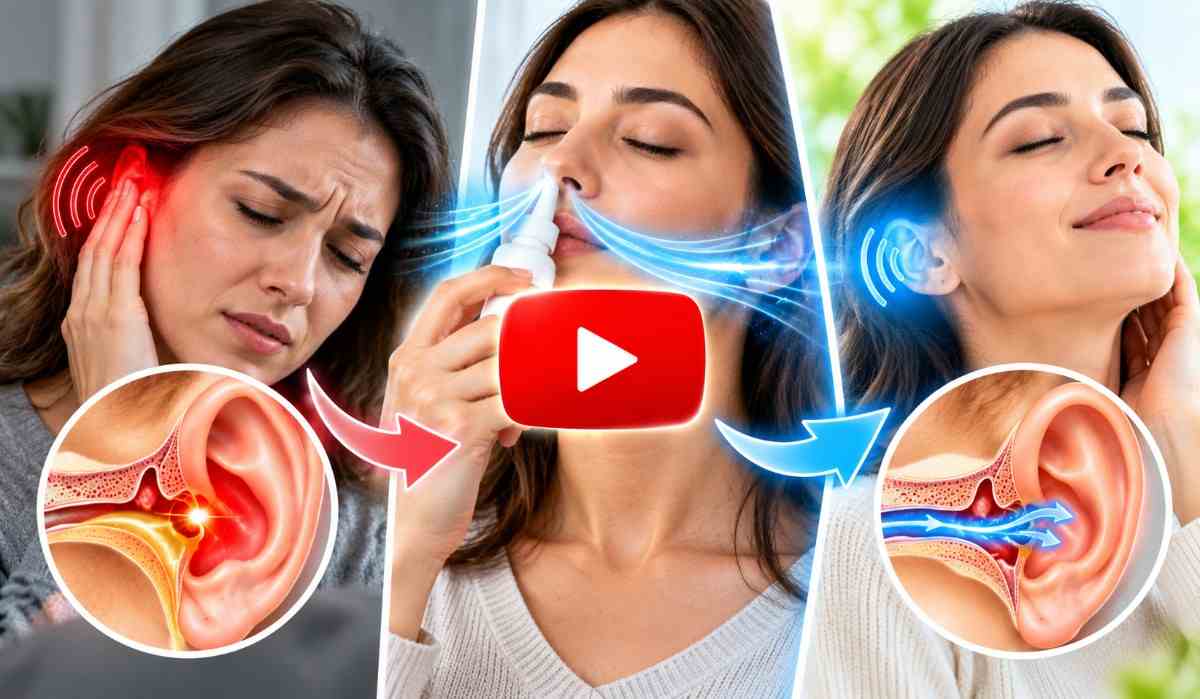
👉 DON’T TRY THIS “VICKS NASAL SPRAY FOR BLOCKED EARS” UNTIL YOU SEE THIS
When Should You See a Doctor for Blocked Ears?
Mild ear fullness during a cold often improves as the underlying illness resolves. Persistent or worsening symptoms should not be ignored.
Seek medical evaluation if you experience:
-
Ear blockage lasting longer than one to two weeks
-
Persistent muffled hearing
-
Repeated episodes of ear pressure
-
Significant ear pain or fever
-
Fluid or discharge coming from the ear
-
Dizziness or balance difficulties
Sudden hearing loss, especially in one ear, requires urgent medical assessment, ideally within 24 hours.
It can sometimes feel like ordinary ear blockage but may indicate a condition requiring prompt treatment.
A healthcare professional can examine the ear canal and eardrum, assess hearing, and determine whether earwax, infection, fluid, or another condition is responsible.
How to Prevent Blocked Ears During Colds and Allergies
Preventing every episode of ear blockage is not always possible, but managing nasal health may reduce certain triggers.
Manage Seasonal Allergies
People with recurring allergic rhinitis may benefit from identifying allergens and using appropriate treatments recommended by a clinician.
Avoid Excessive Nose Blowing
Forceful nose blowing can increase pressure inside the nasal passages and may worsen discomfort. Blow gently, clearing one nostril at a time.
Practice Good Hand Hygiene
Regular handwashing reduces exposure to respiratory viruses that can trigger colds and associated nasal inflammation.
Avoid Smoking and Irritants
Cigarette smoke and other airborne irritants can contribute to upper respiratory irritation. Reducing exposure supports general respiratory health.
Use Nasal Medications Responsibly
Follow medication labels carefully and avoid prolonged use of topical decongestants. Persistent congestion may require evaluation rather than repeated short-term treatment.
Final Thoughts
Vicks nasal spray for blocked ears is a commonly searched remedy because nasal congestion and ear pressure frequently occur together.
The connection between the nose and middle ear explains why people may experience both symptoms during colds, allergies, or sinus inflammation.
Medicated Vicks Sinex sprays containing oxymetazoline can temporarily reduce nasal swelling and improve breathing.
Earwax buildup, middle-ear infections, fluid accumulation, and pressure-related symptoms may require entirely different approaches.
Gentle swallowing, yawning, saline nasal care, and appropriate management of allergies can be helpful in certain situations.
👉 DON’T TRY THIS “VICKS NASAL SPRAY FOR BLOCKED EARS” UNTIL YOU SEE THIS
.
.
.
.
References
https://vicks.com/en-us/shop-products/sinex/sinex-severe-nasal-spray
https://medlineplus.gov/druginfo/meds/a608026.html
https://www.nhs.uk/medicines/decongestants/
.
.
.
About Us
