Titanium Cutting Board vs Wood Board: Which Is Better?
Compare titanium and wood cutting boards to discover differences in durability, cleaning, knife care, features, benefits, pricing, and the best kitchen choice.
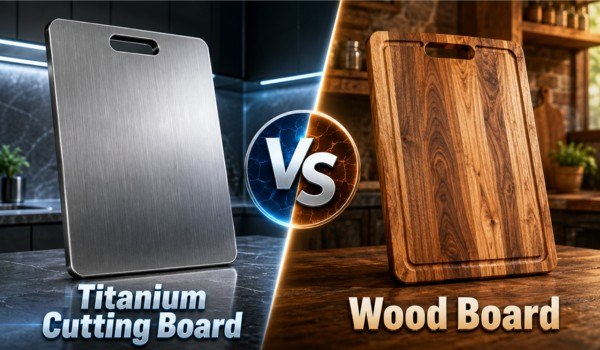
A cutting board is not only a surface for chopping vegetables, slicing meat, or preparing ingredients—it also affects food hygiene, knife performance, durability, maintenance, and overall cooking convenience.
In recent years, titanium cutting boards have gained popularity because of their modern design, non-porous surface, and long-lasting durability.
At the same time, wood cutting boards have remained a trusted kitchen essential for generations because of their natural appearance, knife-friendly surface, and traditional cooking benefits.
The debate between titanium cutting boards vs. wood boards comes down to understanding the differences in materials, cleaning requirements, durability, knife protection, price, and everyday usability.
Titanium Cutting Board vs Wood Board – Comparison Table
| Feature | Titanium Cutting Board | Wood Cutting Board |
|---|---|---|
| Material | Titanium metal surface | Natural hardwood |
| Durability | Extremely long-lasting and resistant to damage | Durable but requires maintenance |
| Surface Type | Hard, non-porous surface | Slightly softer natural surface |
| Knife Protection | May require more frequent sharpening | More gentle on knife edges |
| Cleaning | Easy to clean and resistant to stains | Requires proper washing and drying |
| Maintenance | Minimal maintenance required | Requires occasional oiling |
| Appearance | Modern and premium design | Classic natural kitchen look |
| Best For | Hygiene-focused users and low-maintenance kitchens | Everyday cooking and knife-friendly preparation |
Titanium Cutting Board vs Wood Board – Quick Overview
What Is a Titanium Cutting Board?
A titanium cutting board is a modern kitchen prep surface made from titanium or a titanium-based material, designed for durability, cleanliness, and long-term use.
Titanium is a strong, lightweight metal known for its resistance to corrosion, stains, and moisture. Unlike traditional wooden boards, titanium does not absorb liquids, food odors, or juices, making the preparation surface easier to keep clean.
One of the biggest reasons people choose titanium cutting boards is their non-porous structure. The surface doesn’t allow liquids to soak into the material, which helps prevent lingering smells and makes cleanup faster after preparing different foods.
Titanium cutting boards are also marketed as a long-lasting alternative because they do not crack, warp, or require regular oil treatments like many wooden boards. Their sleek appearance and modern design make them attractive for homeowners looking for premium kitchen accessories.
However, because titanium is harder than wood, some users may notice it feels different while cutting. The rigid surface can provide excellent durability but may not offer the same knife-friendly experience as softer materials.
What Is a Wood Board?
A wood cutting board is a traditional kitchen tool made from natural hardwood materials such as maple, walnut, teak, or cherry wood.
Wood boards have been used for centuries because they provide a balanced cutting experience. The natural grain structure creates a surface that absorbs some impact from knife blades while allowing comfortable chopping and slicing.
High-quality wooden cutting boards are especially popular among chefs because they are gentle on knives. The slightly softer surface helps reduce unnecessary stress on the blade edge compared with harder materials.
Wood boards also offer a warm, natural appearance that complements many kitchen styles. Many users appreciate their traditional look and the ability to restore them by sanding and oiling them when they wear out.
The main disadvantage of wood is that it requires more care. Wooden boards need proper cleaning, drying, and occasional conditioning with food-safe oil to maintain their appearance and prevent cracking or warping.

Titanium Cutting Board vs Wood Board – How It Works?
How a Titanium Cutting Board Works?
A titanium cutting board works by providing a strong, non-absorbent surface for chopping, slicing, and preparing food.
The dense titanium surface blocks moisture absorption, stains, and odors. Because there are no deep pores like natural wood grain, food particles and liquids remain on the surface rather than penetrating into the material.
After use, you can usually clean the board quickly with soap and water. Its moisture-resistant structure makes it suitable for users who want a low-maintenance kitchen surface.
The strength of titanium allows the board to withstand frequent daily use without developing cracks or major damage. However, the hardness of the material means users should consider their knife type and sharpening routine.
How a Wood Cutting Board Works
A wood cutting board works through its natural grain structure, which provides a balanced surface for food preparation.
When a knife contacts wood, the fibers of the board can slightly absorb the pressure from cutting. This creates a more forgiving surface that helps protect knife edges during regular kitchen tasks.
Wood naturally manages moisture differently from metal surfaces. The grain structure can hold small amounts of moisture while allowing the board to dry when properly maintained.
A quality wooden cutting board also develops a unique appearance over time. With regular care, it can last for many years and may even become a long-term kitchen investment.
Titanium Cutting Board vs Wood Board – Features
Explore the key features of titanium and wood cutting boards, including durability, maintenance, design, cutting comfort, and overall kitchen performance.
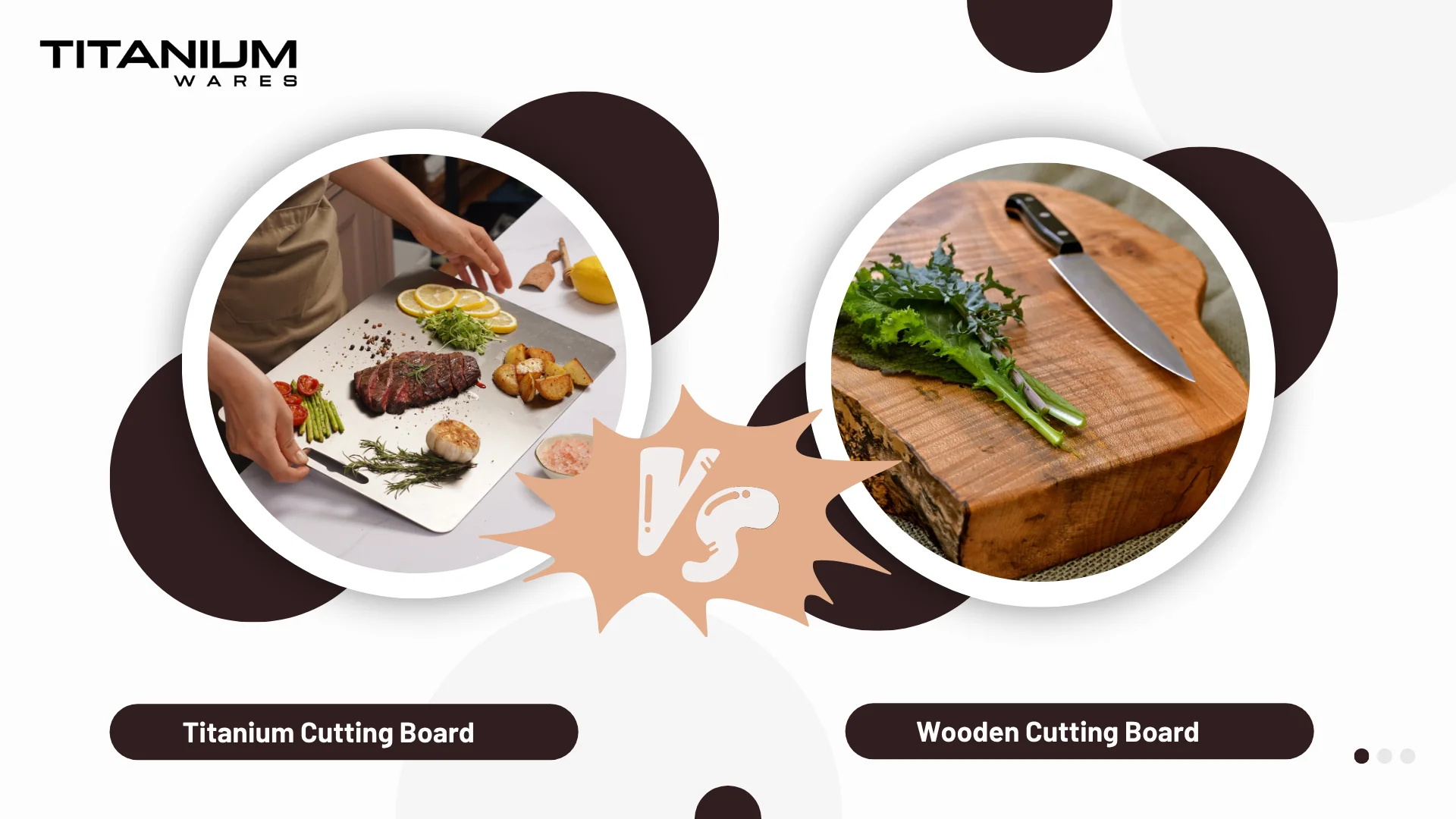
Titanium Cutting Board Features
1. Non-Porous Surface
Titanium cutting boards feature a smooth, non-porous surface that does not easily absorb liquids, food juices, or odors. This makes them easier to clean and maintain after everyday food preparation.
2. High Durability
Titanium is a strong and resilient material designed to withstand regular kitchen use. It resists cracks, warping, and moisture-related damage, helping the board maintain its quality for a long time.
3. Easy Maintenance
Titanium cutting boards require minimal upkeep compared with traditional wooden boards. They don’t need regular oiling, conditioning, or special treatments to maintain performance.
4. Odor and Stain Resistance
The non-absorbent surface helps prevent food smells, stains, and residue from building up over time. This helps the board stay cleaner and fresher after repeated use.
5. Modern Kitchen Design
Titanium cutting boards offer a sleek, premium look that complements modern kitchen styles. Their contemporary design makes them an attractive addition to any cooking space.
Wood Board Features
1. Knife-Friendly Surface
Wood cutting boards provide a softer cutting surface that is gentle on knife blades. The natural texture reduces stress on knives while providing a smooth, comfortable cutting experience.
2. Natural Appearance
Wood boards bring a classic and elegant look to kitchens with their unique grain patterns and warm appearance. Each board has a natural design that adds character to food preparation areas.
3. Restorable Design
One advantage of wooden boards is that they can often be restored when they develop scratches or marks. Sanding and refinishing can help refresh their appearance and extend their lifespan.
4. Variety of Options
Wood cutting boards are available in various materials, sizes, thicknesses, and designs. This allows users to choose a board that matches their cooking habits and kitchen preferences.
5. Comfortable Cutting Experience
Many cooks prefer wood boards because the surface feels comfortable during chopping and slicing. The slightly softer material provides a natural feel that works well for everyday food preparation.
Titanium Cutting Board vs Wood Board – Benefits
Titanium Cutting Board Benefits
- Long-Lasting Durability – Provides a strong cutting surface designed to withstand daily kitchen use while maintaining quality and performance.
- Easy Cleaning – Simplifies cleanup with a smooth surface that resists moisture, stains, and food residue.
- Low Maintenance – Requires minimal care without frequent oiling, conditioning, or special treatments compared with traditional boards.
- Improved Hygiene – Supports a cleaner preparation surface by reducing absorption of liquids, odors, and leftover food particles.
- Modern Kitchen Appeal – Adds a sleek, premium appearance that enhances contemporary kitchen spaces.
Wood Board Benefits
- Knife Protection – Provides a softer cutting surface that helps maintain knife sharpness during regular food preparation.
- Natural Beauty – Offers a timeless appearance with unique wood grain patterns that complement kitchen designs.
- Comfortable Cutting – Creates a pleasant chopping experience with a softer, more natural surface feel.
- Repairable Surface – Allows sanding and refinishing to restore appearance and extend long-term usability.
- Wide Selection – Available in various wood types, sizes, and styles to match different cooking needs. bullet
Titanium Cutting Board vs Wood Board – Pros & Cons
Titanium Cutting Board Pros & Cons Table
|
Pros |
Cons |
| Completely non-porous and naturally resistant to bacteria and moisture | Higher upfront cost compared with most wooden boards |
| Hypoallergenic, biocompatible, and food-safe material | May show cosmetic knife marks over time |
| Extremely durable and can last for decades without warping or cracking | Firmer cutting feel with a louder chopping sound |
| Corrosion-resistant with no rust or staining issues | Sleek metal appearance may feel too modern for some kitchens |
Wood Cutting Board Pros & Cons Table
| Pros | Cons |
|---|---|
| Warm, classic aesthetic that suits traditional kitchens | Porous surface absorbs moisture, juices, and bacteria |
| Soft, quiet cutting feel that is gentle on knives | Requires regular oiling and careful drying |
| Generally lower upfront cost | Can crack, warp, or split over time |
| Renewable, natural material | Not dishwasher safe |
| Wide range of woods, sizes, and styles available | Shorter lifespan compared with titanium cutting boards |
Titanium Cutting Board vs Wood Board – Price Details
Titanium Cutting Board Price Details
A Titanium Cutting Board is considered a premium kitchen product because of its durable titanium construction and long-lasting performance.
The price is generally higher than traditional cutting boards, with many models ranging from around $40 to $200+ depending on size, thickness, design, and brand.
Although the upfront cost is higher, its durability, low maintenance requirements, and long lifespan can make it a valuable investment for users looking for a high-quality cutting surface.
✅ Get The Titanium Cutting Board at the Lowest Price Today!
Wood Cutting Board Price Details
Wood boards are available at a wide range of prices, making them suitable for different budgets. Basic wooden cutting boards may start around $20 to $50, while premium hardwood or handcrafted boards can cost $100 or more depending on the type of wood, craftsmanship, and size.
While wooden boards are generally more affordable initially, they may require additional care such as oiling and maintenance to maintain their quality over time.
✅ Get The Wood Cutting Board at the Lowest Price Today!
Titanium Cutting Board vs Wood Board – Price Comparison
| Factor | Titanium Cutting Board | Wood Board |
|---|---|---|
| Material | Solid non-porous titanium metal surface | Natural hardwood with porous grain structure |
| Durability / Lifespan | 10 to 30+ years with proper use | 5 to 15 years depending on care and maintenance |
| Hygiene | Non-porous surface helps resist moisture, stains, and odors | Requires proper cleaning and care to maintain hygiene |
| Knife Friendliness | Firm surface that provides reasonable knife protection | Softer surface that is generally gentler on knife edges |
| Weight | Lightweight and easy to handle | Weight varies depending on wood type and thickness |
| Price | Premium upfront investment due to durable material | Lower initial cost with options across different price ranges |
| Environmental Impact | Highly durable, recyclable, and designed for long-term use | Made from renewable natural materials and biodegradable over time |
Conclusion
After comparing both options, the Titanium Cutting Board stands out as an excellent choice for modern kitchens that prioritize durability, hygiene, and easy maintenance.
Its strong construction, smooth surface, and resistance to moisture and stains make it a convenient option for everyday food preparation.
While the Wood Board is also a good traditional choice with a natural appearance and knife-friendly surface, it may require more care and has received lower customer feedback compared with the Titanium Cutting Board.
For those who want a premium cutting surface that combines long-lasting performance, hygiene, and simple maintenance, the Titanium Cutting Board is a highly recommended option.
Its modern design and positive customer response make it a reliable choice for improving your overall cooking experience.

Click to Learn More About The Titanium Cutting Board
About Us