Parkinson’s Disease Dementia: Symptoms, Causes and Treatment
Parkinson’s disease dementia is a progressive cognitive condition that can develop in some people who have lived with Parkinson’s disease, affecting thinking, attention, memory, behavior, and everyday independence.
Parkinson’s disease dementia is a form of cognitive decline that can develop in some people living with Parkinson’s disease, usually after movement symptoms have been present for some time.
It can affect memory, attention, problem-solving, judgment, communication, and the ability to complete everyday activities independently.
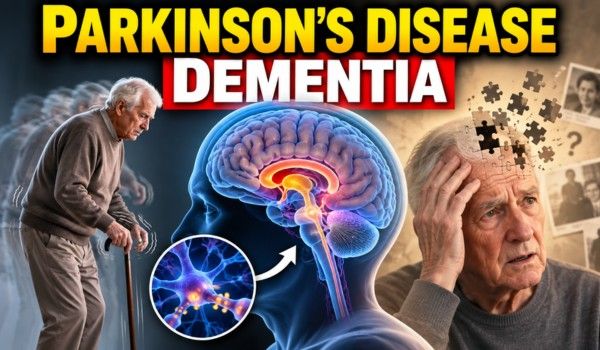
Some people may also experience hallucinations, mood changes, sleep problems, slower thinking, or difficulty understanding visual information.
Symptoms often develop gradually and can vary from person to person. Early recognition, regular medical evaluation, appropriate treatment, physical activity, structured routines, and family support can help manage symptoms and maintain quality of life.
What Is Parkinson’s Disease Dementia?
Parkinson’s disease dementia, commonly shortened to PDD, occurs when significant changes in thinking and memory develop after a person has already been living with the movement symptoms of Parkinson’s disease.
⬩➤ Key Points
- PDD affects thinking abilities.
- Memory changes may develop.
- Attention can become difficult.
- Daily tasks may become harder.
- Symptoms usually progress gradually.
- Not everyone with Parkinson’s gets PDD.
Parkinson’s disease is generally recognized for tremor, stiffness, slow movement, and balance problems, but it can also produce important non-movement symptoms involving mood, sleep, thinking, and behavior.
Dementia is diagnosed when cognitive difficulties become significant enough to interfere with independence and a person’s ability to manage normal daily responsibilities.
How Parkinson’s Disease Affects the Brain
Parkinson’s disease involves changes in several brain systems, including pathways that use dopamine and other chemical messengers involved in movement, attention, mood, and thinking.
⬩➤ Brain Changes May Affect
- Attention
- Memory
- Planning
- Judgment
- Visual processing
- Problem-solving
- Communication
Abnormal accumulation of the protein alpha-synuclein can form structures called Lewy bodies, which are strongly associated with Parkinson’s disease and related forms of dementia.
As these brain changes become more widespread, some people experience difficulties beyond movement symptoms and eventually develop significant cognitive impairment.
 DON’T TRY THIS “PARKINSON’S DISEASE DEMENTIA” UNTIL YOU SEE THIS
Parkinson’s Disease Dementia vs Mild Cognitive Impairment
Mild cognitive impairment can cause noticeable changes in thinking while allowing a person to remain largely independent in normal daily activities.
⬩➤ Mild Changes May Include
- Slower thinking
- Mild forgetfulness
- Reduced concentration
- Trouble multitasking
- Difficulty organizing tasks
Parkinson’s disease dementia involves more substantial impairment that begins interfering with activities such as managing medications, handling finances, preparing meals, communicating, or navigating familiar environments.
Having mild cognitive impairment does not automatically mean that a person currently has dementia, although cognitive abilities should continue to be monitored.
Parkinson’s Disease Dementia vs Lewy Body Dementia
Parkinson’s disease dementia and dementia with Lewy bodies are closely related conditions associated with Lewy body changes, but doctors distinguish them mainly by the timing of symptoms.
⬩➤ Parkinson’s Disease Dementia
- Parkinson’s begins first.
- Dementia develops later.
- Movement symptoms are established.
- Cognitive decline follows over time.
⬩➤ Dementia With Lewy Bodies
- Cognitive symptoms appear early.
- Thinking may decline first.
- Movement changes may follow.
- Symptoms may begin together.
Clinicians generally consider Parkinson’s disease dementia when significant cognitive decline begins more than a year after established Parkinson’s movement symptoms.
When dementia occurs before Parkinson-like movement problems or within roughly the same early period, dementia with Lewy bodies may be considered instead.
Early Signs of Parkinson’s Disease Dementia
Early Parkinson’s disease dementia may be subtle because changes can initially resemble ordinary forgetfulness, fatigue, depression, medication effects, or normal age-related changes.
⬩➤ Possible Early Signs
- Difficulty staying focused
- Slower decision-making
- Problems planning activities
- Increased forgetfulness
- Trouble following conversations
- Difficulty completing tasks
- Reduced mental flexibility
- Visual perception problems
Family members sometimes notice these changes before the person with Parkinson’s recognizes how much their everyday functioning has changed.
Persistent cognitive changes should therefore be discussed with a neurologist rather than being assumed to be an unavoidable part of normal aging.
Memory Problems
Memory difficulties can occur with Parkinson’s disease dementia, although the pattern may differ from the memory problems typically associated with Alzheimer’s disease.
⬩➤ Memory Changes Can Include
- Forgetting recent conversations
- Losing track of appointments
- Repeating questions
- Misplacing familiar objects
- Forgetting task sequences
- Difficulty recalling information
Some people may struggle more to retrieve stored information than to learn it initially, particularly in the early stages of cognitive decline.
Using calendars, written reminders, labeled storage areas, and predictable routines may make daily activities easier to manage.
Attention and Concentration Changes
Attention problems are common cognitive difficulties associated with Parkinson’s disease and may become more noticeable as dementia develops.
⬩➤ Common Attention Problems
- Losing focus easily
- Difficulty multitasking
- Slow mental responses
- Trouble following discussions
- Becoming overwhelmed quickly
- Difficulty switching tasks
Busy surroundings containing multiple conversations, televisions, music, or other distractions may make concentration particularly difficult.
Creating a quiet environment and completing one activity at a time can reduce unnecessary mental demands.
Executive Function Problems
Executive functions help people plan, organize, prioritize, solve problems, and complete activities that require several separate steps.
⬩➤ Possible Difficulties
- Planning meals
- Paying household bills
- Organizing appointments
- Following complicated instructions
- Making quick decisions
- Starting activities independently
Someone may remember individual pieces of information but still struggle to organize those details effectively enough to complete a complicated task.
Breaking activities into smaller steps and providing simple written instructions can make everyday responsibilities more manageable.
Visual and Spatial Difficulties
Parkinson’s disease dementia can affect the brain’s ability to interpret visual information and understand where objects are located in relation to one another.
⬩➤ Possible Visual Problems
- Misjudging distances
- Difficulty finding objects
- Problems navigating rooms
- Misinterpreting shadows
- Trouble recognizing objects
- Increased risk of falls
Poor lighting, clutter, patterned floors, and unfamiliar environments may make these difficulties more noticeable. Clear walkways, appropriate lighting, contrasting objects, and an organized home environment may improve safety.
Hallucinations and Parkinson’s Disease Dementia
Some people with Parkinson’s disease dementia experience hallucinations, particularly visual experiences involving people, animals, objects, or shapes that are not actually present.
⬩➤ Hallucinations May Include
- Seeing people who are absent
- Seeing small animals
- Mistaking objects for people
- Seeing movement in shadows
- Hearing unusual sounds
Hallucinations can be related to Parkinson’s disease itself, cognitive changes, sleep problems, medications, infections, or other medical factors.
Report new or worsening hallucinations to the healthcare team so they can review potential causes carefully.


Changes in Mood and Behavior
Parkinson’s disease dementia can influence emotional regulation and behavior as the brain systems involved in judgment, motivation, perception, and mood become affected.
⬩➤ Behavioral Changes May Include
- Anxiety
- Depression
- Irritability
- Apathy
- Suspiciousness
- Agitation
- Social withdrawal
- Reduced motivation
Behavioral changes should be discussed with healthcare professionals because depression, medication effects, sleep disturbances, and other treatable problems may contribute.
A calm environment and consistent routine can also help reduce confusion and unnecessary stress.
Sleep Problems
Sleep disturbances are common in Parkinson’s disease and can worsen daytime attention, memory, mood, and overall cognitive performance.
⬩➤ Sleep Issues May Include
- Daytime sleepiness
- Frequent awakenings
- Vivid dreams
- Restless sleep
- Dream enactment
- Irregular sleep schedules
REM sleep behavior disorder can cause a person to move, shout, kick, or physically act out dreams while asleep. Persistent or dangerous sleep behaviors require medical evaluation because treatment and safety measures may be necessary.
Risk Factors for Parkinson’s Disease Dementia
No single factor determines whether someone with Parkinson’s disease will develop dementia, and individual experiences vary considerably.
⬩➤ Associated Factors Include
- Older age
- Longer Parkinson’s duration
- Greater movement impairment
- Existing cognitive changes
- Hallucinations
- Sleep disturbances
Researchers continue studying genetic, biological, environmental, and clinical factors that may help identify individuals at greater risk of cognitive decline.
Risk factors describe associations and cannot predict exactly what will happen to an individual person.
DON’T TRY THIS “PARKINSON’S DISEASE DEMENTIA” UNTIL YOU SEE THIS
How Is Parkinson’s Disease Dementia Diagnosed?
There is no single test that independently confirms Parkinson’s disease dementia, so diagnosis usually combines medical history, cognitive testing, physical assessment, and information about everyday functioning.
⬩➤ Evaluation May Include
- Medical history
- Neurological examination
- Cognitive screening
- Medication review
- Family observations
- Neuropsychological testing
- Laboratory tests
- Brain imaging when needed
Doctors may ask about attention, memory, language, planning, judgment, visual processing, behavioral changes, and the person’s ability to perform everyday activities independently.
Detailed neuropsychological testing may help identify patterns of cognitive strengths and weaknesses and distinguish dementia from milder cognitive changes.
Ruling Out Other Causes
A sudden change in mental functioning is generally not considered typical of slowly progressing Parkinson’s disease dementia and deserves prompt medical attention.
⬩➤ Other Causes Can Include
- Infection
- Dehydration
- Medication side effects
- Sleep deprivation
- Depression
- Metabolic problems
- Vitamin deficiencies
- Acute illness
Healthcare professionals may order laboratory tests, review medications, or perform additional assessments depending on the person’s symptoms.
Finding a reversible contributor can sometimes significantly improve confusion or cognitive functioning.
Treatment of Parkinson’s Disease Dementia
There is currently no treatment that completely reverses Parkinson’s disease dementia, but medical care can help manage symptoms and support quality of life.
⬩➤ Treatment Goals Include
- Supporting cognitive function
- Managing hallucinations
- Improving communication
- Maintaining independence
- Reducing safety risks
- Supporting caregivers
Treatment should be individualized because Parkinson’s disease dementia can involve movement, cognition, behavior, sleep, mood, and other medical concerns simultaneously.
A neurologist or movement-disorder specialist can coordinate treatment and work with additional healthcare professionals when needed.

Medications
Rivastigmine is an important prescription medication used for dementia associated with Parkinson’s disease and may help certain cognitive and behavioral symptoms.
⬩➤ Medication Reviews Consider
- Thinking symptoms
- Hallucinations
- Movement problems
- Sleep difficulties
- Mood changes
- Possible side effects
Other medications may be considered depending on individual circumstances, but qualified healthcare professionals should always make treatment choices.
Some medicines can worsen confusion or hallucinations, making regular medication review especially important for people experiencing cognitive changes.
Physical Activity and Exercise
Regular physical activity remains an important component of Parkinson’s disease management because it can support mobility, strength, balance, cardiovascular fitness, and independence.
⬩➤ Helpful Activities May Include
- Walking
- Balance exercises
- Strength training
- Stretching
- Cycling
- Supervised exercise
Exercise programs should match the person’s physical ability, fall risk, cognitive status, and other medical conditions. Physical therapists familiar with Parkinson’s disease can provide safer individualized exercise recommendations.
Occupational Therapy
Occupational therapists can help people continue everyday activities while adapting tasks and environments to changing physical and cognitive abilities.
⬩➤ Therapy May Help With
- Dressing
- Meal preparation
- Home organization
- Medication routines
- Fall prevention
- Daily task planning
Practical modifications can reduce frustration while helping individuals preserve independence for as long as reasonably possible.
Care partners can also learn ways for simplify activities without unnecessarily reducing the person’s involvement.
DON’T TRY THIS “PARKINSON’S DISEASE DEMENTIA” UNTIL YOU SEE THIS
Speech and Communication Support
Parkinson’s disease can affect voice, speech production, language processing, and the ability to follow complicated conversations.
⬩➤ Communication Tips
- Speak clearly.
- Use simple sentences.
- Ask one question at a time.
- Reduce background noise.
- Allow extra response time.
- Maintain comfortable eye contact.
Speech-language pathologists can evaluate communication difficulties and recommend strategies for both the person with Parkinson’s and their family.
Patience matters because slower responses don’t necessarily mean the person failed to understand the conversation.
Creating a Dementia-Friendly Home
Simple environmental adjustments can reduce confusion and make everyday activities safer for someone experiencing Parkinson’s disease dementia.
⬩➤ Helpful Home Changes
- Remove unnecessary clutter.
- Improve hallway lighting.
- Keep pathways clear.
- Label important drawers.
- Use visible calendars.
- Store medicines securely.
- Install bathroom supports.
- Reduce nighttime hazards.
A familiar and predictable environment can reduce the cognitive effort required to complete routine activities. Review home safety needs as mobility and cognitive symptoms change.
Daily Routine and Cognitive Support
Predictable routines can reduce uncertainty and help people with Parkinson’s disease dementia use familiar habits throughout the day.
⬩➤ Helpful Daily Strategies
- Keep regular meal times.
- Maintain a sleep schedule.
- Use written reminders.
- Schedule one task at a time.
- Keep essential items visible.
- Allow plenty of task time.
- Encourage social interaction.
Complex activities are often easier when divided into smaller, clearly defined steps. Family members should aim to provide support while preserving appropriate choices and independence whenever safely possible.

Nutrition and Hydration
Balanced nutrition and adequate hydration support general health and may become harder to maintain when cognitive or movement symptoms progress.
⬩➤ Practical Nutrition Tips
- Maintain regular meals.
- Provide easy-to-eat foods.
- Encourage enough fluids.
- Monitor unexpected weight loss.
- Make meals less distracting.
- Follow medical diet advice.
Swallowing difficulties can occur in Parkinson’s disease, so discuss coughing or choking during meals with a healthcare professional.
A dietitian or speech-language pathologist may be involved when nutritional intake or swallowing becomes difficult.
Supporting Family and Care Partners
Parkinson’s disease dementia can place substantial emotional and practical demands on spouses, relatives, friends, and other care partners.
⬩➤ Care Partners Should Consider
- Asking relatives for help
- Using respite services
- Joining support groups
- Attending medical visits
- Planning responsibilities early
- Protecting personal health
Caregiving responsibilities may gradually expand from reminders and transportation to medication management, personal care, supervision, and safety monitoring.
Building a wider support network before needs become urgent can make long-term care easier to coordinate.
When to Contact a Doctor
Gradual cognitive changes should be discussed during routine Parkinson’s appointments, while sudden or severe changes require more immediate medical evaluation.
⬩➤ Seek Medical Advice for
- Sudden confusion
- Rapid behavior changes
- New hallucinations
- Frequent falls
- Major sleep changes
- Medication mistakes
- Difficulty swallowing
- Loss of daily independence
Sudden confusion can sometimes indicate infection, medication reactions, dehydration, or another medical problem rather than progression of dementia.
Emergency symptoms or rapidly changing consciousness require appropriate urgent medical care.
DON’T TRY THIS “PARKINSON’S DISEASE DEMENTIA” UNTIL YOU SEE THIS
Can Parkinson’s Disease Dementia Be Prevented?
There is currently no proven strategy guaranteed to prevent Parkinson’s disease dementia, although supporting overall brain and physical health remains worthwhile.
⬩➤ Healthy Habits Can Include
- Regular physical activity
- Consistent sleep habits
- Social engagement
- Balanced nutrition
- Medical condition management
- Regular healthcare visits
People with Parkinson’s should focus on evidence-based medical care instead of products claiming to prevent, reverse, or cure dementia without reliable clinical evidence.
Regular cognitive monitoring may help identify meaningful changes earlier and allow appropriate support to begin sooner.
Living With Parkinson’s Disease Dementia
A Parkinson’s disease dementia diagnosis can change everyday life, but structured support can help individuals remain involved in meaningful activities and relationships.
⬩➤ Priorities Can Include
- Maintaining familiar routines
- Encouraging safe independence
- Staying socially connected
- Managing symptoms promptly
- Simplifying difficult tasks
- Planning future care needs
Abilities can vary from day to day, so care strategies often work best when they are flexible rather than expecting identical performance every day.
Focusing on comfort, dignity, communication, safety, and meaningful participation remains important throughout the condition.
Final Thoughts
Parkinson’s disease dementia is a complex condition involving cognitive, behavioral, movement, sleep, and perceptual changes that can significantly affect independence and everyday life.
Recognizing early changes in attention, planning, memory, visual processing, behavior, or communication allows families to discuss concerns with the healthcare team sooner.
Medical treatment, rehabilitation, structured routines, environmental adaptations, exercise, communication strategies, and family support can work together to maintain safety and quality of life.
Because every person’s Parkinson’s journey is different, treatment and care plans should be individualized and regularly reviewed as physical and cognitive needs change.
Anyone experiencing new cognitive symptoms should speak with a neurologist or other qualified healthcare professional rather than attempting to diagnose Parkinson’s disease dementia independently.
.
References
https://en.wikipedia.org/wiki/Parkinson%27s_disease_dementia
https://www.webmd.com/parkinsons-disease/understanding-parkinsons-disease-symptoms
https://www.healthline.com/health/parkinsons/parkinsons-dementia
About Us