
Parkinson’s Disease and Mental Health: Symptoms & Support
Parkinson’s Disease and Mental Health are closely connected, as the condition can affect more than movement.
Along with tremors, stiffness, slow movement, and balance problems, Parkinson’s may influence mood, emotions, thinking, memory, sleep, motivation, and overall well-being.


Parkinson’s Disease and Mental Health can involve depression, anxiety, sleep changes, and cognitive issues, with treatment and support helping manage symptoms.
Some people may experience depression, anxiety, apathy, sleep problems, hallucinations, or cognitive changes.
These issues can result from changes in the brain, medication effects, poor sleep, stress, or social isolation.
Recognizing these changes early and getting appropriate medical and emotional support can help patients, families, and caregivers manage them
What is the Connection Between Parkinson’s Disease and Mental Health?
Parkinson’s disease is a neurological condition that affects the brain. It is best known for affecting movement, but the changes occurring in the brain can also influence mood, motivation, thinking, behavior, and other non-movement functions.
Brain chemicals such as dopamine, serotonin, and norepinephrine play roles in movement as well as mood, motivation, sleep, and other functions.
Changes involving these systems may contribute to emotional and cognitive symptoms in some people with Parkinson’s disease.
Mental health changes can also develop because living with a chronic neurological condition can be challenging. Changes in independence, work, relationships, physical abilities, social activities, and daily routines may cause frustration, grief, worry, or stress.
For some people, mental health symptoms may even appear before the more familiar movement symptoms become obvious.
The Parkinson’s Foundation reports that depression affects about half of people with Parkinson’s at some point, while anxiety affects a substantial proportion as well.
This demonstrates why mental health should be considered an important part of Parkinson’s care rather than something separate from the disease.
👉 DON’T TRY THIS “PARKINSON’S DISEASE AND MENTAL HEALTH” UNTIL YOU SEE THIS
How Parkinson’s Medications Can Affect Mental Health
Parkinson’s medications are important for managing movement symptoms, but some medications can also contribute to changes in mood, behavior, sleep, or perception in certain people.
Possible medication-related problems may include:
- Confusion
- Sleepiness
- Changes in behavior
- Impulsive behaviors
- Hallucinations
- Changes in mood
This does not mean Parkinson’s medication should be avoided. Instead, it highlights the importance of regular medical review.
If a mental or behavioral symptom begins after starting a new medication or changing a dose, tell the prescribing doctor.
The healthcare professional can determine whether the medication, the disease, another health problem, or several factors may be contributing to the change.
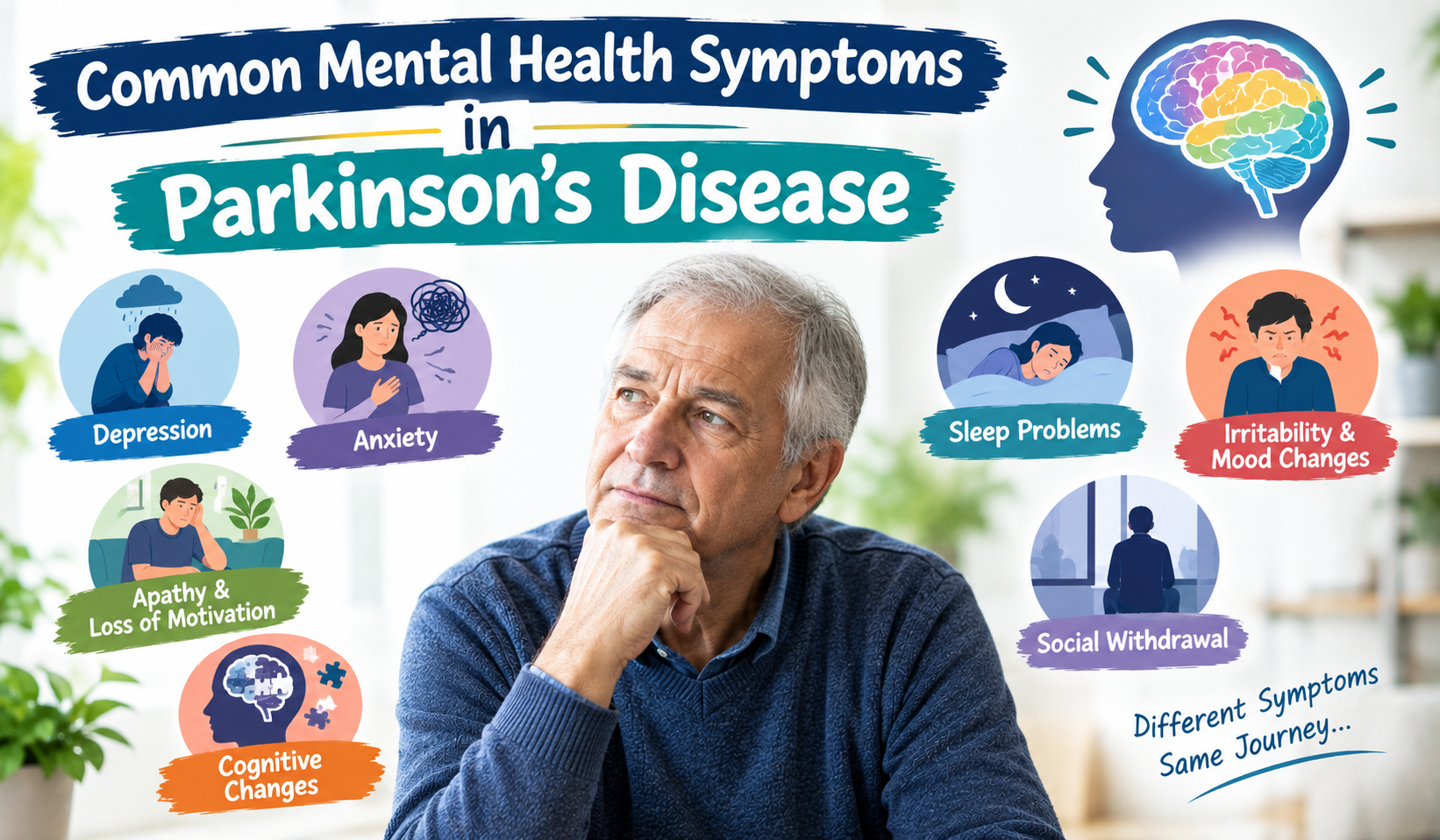
Common Mental Health Symptoms in Parkinson’s Disease
Parkinson’s disease can affect more than movement. It may also affect mood, emotions, thinking, sleep, motivation, and behavior. Mental health changes can occur at different stages, and each person may experience them differently.
1. Depression
Depression is a common mental health concern in people with Parkinson’s disease. It can affect mood, energy, motivation, sleep, and interest in everyday activities.
Key points:
- Persistent sadness or low mood
- Loss of interest in hobbies or activities
- Low energy or increased tiredness
- Reduced motivation
- Feelings of hopelessness
- Changes in sleep or appetite
- Difficulty concentrating
- Withdrawal from family or friends
- Feelings of guilt or worthlessness
Depression should not simply be considered a normal reaction to having Parkinson’s disease. If symptoms continue or interfere with daily life, a healthcare professional should evaluate them.
2. Anxiety
Anxiety can cause excessive worry, nervousness, fear, and physical symptoms. In Parkinson’s disease, anxiety may sometimes become more noticeable when symptoms are difficult to control.
Key points:
- Excessive or persistent worrying
- Feeling nervous or constantly on edge
- Restlessness
- Irritability
- Difficulty concentrating
- Trouble sleeping
- Fear of going outside
- Avoiding social situations
- Panic attacks
- Racing heartbeat
- Sweating or dizziness
- Nausea
Anxiety can also cause someone to avoid activities because they are worried about falling or experiencing symptoms in public.
3. Apathy and Loss of Motivation
Apathy means having reduced interest or motivation to participate in normal activities. It can sometimes look like laziness, but it may be associated with Parkinson’s disease.
Key points:
- Less interest in hobbies
- Reduced motivation
- Less participation in exercise
- Avoiding social activities
- Difficulty starting everyday tasks
- Less interest in household responsibilities
- Reduced involvement in appointments or routines
Apathy is not necessarily the same as depression. A person can experience a lack of motivation without feeling persistently sad.
👉 DON’T TRY THIS “PARKINSON’S DISEASE AND MENTAL HEALTH” UNTIL YOU SEE THIS
4. Cognitive Changes
Parkinson’s disease can affect thinking and cognitive abilities. These changes may be mild or may become more noticeable over time.
Key points:
- Slower thinking
- Difficulty concentrating
- Forgetfulness
- Trouble finding words
- Difficulty planning
- Problems with multitasking
- Difficulty solving complicated tasks
- Trouble following several instructions
- Difficulty organizing appointments or daily activities
Mild cognitive changes do not automatically mean dementia. However, discuss new or worsening memory or thinking problems with a healthcare professional.
5. Sleep Problems
Sleep problems are another important part of mental and emotional health in Parkinson’s disease. Poor sleep can affect energy, concentration, memory, and mood.
Key points:
- Difficulty falling asleep
- Waking frequently during the night
- Difficulty staying asleep
- Excessive daytime sleepiness
- Low energy during the day
- Difficulty concentrating
- Problems remembering information
- Increased difficulty managing emotions
Depression and anxiety can also make sleep problems worse, creating a cycle between poor sleep, fatigue, reduced activity, and low mood.
6. Irritability and Mood Changes
Changes in mood and behavior can occur in some people with Parkinson’s disease. A person may become more easily frustrated, irritable, or emotionally sensitive.
Key points:
- Increased irritability
- Frustration
- Changes in emotional responses
- Reduced interest in usual activities
- Changes in behavior
- Difficulty managing emotions
These changes can have several possible causes, including Parkinson’s disease, medication effects, sleep problems, anxiety, depression, or cognitive changes.
7. Social Withdrawal
Some people with Parkinson’s may gradually reduce contact with friends, family, or community activities.
Key points:
- Avoiding social activities
- Spending more time alone
- Losing interest in hobbies
- Avoiding public activities
- Reduced communication with family or friends
- Less participation in community activities
Social withdrawal may be related to anxiety, depression, fatigue, physical limitations, or reduced motivation. Staying socially connected can be an important part of maintaining emotional well-being.
When Should You Seek Help?
Don’t ignore mental health changes if they continue or start affecting everyday life.
Talk to a healthcare professional if you notice:
- Persistent sadness or anxiety
- Major changes in sleep
- Loss of interest in normal activities
- Increasing social withdrawal
- Noticeable memory or thinking problems
- Significant changes in motivation
- Mental health symptoms affecting daily activities
- Symptoms becoming progressively worse
Early discussion can help the healthcare team identify possible causes and develop an appropriate management plan.
The Role of Sleep in Parkinson’s and Mental Health
Sleep and mental health are closely connected.
People with Parkinson’s may experience difficulty falling asleep, waking frequently during the night, vivid dreams, daytime sleepiness, or other sleep-related problems.
Poor sleep can make several symptoms worse, including:
- Fatigue
- Irritability
- Anxiety
- Depression
- Difficulty concentrating
- Memory problems
- Daytime sleepiness
Improving sleep may therefore be an important part of supporting mental well-being.
Helpful habits may include maintaining a regular sleep and wake schedule, keeping the bedroom comfortable and safe, getting appropriate daytime physical activity, and discussing persistent sleep problems with a healthcare professional.
How Exercise Can Support Mental Health?
Physical activity is an important part of overall Parkinson’s care.
Exercise can support mobility, strength, balance, and physical function. It may also support mood, concentration, stress management, and general well-being.
Activities can be adapted to a person’s abilities. Depending on their health and safety needs, options may include:
- Walking
- Stretching
- Strength exercises
- Cycling
- Swimming
- Yoga
- Tai chi
- Parkinson’s-specific exercise programs
A person with balance problems or significant mobility difficulties should discuss safe exercise options with their healthcare team or physical therapist.
Exercise should not be viewed as a replacement for professional treatment of depression, anxiety, or other mental health conditions. Instead, it can be one part of a broader care plan. Research and Parkinson’s Foundation guidance support regular physical activity as one way to support cognitive and emotional well-being.
How Counseling Can Help?
Living with Parkinson’s can involve major emotional changes. Counseling or psychotherapy can give people a safe place to discuss these challenges.
A mental health professional can help with:
- Anxiety
- Depression
- Stress
- Grief
- Fear about the future
- Changes in relationships
- Loss of independence
- Adjustment to diagnosis
- Coping with cognitive changes
Cognitive behavioral therapy (CBT), for example, may help people identify unhelpful thought patterns and develop practical strategies for managing emotional symptoms.
Counseling can also involve a spouse, family member, or caregiver when appropriate.
Seeking counseling does not mean someone is weak or unable to cope. Mental health support is a normal part of managing a long-term neurological condition.
👉 DON’T TRY THIS “PARKINSON’S DISEASE AND MENTAL HEALTH” UNTIL YOU SEE THIS
The Importance of Social Connection
Parkinson’s disease can sometimes lead people to withdraw from social activities. A person may avoid going out because of tremors, walking difficulties, speech problems, fatigue, anxiety, or embarrassment about symptoms.
Over time, isolation can contribute to loneliness and worsen emotional well-being.
Maintaining social connections can be helpful. This might include:
- Talking with family members
- Meeting friends
- Joining a Parkinson’s support group
- Participating in exercise classes
- Attending community activities
- Staying involved in hobbies
- Connecting with others online
The goal is not to force someone to participate in activities they find overwhelming. Instead, families can help identify comfortable and meaningful ways to stay connected.
Tips for Families and Caregivers
Mental health changes can be difficult for caregivers as well as patients.
Caregivers may become frustrated when a loved one’s behavior changes. Understanding that these changes may be related to Parkinson’s can make them easier to approach.
Helpful strategies include:
- Listen without judging right away: Give the person a chance to explain how they feel.
- Avoid calling someone lazy: Apathy and fatigue can look like laziness but may have neurological or medical causes.
- Keep routines predictable: A consistent daily schedule can make everyday tasks easier.
- Use simple communication: If cognitive changes are present, provide one instruction at a time when possible.
- Encourage medical appointments: Include mental health symptoms in discussions with the Parkinson’s care team.
- Watch for sudden changes: Rapid changes in confusion, behavior, or awareness require medical attention.
- Take caregiver mental health seriously: Caregivers also need rest, emotional support, social connection, and professional help when needed.
When Should Someone Talk to a Doctor?
Mental health symptoms should not be ignored simply because Parkinson’s disease is already present.
Contact a healthcare professional if someone develops:
- Persistent sadness
- Increasing anxiety
- Significant loss of motivation
- Major sleep changes
- New memory problems
- Increasing confusion
- Significant behavioral changes
- Hallucinations
- Delusions
- New impulsive or risky behaviors
- Difficulty managing daily responsibilities
- Social withdrawal
- A major decline in quality of life
It is particularly important to seek prompt medical evaluation when mental changes appear suddenly.
Sudden confusion is not something that should automatically be attributed to Parkinson’s progression. Infection, medication effects, dehydration, sleep problems, or other medical issues may sometimes be responsible.
Building a Complete Parkinson’s Care Plan
Parkinson’s care should address both movement and non-movement symptoms.
A complete care plan may involve several professionals, depending on the person’s needs. These may include:
- Neurologists
- Movement-disorder specialists
- Primary care doctors
- Mental health professionals
- Physical therapists
- Occupational therapists
- Speech-language therapists
- Social workers
- Nurses
- Dietitians
- Caregivers and family members
This team-based approach can help address the different ways Parkinson’s disease affects everyday life.
For example, a neurologist may manage Parkinson’s medications, while a therapist may help with anxiety or depression. A physical therapist may address mobility, while an occupational therapist may recommend strategies for completing daily tasks safely.
Everyday Ways to Support Mental Well-Being
Small, consistent habits can make daily life easier.

1. Follow a regular routine
A predictable schedule can reduce stress and make daily responsibilities easier to manage.
2. Stay physically active
Choose safe activities that match the person’s abilities and medical needs.
3. Stay socially connected
Regular interaction with friends, relatives, support groups, or community organizations can help reduce isolation.
4. Get enough rest
Discuss persistent sleep problems with a healthcare professional.
5. Talk about emotions
Encourage honest conversations about sadness, fear, frustration, and anxiety.
6. Keep medical appointments
Regular follow-up allows doctors to monitor both physical and mental symptoms.
7. Review medications regularly
Tell the healthcare team about new behavioral or mental symptoms.
8. Make activities manageable
Break large tasks into smaller steps when concentration or motivation is difficult.
9. Maintain enjoyable hobbies
Reading, music, gardening, crafts, cooking, walking, or other meaningful activities can provide structure and enjoyment.
Final Thought
Parkinson’s disease can affect more than movement, and mental health changes such as depression, anxiety, apathy, sleep problems, and changes in thinking may occur at different stages.
Recognizing these symptoms early is important because they can affect daily life, relationships, motivation, and overall well-being.
Patients and caregivers should discuss new or worsening emotional, behavioral, or cognitive changes with a healthcare professional.
With appropriate medical care, emotional support, regular physical activity, healthy routines, good sleep habits, and social connection, many mental health challenges can be managed.
Understanding the connection between Parkinson’s disease and mental health helps patients, families, and caregivers recognize changes, seek timely support, and improve day-to-day quality of life.
.
.
.
Reference
https://www.mayoclinic.org/diseases-conditions/parkinsons-disease/symptoms-causes/
About Us

Dr. Carlos Espiche, MD
Dr. Carlos Espiche, MD is a dedicated medical professional with a passion for providing personalized care. With years of experience in healthcare, she specializes in holistic treatment approaches, ensuring patients receive the best care possible. Dr. Carlos Espiche, MD is committed to improving patient outcomes through compassion and evidence-based practices.