How to Treat a Pinched Nerve – Relief Tips & Recovery Guide
How to Treat a Pinched Nerve: Complete Guide to Relief, Recovery, and Prevention
A pinched nerve can be an intensely uncomfortable and sometimes disabling condition that affects daily movement, sleep, and overall quality of life.
It occurs when surrounding tissues such as bones, cartilage, muscles, or tendons place excessive pressure on a nerve, leading to pain, tingling, numbness, or weakness. Pinched nerves can develop in the neck, back, shoulders, or even wrists, and they often worsen if left untreated.
The good news is that most cases improve with conservative care, lifestyle adjustments, and targeted therapy. In this comprehensive guide, we’ll break down everything you need to know about how to treat a pinched nerve effectively at home and when to seek medical help.


What Is a Pinched Nerve?
A pinched nerve—also called nerve compression—occurs when too much pressure is applied to a nerve by surrounding tissues. This pressure disrupts normal nerve function and leads to pain signals or abnormal sensations.
Pinched nerves commonly occur in areas where nerves travel through narrow spaces, such as the spine, neck, or joints. According to medical experts, this condition is often associated with aging, repetitive movement, poor posture, or spinal conditions like herniated discs or arthritis.
When the nerve is compressed, communication between the brain and the affected body part becomes disrupted, resulting in symptoms such as:
- Sharp or burning pain
- Tingling or “pins and needles” sensation
- Numbness in the affected area
- Muscle weakness
- Pain radiating down the arms or legs
Common Causes of a Pinched Nerve
A pinched nerve develops when surrounding tissues such as bones, muscles, tendons, or cartilage place excess pressure on a nerve.
This compression interrupts normal nerve signals and leads to pain, tingling, or numbness. Below are the most common causes explained in simple 2–3 line paragraphs.
1. Poor posture
Poor posture is one of the leading causes of a pinched nerve, especially from long hours of sitting or screen use. Slouching or forward head position places extra stress on the spine and surrounding nerves. Over time, this pressure can lead to nerve compression and discomfort.
2. Herniated or bulging discs
A herniated or bulging disc occurs when the soft cushioning between spinal bones shifts out of place. This displaced disc can press directly on nearby nerves, causing pain and tingling. It is one of the most common spinal causes of nerve compression.
3. Repetitive movements
Repeating the same motion for long periods, such as typing, lifting, or using tools, can irritate nearby nerves. This constant strain leads to inflammation and narrowing of nerve pathways. Over time, this may result in chronic nerve compression symptoms.
4. Injury or trauma
Accidents, falls, or sports injuries can cause sudden pressure or swelling around nerves. This physical trauma may compress or irritate nerve structures. In some cases, inflammation after injury continues to worsen nerve pain.
5. Arthritis and bone spurs
Arthritis can cause joint inflammation and the formation of bone spurs along the spine. These extra bone growths may narrow nerve pathways and create pressure. As a result, nerves become irritated, leading to pain and stiffness.
6. Obesity or excess weight
Symptoms of a Pinched Nerve
Symptoms depend on where the nerve is compressed, but typically include:
- Localized pain in the neck, back, or limb
- Radiating pain (e.g., lower back to leg or neck to arm)
- Numbness or reduced sensation
- Tingling or burning sensation
- Muscle weakness or reduced grip strength
- Increased pain with movement
If symptoms persist or worsen, medical evaluation is important to prevent complications.
How to Treat a Pinched Nerve at Home
Most mild cases can be treated with conservative home care. Early treatment focuses on reducing inflammation, relieving pressure, and supporting nerve healing.
1. Rest and activity modification
The first step is to avoid activities that trigger pain or worsen symptoms. Rest helps reduce nerve irritation and allows healing to begin.
However, complete inactivity is not recommended. Light movement should be gradually reintroduced as pain improves.
2. Cold and heat therapy
- Cold packs reduce inflammation and numb sharp pain
- Heat therapy relaxes tight muscles and improves blood flow
Alternating both can be highly effective for symptom relief.
3. Over-the-counter pain relief
Non-prescription medications like ibuprofen or naproxen may help reduce inflammation and pain. Always follow dosage guidelines and consult a doctor if needed.
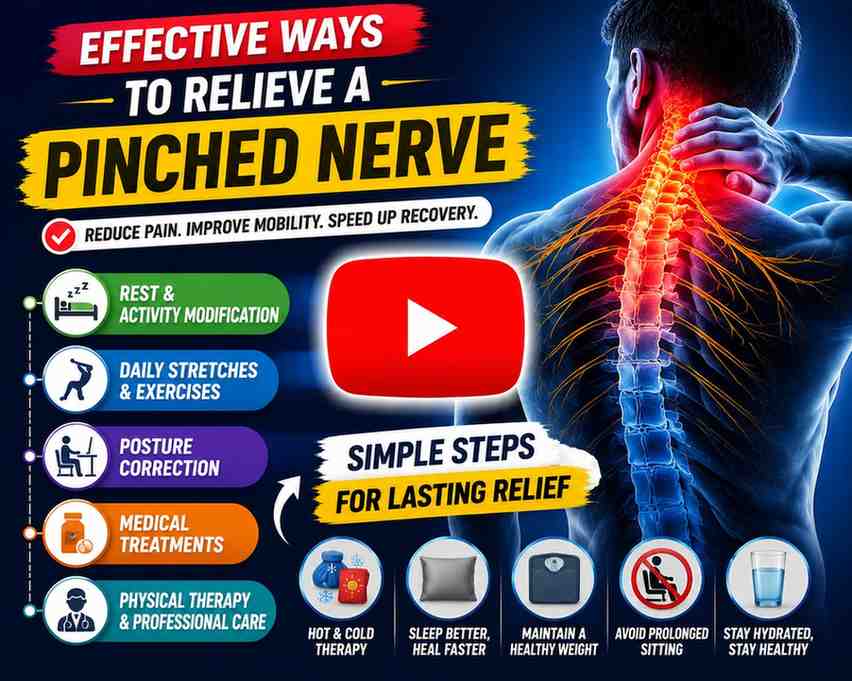
4. Gentle stretching and movement
Controlled movement helps reduce nerve pressure and improves flexibility. Studies show that light exercise and stretching can relieve pressure on compressed nerves and improve function.
Examples include:
- Neck tilts and rotations
- Shoulder rolls
- Knee-to-chest stretches
- Gentle spinal twists
- Walking short distances
5. Posture correction
Poor posture is one of the biggest contributors to pinched nerves. Improving alignment can significantly reduce symptoms.
Tips include:
- Keep shoulders relaxed and back straight
- Avoid slouching while sitting
- Use ergonomic chairs and desks
- Keep screens at eye level
6. Lifestyle changes
Small daily changes can speed up recovery:
- Maintain a healthy weight
- Avoid prolonged sitting
- Take frequent movement breaks
- Stay hydrated
- Improve sleep posture with proper pillow support
Physical Therapy for Pinched Nerve Relief
If symptoms persist, physical therapy is one of the most effective treatments. A therapist can design a personalized program that includes stretching, strengthening, and mobility exercises.
Physical therapy helps:
- Reduce nerve compression
- Strengthen supporting muscles
- Improve spinal alignment
- Prevent future recurrence
Common therapies include:
- Guided stretching routines
- Manual therapy
- Postural training
- Nerve gliding exercises
- Core strengthening exercises

Exercises That Help a Pinched Nerve
Regular gentle exercise supports recovery and prevents stiffness.
Recommended exercises:
- Cat-Cow stretch
- Child’s pose
- Pelvic tilts
- Shoulder rolls
- Hamstring stretches
- Walking
- Nerve gliding exercises
These movements help restore mobility and reduce pressure on irritated nerves.
What to Avoid With a Pinched Nerve
To prevent worsening symptoms, avoid:
- Heavy lifting
- Sudden twisting movements
- High-impact exercise
- Sitting for long periods without breaks
- Poor posture positions
- Deep or aggressive stretching
How Long Does a Pinched Nerve Take to Heal?
Recovery time varies depending on severity:
- Mild cases: a few days to 2 weeks
- Moderate cases: 3 to 6 weeks
- Severe cases: several months
Most people improve significantly with consistent treatment and lifestyle adjustments.
When to See a Doctor
Seek medical attention if you experience:
- Symptoms lasting more than 2–3 weeks
- Increasing pain or weakness
- Loss of coordination
- Difficulty walking
- Severe numbness
Early diagnosis helps prevent long-term nerve damage.
Preventing a Pinched Nerve
Prevention is key to long-term spinal health:
- Maintain good posture daily
- Exercise regularly
- Strengthen core muscles
- Avoid repetitive strain
- Take frequent breaks during work
- Use ergonomic furniture
Conclusion
A pinched nerve can be painful, but it is highly treatable in most cases with the right combination of rest, movement, posture correction, and targeted therapy.
Early care is essential to prevent worsening symptoms and long-term nerve damage.
By staying active in a controlled way, improving posture, and following a structured recovery plan, most individuals can achieve full recovery and return to normal activity.
If symptoms persist, professional evaluation ensures the safest and most effective treatment approach.
References
About Us