
How Does the Horse Trick Work in the Body? Explained
The phrase “Horse Trick” has recently attracted attention in online wellness discussions, particularly among men looking for simple ways to support energy, stamina, physical performance, circulation, and sexual wellness.
However, the term is not a medically standardized technique. Different websites and social media posts may use “Horse Trick” to describe different routines, exercises, food-based practices, or wellness methods.
That lack of a consistent definition makes it important to look beyond the name and understand what a particular practice is actually doing inside the body.
The Horse Trick is an online wellness practice often discussed in connection with men’s health and physical performance. It should be approached responsibly as part of a balanced lifestyle that includes regular exercise, healthy nutrition, adequate sleep, hydration, and other supportive habits.

Instead of assuming that a viral health trend has a special biological effect, it is more useful to examine the individual activity, how the body responds to it, and what scientific evidence says about the claimed benefits.
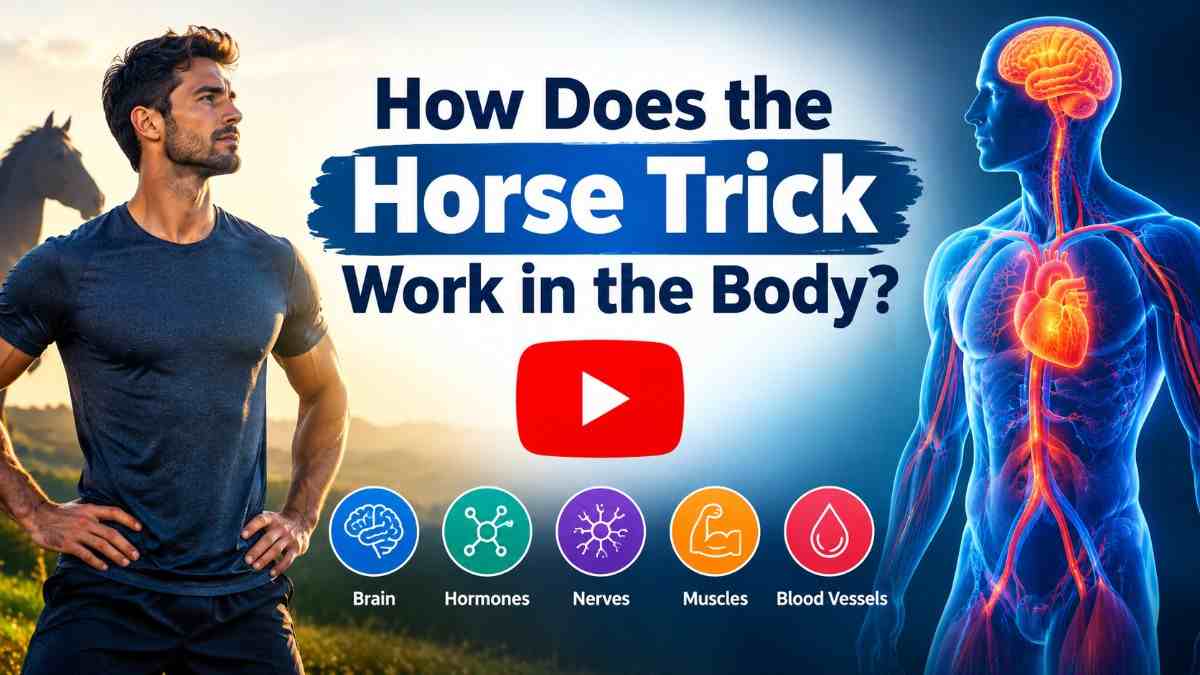
The cardiovascular system supplies blood, the nervous system coordinates responses, muscles provide physical control, hormones influence sexual function and metabolism, and psychological factors can affect arousal and performance.
Erectile function involves the brain, hormones, emotions, nerves, muscles, and blood vessels. All of these systems work together to support normal sexual response and performance.
This article explains how the Horse Trick is claimed to work in the body and which biological mechanisms may be relevant.
What Is the Horse Trick?
The Horse Trick is primarily an internet wellness phrase rather than a recognized medical treatment or standardized therapeutic technique.
Online descriptions can vary considerably. Some versions of the term may refer to a physical routine, while others may describe a particular approach intended to support male stamina, circulation, sexual performance, or general vitality.
Because the same phrase can apply to different practices, no single mechanism can accurately explain every version.
This distinction matters when evaluating health claims. If a routine involves physical movement, for example, consider its effects in relation to exercise and muscle activity.
If it involves breathing or relaxation, its effects should be examined through those physiological pathways. If it is presented as a sexual-enhancement method, its claims should be evaluated against evidence for sexual function rather than relying on the name itself.
The term should therefore be viewed as a popular online label rather than evidence that a unique biological process occurs in the body.
How Does the Horse Trick Work in the Body?
The answer depends on which version of the Horse Trick a person is referring to. There is no established medical mechanism known simply as the “Horse Trick effect.”
However, some practices promoted under viral wellness names may involve ordinary physiological processes such as muscle activation, blood circulation, breathing patterns, physical activity, relaxation, or changes in attention and arousal.
When the body performs physical activity, muscles require additional energy and oxygen. Heart rate can increase, breathing becomes more active, and blood flow is redistributed to meet the body’s demands.
If a version of the Horse Trick involves controlled movement or muscle contractions, the muscles involved may become more active and better coordinated through repeated practice.
That does not mean the routine automatically produces a specific sexual or hormonal outcome. The biological effect comes from the underlying physical activity, not from the viral label.
 DON’T TRY THIS “HORSE TRICK WORK IN THE BODY” UNTIL YOU SEE THIS
The Horse Trick and Blood Circulation
An erection is a vascular event that depends on appropriate blood flow and communication between the nervous system and blood vessels.
The body must coordinate signals that allow blood vessels in the erectile tissue to relax and permit increased blood flow.
Because circulation plays an important role in erectile function, activities that improve overall cardiovascular health may indirectly support healthy sexual function.
However, it is important not to confuse general circulation benefits with proof that a particular internet routine directly increases penile blood flow.
Mayo Clinic notes that physical activity can help address factors involved in erectile dysfunction, including stress, excess weight, and cardiovascular health, while regular exercise may also increase blood flow.
Therefore, if a Horse Trick involves meaningful physical activity, any benefit may be related to the broader effects of being physically active rather than a unique mechanism associated with the term.
What Happens to the Muscles?
Muscles are another possible part of the explanation when a Horse Trick involves physical movement or contractions.
Repeated muscular activity requires coordination between the brain, nerves, and muscles. When a person performs an exercise correctly and consistently, the nervous system becomes better practiced at controlling the movement.
Some male wellness discussions also mention pelvic-floor muscles. These muscles contribute to urinary control and participate in sexual function.
Exercises designed specifically for the pelvic floor are different from a generalized viral “trick,” however.
A person should therefore distinguish between a properly defined pelvic-floor exercise and an online routine that simply uses a catchy name.
If pelvic-floor training is being considered for a specific urinary or sexual concern, proper technique is important. Performing repeated contractions incorrectly or excessively is not necessarily beneficial.
The Nervous System and Sexual Response
Sexual arousal begins partly in the brain and involves communication between the brain, nerves, hormones, blood vessels, and muscles.
Signals travel through the nervous system to coordinate physiological changes associated with sexual response.
Stress can also interfere with sexual response. When someone is anxious about sexual performance, the resulting worry can affect arousal and make it more difficult to maintain an erection.
Mayo Clinic identifies stress, anxiety, relationship difficulties, and other psychological factors among contributors that can cause or worsen erectile dysfunction.
If a Horse Trick involves relaxation, controlled breathing, or mindful movement, some people may experience a temporary sense of relaxation. But that is different from proving that the routine treats erectile dysfunction.
Can the Horse Trick Increase Testosterone?
Testosterone is involved in several normal physiological functions, including sexual development, reproductive function, muscle-related processes, and bone health.
Testosterone levels can vary between individuals and can also change with age, health status, body composition, sleep, medications, and other factors.
However, there is no established evidence that a generalized “Horse Trick” reliably increases testosterone.
This is an important distinction because a practice may make someone feel more energetic without actually producing a clinically meaningful change in testosterone levels.
Feeling temporarily energized after physical activity, for example, does not prove that testosterone has increased. Similarly, feeling more confident after completing an exercise routine does not demonstrate a hormonal effect.
Men concerned about symptoms associated with low testosterone should discuss those symptoms with a qualified healthcare professional rather than assuming an internet trend can determine or correct hormone levels.
Does the Horse Trick Improve Erectile Function?
Mayo Clinic identifies cardiovascular disease, high blood pressure, high cholesterol, diabetes, obesity, tobacco use, certain medications, alcohol or drug use, sleep problems, stress, anxiety, and other physical or psychological factors among possible contributors to erectile dysfunction.
Because there are so many possible causes, a single routine cannot reasonably be expected to address every case.
If a particular Horse Trick involves physical activity, it may contribute to general fitness. If it includes pelvic-floor exercises, the underlying pelvic-floor training can be evaluated separately.
If it promotes relaxation, that aspect can be considered in relation to stress management. But none of these observations establish that the Horse Trick itself is a proven treatment for erectile dysfunction.
The National Center for Complementary and Integrative Health states that no complementary health approach is safe and effective for treating erectile dysfunction.
Can the Horse Trick Improve Stamina?
Stamina generally refers to the ability to sustain physical or sexual activity without becoming excessively fatigued.
Physical stamina develops through conditioning. Regular cardiovascular activity can improve endurance, while resistance training can strengthen muscles.
Adequate sleep, balanced nutrition, hydration, and appropriate recovery also contribute to physical performance. If someone feels more energetic after beginning a new wellness routine, several factors may be responsible.
They may be moving more, sleeping better, eating differently, managing stress more effectively, or simply becoming more confident about their health routine.
It is therefore difficult to attribute a change in stamina specifically to the Horse Trick without controlled research. Anecdotal reports can be interesting, but personal experiences do not establish that the same result will occur in everyone.
The Role of Physical Activity
One of the most important factors to consider is whether the particular version of the Horse Trick encourages movement.
Regular physical activity is associated with numerous health benefits. Exercise can help support cardiovascular health, body-weight management, metabolic function, and stress management.
These effects matter for men’s sexual health because erectile function is closely connected with vascular and metabolic health.
Mayo Clinic recommends regular physical activity, healthy eating, weight management, adequate sleep, and quitting smoking among lifestyle measures that may help people with erectile dysfunction.
This does not mean that every exercise routine is a treatment for erectile dysfunction. Rather, it shows why an active lifestyle can be more meaningful than focusing on a single viral technique.
The Horse Trick and Stress
When someone experiences ongoing stress, the nervous system can remain in a heightened state of alertness. This can affect sleep, concentration, mood, energy, and sexual response.
Sexual performance can also become affected by performance anxiety. A person who becomes worried about whether they will achieve or maintain an erection may experience additional anxiety, creating a cycle in which concern itself makes sexual response more difficult.
A routine that encourages relaxation, mindful movement, or regular exercise may help some people manage everyday stress.
However, this should not be interpreted as evidence that the Horse Trick specifically treats anxiety or erectile dysfunction. The potential value of relaxation comes from the relaxation practice itself.
DON’T TRY THIS “HORSE TRICK WORK IN THE BODY” UNTIL YOU SEE THIS
Does the Horse Trick Affect Hormones?
Hormones are chemical messengers that help regulate many processes throughout the body. Because testosterone and other hormones are associated with men’s health, internet trends sometimes claim to “balance” or “boost” hormones.
Hormonal physiology is considerably more complicated than these claims suggest. Hormone levels can be affected by age, sleep, body composition, health conditions, medications, and other factors.
A short-term change in how a person feels does not automatically indicate a measurable hormonal change.
For that reason, claims that the Horse Trick directly increases testosterone or dramatically changes hormone levels should be treated cautiously unless supported by appropriately designed human research.
How Long Does the Horse Trick Take to Work?
There is no scientifically established timeframe for the Horse Trick because the phrase does not represent one standardized intervention.
A relaxation exercise may produce an immediate subjective feeling of calm. Physical activity may produce short-term changes in heart rate and circulation.
Improvements in fitness generally require repeated activity over time. Likewise, changes associated with weight management, cardiovascular conditioning, or improved sleep typically develop through consistent habits rather than one-time use.
Is the Horse Trick Safe?
A moderate physical activity may be appropriate for many healthy adults, while an intense or incorrectly performed exercise could create unnecessary strain.
NCCIH notes that dietary supplements can vary considerably in evidence and safety, and some may interact with medications or pose risks for people with particular health conditions.
Men should therefore avoid assuming that something is safe simply because it is described as natural, traditional, viral, or popular online.
If a routine causes pain, dizziness, unusual shortness of breath, chest discomfort, injury, or other concerning symptoms, it should be stopped and evaluated appropriately.
Warning Signs to Watch For
Online health trends can become problematic when marketing claims become stronger than the available evidence.
Be cautious when a product or routine promises guaranteed results, immediate erectile improvement, dramatic testosterone increases, permanent sexual enhancement, or a cure for a medical condition.
Individual experiences can be genuine while still failing to demonstrate that a practice works consistently across a wider population.
Scientific evaluation generally requires controlled research involving enough participants to determine whether an observed effect is meaningful and reproducible.
Horse Trick vs. Healthy Lifestyle Habits
It can be useful to compare the claims surrounding an internet trend with established health principles. A healthy lifestyle focuses on several interconnected areas rather than one quick technique.
Regular Exercise
Regular physical activity can support cardiovascular fitness, weight management, circulation, and stress reduction. These factors are relevant to overall men’s health and can also influence sexual function.
Balanced Nutrition
A balanced eating pattern provides the body with energy and essential nutrients needed for normal physiological processes. Healthy dietary habits also support weight management and cardiovascular health.
Quality Sleep
Sleep affects energy, recovery, mood, concentration, and many aspects of general health. Poor sleep can also be associated with sexual difficulties.
Avoiding Tobacco
Smoking can negatively affect blood vessels and circulation. Because healthy blood vessels are important for erectile function, avoiding tobacco is an important part of cardiovascular and sexual wellness.
Moderating Alcohol
Excessive alcohol consumption can contribute to sexual difficulties and other long-term health concerns. Reducing excessive alcohol intake can therefore support broader health goals.
Managing Stress
Stress management can support emotional well-being and may help reduce one contributor to sexual difficulties.
Maintaining a Healthy Weight
Excess body weight can contribute to several conditions associated with erectile dysfunction. Maintaining a healthy weight through nutrition and physical activity can support overall metabolic and cardiovascular health.
What If Erectile Problems Keep Happening?
Occasional changes in sexual performance can happen for many reasons, including stress, fatigue, alcohol use, relationship concerns, or temporary illness.
Erectile dysfunction can sometimes be associated with cardiovascular disease, diabetes, high blood pressure, obesity, medication effects, hormonal issues, nerve problems, or other medical conditions.
For that reason, repeatedly trying internet remedies without understanding the underlying cause may delay appropriate evaluation.
A healthcare professional can review symptoms, medications, lifestyle factors, medical history, and other possible contributors.
This is especially important when erectile changes occur alongside other symptoms or when someone has known cardiovascular or metabolic risk factors.
Why the “Horse Trick” Can Be Misleading
The biggest issue with viral health terminology is that a catchy name can make a routine sound more medically established than it actually is.
The body does not recognize the phrase “Horse Trick.” It responds to specific physical, nutritional, psychological, and physiological inputs.
If someone receives medical treatment, the body responds according to the treatment and the underlying condition.
Understanding this distinction helps people separate a marketing label from an actual biological mechanism.
What Does the Science Really Support?
The available evidence supports the importance of addressing overall health rather than relying on an undefined viral technique.
NCCIH notes that many products marketed specifically for men’s health have not been demonstrated to be safe or effective, and it states that no complementary health approach has been established as both safe and effective for treating erectile dysfunction.
Mayo Clinic similarly emphasizes lifestyle measures such as physical activity, healthy eating, weight management, adequate sleep, and quitting smoking when discussing factors that may help with erectile function.
This evidence does not mean every component of a Horse Trick is necessarily useless. It means each component should be evaluated according to what it actually involves and what research supports.
That is a much more reliable way to understand wellness trends than accepting broad claims based solely on popularity.
Final Thoughts
The most accurate answer is that there is no single biological mechanism because “Horse Trick” is an internet wellness term rather than a standardized medical technique.
Different versions may involve physical activity, muscle contractions, relaxation, or other behaviors, and the body responds to those individual actions through ordinary physiological processes.
The most important point is to separate the name of a trend from the activity itself. If a routine involves exercise, its potential value should be considered through the established effects of exercise.
If it involves pelvic-floor training, that practice should be evaluated according to evidence about pelvic-floor function. If it involves relaxation, its role should be considered in relation to stress management.
For men’s overall wellness, the broader foundation remains important: regular physical activity, balanced nutrition, adequate sleep, healthy weight management, avoidance of tobacco, moderation of alcohol, stress management, and appropriate healthcare.
Persistent changes in sexual function should not automatically be attributed to aging or treated solely with an internet trend.
Erectile dysfunction can sometimes be associated with underlying cardiovascular, metabolic, hormonal, neurological, medication-related, or psychological factors.
DON’T TRY THIS “HORSE TRICK WORK IN THE BODY” UNTIL YOU SEE THIS
Medical Disclaimer
This article is intended for general educational and informational purposes only. It is not intended to diagnose, treat, cure, or prevent any disease or medical condition.
Health information can vary from person to person. Anyone experiencing persistent, worsening, or concerning symptoms should consult a qualified healthcare professional for appropriate evaluation and guidance.
.
.
.
References
Erectile Dysfunction: Diagnosis and Treatment
https://www.mayoclinic.org/diseases-conditions/erectile-dysfunction/diagnosis-treatment/drc-20355782
Men’s Health
https://www.nccih.nih.gov/health/mens-health
Using Dietary Supplements Wisely
https://www.nccih.nih.gov/health/using-dietary-supplements-wisely
National Library of Medicine
https://pubmed.ncbi.nlm.nih.gov/
About Us
