Early Signs of Parkinson’s: Symptoms You Should Know
Parkinson’s disease is a progressive neurological condition that affects the brain and gradually impacts movement, coordination, and several other body functions.
While many people recognize Parkinson’s by visible shaking or tremors, the earliest signs are often much subtler and harder to notice. In many cases, Parkinson’s symptoms develop slowly over months or years.
Early changes may appear as small differences in movement, sleep patterns, handwriting, smell, mood, or daily activities. Because these signs can overlap with normal aging or other health conditions, they are sometimes overlooked.


Early signs of Parkinson’s include subtle tremors, slow movement, stiffness, sleep changes, and other symptoms that may appear before diagnosis.
Understanding the early signs of Parkinson’s disease can help individuals and families identify possible concerns and seek professional medical advice when needed. Early evaluation may support better symptom management and help create a personalized care approach.
This guide explains the most common early signs of Parkinson’s disease, why they occur, risk factors, diagnosis methods, and ways to support overall health.
What Is Parkinson’s Disease?
Parkinson’s disease is a disorder that affects the nervous system, especially areas of the brain involved in controlling movement. It occurs when certain brain cells responsible for producing dopamine become damaged or gradually stop working properly.
Dopamine is a chemical messenger that helps the brain control smooth, coordinated movement. When dopamine levels decrease, the body may experience stiffness, slower movements, and balance problems.
Parkinson’s is more than a movement disorder. Although movement symptoms are often the most recognized, Parkinson’s can also affect sleep, emotions, digestion, speech, and other daily functions.
Some people experience non-movement symptoms before noticeable movement changes appear. The condition usually develops gradually, and symptoms may vary significantly from person to person.
Why Recognizing Early Signs of Parkinson’s Matters
The early stages of Parkinson’s disease may involve small changes that are easy to dismiss. A person may notice that their movements feel slower, their handwriting has changed, or they are experiencing unusual stiffness.
These changes do not always mean someone has Parkinson’s disease. Many symptoms can occur because of other health conditions, medications, stress, or natural aging.
However, recognizing patterns and discussing concerns with a healthcare professional can help identify possible causes. Small changes can provide important health clues.
Early recognition helps individuals better understand their symptoms and seek appropriate medical guidance. It also helps family members support the person when changes in daily activities become noticeable.
👉 DON’T TRY THIS “EARLY SIGNS OF PARKINSON’S” UNTIL YOU SEE THIS
Common Early Signs of Parkinson’s Disease
1. Tremors or Mild Shaking
One of the most commonly known early signs of Parkinson’s disease is a tremor. This usually appears as a slight shaking movement that occurs when the body part is relaxed. A tremor may begin in one hand, finger, foot, or another area of the body. In first, it may appear only occasionally and become more noticeable over time.
2. Slower Movement (Bradykinesia)
Slower movement, also known as bradykinesia, is another common early sign of Parkinson’s disease. This occurs when the brain has difficulty controlling normal movement speed.
Some possible changes include:
- Taking smaller steps while walking
- Moving more slowly than usual
- Difficulty starting movements
- Reduced natural body movements
3. Muscle Stiffness and Tightness
Muscle stiffness can develop when Parkinson’s affects the body’s ability to control muscle movement. People may experience tightness or discomfort in areas such as the shoulders, arms, legs, or neck.
Early stiffness may appear as:
- Shoulder discomfort
- Reduced flexibility
- Tight muscles
- Difficulty moving freely
4. Changes in Handwriting
Changes in handwriting can be an early indicator of movement changes related to Parkinson’s disease. This condition is sometimes called micrographia, where handwriting becomes smaller and more crowded.
These changes may affect:
- Signing documents
- Writing notes
- Filling out forms
- Everyday handwriting tasks
Handwriting changes may appear before major movement symptoms. Family members or coworkers may sometimes notice these differences before the person recognizes them.
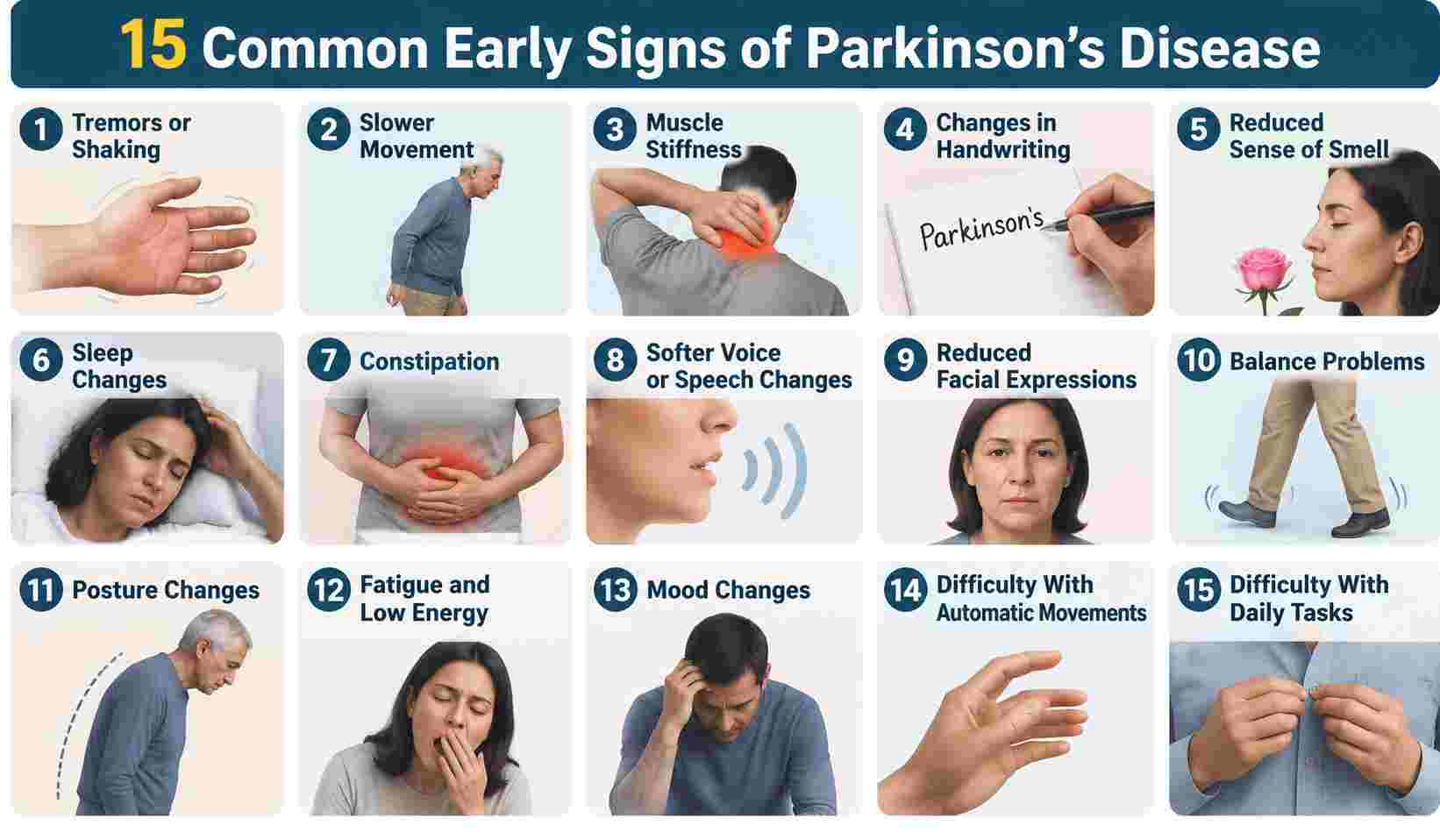
5. Reduced Sense of Smell
Some people may have a decreased ability to smell in the early stages of Parkinson’s disease. A person may find it harder to recognize familiar scents or notice that foods do not smell as strong as before.
Changes in smell may include:
- Difficulty identifying odors
- Reduced enjoyment of food flavors
- Less awareness of environmental smells
6. Sleep Changes
Sleep problems are another possible early sign associated with Parkinson’s disease. Some individuals may experience changes in sleep quality, unusual movements during sleep, or difficulty maintaining regular sleep patterns.
Possible sleep-related changes include:
- Trouble falling asleep
- Frequent waking during the night
- Acting out dreams
- Feeling tired during the day
7. Constipation and Digestive Changes
Digestive problems, especially constipation, may occur in some people before noticeable movement symptoms appear. The nervous system plays an important role in controlling digestion. Changes in nerve function may influence how the digestive system works.
Possible digestive changes include:
- Less frequent bowel movements
- Changes in digestion
- Increased digestive discomfort
8. Softer Voice and Speech Changes
Some people with early Parkinson’s disease notice changes in their voice. Speech may become softer, slower, or less clear. A person may not realize their voice has changed, but family members or friends may notice that they speak more quietly than before.
Possible speech changes include:
- Lower speaking volume
- Reduced voice strength
- Slower speech patterns
- Difficulty projecting the voice
9. Reduced Facial Expressions
Another possible early sign of Parkinson’s disease is a reduction in facial movements. Some people may notice that their face appears less expressive than before, even when they are experiencing different emotions.
Family members may notice changes such as:
- Less smiling
- Reduced facial reactions
- A more serious-looking expression
- Fewer natural facial movements
10. Balance Problems and Walking Changes
Changes in walking and balance may occur during the early stages of Parkinson’s disease. Some individuals may notice that their walking pattern feels different or that their movements are less coordinated.
Possible early walking changes include:
- Smaller steps
- Reduced arm movement while walking
- Feeling less steady
- Difficulty changing direction quickly
11. Posture Changes
Changes in posture can sometimes appear as Parkinson’s disease affects muscle control and movement coordination. Some individuals may begin leaning forward slightly or notice that maintaining an upright posture requires more effort.
Possible posture changes include:
- Rounded shoulders
- Forward leaning position
- Reduced body flexibility
- Difficulty maintaining normal posture
12. Fatigue and Low Energy
Some people with Parkinson’s disease may experience persistent tiredness in reduced energy. This fatigue may feel different from normal tiredness after physical activity.
A person may experience:
- Reduced energy during daily activities
- Difficulty staying focused
- Feeling exhausted despite adequate rest
- Less motivation for regular activities
13. Mood Changes and Emotional Symptoms
Changes in mood may appear before or alongside other Parkinson’s symptoms. Some individuals experience emotional changes that affect their daily life.
Possible mood-related symptoms include:
- Increased anxiety
- Feelings of sadness
- Reduced interest in activities
- Changes in motivation
👉 DON’T TRY THIS “EARLY SIGNS OF PARKINSON’S” UNTIL YOU SEE THIS
14. Difficulty With Automatic Movements
Parkinson’s disease can affect movements that usually happen without conscious effort. These automatic movements help make daily activities feel natural.
Examples include:
- Reduced arm swinging while walking
- Less frequent blinking
- Changes in facial movements
- Reduced body gestures
15. Changes in Writing, Typing, or Daily Tasks
Beyond handwriting changes, some people have difficulty with tasks that require fine motor skills.
Examples include:
- Using buttons or zippers
- Handling small objects
- Typing on a keyboard
- Using utensils
Symptoms That May Be Mistaken for Normal Aging
Some early Parkinson’s symptoms can look like common aging changes. This can make them difficult to recognize.
However, certain patterns may deserve closer attention, especially when multiple changes occur together.
Examples include:
- Increasing difficulty with movement
- Noticeable changes in handwriting
- Frequent stiffness
- New balance concerns
- Significant sleep changes
- Reduced sense of smell
A combination of symptoms is often more meaningful than a single symptom. Keeping a record of symptoms can help healthcare professionals understand changes over time.
Risk Factors Associated With Parkinson’s Disease
The exact cause of Parkinson’s disease is not completely understood. Researchers believe that several factors may contribute to the development of the condition.
Possible risk factors include:
- Age: Parkinson’s disease is more common as people get older, although younger individuals can also develop the condition.
- Genetics: Some people may have a higher risk because of specific genetic factors or family history.
- Environmental Factors: Certain environmental exposures may increase risk, although research continues to explore these connections.
- Biological Changes: Changes involving brain cells and dopamine production play an important role in Parkinson’s development.

How Is Parkinson’s Disease Diagnosed?
There is no single test that can confirm Parkinson’s disease. Doctors usually diagnose the condition by evaluating symptoms, medical history, and physical examinations.
During an evaluation, healthcare professionals may check:
- Muscle movement
- Balance and coordination
- Walking patterns
- Reflexes
- Muscle stiffness
- Medical history
Doctors may also use additional tests when needed to rule out other possible conditions. Doctors base the diagnosis on a complete evaluation, not a single symptom. Early consultation can help individuals understand their symptoms and receive appropriate guidance.
When Should You Talk to a Doctor?
You should consider discussing symptoms with a healthcare professional if you experience ongoing or unexplained changes such as:
- Persistent tremors
- Increasing stiffness
- Slower movements
- Significant handwriting changes
- Changes in walking ability
- Sleep disturbances
- Loss of smell
- Unusual mood changes
These symptoms may have many possible causes, but professional evaluation can help identify the reason.
How Family Members Can Support Someone With Early Parkinson’s Signs
Family support can play an important role when someone experiences possible Parkinson’s symptoms.
Helpful ways to provide support include:
- Encouraging medical discussions
- Being patient with daily activities
- Helping track symptom changes
- Supporting healthy routines
- Providing emotional encouragement
Understanding and communication can make daily life easier.
Conclusion
Recognizing early signs of Parkinson’s can help people seek timely medical guidance.
Symptoms such as tremors, slower movement, stiffness, handwriting changes, sleep problems, reduced smell, and mood changes may appear gradually.
While these signs do not always indicate Parkinson’s disease, noticing patterns and discussing concerns with a healthcare professional can provide valuable information.
Understanding the early signs allows individuals and families to become more informed and prepared. With proper evaluation, personalized care strategies, and healthy lifestyle habits, many people with Parkinson’s continue to maintain meaningful and active lives.
References
https://www.mayoclinic.org/diseases-conditions/parkinsons-disease/symptoms-causes/syc-20376055
https://en.wikipedia.org/wiki/Parkinson%27s_disease
https://www.webmd.com/parkinsons-disease/understanding-parkinsons-disease-symptoms
https://www.healthline.com/health/parkinsons
About Us