
Does Ankylosing Spondylitis Affect the Brain? Explained
Does Ankylosing Spondylitis Affect the Brain?
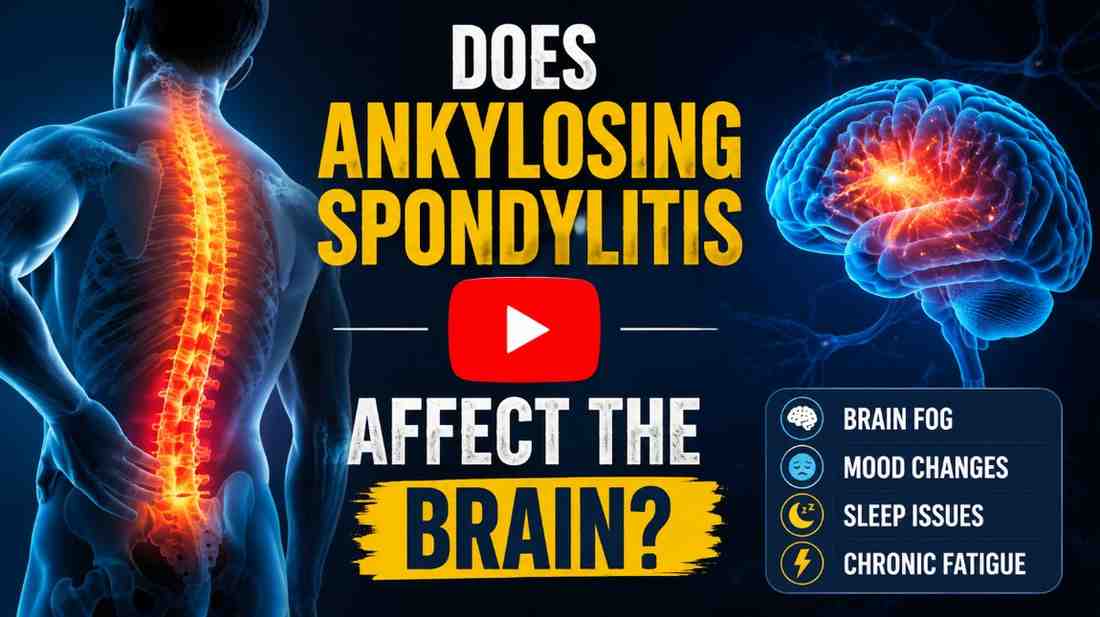
Ankylosing spondylitis (AS) is traditionally known as a chronic inflammatory condition that primarily targets the spine and sacroiliac joints. It causes persistent pain, stiffness, and progressive structural changes in the spine over time.
However, in recent years, growing clinical attention has shifted toward understanding whether AS is strictly a musculoskeletal disorder or whether its effects extend beyond the skeleton, particularly into the brain and nervous system.
This article explores in detail how ankylosing spondylitis may affect the brain, what symptoms patients report, what science currently understands, and what remains under investigation.

Understanding Ankylosing Spondylitis as a Systemic Disease
Ankylosing spondylitis is classified as a type of axial spondyloarthritis, a group of autoimmune and inflammatory diseases. It is strongly associated with the HLA-B27 gene and involves chronic inflammation of the spine and sacroiliac joints.
However, AS is not limited to the spine alone. It is increasingly recognized as a systemic inflammatory disorder, meaning it can affect multiple organs and systems in the body.
Common extra-spinal manifestations include:
- Eye inflammation (uveitis)
- Fatigue and chronic exhaustion
- Gut inflammation (in some patients overlapping with IBD)
- Cardiovascular involvement
- Psychological and cognitive symptoms
Because inflammation circulates through the bloodstream and immune signaling pathways, it can potentially influence brain function indirectly.
Can Ankylosing Spondylitis Reach the Brain Directly?
To be precise, ankylosing spondylitis does not typically invade brain tissue. The blood-brain barrier (BBB) protects the brain from many circulating inflammatory cells and molecules.
However, this does not mean the brain is unaffected.
Instead, AS can influence the brain through:
- Systemic inflammatory cytokines crossing or signaling through the BBB
- Chronic pain signaling pathways alter brain structure and function
- Sleep disruption affects cognitive processing
- Emotional stress and depression linked to chronic illness
- Medication side effects in some cases
So while AS does not directly damage brain tissue like a brain infection or tumor might, it can significantly affect how the brain functions over time.
The Role of Chronic Inflammation in Brain Function
One of the most important connections between ankylosing spondylitis and brain health is inflammation.
AS involves elevated levels of inflammatory cytokines, such as:
- Tumor necrosis factor-alpha (TNF-α)
- Interleukin-6 (IL-6)
- Interleukin-17 (IL-17)
These inflammatory molecules are not confined to the joints. They circulate throughout the body and can influence brain signaling.
How inflammation affects the brain:
1. Neuroinflammation
Low-grade inflammation can affect brain cells (microglia), altering neurotransmitter balance.
2. Reduced cognitive efficiency
Inflammation is linked to slower processing speed and reduced attention span.
3. Fatigue signaling
Cytokines can trigger “sickness behavior,” leading to fatigue, low motivation, and brain fog.
4. Mood changes
Inflammatory markers are strongly associated with depression and anxiety.
This is why many AS patients report symptoms that go beyond physical pain.
Cognitive Symptoms in Ankylosing Spondylitis
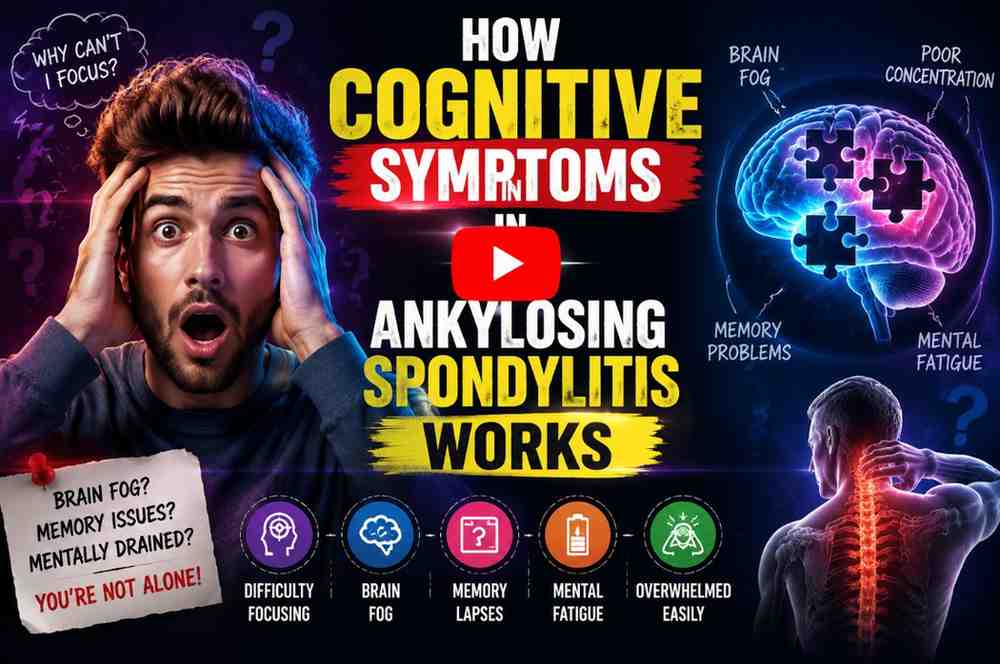
Many individuals with ankylosing spondylitis report what is commonly referred to as “brain fog.” This is not a medical diagnosis, but a collection of cognitive symptoms.
Common cognitive complaints include:
- Difficulty concentrating
- Slower thinking or mental processing
- Forgetfulness
- Reduced multitasking ability
- Mental fatigue even after rest
These symptoms are often subtle but can significantly affect quality of life and work performance.
Why does this happen?
Several overlapping mechanisms may contribute:
- Chronic inflammation affects neural signaling
- Poor sleep due to pain and stiffness
- Psychological stress from chronic disease
- Reduced physical activity impacts brain oxygenation and circulation
- Medication effects in some patients
Importantly, these cognitive symptoms are usually functional and reversible, rather than due to structural brain damage.

Chronic Pain and Brain Rewiring
Chronic pain is one of the defining features of ankylosing spondylitis, and it plays a major role in how the brain adapts over time.
When pain persists for months or years, the brain undergoes neuroplastic changes:
Key brain changes linked to chronic pain:
- Increased sensitivity in pain-processing regions
- Altered activity in the prefrontal cortex (decision-making and attention)
- Heightened emotional response in the limbic system
- Reduced pain threshold over time
This means that AS does not just cause physical discomfort—it can actually reshape how the brain processes pain and stress.
The result can be:
- Increased perception of pain
- Emotional exhaustion
- Difficulty focusing on non-pain-related tasks
Sleep Disturbance and Brain Health in AS
Sleep is one of the most important regulators of brain health. Unfortunately, ankylosing spondylitis frequently disrupts sleep.
Common sleep issues in AS:
- Night-time back pain
- Morning stiffness
- Difficulty finding a comfortable position
- Frequent waking
Poor sleep has direct effects on the brain:
- Reduced memory consolidation
- Lower cognitive performance
- Increased irritability
- Heightened pain sensitivity
- Impaired immune regulation
Over time, chronic sleep disruption can amplify both physical and cognitive symptoms of AS.
Emotional and Psychological Effects
There is a strong bidirectional relationship between chronic inflammatory diseases and mental health.
Patients with ankylosing spondylitis have higher rates of:
- Depression
- Anxiety
- Mood instability
This is not only due to psychological stress but also to biological mechanisms.
Contributing factors include:
- Chronic pain burden
- Reduced physical independence in severe cases
- Inflammatory cytokines affecting serotonin and dopamine pathways
- Social limitations and lifestyle disruption
The brain’s emotional regulation centers are sensitive to both inflammation and stress hormones, which can intensify mood symptoms.
Fatigue: The Brain’s Energy Problem
Fatigue in ankylosing spondylitis is not just tiredness—it is a complex neurological symptom.
It is often described as:
- “Whole-body exhaustion”
- “Mental battery draining quickly”
- “Feeling unrefreshed even after sleep”
Possible neurological causes of fatigue:
- Cytokine-induced brain signaling changes
- Reduced mitochondrial energy efficiency
- Sleep fragmentation
- Chronic pain drains on cognitive resources
Fatigue is one of the most disabling aspects of AS and often affects brain performance more than physical pain itself.
Does Ankylosing Spondylitis Increase Risk of Neurological Disease?
Current research does not strongly suggest that ankylosing spondylitis directly causes neurodegenerative diseases such as Alzheimer’s or Parkinson’s. However, chronic systemic inflammation is being studied as a potential risk modifier in many long-term neurological conditions.
Possible associations under research include:
- Increased risk of mood disorders
- Cognitive impairment linked to chronic inflammation
- Higher risk of vascular complications in severe inflammatory disease
It is important to note that these are associations, not confirmed direct causes.
Medication Effects on the Brain
Many people with ankylosing spondylitis are treated with:
- NSAIDs (non-steroidal anti-inflammatory drugs)
- TNF inhibitors (biologic therapy)
- IL-17 inhibitors
- Corticosteroids (in some cases)
While these medications help reduce inflammation and improve quality of life, they may also have indirect effects on the nervous system.
Possible effects include:
- Improved cognitive function due to reduced inflammation
- Temporary fatigue during medication adjustment
- Mood improvement in some patients due to reduced pain burden
Overall, better inflammation control tends to improve brain-related symptoms rather than worsen them.
The Gut-Brain-Inflammation Connection
Emerging research highlights the role of the gut microbiome in both ankylosing spondylitis and brain health.
AS is often associated with gut inflammation in some patients, suggesting a gut-joint-brain axis.
This connection may involve:
- Gut bacteria influence immune system activity
- Immune signals affecting brain function
- Metabolic byproducts influencing mood and cognition
This is an active area of research and may explain why some AS patients experience both digestive and neurological symptoms.
Can Brain Symptoms in AS Be Reversed?
In most cases, yes—brain-related symptoms in ankylosing spondylitis are manageable and often reversible.
Improvement strategies include:
- Controlling inflammation with medical therapy
- Improving sleep quality
- Regular low-impact exercise (especially stretching and swimming)
- Stress reduction techniques
- Cognitive stimulation and mental engagement
- Balanced nutrition supporting brain health
When inflammation and pain are well-managed, cognitive and emotional symptoms often improve significantly.
Lifestyle Strategies to Protect Brain Health in AS
Supporting brain health is an essential part of managing ankylosing spondylitis.
Effective strategies include:
- Regular movement: Helps improve blood flow and reduce stiffness
- Sleep hygiene: Maintaining consistent sleep schedules
- Anti-inflammatory diet: Supports systemic inflammation control
- Mind-body practices: Yoga, meditation, breathing exercises
- Hydration: Supports cognitive clarity and energy levels
- Routine medical follow-up: Ensures inflammation is well controlled
These strategies work together to reduce brain fog and improve mental clarity.
Conclusion
Ankylosing spondylitis does not directly damage the brain, but its systemic inflammatory nature means it can significantly influence brain function, cognition, mood, sleep, and energy levels.
Through chronic inflammation, persistent pain, disrupted sleep, and immune signaling, AS creates a complex environment that affects neurological health in multiple indirect ways.
The encouraging insight is that these brain-related symptoms are often not permanent. With proper management of inflammation, lifestyle adjustments, and targeted medical treatment, many individuals experience meaningful improvement in cognitive clarity, emotional stability, and mental energy.
Understanding the brain-body connection in ankylosing spondylitis is essential for holistic care. Treating AS is not only about protecting the spine; it is also about preserving brain function, emotional well-being, and overall quality of life.
References
https://www.webmd.com/ankylosing-spondylitis/what-is-ankylosing-spondylitis
https://www.healthline.com/health/ankylosing-spondylitis
https://en.wikipedia.org/wiki/Chronic_pain
About Us
