
Common Symptoms of Parkinson’s Disease: Early Warning Signs
Parkinson’s disease is a progressive neurological disorder that mainly affects movement, but it can also cause changes involving sleep, mood, digestion, thinking, and other body functions.
The symptoms can develop gradually, and they do not look exactly the same in every person. Recognizing symptoms early can help people seek appropriate medical evaluation sooner.
Common symptoms of Parkinson’s disease include tremors, stiffness, slow movement, balance problems, sleep changes, constipation, and loss of smell.


The most commonly recognized symptoms include tremors, muscle stiffness, slowed movement, and problems with balance or walking. However, Parkinson’s disease can also cause several non-movement symptoms. Some of these may appear before noticeable movement changes.
Understanding the common symptoms of Parkinson’s disease can help individuals recognize changes in their health and discuss them with a healthcare professional.
What Is Parkinson’s Disease?
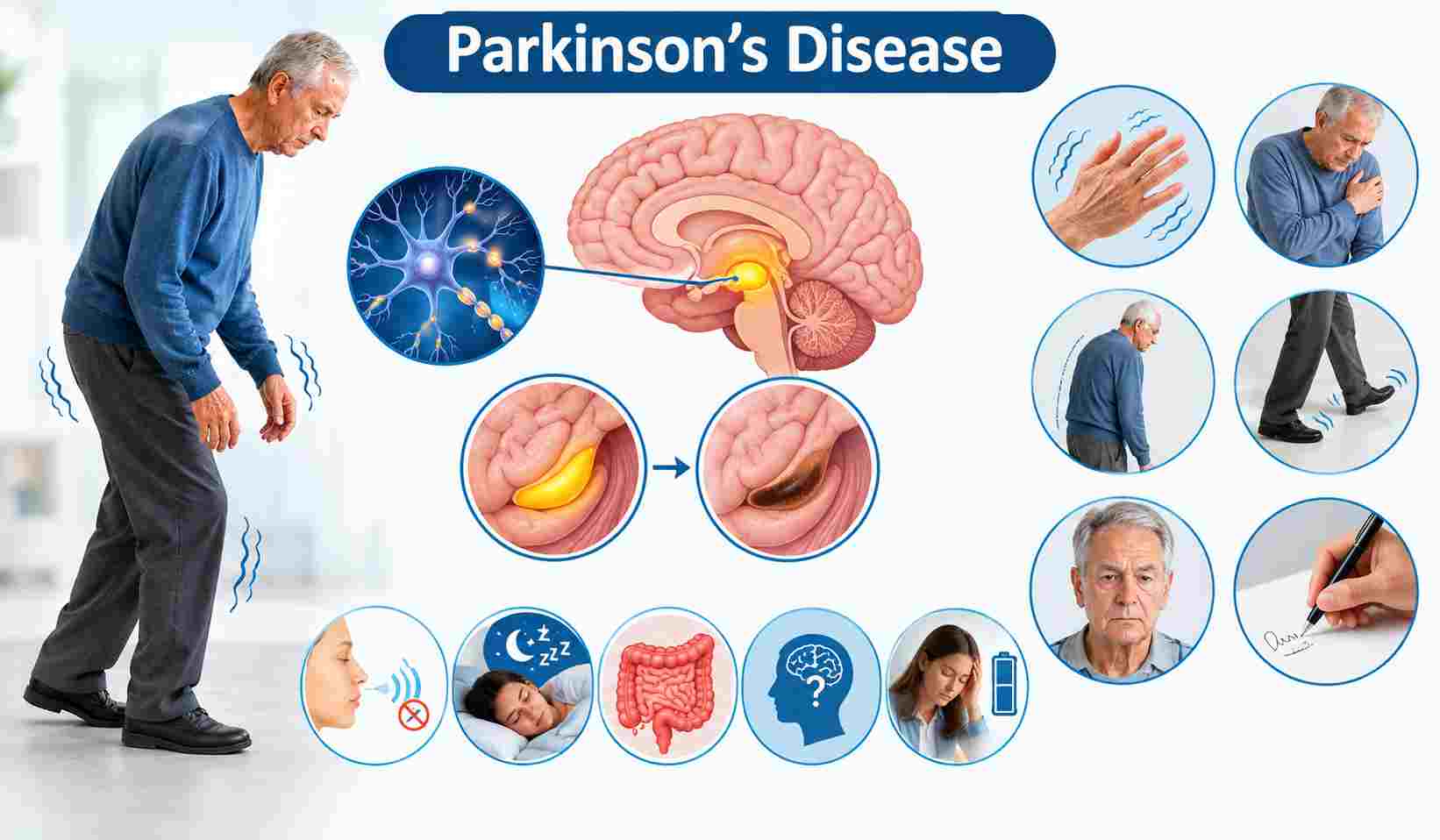
Parkinson’s disease is a progressive disorder that affects certain nerve cells in the brain. These cells are involved in producing dopamine, a chemical messenger that helps regulate smooth and coordinated movement.
As dopamine-producing cells become damaged or lost, movement may become slower, less controlled, or more difficult. Parkinson’s disease can also affect other brain systems, which helps explain why people may experience symptoms that are not directly related to movement.
Parkinson’s disease affects more than movement alone. Symptoms often develop gradually over several years.
They may initially affect one side of the body more than the other. Over time, symptoms may become more noticeable and begin affecting everyday activities.
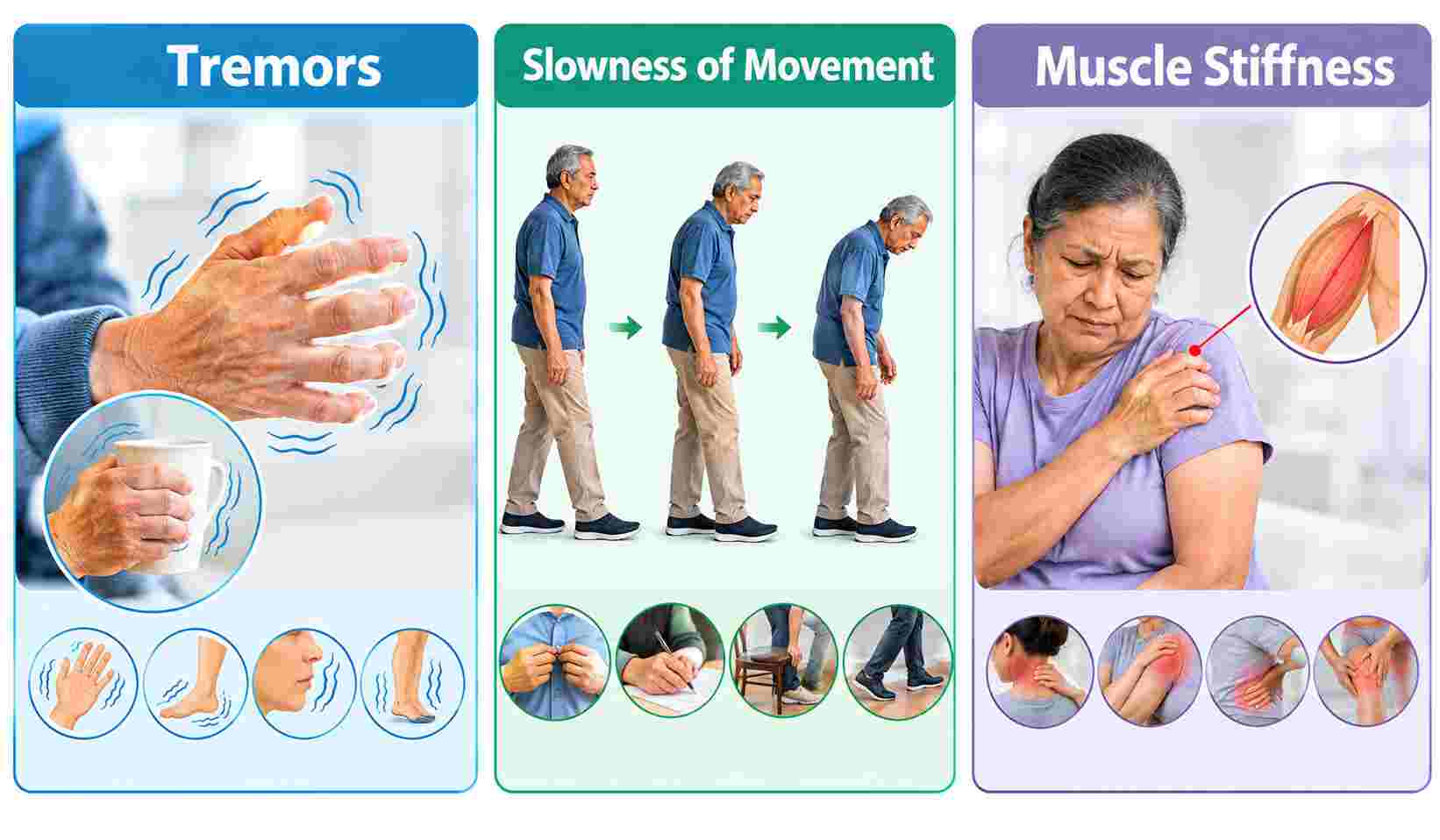
1. Tremors
Tremor is one of the most recognizable symptoms associated with Parkinson’s disease. A Parkinson’s tremor often occurs when a person’s muscles are relaxed, particularly when the affected hand or limb is at rest.
The shaking may begin in one hand, finger, foot, jaw, or another part of the body. Some people describe a repetitive movement involving the thumb and fingers.
However, not everyone with Parkinson’s disease develops tremors. Tremors can also have many other causes, including medications, stress, other neurological conditions, and normal temporary responses to fatigue.
2. Slowness of Movement
Slowness of movement, medically called bradykinesia, is a major symptom of Parkinson’s disease. Everyday activities that once seemed automatic may gradually take longer.
A person may notice difficulty getting dressed, buttoning clothing, brushing their teeth, writing, preparing food, or getting out of a chair. Movements may become smaller and less fluid.
Someone may also take longer to begin walking after standing up. Bradykinesia can be especially noticeable when several movements must be performed together. The person may feel that their body is not responding as quickly as they expect.
3. Muscle Stiffness
Muscle stiffness, also called rigidity, is another common symptom. The muscles may feel tight, tense, or difficult to move comfortably.
Stiffness can affect the arms, legs, neck, shoulders, or other areas. Some people feel aching or discomfort because their muscles stay tense for long periods. The stiffness may interfere with ordinary activities, including walking, turning, reaching, or getting out of bed.
Muscle stiffness can have many possible causes. Arthritis, injuries, physical strain, and other neurological conditions can also cause stiffness.
4. Balance and Posture Problems
Changes in balance and posture may occur as Parkinson’s disease progresses. A person may become less steady while standing or walking.
Some people develop a stooped posture, with the upper body leaning forward. Balance problems can increase the risk of stumbling or falling.
Changes in posture may happen gradually and can sometimes be overlooked because they may appear to be ordinary changes associated with aging.
5. Walking Changes
Parkinson’s disease can change the way a person walks. Steps may become shorter, slower, or more shuffling.
A person may notice reduced arm movement while walking. Turning around, getting started, or moving through narrow spaces may also become difficult.
Some people experience freezing of gait. This describes a temporary feeling that the feet are stuck to the floor even though the person wants to move.
6. Changes in Handwriting
A noticeable change in handwriting can be an early sign of Parkinson’s disease. A person may begin writing smaller than usual, with letters becoming increasingly crowded.
This change is called micrographia.
Someone may notice that signing their name, writing a shopping list, or filling out forms requires more effort than before.
A handwriting change alone does not mean that someone has Parkinson’s disease. Nevertheless, persistent changes combined with other symptoms should be discussed with a doctor.
 DON’T TRY THIS “COMMON SYMPTOMS OF PARKINSON’S” UNTIL YOU SEE THIS
7. Changes in Speech and Voice
Parkinson’s disease can affect speech. A person’s voice may gradually become softer, quieter, breathier, or less expressive.
They may also speak more quickly or have difficulty maintaining a consistent volume during conversations.
Friends and family members may notice these changes before the person recognizes them.
Speech therapy can sometimes help people work on voice volume, clarity, and communication strategies.
8. Reduced Facial Expression
Some people with Parkinson’s disease develop fewer facial movements. This may make the face appear less expressive.
This symptom is sometimes called a masked face because reduced movement of facial muscles can make emotions less visible.
A person may still experience the same emotions internally, even if their facial expression appears different. Reduced blinking can also occur. A change in facial expression does not necessarily reflect a change in mood.
9. Loss of Sense of Smell
A reduced ability to smell, known as hyposmia, can occur in Parkinson’s disease. Some people may notice that foods or familiar smells seem weaker than they used to.
Changes in smell can sometimes occur before obvious movement symptoms. However, reduced smell has many possible causes, including respiratory infections, nasal conditions, allergies, certain medications, and other health conditions.
Therefore, loss of smell should not be considered proof of Parkinson’s disease.
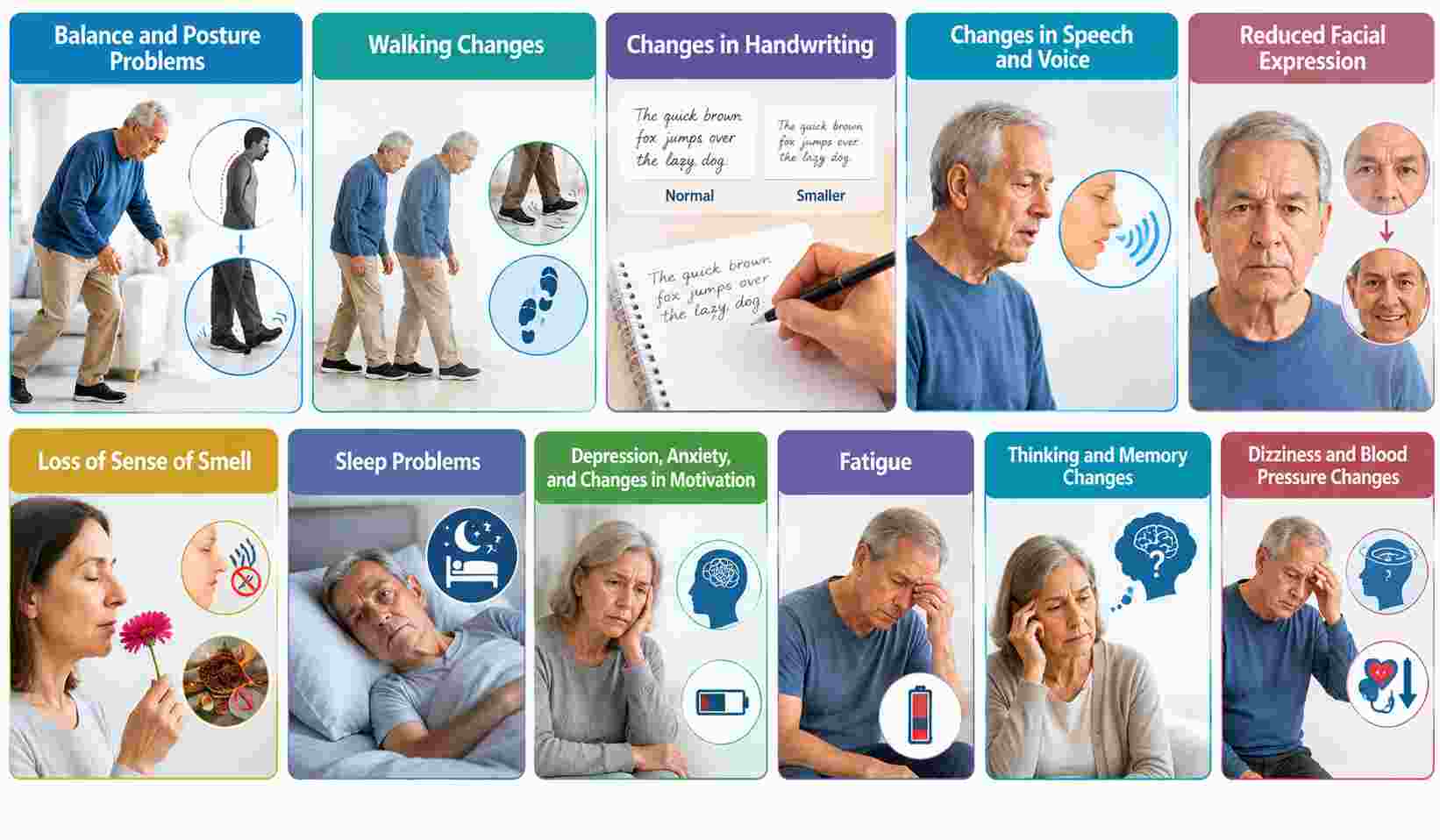
10. Sleep Problems
Sleep changes are another important group of Parkinson’s symptoms. People may have difficulty falling asleep, staying asleep, or getting comfortable at night.
Some people experience vivid dreams or unusual movements during sleep. Daytime sleepiness can also occur. Sleep problems can contribute to tiredness and difficulty concentrating during the day.
Because sleep disorders can have many causes, persistent sleep changes should be evaluated rather than automatically attributed to Parkinson’s disease.
11. Constipation and Digestive Changes
Constipation can occur in people with Parkinson’s disease. It may involve fewer bowel movements, hard stools, or difficulty passing stool.
Digestive changes may sometimes appear before movement symptoms. Constipation is extremely common and can result from diet, dehydration, medications, reduced physical activity, and numerous medical conditions.
Discuss persistent constipation with a healthcare professional, especially when other neurological symptoms are present.
12. Depression, Anxiety, and Changes in Motivation
Parkinson’s disease can affect emotional well-being. Some people experience depression, anxiety, reduced motivation, or changes in emotional responses.
These symptoms may occur alongside movement problems or, in some cases, before noticeable motor symptoms. Emotional changes should be taken seriously. They are not simply a sign that someone is “not trying hard enough.”
Appropriate medical and mental health support can help address these symptoms and improve overall quality of life.
13. Fatigue
Persistent fatigue can affect people with Parkinson’s disease. A person may feel unusually tired even after getting adequate rest.
Fatigue can make everyday activities more difficult and may occur because of sleep problems, mood changes, the effort required for movement, or other factors.
Because fatigue is common in many health conditions, consider the full pattern of symptoms rather than treating fatigue alone as evidence of Parkinson’s disease.
14. Dizziness and Blood Pressure Changes
Some people with Parkinson’s disease experience dizziness or lightheadedness, particularly after standing up. This can happen when blood pressure drops after a position change. It may cause weakness, unsteadiness, or, in more serious cases, fainting.
Anyone experiencing repeated dizziness or fainting should speak with a healthcare professional because these symptoms can have several possible causes.
DON’T TRY THIS “COMMON SYMPTOMS OF PARKINSON’S” UNTIL YOU SEE THIS
15. Thinking and Memory Changes
Cognitive changes can occur in Parkinson’s disease, particularly as the condition progresses. These may involve attention, planning, concentration, memory, or the ability to process information.
Not everyone with Parkinson’s disease develops significant cognitive impairment. Changes in thinking can also occur because of aging, medications, sleep disorders, depression, vitamin deficiencies, and other medical conditions.
A healthcare professional can help determine the possible cause.
When Should You See a Doctor?
Having one symptom associated with Parkinson’s disease does not mean that you have the condition. Many Parkinson’s symptoms overlap with other neurological, muscular, sleep, digestive, and age-related conditions.
However, medical evaluation is important when symptoms are persistent, worsening, or occurring together.
Consider talking with a healthcare professional if you notice:
- A persistent tremor, especially while resting
- Increasing muscle stiffness
- Slower everyday movements
- New walking difficulties
- Repeated balance problems or falls
- Noticeably smaller handwriting
- Changes in speech or facial expression
- Loss of smell without an obvious explanation
- Significant sleep changes
- Persistent constipation combined with other symptoms
Early evaluation can help identify the cause of symptoms and guide appropriate care.
How Is Parkinson’s Disease Diagnosed?
There is no single blood test or imaging test that can independently confirm Parkinson’s disease. Doctors generally consider a person’s symptoms, medical history, physical examination, and neurological findings.
A healthcare professional may assess walking, balance, muscle movement, coordination, reflexes, and other neurological functions.
Healthcare professionals may also use additional tests to rule out other conditions or provide supporting information.
Because Parkinson’s disease can resemble other neurological disorders, an accurate diagnosis is important.
Can Parkinson’s Symptoms Be Treated?
There is currently no cure for Parkinson’s disease, but several treatments can help manage symptoms and support daily functioning.
Treatment may include medications, physical therapy, occupational therapy, speech therapy, exercise, lifestyle adjustments, and, for some individuals, specialized procedures.
Treatment is individualized because symptoms and responses can differ considerably from one person to another.
Regular medical follow-up can help healthcare professionals adjust treatment as symptoms change.
DON’T TRY THIS “COMMON SYMPTOMS OF PARKINSON’S” UNTIL YOU SEE THIS
Final Thoughts
The common symptoms of Parkinson’s disease include tremor, slow movement, muscle stiffness, balance difficulties, walking changes, handwriting changes, speech changes, reduced facial expression, and several non-movement symptoms.
Sleep problems, constipation, reduced sense of smell, fatigue, emotional changes, dizziness, and cognitive changes may also occur. Parkinson’s disease does not affect every person in the same way.
One symptom alone does not establish a diagnosis. If several concerning symptoms appear together or gradually worsen, speaking with a qualified healthcare professional is an important next step.
Understanding the symptoms can encourage earlier conversations with healthcare providers and help individuals receive appropriate evaluation and support.
References
https://www.mayoclinic.org/diseases-conditions/parkinsons-disease/symptoms-causes/syc-20376055
https://www.healthline.com/health/parkinsons
https://www.webmd.com/healthy-aging/what-to-know-about-parkinsons-symptoms-in-adults
https://en.wikipedia.org/wiki/Parkinson%27s_disease
.
About Us
