Assistive Devices for Neuropathy: Expert Safety Guide
Assistive devices for neuropathy can help people with numbness, weakness, pain, poor balance, or difficulty walking move more safely and maintain independence.
Common options include canes, walkers, wheelchairs, foot and ankle braces, orthotics, and supportive footwear.
These devices do not cure neuropathy or repair damaged nerves. Instead, they can compensate for problems caused by reduced sensation, muscle weakness, altered gait, or balance difficulties.
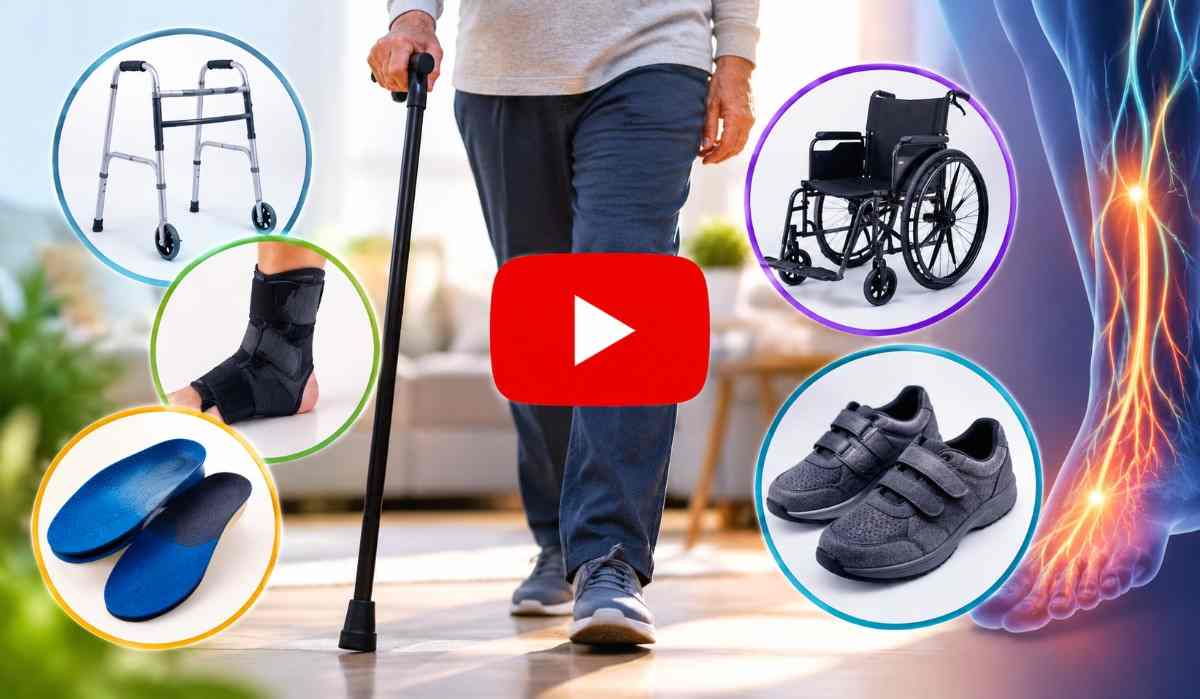

Choosing the right device depends on the person’s symptoms, mobility level, foot condition, and risk of falling.
What Are Assistive Devices for Neuropathy?
Assistive devices are tools designed to make movement and daily activities safer or easier when neuropathy affects sensation, strength, coordination, or balance.
Peripheral neuropathy commonly affects the feet and legs and may cause burning, tingling, numbness, weakness, pain, and difficulty sensing body position. These changes can affect walking and increase the risk of falls.
The purpose of an assistive device is therefore functional support, not nerve healing.
A properly selected device can provide stability, reduce pressure on vulnerable areas, improve walking mechanics, or compensate for weakness.
Why Might Someone With Neuropathy Need an Assistive Device?
Not everyone with neuropathy needs a mobility aid. Mild symptoms may not interfere significantly with everyday movement.
An assistive device becomes more relevant when neuropathy causes:
- Difficulty maintaining balance
- Frequent stumbling or falls
- Weakness in the feet or legs
- An altered walking pattern
- Difficulty climbing stairs
- Foot deformities or pressure points
- Significant loss of protective sensation
- Difficulty walking safely over uneven surfaces
Neuropathy can also reduce awareness of injuries. A person may develop a blister, cut, or pressure area without noticing, especially when sensation in the feet is significantly reduced.
 DON’T TRY THIS “ASSISTIVE DEVICES FOR NEUROPATHY” UNTIL YOU SEE THIS
Best Assistive Devices for Neuropathy
The most appropriate device depends on the specific problem. There is no single “best” neuropathy device for everyone.
1. Canes
A cane may provide extra balance and stability for people with relatively mild walking difficulty.
A standard cane generally provides less support than a walker, while a quad cane has a wider base and can offer greater stability. However, a quad cane can also be heavier and more difficult to maneuver.
A cane should be properly fitted. An improperly sized cane can encourage leaning, interfere with walking mechanics, and potentially increase instability.
2. Walkers
Walkers generally provide more support than canes and may be appropriate when neuropathy causes substantial balance problems or weakness.
Different designs include standard walkers, two-wheel walkers, and four-wheel rollators. The appropriate style depends on strength, coordination, balance, and the person’s ability to control the device.
Do not purchase and use a walker without instruction. Physical therapists can teach proper positioning, turning, braking, and how to navigate stairs or uneven surfaces.
3. Wheelchairs and Mobility Chairs
For people with severe weakness, significant balance impairment, or very limited walking ability, a wheelchair may provide safer mobility.
Using a wheelchair does not necessarily mean a person can never walk again. In some cases, it provides a practical way to conserve energy and avoid dangerous falls while allowing a person to remain active.
The correct wheelchair should be selected according to posture, strength, home environment, transportation needs, and ability to propel or operate the chair.
4. Foot and Ankle Braces
Neuropathy can sometimes cause weakness that affects foot positioning and walking. In these situations, a foot or ankle brace may help stabilize the joint or improve walking mechanics.
Mayo Clinic notes that physical therapy may be used for weakness or balance problems and that some people may need hand or foot braces, canes, walkers, or wheelchairs.
A brace should fit correctly and should not create excessive pressure on areas with reduced sensation.
5. Orthotics and Shoe Inserts
Orthotics are inserts or specialized devices placed inside footwear to help redistribute pressure or support foot structure.
They may be particularly useful when neuropathy occurs alongside foot deformities, abnormal pressure distribution, or conditions such as bunions or hammertoes.
For people with diabetes-related neuropathy and increased pressure under the foot, clinicians may recommend customized pressure-relieving orthoses as part of foot care.
However, an insert is not automatically beneficial simply because someone has neuropathy. It needs to match the individual’s foot structure and clinical needs.

6. Therapeutic and Protective Footwear
Proper footwear is one of the most important forms of protection when neuropathy affects the feet.
Shoes should provide adequate for room, fit comfortably, and protect the feet from external injury.
People with reduced sensation should inspect the inside of their shoes before wearing them because small objects or rough areas may cause injuries without producing noticeable pain.
Special shoes may be necessary when the shape of the foot has changed or when pressure needs to be redistributed.
How Do Assistive Devices Help With Neuropathy?
Assistive devices address the functional consequences of nerve damage.
For example, a cane or walker can provide an additional point of support when balance is impaired. A brace can help stabilize a weak joint, while an orthotic may redistribute pressure across the foot.
This distinction is important: assistive devices manage mobility and safety problems; they do not directly treat the underlying nerve damage.
Physical therapy may also be combined with assistive-device use to improve strength, balance, gait, and functional movement.
Can Assistive Devices Reduce Falls?
They can improve stability when selected and used correctly, but owning a mobility aid does not guarantee fall prevention.
The device must match the person’s abilities. A cane that is too difficult to control, a walker used incorrectly, or footwear that does not fit properly can create additional problems.
Research on foot and ankle devices for people with sensory loss suggests that evidence for improving balance and gait through footwear or insole modifications is limited and varies between devices and individuals.
Therefore, when balance or walking is significantly impaired, assistive devices should ideally be selected with guidance from a healthcare professional.
DON’T TRY THIS “ASSISTIVE DEVICES FOR NEUROPATHY” UNTIL YOU SEE THIS
How to Choose the Right Neuropathy Mobility Aid
Choosing an assistive device should start with the person’s actual functional problem.
Consider:
- Balance: Is the main problem occasional unsteadiness or severe instability?
- Strength: Can the person safely support their body weight?
- Sensation: How much feeling has been lost in the feet or hands?
- Walking pattern: Has neuropathy changed the person’s gait?
- Foot structure: Are there deformities, pressure points, or previous wounds?
- Home environment: Are there stairs, narrow hallways, or uneven flooring?
- Hand function: Can the person grip and control a cane or walker?
- Endurance: How far can the person safely walk?
A physical therapist, podiatrist, neurologist, occupational therapist, or other qualified professional can help determine which device and fitting approach are appropriate.
Assistive Devices for Diabetic Neuropathy
Diabetic peripheral neuropathy deserves particular attention because loss of sensation can make foot injuries difficult to detect.
High blood glucose over time can contribute to nerve damage and can also affect the small blood vessels that supply nerves.
Peripheral neuropathy may cause numbness, pain, weakness, and balance problems.
For someone with diabetic neuropathy, assistive mobility equipment should therefore be considered alongside daily foot inspection, appropriate footwear, glucose management, and regular medical assessment.
Protective footwear and properly fitted orthotics can be especially important when there are pressure-related foot problems.
Safety Tips When Using Neuropathy Assistive Devices
Reduced sensation makes safety especially important.
➢ Check the device regularly
Inspect cane tips, walker wheels, brakes, grips, and braces for wear. Damaged equipment may become unstable.
➢ Make sure the device fits
Adjust a cane or walker to the individual’s height. Mayo Clinic recommends that a properly fitted cane allows a comfortable elbow bend and places the top of the cane around wrist-crease height when the arm hangs naturally.
➢ Inspect your feet every day
Do not rely on pain to identify an injury. Look for redness, swelling, blisters, cuts, pressure marks, or changes in skin condition.
➢ Avoid walking barefoot
People with reduced foot sensation may not recognize an injury caused by a sharp object, hot surface, or rough flooring. Protective footwear can reduce these risks.
➢ Introduce new footwear gradually
Wear new shoes for limited periods at first, then check for areas of rubbing or pressure points.
Common Mistakes to Avoid
One common mistake is choosing a mobility aid based only on appearance or price. A device that works well for one person may be inappropriate for another.
Another mistake is assuming that more support is always better.
A walker may provide more stability than a cane, but it can be unnecessary or hard to maneuver for someone who needs only minimal assistance.
Other mistakes include:
- Using a cane that is too short or too tall
- Failing to learn proper walking technique
- Ignoring worn cane tips or walker components
- Wearing tight or poorly fitted shoes
- Assuming numb feet are harmless
- Using heating pads on numb feet
- Continuing to use a device that causes pain or pressure
People with diabetic neuropathy should also avoid direct heat on numb feet because reduced sensation can make burns difficult to recognize.
Myths About Assistive Devices for Neuropathy
Myth: A cane treats neuropathy
A cane does not treat the underlying nerve damage. It provides additional support for mobility and balance.
Myth: Everyone with neuropathy needs a walker
Not necessarily. The appropriate device depends on the severity and type of functional impairment.
Myth: Orthotics repair damaged nerves
Orthotics can help with pressure distribution, foot positioning, or mechanical support. They do not regenerate damaged nerves.
Myth: If a foot injury does not hurt, it is not serious
This is particularly dangerous. Loss of sensation can prevent a person from feeling an injury, allowing a small wound to become more serious.
Trending Claims: Do Neuropathy Devices Reverse Nerve Damage?
Online advertisements sometimes suggest that specialized shoes, compression products, electronic gadgets, or other devices can “reverse” neuropathy.
These claims should be approached carefully.
Assistive equipment can improve function, mobility, protection, and safety, but that is different from reversing the biological nerve damage responsible for neuropathy.
Current clinical management focuses on identifying and treating the underlying cause, managing symptoms, protecting affected body areas, and addressing functional problems such as weakness and balance difficulties.
For diabetic neuropathy, good diabetes management and preventive foot care are particularly important.
DON’T TRY THIS “ASSISTIVE DEVICES FOR NEUROPATHY” UNTIL YOU SEE THIS
When Should You See a Healthcare Professional?
Professional evaluation is especially important if neuropathy is causing repeated falls, new weakness, difficulty walking, significant foot deformity, or loss of sensation.
Prompt medical attention is also appropriate for a foot wound, infection, unexplained swelling, significant redness, or a rapidly changing foot.
A healthcare professional can assess sensation, strength, gait, balance, footwear, and foot condition and determine whether an assistive device is appropriate.
Can Physical Therapy Help With Neuropathy?
Yes. Physical therapy can be useful when neuropathy causes weakness, balance problems, or difficulty moving.
A therapist may work on strengthening, balance training, gait training, flexibility, and safe use of an assistive device.
The goal is not simply to give someone a cane or walker. It is to help the person use the least restrictive device that provides appropriate safety and independence.
Conclusion
Assistive devices for neuropathy can be valuable tools for improving mobility, balance, foot protection, and independence.
Canes may help with mild balance difficulties, while walkers or wheelchairs may be more appropriate when walking is significantly impaired.
Foot and ankle braces, orthotics, and protective footwear can address specific mechanical and foot-protection needs.
The most important point is that no single device works best for everyone with neuropathy. The right choice depends on the individual’s symptoms, strength, balance, sensation, foot condition, and daily environment.
Assistive devices do not cure or reverse nerve damage, but when selected and fitted correctly, they can reduce functional difficulties and make everyday movement safer.
For people with diabetic neuropathy, mobility support should be combined with careful foot inspection, appropriate footwear, diabetes management, and regular professional assessment.
The safest approach is to choose an assistive device based on a proper functional evaluation, not an online recommendation or viral claim.
References
Wikipedia – Peripheral Neuropathy
https://en.wikipedia.org/wiki/Peripheral_neuropathy
WebMD – Peripheral Neuropathy
https://www.webmd.com/brain/understanding-peripheral-neuropathy-basics
Healthline – Peripheral Neuropathy
https://www.healthline.com/health/peripheral-neuropathy
About Us