
Can You Take Too Much B12? Side Effects, Risks & Dosage
Vitamin B12 is an essential nutrient that supports healthy nerve function, red blood cell production, DNA synthesis, and overall well-being.
Can you take too much B12? Vitamin B12 is generally considered safe, even at high doses, because it has a low potential for toxicity.
Excessive vitamin B12 supplementation may occasionally cause unwanted reactions, including acne-like skin breakouts or allergic reactions.
Can You Take Too Much B12 explores excessive vitamin B12 intake, recommended daily dosage, potential side effects, overdose risks, high blood B12 levels, possible health concerns, and safe supplementation guidelines.
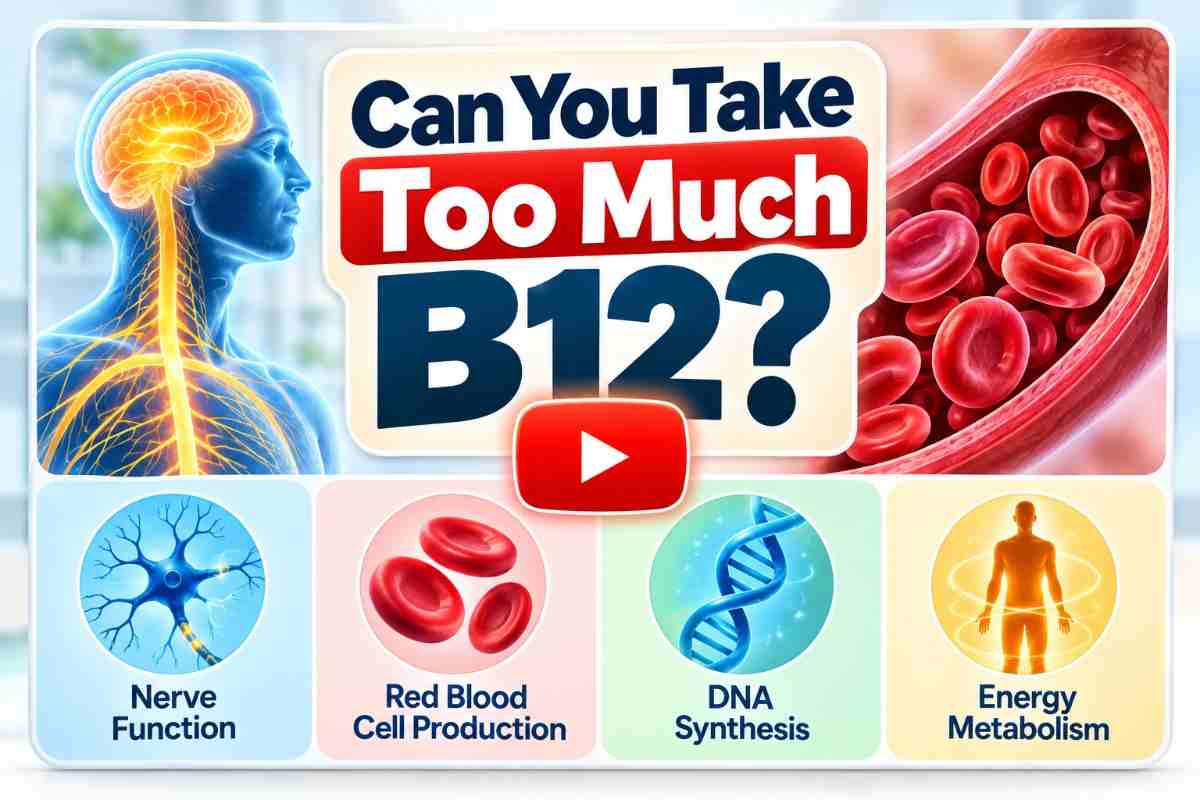
👉 DON’T TRY THIS “ CAN YOU TAKE TOO MUCH B12” UNTIL YOU SEE THIS
The recommended daily vitamin B12 intake for adults is 2.4 mcg, although higher doses may be prescribed to treat deficiencies.
High vitamin B12 levels in blood tests may result from supplements, injections, or certain underlying medical conditions.
Persistently elevated levels without an obvious cause should be evaluated by a healthcare professional.
What Is Vitamin B12?
Vitamin B12, also known as cobalamin, is a water-soluble vitamin that plays several important roles in maintaining normal bodily functions.
Unlike nutrients that the body can manufacture independently, vitamin B12 must come from dietary sources, fortified foods, or supplements.
Vitamin B12 is particularly important for producing healthy red blood cells and maintaining the protective covering surrounding nerve health.
It also participates in DNA synthesis and helps the body process certain nutrients involved in energy metabolism.
Maintaining adequate vitamin B12 levels is important, but consuming larger doses does not necessarily improve health when your nutritional needs are already met.
Can You Take Too Much B12?
Yes, you can consume more vitamin B12 than your body needs, but serious toxicity from vitamin B12 alone is considered very uncommon.
According to the National Institutes of Health (NIH), vitamin B12 has no established tolerable upper intake level because available evidence indicates a low potential for toxicity.
This means researchers have not identified a specific daily intake above which harmful effects consistently occur in healthy individuals.
Vitamin B12 absorption is also regulated. When someone takes a high-dose supplement, only a small percentage of that dose may enter the bloodstream.
High-dose B12 supplements may be beneficial for individuals with diagnosed deficiencies, absorption difficulties, or certain medical conditions.
👉 DON’T TRY THIS “ CAN YOU TAKE TOO MUCH B12” UNTIL YOU SEE THIS
How Much Vitamin B12 Should You Take Daily?
The recommended daily amount of vitamin B12 depends on age, pregnancy status, and individual nutritional requirements.
The NIH provides the following recommended dietary allowances:
| Age or Life Stage | Recommended Daily B12 |
|---|---|
| Infants 0–6 months | 0.4 mcg |
| Infants 7–12 months | 0.5 mcg |
| Children 1–3 years | 0.9 mcg |
| Children 4–8 years | 1.2 mcg |
| Children 9–13 years | 1.8 mcg |
| Teenagers 14–18 years | 2.4 mcg |
| Adults 19 years and older | 2.4 mcg |
| Pregnant women | 2.6 mcg |
| Breastfeeding women | 2.8 mcg |
These recommendations represent the approximate daily intake needed to meet nutritional requirements in generally healthy individuals.
For example, doctors sometimes recommend oral vitamin B12 doses of 1,000–2,000 micrograms daily for certain deficiencies.
Such doses are considerably higher than ordinary dietary requirements because absorption may be limited.
What Happens If You Take Too Much Vitamin B12?
When someone consumes a large amount of vitamin B12, several processes determine how the body responds.
1. The Body Limits Vitamin B12 Absorption
This process has a limited capacity, meaning the body cannot absorb unlimited quantities through the normal digestive pathway.
A small proportion of high oral doses may also be absorbed through passive diffusion. Consequently, swallowing 1,000 mcg does not mean the body absorbs the entire amount.
2. Excess Vitamin B12 May Be Excreted
Vitamin B12 is water-soluble, and some excess vitamin can leave the body through urine. The body can retain vitamin B12 in its tissues, particularly the liver.
3. Blood Vitamin B12 Levels May Increase
Taking supplements regularly can increase measured blood vitamin B12 concentrations. A high laboratory result does not automatically indicate toxicity.
4. Additional Benefits May Be Limited
Once vitamin B12 requirements are satisfied, taking more generally does not improve energy, concentration, or physical performance.
People experiencing persistent fatigue should consider other possible causes rather than continuously increasing their B12 dosage.
Possible Side Effects of Too Much Vitamin B12
Vitamin B12 is generally well tolerated. Nevertheless, some adverse reactions have been reported, particularly with high-dose supplements or injections.
1. Acne and Skin Breakouts
Some case reports associate vitamin B12 supplementation with acne-like eruptions. These reactions appear uncommon and may occur in susceptible individuals.
Researchers have proposed that changes in skin bacteria could contribute, although the exact mechanism remains uncertain.
2. Skin Redness and Rosacea-Like Reactions
Rare reports describe rosacea-like facial eruptions following vitamin B12 supplementation. Symptoms may include facial redness, bumps, or irritation.
People who notice new skin symptoms after beginning a supplement should discuss the timing with a healthcare professional.
3. Allergic Reactions
Although uncommon, allergic reactions can occur with vitamin B12 preparations or other ingredients in supplements and injections.
Difficulty breathing, throat swelling, or severe dizziness after taking a supplement requires immediate emergency medical attention.
4. Digestive Discomfort
Some people report nausea or gastrointestinal discomfort while using vitamin supplements. Checking the complete supplement label can help identify potential contributors.
5. Injection-Related Reactions
Vitamin B12 injections may cause temporary discomfort, redness, or swelling at the injection site. These effects differ from an oral vitamin B12 overdose.
👉 DON’T TRY THIS “ CAN YOU TAKE TOO MUCH B12” UNTIL YOU SEE THIS
Can Too Much Vitamin B12 Cause Serious Health Problems?
Current evidence does not establish that high oral vitamin B12 intake routinely causes serious toxicity in healthy people.
Nevertheless, researchers continue investigating possible associations between elevated B12 concentrations and certain health conditions.
Some observational studies have reported associations involving high circulating B12 levels and adverse health outcomes.
High blood B12 may reflect an existing illness, changes in vitamin transport proteins, or other biological processes.
This distinction is particularly important when interpreting research involving cancer, liver disease, or kidney dysfunction.
People should not discontinue medically prescribed B12 treatment solely because they encounter observational research suggesting possible risks.

👉 DON’T TRY THIS “ CAN YOU TAKE TOO MUCH B12” UNTIL YOU SEE THIS
Can Taking 1,000 mcg of B12 Daily Be Harmful?
A 1,000 mcg vitamin B12 supplement contains substantially more than the recommended daily allowance of 2.4 mcg for adults.
1,000 mcg daily is commonly used in medical treatment and is generally considered safe when appropriate.
The reason such doses are sometimes prescribed is that only a small proportion of an oral dose is absorbed.
Long-term supplementation should be based on dietary habits, laboratory findings, medical history, and professional recommendations.
Is 5,000 mcg of Vitamin B12 Too Much?
A 5,000 mcg supplement contains approximately 2,083 times the adult recommended daily allowance.
Despite this substantial difference, vitamin B12 does not have an established upper intake limit. That does not mean a 5,000 mcg dose is necessary for most people.
Such products may be recommended in selected circumstances, but they should not be viewed as superior simply because the number is larger.
What Causes High Vitamin B12 Levels in Blood?
Elevated blood vitamin B12 levels can occur for several reasons.
High-Dose Supplementation
Regularly taking vitamin B12 tablets, multivitamins, or injections can increase circulating B12 concentrations.
Liver Conditions
The liver stores vitamin B12. Certain liver disorders may alter B12 storage, release, or metabolism, resulting in elevated blood concentrations.
Kidney Dysfunction
Kidney problems may affect the handling of vitamin B12 and related transport proteins.
Certain Blood Disorders
Some blood-related conditions can increase vitamin B12-binding proteins, producing unusually high laboratory results.
Other Underlying Medical Conditions
Persistently elevated vitamin B12 levels without an obvious explanation can occasionally accompany serious illnesses.
Doctors may consider medication use, supplementation history, blood counts, liver function, kidney function, and other findings before recommending additional testing.
How Do You Know If Your Vitamin B12 Is Too High?
Laboratories use different reference intervals, so results should always be interpreted using the range provided with the report.
A commonly encountered reference interval is approximately 200–900 pg/mL, although exact cutoffs vary.
Importantly, an elevated blood level does not necessarily mean that a person has experienced vitamin B12 toxicity.
If results are unclear, a clinician may recommend additional testing, including methylmalonic acid or other relevant measurements.
Vitamin B12 blood test results are most useful when interpreted alongside symptoms, medical history, and supplement intake.
👉 DON’T TRY THIS “ CAN YOU TAKE TOO MUCH B12” UNTIL YOU SEE THIS
Who Should Be Careful With High-Dose Vitamin B12?
Certain individuals may benefit from additional guidance before using high-dose vitamin B12.
People With Kidney or Liver Conditions
Individuals with existing kidney or liver disease should discuss unexplained high B12 levels and supplement requirements with their healthcare provider.
People Receiving Vitamin B12 Injections
Changing injection frequency without medical advice may interfere with appropriate deficiency management.
People Taking Multiple Supplements
Multivitamins, B-complex products, energy supplements, and fortified drinks may all contain vitamin B12.
People With Previous Allergic Reactions
Individuals with known sensitivity to cobalt, vitamin B12 preparations, or injection ingredients should seek medical advice before supplementation.
Can Too Much B12 Cause Nerve Damage?
Vitamin B12 deficiency can cause neurological complications, including tingling, numbness, balance difficulties, and nerve dysfunction.
This is an important distinction because vitamin B6, another B vitamin, can cause peripheral neuropathy when taken excessively over time.
If tingling or numbness develops while taking supplements, review all ingredients rather than automatically blaming vitamin B12.
Persistent neurological symptoms require medical assessment because untreated B12 deficiency and other conditions can cause lasting complications.
Can Too Much Vitamin B12 Cause Anxiety or Insomnia?
Vitamin B12 contributes to normal nervous system function, but evidence does not establish that excessive B12 commonly causes anxiety or insomnia.
Some individuals report feeling unusually alert after taking supplements, although these experiences do not prove a direct effect.
Products labeled as energy supplements may also contain caffeine or other stimulating ingredients. These substances are more clearly associated with sleep disruption.
If sleep problems begin after starting a supplement, reviewing the complete ingredient list and discussing the symptoms with a clinician may be helpful.
Vitamin B12 From Food vs. Supplements
Obtaining vitamin B12 through a balanced diet is generally appropriate for people who can absorb it normally.
Common dietary sources include:
-
Fish, including salmon and tuna
-
Beef and poultry
-
Eggs and dairy products
-
Shellfish, including clams
-
Fortified breakfast cereals
-
Fortified nutritional yeast
-
Fortified plant-based milk alternatives
People following vegan diets generally need reliable fortified foods or supplements to maintain adequate intake.

👉 DON’T TRY THIS “ CAN YOU TAKE TOO MUCH B12” UNTIL YOU SEE THIS
How to Take Vitamin B12 Safely
Using vitamin B12 appropriately involves understanding individual requirements rather than choosing the highest available dosage.
1. Identify Your Nutritional Needs
Consider dietary intake, age, medications, and medical conditions that may influence vitamin B12 absorption.
2. Check Supplement Labels
Review the amount of vitamin B12 in micrograms and check whether multiple products contain the same nutrient.
3. Avoid Unnecessary High Doses
Higher doses may be appropriate for deficiency treatment, but they are not automatically beneficial for everyone.
4. Follow Medical Recommendations
If vitamin B12 was prescribed for a deficiency, follow the recommended treatment plan.
5. Monitor Symptoms and Laboratory Results
People with diagnosed deficiencies, absorption disorders, or persistent unexplained symptoms may require follow-up testing.
When Should You See a Doctor?
Medical evaluation is appropriate if you experience unexplained symptoms, receive abnormal laboratory results, or are uncertain about supplement dosing.
Consult a healthcare professional if you have:
-
Persistently elevated vitamin B12 levels without supplementation
-
Numbness, tingling, or difficulty walking
-
Unexplained fatigue or weakness
-
New skin reactions after starting supplementation
-
A history of significant absorption problems
-
Concerns about taking several vitamin products together
If you accidentally take more B12 than directed, check the complete product ingredients and contact a pharmacist or Poison Control for individualized guidance, particularly if symptoms develop.
Seek emergency medical care for severe allergic reactions, breathing difficulties, or other serious symptoms.
Final Thoughts
Vitamin B12 is essential for maintaining healthy nerves, producing red blood cells, and supporting normal cellular function.
The NIH has not established an upper intake limit because available evidence suggests that vitamin B12 has a low potential for harmful effects, even at high doses.
High-dose supplements may be appropriate for people with confirmed deficiencies, impaired absorption, or certain medical conditions.
Unexplained elevated blood vitamin B12 levels should also be evaluated rather than automatically attributed to excessive vitamin consumption.
The best approach is to maintain adequate vitamin B12 levels through appropriate nutrition, targeted supplementation, and medical guidance when necessary.
👉 DON’T TRY THIS “ CAN YOU TAKE TOO MUCH B12” UNTIL YOU SEE THIS
.
.
.
.
References
https://ods.od.nih.gov/factsheets/VitaminB12-HealthProfessional/
https://ods.od.nih.gov/factsheets/VitaminB12-Consumer/
https://www.nhlbi.nih.gov/health/anemia/vitamin-b12-deficiency-anemia
.
.
.
.
About Us
