Scrambler Therapy for Neuropathy: Is It Effective and Safe?
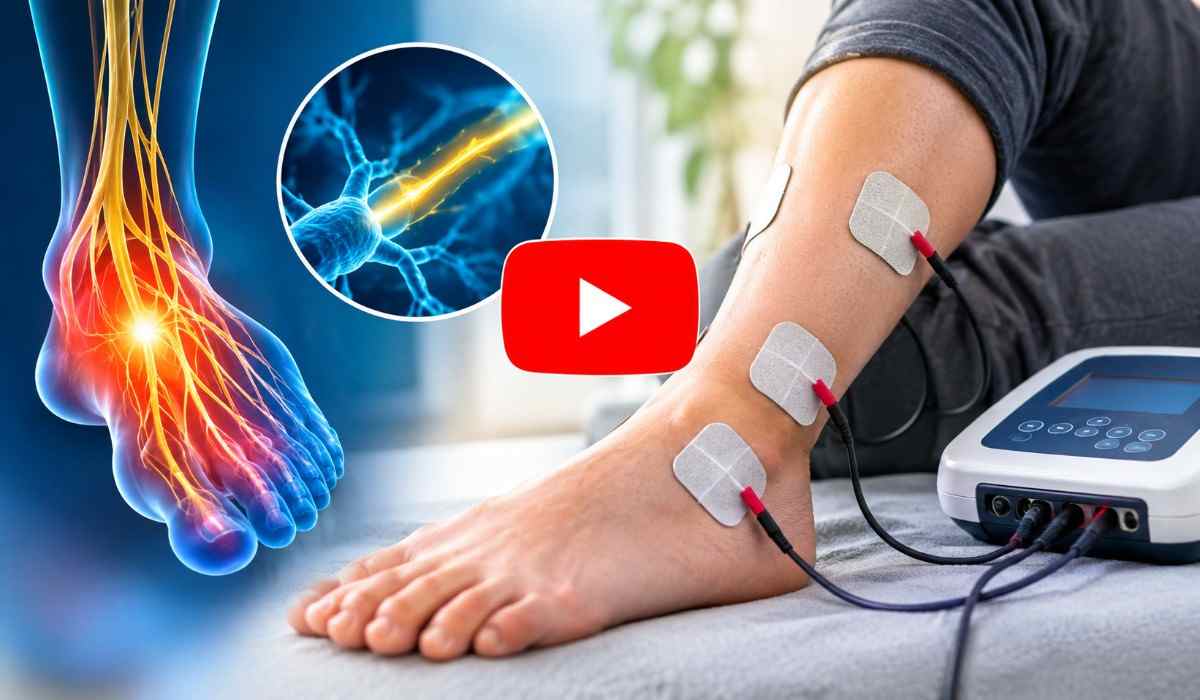
Scrambler Therapy for neuropathy is a non-invasive treatment that uses electrical stimulation through electrodes placed on the skin to modify pain signaling.
It may reduce neuropathic pain in some people, but it should not be considered a proven cure for nerve damage. Research on Scrambler Therapy is encouraging but mixed.
Some randomized trials and meta-analyses have reported meaningful reductions in chronic neuropathic pain, while other controlled studies, particularly in chemotherapy-induced peripheral neuropathy, have not found a clear advantage over sham treatment or other electrical stimulation.

This distinction matters for anyone searching for treatment for burning, tingling, numbness, electric-shock sensations, or chronic nerve pain.
What Is Scrambler Therapy for Neuropathy?
Scrambler Therapy is a form of non-invasive electrocutaneous neuromodulation. During treatment, electrodes are placed on the skin around or near the painful area, and the device delivers specially programmed electrical signals.
The treatment is designed to influence how the nervous system processes pain rather than physically repairing an injured nerve.
Scrambler Therapy is sometimes called Calmare Therapy. It differs from conventional TENS, although both use electrical stimulation through surface electrodes.
The proposed concept is that chronic neuropathic pain can involve abnormal transmission and processing of sensory information.
Scrambler Therapy attempts to provide alternative sensory signals that may reduce the perception of pain.
However, the proposed mechanism should not be interpreted as definitive proof that the treatment “rewires” or regenerates damaged nerves.
 DON’T TRY THIS “SCRAMBLER THERAPY FOR NEUROPATHY” UNTIL YOU SEE THIS
Does Scrambler Therapy Work for Neuropathy?
It can help some patients, but the evidence does not support a guarantee that it will work for everyone with neuropathy.
A 2025 meta-analysis of eight randomized controlled trials involving 350 people with chronic neuropathic pain found a clinically meaningful short-term reduction in pain with Scrambler Therapy.
The analysis also found that pain remained below baseline for up to approximately 90 days, although certainty about longer-term effects was limited.
At the same time, an earlier meta-analysis of seven randomized controlled trials involving 287 patients found only a marginal overall reduction in pain and substantial variation between studies.
The researchers emphasized that many of the trials were small and had methodological limitations. PubMed
Therefore, the most accurate answer is:
Scrambler Therapy appears promising for neuropathic pain, but evidence quality and treatment response vary, and it is not established as a universal treatment for neuropathy.
What Does the Latest Research Say?
The evidence has become more substantial over time, but it has also become more nuanced.
A systematic review published in 2022 identified 21 Scrambler Therapy studies, including randomized controlled trials and observational research.
Most investigated neuropathic pain, with chemotherapy-induced peripheral neuropathy being one of the most frequently studied conditions.
Many studies reported clinically meaningful pain reduction and good tolerability, but small sample sizes limited confidence in the findings.
A newer 2025 meta-analysis of randomized trials reported stronger evidence for short-term pain reduction. However, researchers still noted uncertainty regarding how long the benefit lasts. PubMed
The picture becomes more complicated when looking specifically at chemotherapy-induced peripheral neuropathy.
A 2026 systematic review of randomized controlled trials concluded that the evidence for Scrambler Therapy in chemotherapy-induced peripheral neuropathy remains insufficient and that larger, better-designed studies are needed.
For patients, this means interpreting online claims carefully. “Promising” does not mean “proven.”
Scrambler Therapy for Chemotherapy-Induced Peripheral Neuropathy
Chemotherapy-induced peripheral neuropathy, or CIPN, is one of the conditions most commonly discussed in connection with Scrambler Therapy.
Certain chemotherapy drugs can damage peripheral nerves, leading to symptoms such as:
- Burning or shooting pain
- Tingling
- Numbness
- Increased sensitivity to touch
- Difficulty walking or using the hands
- Electric-shock sensations
Several clinical studies have reported improvements in CIPN symptoms following Scrambler Therapy.
For example, one randomized phase II trial compared Scrambler Therapy with TENS and found a higher proportion of patients receiving Scrambler Therapy achieved at least a 50% improvement in pain, tingling, or numbness during treatment.
However, another randomized sham-controlled trial involving chronic CIPN found no significant difference between real and sham Scrambler Therapy in its primary pain and neuropathy outcomes. PubMed
That conflicting evidence is precisely why stronger trials are still needed.

What About Diabetic Neuropathy?
Diabetic peripheral neuropathy is another condition for which Scrambler Therapy has attracted interest.
The theoretical appeal is understandable: diabetic neuropathy can produce chronic burning, stabbing, or electrical pain that may be difficult to control with medication.
However, evidence for Scrambler Therapy specifically in diabetic neuropathy is less developed than many online treatment pages imply.
People with diabetes should not use pain reduction as evidence that their underlying nerve disease has been reversed.
Blood glucose management, foot care, cardiovascular risk reduction, medication review, physical activity when appropriate, and regular medical assessment remain important parts of diabetic neuropathy care.
Scrambler Therapy, if considered, should be viewed as a possible pain-management intervention rather than a replacement for diabetes treatment.
How Does Scrambler Therapy Work?
The nervous system constantly carries sensory information between the body and brain.
With neuropathic pain, damaged or dysfunctional nerves can produce abnormal signals. The brain and spinal cord may then interpret these signals as pain even when there is no new tissue injury.
Scrambler Therapy uses surface electrodes to deliver electrical signals intended to alter this abnormal pain processing.
The exact biological mechanism remains an area of research. The therapy is generally described as attempting to substitute or modify abnormal pain information rather than simply blocking nerve transmission.
This is one reason it should not automatically be described as a “nerve regeneration treatment.”
Pain modulation and nerve repair are different biological processes.
DON’T TRY THIS “SCRAMBLER THERAPY FOR NEUROPATHY” UNTIL YOU SEE THIS
Scrambler Therapy vs. TENS: Are They the Same?
No.
Both treatments use electrodes attached to the skin, but their stimulation approaches and intended mechanisms differ.
TENS, or transcutaneous electrical nerve stimulation, uses electrical stimulation to activate sensory nerves and influence pain perception.
Scrambler Therapy uses programmed signals intended to provide alternative sensory information and modify abnormal pain processing.
Clinical research also does not allow results from TENS studies to be automatically applied to Scrambler Therapy.
Some trials have suggested Scrambler Therapy may outperform TENS for certain neuropathic symptoms, while other controlled research has produced less definitive findings.
How Many Scrambler Therapy Sessions Are Needed?
Many published treatment protocols use 10 sessions, commonly delivered over approximately two weeks.
For example, clinical studies have used daily 30-minute sessions for 10 treatment days.
However, treatment schedules are not universal.
The number and frequency of sessions can depend on:
- The underlying cause of neuropathy
- Location and severity of pain
- Response during treatment
- Electrode placement
- The treatment protocol being used
- The clinician’s experience
Patients should be cautious about clinics promising that a fixed number of sessions will permanently eliminate neuropathy.
What Can You Expect During Treatment?
During a typical session, electrodes are placed on the skin near the painful region.
The practitioner adjusts the stimulation according to the treatment protocol and the patient’s response.
The sensation may feel like tingling, vibration, or electrical stimulation. It should generally remain tolerable.
A key practical issue is electrode placement. Reviews have noted that differences in treatment technique, protocol adherence, and operator experience may contribute to differences between studies.
Treatment should therefore be performed by someone appropriately trained in the technology rather than simply treating the device as an ordinary electrical-stimulation machine.
What Are the Benefits of Scrambler Therapy?
Potential benefits include:
- Non-invasive treatment: No surgery or implanted electrodes are required.
- Drug-free pain modulation: It does not require another systemic pain medication.
- Potential neuropathic pain reduction: Randomized trials and meta-analyses have reported meaningful pain improvements in some populations.
- Potential reduction in medication use: Some studies have reported reduced analgesic requirements.
- Generally favorable tolerability: Serious adverse events have not been prominent in the published clinical literature.
However, a potential benefit is not the same as a guaranteed outcome.
Individual response can vary considerably.
What Are the Risks and Side Effects?
Scrambler Therapy is generally considered non-invasive and has been well tolerated in published studies.
Possible problems can include:
- Temporary discomfort during stimulation
- Skin irritation from electrodes
- Contact reactions
- Bruising or irritation at electrode sites
- No meaningful improvement in symptoms
Published studies have generally reported few serious treatment-related complications.
Nevertheless, “low risk” does not mean appropriate for every person. A clinician should review the patient’s medical history, neurological symptoms, medications, skin condition, and any implanted electronic devices before treatment.
Anyone experiencing new weakness, rapidly progressing numbness, loss of balance, bowel or bladder problems, or other concerning neurological symptoms should seek medical evaluation rather than relying on pain treatment alone.
DON’T TRY THIS “SCRAMBLER THERAPY FOR NEUROPATHY” UNTIL YOU SEE THIS
Does Scrambler Therapy Repair Nerve Damage?
There is not sufficient evidence to call Scrambler Therapy a nerve-repair or nerve-regeneration treatment.
This is one of the most important distinctions in neuropathy treatment.
A person can experience less pain while the underlying nerve abnormality remains.
For example, if diabetes is contributing to neuropathy, pain reduction does not eliminate the importance of managing diabetes.
Likewise, if neuropathy developed following chemotherapy, nutritional deficiency, medication exposure, alcohol use, or another medical condition, that underlying issue still requires appropriate medical management.
Scrambler Therapy is better understood as a pain-modulation treatment than a demonstrated method of repairing damaged nerves.
How Long Does Scrambler Therapy Relief Last?
There is no single answer.
Some studies have reported pain improvement lasting beyond the treatment period.
A recent meta-analysis found that pain scores remained below baseline for up to approximately 90 days, although the certainty of longer-term benefit was limited.
Other research has reported shorter-lasting improvements.
Long-term maintenance and retreatment remain important research questions.
Therefore, claims such as “one course permanently eliminates neuropathy pain” should be treated skeptically unless supported by high-quality clinical evidence.
Common Myths About Scrambler Therapy
Myth 1: Scrambler Therapy cures neuropathy
Current evidence does not establish Scrambler Therapy as a cure for nerve damage.
It is primarily investigated as a treatment for neuropathic pain.
Myth 2: Everyone with neuropathy will respond
No treatment works equally well for every patient.
Neuropathy has many causes, and research populations do not necessarily represent every person with neuropathic pain.
Myth 3: It permanently resets the nervous system
“Resetting the nerves” is a popular simplified description, but it should not be presented as an established biological fact.
The treatment is intended to influence pain processing; the precise mechanism and of long its effects last remain under investigation.
Myth 4: It is just TENS
Scrambler Therapy and TENS both use surface electrodes but are different treatment approaches.
Myth 5: Pain relief means the nerves are healed
Pain severity does not directly measure nerve regeneration.
A reduction in symptoms should not be interpreted as proof that the underlying nerve damage has disappeared.
Common Mistakes to Avoid
One of the biggest mistakes is choosing treatment based entirely on testimonials.
Patient experiences can be valuable, but individual success stories cannot establish effectiveness for everyone.
Another mistake is stopping prescribed medication without medical guidance.
Patients should also avoid assuming that a treatment marketed as “natural,” “drug-free,” or “non-invasive” is automatically appropriate for their condition.
Before starting Scrambler Therapy, ask:
- What is causing my neuropathy?
- Is my diagnosis confirmed?
- What evidence supports Scrambler Therapy for my specific condition?
- What outcome will we measure?
- How many sessions are recommended?
- What happens if I do not improve?
- What are the alternatives?
- Will my existing treatment continue?
These questions help turn a treatment decision into an informed clinical discussion.
Who May Consider Scrambler Therapy?
Scrambler Therapy may be worth discussing with a qualified pain, neurology, oncology, or rehabilitation professional when neuropathic pain remains troublesome despite standard management.
It may be particularly relevant for patients looking for a non-invasive approach to pain control.
However, suitability depends on the individual diagnosis and overall health.
The strongest approach is to first identify and manage the cause of neuropathy and then consider Scrambler Therapy as one possible component of symptom management.
Is Scrambler Therapy Worth Trying for Neuropathy?
For some patients, it may be worth considering.
The research provides a legitimate scientific basis for interest in Scrambler Therapy, particularly because randomized trials and meta-analyses have reported reductions in chronic neuropathic pain. P
But the evidence is not uniformly positive.
The conflicting findings in chemotherapy-induced peripheral neuropathy, including a randomized sham-controlled study showing no significant difference between real and sham treatment, mean that strong claims of universal effectiveness are not justified.
The 2026 systematic review of randomized trials further reinforces the need for better-quality research in CIPN.
That makes realistic expectations essential.
DON’T TRY THIS “SCRAMBLER THERAPY FOR NEUROPATHY” UNTIL YOU SEE THIS
Final Takeaway
Scrambler Therapy for neuropathy is a promising but still evolving pain-management option. It is non-invasive and has produced meaningful pain reductions in several clinical studies, particularly in chronic neuropathic pain.
However, the evidence is not conclusive for every type of neuropathy. Some randomized studies have produced positive results, while others have found little or no difference compared with sham treatment. Recent research continues to call for larger, better-designed trials. PubMed+2
Most importantly, Scrambler Therapy should not be presented as a guaranteed cure or proven nerve-regeneration treatment.
For someone living with neuropathic pain, the best approach is to establish the underlying cause, discuss established treatment options with a qualified healthcare professional, and then consider whether Scrambler Therapy is an appropriate additional pain-management strategy.
The bottom line: Scrambler Therapy may provide meaningful pain relief for selected patients, but informed expectations and evidence-based medical guidance are essential.
References
- Wikipedia – Scrambler Therapy: https://en.wikipedia.org/wiki/Scrambler_therapy
- Wikipedia – Peripheral Neuropathy: https://en.wikipedia.org/wiki/Peripheral_neuropathy
- PubMed – Scrambler Therapy for Noncancer Neuropathic Pain:https://pubmed.ncbi.nlm.nih.gov/34653073/
About Us