
Parkinson’s disease is widely recognized for movement-related symptoms such as tremors, stiffness, slowed movement, and balance problems.
However, Parkinson’s disease can also affect thinking, memory, attention, behavior, and other cognitive abilities. When these cognitive changes become severe enough to interfere with everyday independence, the condition may be diagnosed as Parkinson’s disease dementia (PDD).
It is a progressive cognitive condition associated with Parkinson’s disease and belongs to a group of disorders involving abnormal alpha-synuclein deposits called Lewy bodies.
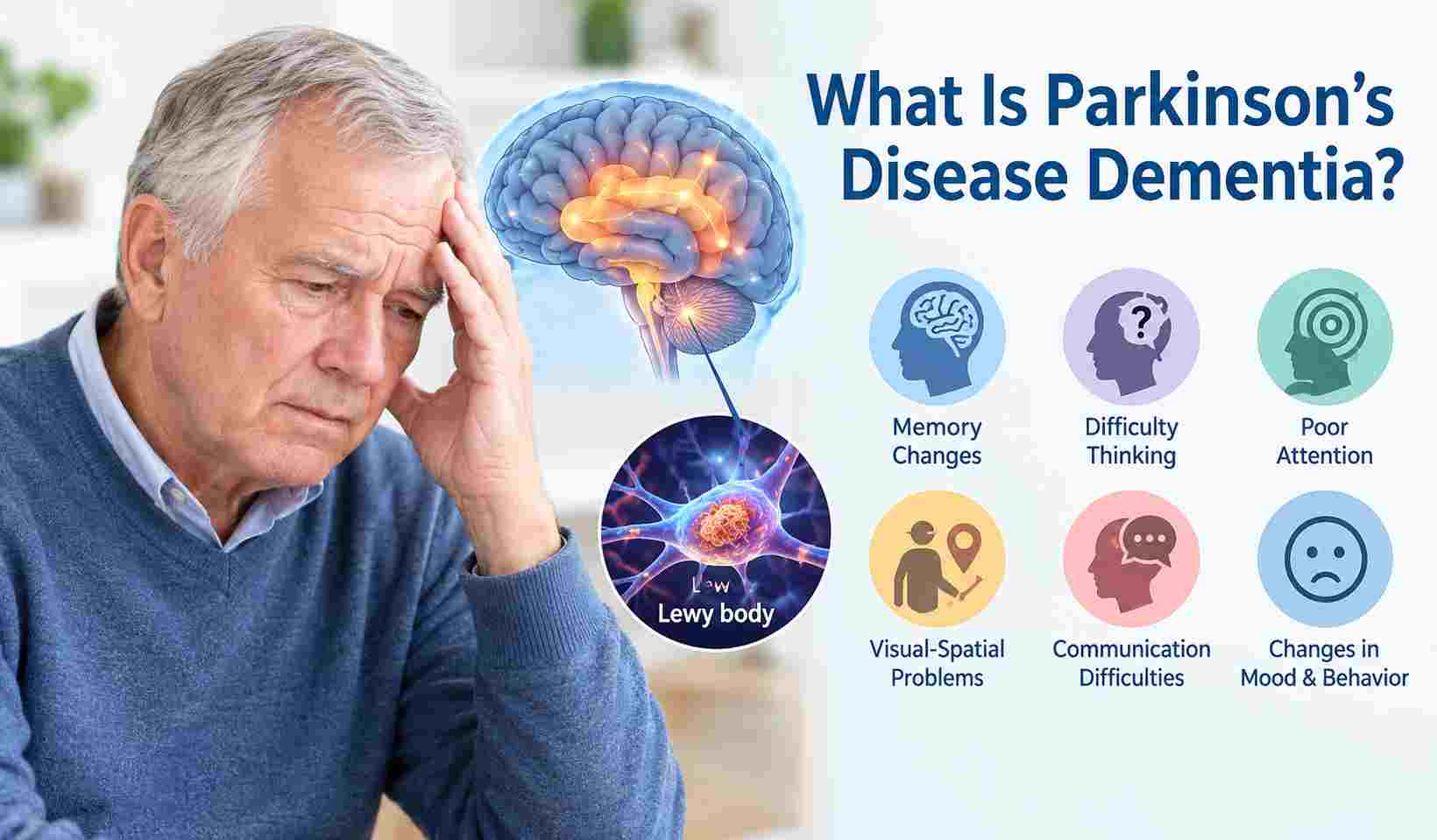
Parkinson’s disease dementia is a cognitive disorder that can develop after Parkinson’s disease, causing changes in memory, thinking, attention, and daily function.
The timing of symptoms is important when distinguishing Parkinson’s disease dementia from another related condition called dementia with Lewy bodies.
According to the National Institute on Aging, when significant dementia develops more than a year after Parkinson’s movement symptoms begin, Parkinson’s disease dementia may be diagnosed.
Understanding what Parkinson’s disease dementia is, what symptoms to watch for, how doctors diagnose it, and what treatments and supportive strategies may help can make the condition easier for patients, families, and caregivers to navigate.
What Is Parkinson’s Disease Dementia?
Parkinson’s disease dementia is a form of dementia that occurs in some people who already have Parkinson’s disease. It involves a decline in cognitive abilities that becomes significant enough to interfere with daily activities and independence.
Cognitive abilities include much more than memory. They involve:
- Attention and concentration
- Planning and organization
- Problem-solving
- Decision-making
- Visual-spatial abilities
- Language and communication
- Memory and learning
- Mental flexibility
A person with Parkinson’s disease may initially experience mild cognitive changes without having dementia. For example, they might take longer to find a word, have difficulty multitasking, or become distracted more easily.
These changes are sometimes called mild cognitive impairment (MCI). Not everyone with mild cognitive impairment develops dementia. The Parkinson’s Foundation notes that cognitive changes can range from mild impairment to Parkinson’s disease dementia, with symptoms varying considerably between individuals.
Parkinson’s disease dementia occurs when cognitive impairment becomes more substantial and begins interfering with everyday life.
 DON’T TRY THIS “PARKINSON’S DISEASE DEMENTIA” UNTIL YOU SEE THIS
How Is Parkinson’s Disease Dementia Related to Parkinson’s Disease?
Parkinson’s disease is a neurological disorder that affects movement and other functions of the nervous system. Common motor symptoms include tremor, stiffness, slowed movement, and impaired balance or coordination.
But Parkinson’s disease can also affect non-movement functions.
These may include:
- Sleep
- Mood
- Blood pressure regulation
- Smell
- Digestion
- Attention
- Thinking
- Memory
- Behavior
Over time, some people with Parkinson’s develop increasingly significant cognitive problems.
Doctors consider the timing of cognitive and movement symptoms when determining whether someone has Parkinson’s disease dementia or dementia with Lewy bodies.
If Parkinson’s motor symptoms clearly began first and dementia develops later, Parkinson’s disease dementia is generally considered. If dementia symptoms occur before or around the same time as Parkinsonian movement symptoms, clinicians may consider dementia with Lewy bodies instead.
What Causes Parkinson’s Disease Dementia?
The exact biological mechanisms behind Parkinson’s disease dementia are complex and continue to be studied.
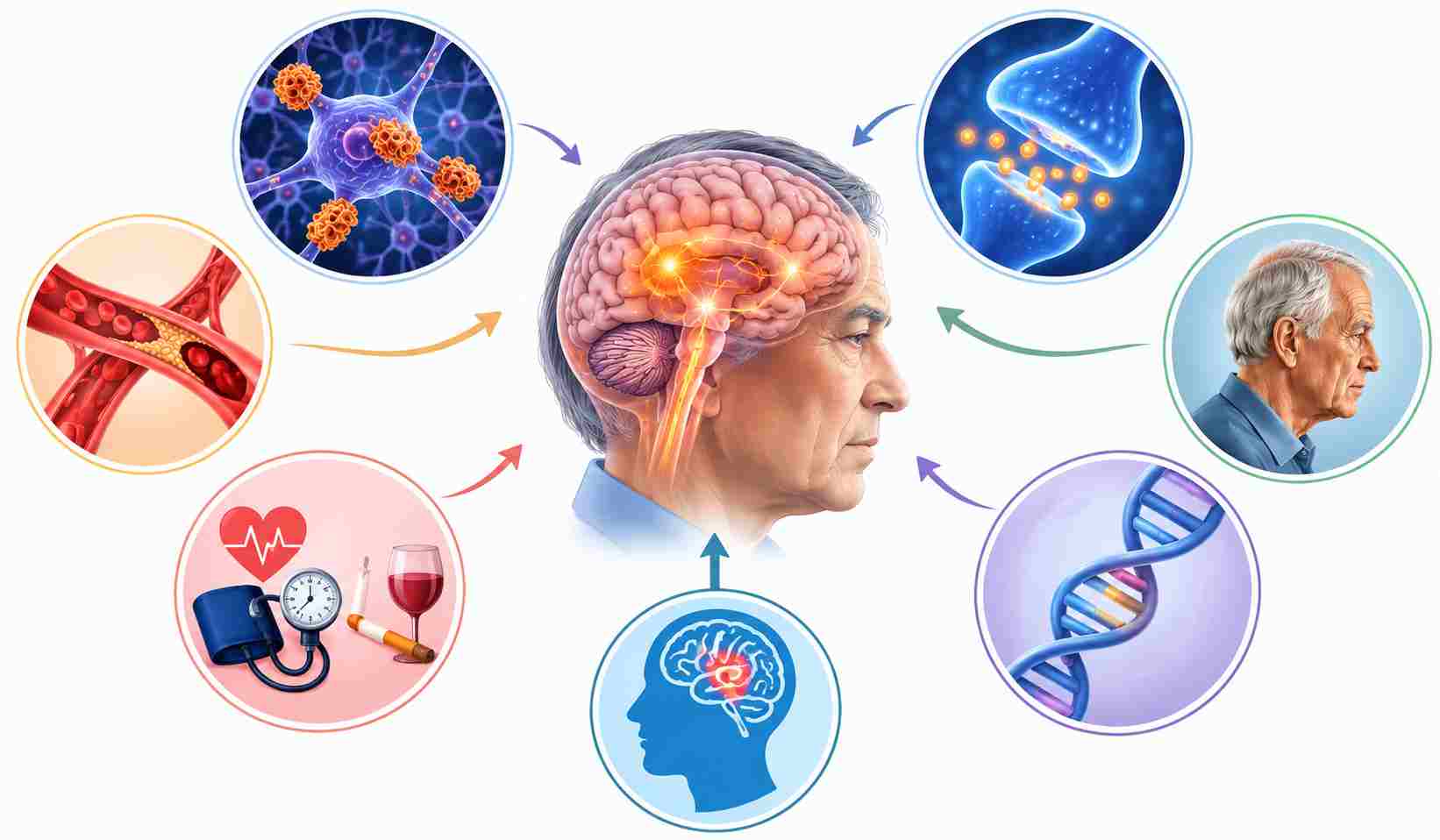
Parkinson’s disease and related Lewy body disorders are associated with abnormal deposits of a protein called alpha-synuclein. These deposits are known as Lewy bodies and can affect brain cells involved in movement, thinking, behavior, sleep, and other functions.
Changes in several brain systems may contribute to cognitive symptoms.
For example, changes involving chemical messengers in the brain can affect attention, thinking, and memory. Parkinson’s disease also involves changes in dopamine-producing nerve cells, which contribute to many movement symptoms.
However, Parkinson’s disease dementia is not simply caused by having less dopamine. Several brain systems can contribute to cognitive decline.
Researchers continue to investigate how alpha-synuclein, dopamine, acetylcholine, other neurotransmitters, brain changes, aging, genetics, and other factors interact.
Because the underlying biology is complicated, Parkinson’s disease dementia can look different from one person to another.
Who Develops Parkinson’s Disease Dementia?
Not everyone with Parkinson’s disease develops dementia.
The likelihood of cognitive impairment generally increases as Parkinson’s disease progresses, but doctors cannot accurately predict which individual will eventually develop Parkinson’s disease dementia. Older age at the time Parkinson’s disease begins is also associated with increased risk.
Other factors may also influence cognitive changes, but risk is individual.
A person with Parkinson’s disease may experience:
- No significant cognitive problems.
- Mild cognitive impairment.
- More advanced cognitive impairment meeting criteria for dementia.
These stages are not necessarily identical for everyone. Some people may remain relatively independent for a long time, while others may experience greater difficulty with daily activities.

Early Signs of Parkinson’s Disease Dementia
The earliest signs may be subtle.
Family members may notice changes before the person recognizes them. Early symptoms may involve attention, planning, visual processing, or mental flexibility rather than obvious memory loss.
Common early signs can include:
Difficulty Concentrating
A person may struggle to stay focused during conversations, television programs, reading, or other activities. They may become distracted more easily than before.
Problems With Multitasking
Tasks that once felt simple may become difficult when several steps must be handled at the same time. For example, managing medications, preparing a meal, and answering a phone call may become overwhelming.
Slower Thinking
The person may understand a question but require additional time to process it and respond. This can sometimes be mistaken for hearing problems or lack of interest.
Difficulty Planning
Planning appointments, shopping trips, meals, finances, or household activities may become harder. The person may need more reminders or assistance.
Visual-Spatial Difficulties
Some people have trouble judging distances, recognizing objects, navigating spaces, or interpreting visual information. This can affect activities such as walking through unfamiliar environments or driving.
Memory Problems
Memory changes can occur, although memory difficulties may not always be the first or most prominent symptom. A person may forget conversations, appointments, instructions, or recently learned information.
Changes in Communication
Finding the right word, following complex conversations, or understanding lengthy instructions may become more difficult. Speech may also be affected by Parkinson’s movement symptoms.
Changes in Mood or Behavior
Depression, anxiety, apathy, irritability, or other behavioral changes may occur alongside cognitive difficulties. These symptoms can have several possible causes, so medical evaluation is important.
More Advanced Symptoms
As Parkinson’s disease dementia progresses, cognitive problems can become more noticeable and interfere with independence.
Possible symptoms include:
- Increasing confusion
- Difficulty remembering important information
- Problems following instructions
- Difficulty managing medications
- Trouble handling finances
- Getting lost in familiar or unfamiliar places
- Problems recognizing objects or surroundings
- Difficulty communicating
- Changes in judgment
- Hallucinations
- Delusions
- Increased dependence on caregivers
The Parkinson’s Foundation identifies memory changes, confusion, mood changes, hallucinations, delusions, visual-perceptual problems, and language difficulties among possible symptoms of Parkinson’s disease dementia.
DON’T TRY THIS “PARKINSON’S DISEASE DEMENTIA” UNTIL YOU SEE THIS
Parkinson’s Disease Dementia vs. Dementia With Lewy Bodies
Parkinson’s disease dementia and dementia with Lewy bodies are closely related.
Both are considered forms of Lewy body dementia and can involve similar symptoms, including cognitive changes, movement problems, hallucinations, sleep disturbances, and changes in autonomic function.
The main distinction involves when cognitive symptoms begin in relation to Parkinsonian movement symptoms.
Parkinson’s Disease Dementia: Parkinson’s movement symptoms develop first, followed later by significant dementia.
Dementia With Lewy Bodies: Cognitive symptoms and dementia occur before or around the same time as Parkinsonian movement symptoms. This distinction is important because the conditions can have different clinical presentations and treatment considerations.
How Is Parkinson’s Disease Dementia Diagnosed?
There is no single test that can independently confirm Parkinson’s disease dementia.
Diagnosis generally involves a detailed medical history, neurological examination, cognitive assessment, medication review, and evaluation of changes in everyday functioning.
The National Institute on Aging explains that diagnosing Lewy body dementia can require several visits and different assessments because symptoms may overlap with other neurological conditions.
Medical History
The doctor may ask:
- When Parkinson’s disease symptoms began
- When cognitive symptoms appeared
- Whether symptoms are getting worse
- What medications are being taken
- Whether hallucinations or sleep changes occur
- How daily activities have changed
- Whether family members have noticed behavioral changes
A caregiver or family member can provide valuable information because the person experiencing cognitive changes may not always recognize them.
Neurological Examination
The doctor may evaluate:
- Movement
- Balance
- Coordination
- Reflexes
- Muscle stiffness
- Tremor
- Walking
- Speech
- Cognitive function
Cognitive Testing
Cognitive assessments can evaluate areas such as:
- Memory
- Attention
- Language
- Reasoning
- Processing speed
- Executive function
- Visuospatial abilities
Doctors may recommend more detailed neuropsychological testing when the diagnosis is unclear.
Blood Tests
Blood tests may help identify other causes or contributors to cognitive symptoms. For example, doctors may investigate certain vitamin deficiencies, thyroid problems, infections, metabolic abnormalities, or other medical conditions.
Brain Imaging
MRI or CT scans may be used to look for other possible causes of cognitive or neurological symptoms. Imaging can help identify conditions such as stroke, bleeding, tumors, or other structural abnormalities.
Brain imaging is generally used to support evaluation and rule out other causes rather than provide a single definitive test for Parkinson’s disease dementia.
Why Accurate Diagnosis Matters
Cognitive changes in someone with Parkinson’s disease can have multiple possible causes.
For example, sudden confusion may be related to infection, medication effects, dehydration, sleep problems, or another acute medical condition rather than the gradual progression of dementia.
The Parkinson’s Foundation notes that Parkinson’s disease itself does not typically cause sudden changes in mental functioning, making sudden cognitive changes something that should be medically evaluated.
An accurate diagnosis can help doctors:
- Identify potentially treatable contributors
- Review medications
- Develop a symptom-management plan
- Address safety concerns
- Support caregivers
- Plan future care
- Determine appropriate therapies
DON’T TRY THIS “PARKINSON’S DISEASE DEMENTIA” UNTIL YOU SEE THIS
How Is Parkinson’s Disease Dementia Treated?
There is currently no cure that stops or reverses Parkinson’s disease dementia.
However, treatment can help manage symptoms and support quality of life.
Treatment is usually individualized and may involve medication, physical activity, rehabilitation, cognitive strategies, environmental changes, and caregiver support.
Treatment focuses on maintaining function, safety, independence, and quality of life.
Medication
Certain medications used for cognitive symptoms may be considered.
Rivastigmine is an acetylcholinesterase inhibitor and is FDA-approved for mild-to-moderate dementia associated with Parkinson’s disease.
The Parkinson’s Foundation also notes that rivastigmine, donepezil, and galantamine may provide cognitive benefits in Parkinson’s disease dementia, although rivastigmine is the FDA-approved medication specifically for dementia associated with Parkinson’s disease.
Doctors decide whether a medication is appropriate based on symptoms, medical history, other medications, and potential side effects.
Managing Parkinson’s Symptoms
Parkinson’s movement symptoms may continue alongside dementia.
Medications such as levodopa may help control motor symptoms. However, medication management can become more complicated when cognitive symptoms, hallucinations, or behavioral symptoms are present.
Treatment needs to be individualized.
Physical Therapy
Physical therapy may help address:
- Balance
- Strength
- Walking
- Flexibility
- Mobility
- Fall prevention
Maintaining safe physical activity can help preserve function.

Occupational Therapy
An occupational therapist can help a person adapt daily activities and the home environment.
This may include strategies for:
- Dressing
- Eating
- Bathing
- Medication organization
- Household activities
- Safe movement around the home
Speech and Language Therapy
Speech-language professionals can help with communication and, when appropriate, swallowing-related problems.
Communication strategies can make conversations easier for both the person with dementia and caregivers.
Cognitive Strategies
Cognitive rehabilitation or structured cognitive strategies may help some individuals manage everyday challenges.
Examples include:
- Using calendars
- Setting reminders
- Keeping important objects in consistent locations
- Breaking complicated tasks into smaller steps
- Following predictable routines
The Parkinson’s Foundation identifies cognitive remediation and structured approaches as part of managing Parkinson’s-related dementia.
When Should You Talk to a Doctor?
Anyone with Parkinson’s disease who develops noticeable changes in thinking, memory, attention, behavior, or daily functioning should discuss those changes with a healthcare professional.
A medical evaluation is particularly important when symptoms:
- Gradually become more frequent
- Interfere with medications
- Affect finances
- Cause difficulty preparing food
- Affect communication
- Create driving concerns
- Include hallucinations
- Lead to falls or safety problems
Sudden confusion or a rapid change in mental status deserves prompt medical attention because it may indicate another medical problem rather than typical dementia progression.
DON’T TRY THIS “PARKINSON’S DISEASE DEMENTIA” UNTIL YOU SEE THIS
Is Parkinson’s Disease Dementia the Same as Alzheimer’s Disease?
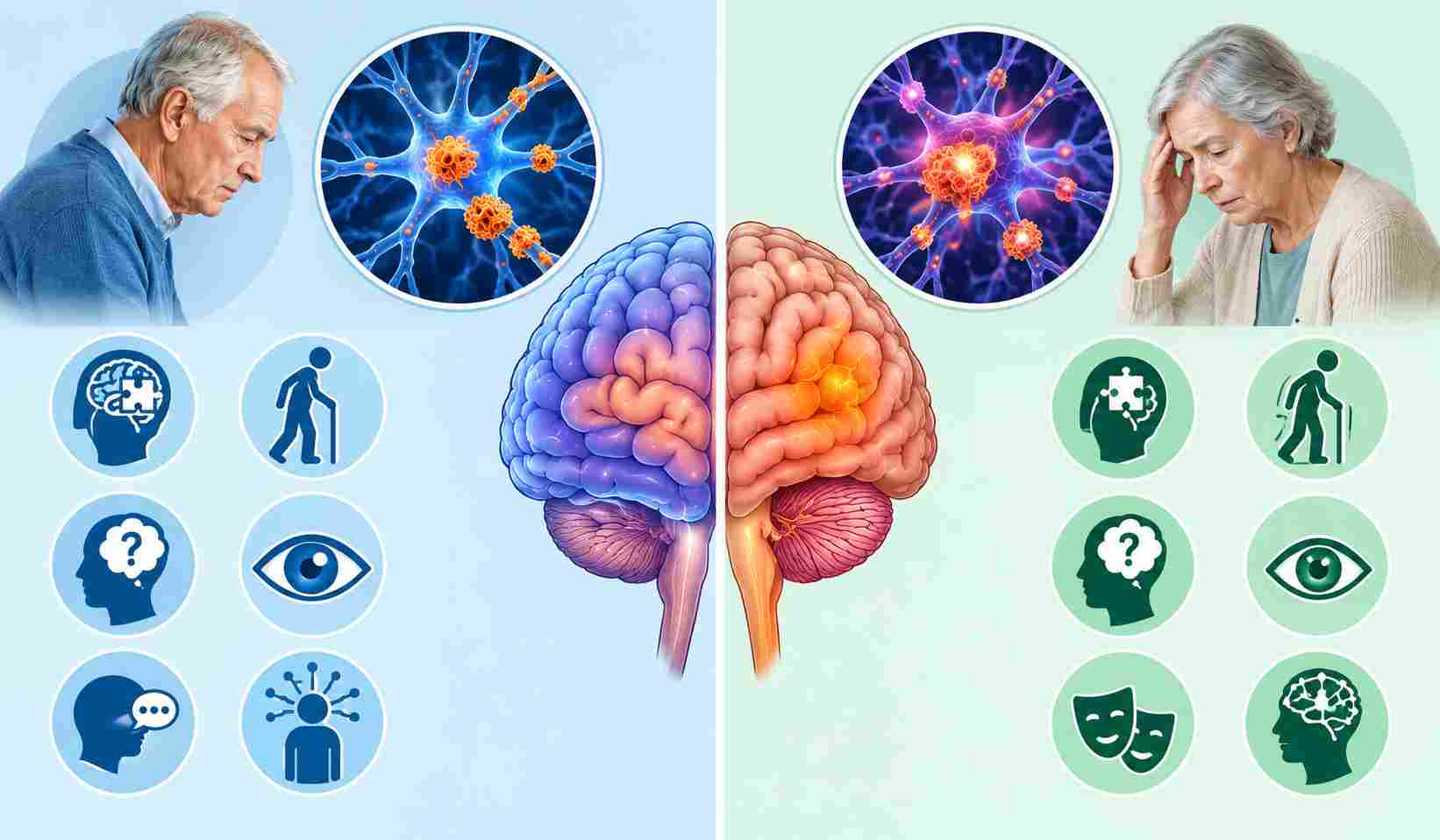
No. Parkinson’s disease dementia and Alzheimer’s disease are different neurological conditions, although they can share some symptoms.
Memory loss is often a prominent early feature of Alzheimer’s disease. Parkinson’s disease dementia may involve more pronounced problems with attention, executive function, processing speed, and visual-spatial abilities, although memory problems can also occur.
Some people can have more than one type of dementia-related brain pathology. Similar symptoms do not necessarily mean the underlying condition is the same. This is why professional evaluation matters, rather than trying to diagnose the condition based on one symptom.
Can Parkinson’s Disease Dementia Be Prevented?
There is currently no guaranteed way to prevent Parkinson’s disease dementia. Researchers continue to investigate why some people with Parkinson’s develop dementia while others do not. Maintaining overall health may still be beneficial.
Helpful habits can include:
- Staying physically active
- Eating a balanced diet
- Managing cardiovascular risk factors
- Getting adequate sleep
- Remaining socially engaged
- Taking prescribed medications correctly
- Attending regular medical appointments
- Addressing hearing and vision problems
- Avoiding unnecessary medications that may worsen cognition
These steps should not be presented as a cure or guaranteed prevention strategy.
Final Thoughts
Parkinson’s disease dementia is a complex condition that can affect thinking, memory, attention, behavior, communication, and everyday independence in people living with Parkinson’s disease.
Not every cognitive change means a person has dementia. Mild cognitive impairment, medication effects, sleep problems, depression, vitamin deficiencies, infections, and other medical conditions can also contribute to changes in thinking.
When dementia does develop, an accurate diagnosis can help guide treatment and support.
Although there is currently no cure that stops Parkinson’s disease dementia, several approaches can help manage symptoms. Prescription medications, physical therapy, occupational therapy, speech therapy, cognitive strategies, structured routines, safety planning, and caregiver support may all play a role.

References Links
https://en.wikipedia.org/wiki/Parkinson%27s_disease_dementia
https://www.webmd.com/parkinsons-disease/parkinsons-disease-overview
https://www.healthline.com/health/parkinsons
.
About Us
