Hume Band vs Garmin 2026: Which Health Tracker Is Best?
Hume Band is a screen-free health tracker that monitors sleep, recovery, heart rate, HRV, activity, and key wellness trends for smarter everyday health choices.
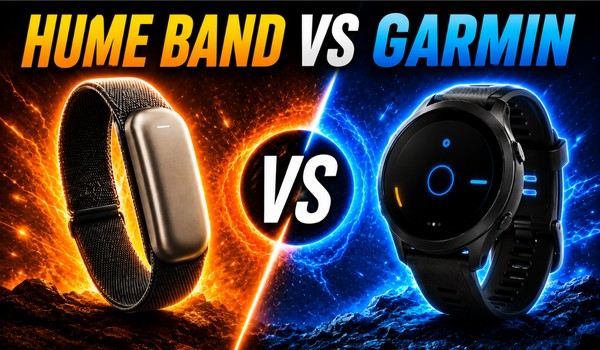
Two increasingly interesting options in this space are Hume Band and Garmin. While Garmin has been one of the most established names in GPS watches and fitness technology for years,
Hume Health takes a somewhat different approach. Instead of emphasizing race performance, maps, notifications, or smartwatch functionality, the Hume Band 2.0 focuses heavily on longevity, metabolic health, recovery, sleep, and long-term wellness trends.
The comparison became particularly relevant in 2026 because Garmin introduced the CIRQA Smart Band, its first screen-free health and fitness band. CIRQA makes the Hume Band vs Garmin comparison much more direct than before.
Both devices now offer screen-free designs, continuous health monitoring, sleep tracking, recovery information, long battery life, and access to smartphone-based health dashboards. However, beneath those similarities are two very different philosophies.
Hume Band is primarily designed for people who want to understand longevity and everyday wellness. Garmin is generally stronger for people who prioritize exercise, sports performance, activity tracking, and integration with a larger fitness ecosystem.
So which one deserves a place on your wrist?
This detailed Hume Band vs Garmin comparison examines their health tracking, sleep insights, fitness features, recovery tools, battery life, apps, subscriptions, pricing, comfort, and overall value.
Hume Band vs Garmin – Quick Overview
| Feature | Hume Band 2.0 | Garmin CIRQA Smart Band |
|---|---|---|
| Primary Focus | Longevity, recovery and wellness | Fitness, health and activity tracking |
| Design | Screenless band | Screenless band |
| Current Price | Around $249 | $199.99 |
| Battery Life | Up to 14 days | Up to 10 days |
| Heart Rate | Yes | Yes |
| HRV Tracking | Yes | Yes |
| Blood Oxygen / SpO2 | Yes | Yes |
| Skin Temperature | Yes | Yes |
| Sleep Tracking | Yes | Yes |
| Sleep Stages | Yes | Yes |
| Recovery Insights | Yes | Yes |
| Stress / Strain Insights | Yes | Yes |
| Training Readiness | Recovery-focused metrics | Yes |
| VO2 Max | Not a primary feature | Yes |
| Training Status | Limited compared with Garmin | Yes |
| Blood Pressure Insights | Directional trend insights | No comparable core CIRQA feature |
| Biological Aging Insights | Yes | Fitness Age rather than Hume-style biological aging |
| Connected GPS | Not a primary feature | Yes |
| Built-In GPS | No | No |
| Tracked Activities | General activity and strain | 80+ activities |
| Water Resistance | IP68 | 5 ATM |
| Free App | Yes | Yes |
| Optional Premium Plan | Yes | Garmin Connect+ available |
| Best For | Healthspan and longevity tracking | Fitness and training tracking |
Current specifications show Hume advertising up to 14 days of battery life, IP68 water resistance, HRV, SpO2, skin temperature, sleep, recovery and longevity-focused metrics. Garmin lists CIRQA with up to 10 days of battery life, 5 ATM water resistance, 80+ activities, connected GPS, HRV Status, VO2 max and Training Readiness.
What Is the Hume Band?
The Hume Band 2.0 is a screenless health and wellness tracker developed by Hume Health. Unlike many traditional fitness trackers, it is not primarily designed around notifications, apps on your wrist, GPS maps, running splits, or smartwatch features.
Instead, Hume focuses on helping users understand how sleep, recovery, activity, stress, and everyday habits may influence their long-term wellness.
The current Hume Band uses optical sensors including five LEDs and four photodiodes to collect physiological signals from the wrist. These measurements are translated into health metrics inside the Hume Health app.
The device can monitor heart rate, heart rate variability, blood oxygen saturation, sleep stages, skin temperature, movement, recovery, and strain.
Hume then builds several proprietary wellness measurements around this information. These include concepts such as Metabolic Capacity, Metabolic Momentum, Pace of Aging, and Biological Age trends.
One of the most distinctive additions to Hume Band 2.0 is its blood-pressure trend insight feature. Hume describes it as a directional wellness tool based on PPG signals, not a replacement for a medical blood-pressure cuff.
That distinction is important. The Hume Band is a consumer wellness wearable, not a medical diagnostic device, so view its measurements as trends and lifestyle insights rather than clinical readings.
✅ Get The Hume Band at the Lowest Price Today!
What Is Garmin CIRQA?
The Garmin CIRQA Smart Band was introduced in July 2026 as Garmin’s first screen-free smart band.
Until CIRQA arrived, comparing Hume Band with Garmin usually meant comparing a lightweight health band against a Garmin smartwatch such as the Venu, Forerunner or Fenix.
That comparison was somewhat uneven because Garmin watches include screens, navigation tools, smartwatch functions and, depending on the model, sophisticated GPS capabilities.
CIRQA changes that.
Like Hume Band, Garmin CIRQA is designed to be worn continuously while keeping screens and notifications off your wrist. You view your information through the Garmin Connect app rather than on the band itself.
CIRQA monitors health and fitness signals throughout the day and night, including heart rate, HRV, Pulse Ox, stress, skin temperature, sleep, activity and recovery-related information.
Its strongest advantage is Garmin’s mature fitness platform. CIRQA supports more than 80 activities, Training Readiness, Training Status, VO2 max, workout benefit, recovery time and connected GPS.
That makes CIRQA essentially a screen-free gateway into Garmin’s fitness ecosystem.
Garmin lists CIRQA at $199.99, with up to 10 days of battery life, no mandatory subscription, and access to the Garmin Connect app.
Hume Band vs Garmin Features
Hume Band Features
- Screen-Free Design – Offers a clean, distraction-free wearable experience that continuously tracks wellness data without notifications, screens, or unnecessary interruptions throughout the day.
- Sleep Tracking – Monitors sleep stages, overnight heart rate, and recovery patterns to help users better understand nightly rest and daily wellness changes.
- HRV Monitoring – Tracks heart rate variability continuously, helping users understand recovery, stress levels, physical readiness, and changes in overall wellness over time.
- Metabolic Insights – Provides Metabolic Capacity and Metabolic Momentum insights that help users understand how daily habits may influence overall metabolic wellness trends.
- Long Battery Life – Delivers up to 14 days of battery life, making continuous day-and-night health tracking more convenient with less frequent charging needed.
- Longevity Tracking – Provides Pace of Aging and Biological Age insights, helping users follow long-term wellness patterns and better understand lifestyle-related health trends.
Garmin Features
- Activity Tracking – Supports multiple workout types and daily activities, helping users monitor movement, exercise performance, calories, and overall fitness progress more effectively.
- Training Readiness – Analyzes sleep, recovery, and recent activity to help users understand whether their body appears ready for more demanding physical training.
- VO2 Max Tracking – Estimates cardiovascular fitness by analyzing exercise performance, helping users understand endurance levels and monitor changes in aerobic capacity over time.
- Advanced Sleep Monitoring – Tracks sleep stages, sleep score, recovery patterns, and other overnight metrics to help users understand sleep quality and daily readiness.
- Connected GPS – Uses a compatible smartphone’s GPS to record routes, distance, pace, and location data during activities such as running or walking.
- Body Battery – Estimates daily energy reserves by combining activity, stress, sleep, and recovery information, helping users better plan exercise and rest periods.
✅ Get The Hume Band at the Lowest Price Today!
Hume Band vs Garmin for Health Tracking
Health monitoring is where this comparison becomes particularly interesting. Both wearables track many of the signals people increasingly expect from premium health devices.
Hume Band monitors:
- Heart rate
- Resting heart rate
- Heart rate variability
- Blood oxygen saturation
- Skin temperature
- Sleep
- Sleep stages
- Activity and movement
- Recovery
- Strain
- Blood-pressure trends
- Metabolic Capacity
- Metabolic Momentum
- Biological Age trends
- Pace of Aging
Garmin CIRQA tracks many similar foundational metrics, including:
- Continuous heart rate
- Resting heart rate
- HRV Status
- Pulse Ox
- Respiration
- Skin temperature
- Stress
- Sleep
- Sleep stages
- Naps
- Body Battery
- Fitness Age
- Activity
- Calories
- Intensity minutes
Garmin also offers women’s health tracking, including menstrual-cycle and pregnancy tracking and additional insights that use overnight skin-temperature information.
The biggest difference is not necessarily the sensors themselves. It is how each platform interprets the data. Hume tries to translate biometrics into a broader longevity narrative. Garmin tends to translate them into health, energy, and fitness readiness.
That is why someone looking at exactly the same overnight HRV trend could receive noticeably different guidance depending on which ecosystem they use.
Winner for Long-Term Wellness Insights: Hume Band
Hume has a distinctive advantage if biological aging, metabolic trends, and healthspan are your main interests.
Winner for Traditional Health and Fitness Metrics: Garmin
Garmin offers a mature set of health metrics and ties those measurements closely to exercise data.
✅ Get The Hume Band at the Lowest Price Today!
Hume Band vs Garmin for Sleep Tracking
Both trackers are meant to stay on the wrist overnight, making sleep tracking a key part of their functionality.
Hume tracks light, deep, REM, and awake periods while combining overnight readings with HRV, resting heart rate, and recovery information.
The broader goal is not simply to tell you how many hours you slept. Hume attempts to show how your sleep influenced your recovery and metabolic capacity the following day. Garmin also takes sleep tracking seriously.
CIRQA includes advanced sleep tracking, sleep stages, sleep score, HRV information, respiration, nap detection, sleep consistency, and personalized sleep coaching.
Garmin’s Sleep Coach can estimate how much sleep you may need based on personal data, while newer sleep tools can also evaluate consistency and alignment with circadian patterns.
Both platforms therefore move well beyond basic sleep duration. The key difference, again, comes down to interpretation. Hume connects sleep closely with longevity and recovery. Garmin connects sleep with recovery, energy, and training readiness.
Neither should be viewed as equivalent to a clinical sleep study, and wearable estimates of individual sleep stages are inherently algorithmic.
Winner for Sleep: Tie
Choose Hume if you want your sleep interpreted mainly through a wellness and longevity lens. Choose Garmin if you want sleep tightly integrated with exercise readiness and training.
Hume Band vs Garmin Benefits
Hume Band Benefits
- Supports Better Sleep – Hume Band tracks sleep stages, overnight heart rate, and recovery patterns, helping users understand sleep quality and make better lifestyle choices that may support more consistent rest.
- Improves Recovery Awareness – By monitoring HRV, resting heart rate, sleep, and strain, Hume Band helps users recognize recovery patterns and adjust exercise, rest, and daily habits more effectively.
- Tracks Long-Term Wellness – Hume Band provides longevity-focused insights such as Pace of Aging and Biological Age, helping users observe how everyday behaviors may influence broader health and wellness trends.
- Provides Metabolic Insights – Metabolic Capacity and Metabolic Momentum help users understand how activity, recovery, and lifestyle patterns may affect metabolic wellness, creating a clearer picture of overall daily health.
- Encourages Continuous Health Monitoring – Its screen-free design and long battery life make Hume Band convenient for continuous wear, helping users collect consistent daytime and nighttime health information with fewer interruptions.
- Supports Stress Management – By tracking HRV, heart rate, sleep, and recovery signals, Hume Band helps users identify periods of increased strain and make informed decisions about relaxation and recovery.
Garmin Benefits
- Enhances Fitness Tracking – Garmin tracks multiple workouts, activities, calories, distance, and performance metrics, helping users understand exercise habits and monitor progress toward personal fitness goals more effectively over time.
- Supports Training Readiness – Garmin analyzes sleep, recovery, recent activity, and other health information to help users understand whether their body is prepared for intense workouts or needs more recovery time.
- Improves Cardiovascular Awareness – VO2 max estimates help users understand aerobic fitness and endurance levels, making Garmin especially useful for runners, cyclists, and people interested in improving cardiovascular performance.
- Provides Detailed Sleep Insights – Garmin tracks sleep stages, sleep score, recovery, and overnight wellness information, helping users understand sleep quality and how it may affect energy and performance.
- Supports Outdoor Activity Tracking – Connected GPS helps record routes, pace, distance, and location information during outdoor activities, making Garmin useful for walking, running, cycling, and other fitness-focused adventures.
- Helps Manage Daily Energy – Garmin Body Battery combines sleep, stress, recovery, and activity information to estimate daily energy reserves, helping users decide when to exercise, stay active, or prioritize rest.
✅ Get The Hume Band at the Lowest Price Today!
Hume Band vs Garmin for Recovery
Recovery is one of the strongest areas for both platforms. Hume combines sleep, HRV, resting heart rate, strain, and other physiological signals to create recovery and metabolic-capacity insights.
The goal is to help users understand whether their body appears ready for additional physical or lifestyle stress. Garmin approaches the same problem through several established tools.
Body Battery estimates your available energy resources using factors such as stress, recovery, sleep, and activity. Training Readiness looks more directly at whether your current condition supports demanding exercise.
Garmin also provides Recovery Time, helping users understand how long they may need before another challenging training session.
For everyday users, Hume’s presentation may feel easier because it prioritizes broad wellness trends rather than a highly detailed performance dashboard. For athletes, Garmin gives more actionable exercise-specific information.
Winner: Depends on Your Goal
Hume Band: better for lifestyle recovery and longevity.
Garmin: better for training recovery and athletic readiness.
Hume Band vs Garmin for Longevity
This is arguably the category that gives Hume its strongest identity. Hume Band does not simply market itself as a fitness tracker. The platform is designed around healthspan, or the concept of staying healthier and more capable throughout life.
Its proprietary metrics include:
Metabolic Capacity: designed to represent how effectively your body can handle activity, stress, and recovery.
Metabolic Momentum: intended to show whether your habits appear to be moving your metabolic health in a favorable or unfavorable direction.
Pace of Aging: a directional estimate showing how lifestyle patterns may relate to biological-aging trends.
Biological Age: an estimated wellness metric comparing physiological patterns with chronological age.
These measures are best treated as wellness estimates, not literal clinical measurements of lifespan or a medical determination of biological age.
Garmin has a comparable concept called Fitness Age, but it serves a different purpose. Fitness Age is primarily intended to estimate of how a user’s fitness compares with their actual age.
Garmin’s broader ecosystem remains more strongly centered on activity, training, and cardiovascular fitness than Hume’s longevity-first positioning.
Winner for Longevity Metrics: Hume Band
If longevity tracking is the main reason you want a wearable, Hume provides the more purpose-built experience.
Blood Pressure: An Important Difference
Hume Band 2.0 includes blood-pressure trend insights, which is one of the features most likely to attract attention. However, consumers should understand exactly what the feature represents.
Hume describes it as a PPG-based directional trend intended to help users observe relative patterns over time. It is not a replacement for an FDA-cleared blood-pressure monitor, medical cuff, or professional medical evaluation.
A person who has hypertension, cardiovascular disease, or concerns about abnormal blood pressure should continue using clinically appropriate equipment and follow healthcare guidance rather than relying on a consumer wearable.
Garmin CIRQA does not center its experience around an equivalent continuous blood-pressure trend feature.
Winner: Hume Band
Hume offers additional blood-pressure trend information, provided users understand the important limitations.
✅ Get The Hume Band at the Lowest Price Today!
Hume Band vs Garmin: Battery Life
Battery life matters more than many people realize. A health wearable cannot analyze sleep, HRV, or recovery if it spends half the night sitting on a charger.
Hume Band 2.0 advertises up to 14 days of battery life with typical use. Garmin CIRQA offers up to 10 days.
Actual battery performance can vary by settings, sync frequency, and sensor use, but both devices are much easier to manage than smartwatches that require daily charging.
Winner for Battery Life: Hume Band
On advertised maximum battery life, Hume holds approximately a four-day advantage.
Hume Band vs Garmin: Water Resistance
Hume Band 2.0 carries an IP68 rating. Hume says it can tolerate immersion up to about one meter for limited periods.
Garmin CIRQA has a 5 ATM water rating, which is generally better suited to regular swimming and water-based activity.
For someone who plans to use the device heavily in the pool, Garmin has the more conventional sport-watch-style water rating.
Winner for Water Resistance: Garmin
Hume Health App vs Garmin Connect
A wearable is only as useful as the software that explains its data.
Hume Health App
The Hume app emphasizes simple interpretation.
Instead of presenting hundreds of training statistics, it tries to connect:
- Activity
- Sleep
- Recovery
- Metabolic health
- Body composition
- Long-term health trends
You can access core Hume Band information without a mandatory subscription.
Hume also offers an optional Premium Membership, starting at $8.99 per month, for more personalized, AI-driven coaching and deeper analysis.
People already using the Hume Body Pod may particularly appreciate the ecosystem because they can consider body-composition measurements alongside wearable data.
Garmin Connect
Garmin Connect is considerably more established and extremely data-rich. Users can analyze activity, sleep, heart rate, stress, Body Battery, workouts, performance trends, and much more.
Garmin also offers Garmin Connect+, an optional premium service that adds features such as AI-powered Active Intelligence, enhanced dashboards, selected premium training tools, and expanded LiveTrack features.
Garmin originally introduced Connect+ in the United States at $6.99 per month or $69.99 per year, while keeping existing Garmin Connect data and features available without requiring the premium plan.
Winner for Simplicity: Hume
Winner for Data Depth: Garmin
Do Hume Band or Garmin Require a Subscription?
Neither Hume Band 2.0 nor Garmin CIRQA requires a mandatory subscription for its essential functionality. That is an important advantage over wearable platforms whose primary functionality depends heavily on an ongoing membership.
Hume states that users can access core Band data without paying for Hume Premium. Likewise, Garmin says CIRQA provides its primary health and fitness features through Garmin Connect without requiring Garmin Connect+.
Both companies nevertheless provide optional paid upgrades for users who want deeper analysis or AI-driven features. For buyers trying to minimize recurring costs, both are attractive options.
Hume Band vs Garmin Price
At the time of this comparison, Hume Band 2.0 is advertised at approximately $249, discounted from a higher listed price. Garmin CIRQA has a suggested retail price of $199.99.
That makes Garmin about $49 cheaper upfront at these prices. However, price alone does not determine value. The better question is what type of information you actually want.
If your priorities are VO2 max, training readiness, activity modes, workout recovery, and Garmin Connect, CIRQA delivers substantial value.
If your priorities are Metabolic Momentum, Pace of Aging, Biological Age trends, long-term wellness, and blood-pressure trend insights, the additional cost of Hume may make sense.
Prices and promotional discounts can change, so shoppers should always confirm current pricing before ordering.
Winner for Lower Upfront Price: Garmin
✅ Get The Hume Band at the Lowest Price Today!
Hume Band Pros and Cons
Pros
- Strong focus on longevity and healthspan
- Screen-free minimalist design
- Up to 14-day battery life
- Tracks HRV, SpO2 and skin temperature
- Detailed sleep and recovery information
- Includes blood-pressure trend insights
- Provides Metabolic Capacity and Metabolic Momentum
- Biological Age and Pace of Aging insights
- No mandatory subscription
- Works with the broader Hume health ecosystem
Cons
- Higher upfront price than Garmin CIRQA
- Less suitable for serious athletic performance analysis
- No built-in GPS
- Some advanced coaching requires optional Premium membership
- Proprietary longevity metrics should not be interpreted as medical diagnoses
Independent Hume Band 2.0 testing has praised its battery improvement and wellness focus while also reporting that fitness tracking and some measurements may not match more specialized performance wearables in every situation.
Garmin CIRQA Pros and Cons
Pros
- Lower $199.99 starting price
- No mandatory subscription
- Up to 10 days of battery life
- More than 80 trackable activities
- Training Readiness
- Training Status
- VO2 max
- Body Battery
- Advanced sleep tracking
- Connected GPS
- Garmin Connect ecosystem
- 5 ATM water resistance
- Strong option for existing Garmin users
Cons
- Shorter battery life than Hume
- No Hume-style Pace of Aging or Metabolic Momentum system
- Connected rather than built-in GPS
- Some Garmin Connect+ functionality requires an optional subscription
- Less focused specifically on longevity
Recent independent reviews have generally found CIRQA comfortable and feature-rich, while noting that some premium coaching features require Garmin Connect+ and that it lacks some capabilities found on full Garmin watches.
Hume Band vs Garmin Watch: What If You Want a Screen?
The answer changes significantly if you are not specifically looking for a screenless band. Garmin’s smartwatch lineup offers many functions that the Hume Band simply isn’t designed to provide.
A watch such as the Garmin Venu 4, for example, combines health and wellness tracking with a touchscreen, microphone, speaker, smartphone features, music capabilities, training tools, and satellite positioning.
Garmin’s Forerunner lineup goes even further for runners and triathletes, offering advanced GPS, pace information, running dynamics, and extensive performance metrics.
Battery life also remains strong on many Garmin watches. Depending on model and size, devices such as Venu 4 and Forerunner 570 can last roughly 10–12 days in smartwatch mode, although GPS and music use reduce those figures considerably.
So if your comparison is Hume Band vs a full Garmin smartwatch, Garmin wins decisively for functionality. Hume wins only if you prefer a minimal, screen-free wellness device focused on long-term health trends.
Who Should Choose the Hume Band?
Hume Band is likely the better option for someone whose main interest is understanding their health rather than maximizing athletic performance.
It makes particular sense for users who:
- Want a screen-free wearable
- Prioritize sleep and recovery
- Want long battery life
- Are interested in longevity
- Prefer simplified health insights
- Want to monitor HRV and SpO2 trends
- Want skin-temperature information
- Are interested in biological-aging trends
- Want blood-pressure trend insights
- Already use other Hume Health products
- Do not need advanced GPS sports tracking
For this type of user, Hume’s narrower focus can actually be an advantage.
Who Should Choose Garmin?
Garmin is the better choice for users whose health goals are closely tied to physical performance.
Garmin makes more sense if you:
- Run frequently
- Cycle
- Train for races
- Want VO2 max tracking
- Want Training Readiness
- Need multiple sport profiles
- Want connected GPS on CIRQA
- Already own Garmin products
- Prefer Garmin Connect
- Need stronger sports analytics
- Swim regularly
- Want to transition between a band and Garmin watch
Garmin also provides a clearer upgrade path.
Someone can begin with CIRQA and later add a Forerunner, Venu, Fenix or another compatible Garmin device while continuing to use Garmin Connect.
✅ Get The Hume Band at the Lowest Price Today!
Hume Band vs Garmin: Which Is More Accurate?
Wearable accuracy is complicated because performance depends on metrics, activity, wrist placement, skin contact, movement, and algorithms.
Neither Hume nor Garmin should automatically be assumed to match medical or laboratory equipment.
Hume Band 2.0 uses an upgraded optical sensor configuration with five LEDs and four photodiodes. Hume says this improves its ability to monitor physiological signals throughout the day.
Independent Hume testing has produced mixed but generally useful results. Some reviewers have reported good agreement for trends such as sleep and resting measurements while noting occasional discrepancies during workouts or for individual measurements.
Garmin has years of experience in optical heart-rate and fitness tracking, and early CIRQA testing has been encouraging. Recent independent tests have reported solid performance for heart rate and step counting under many normal conditions, although no wrist-based tracker performs perfectly during every activity.
For most consumers, the best way to use either device is to focus on patterns over time rather than obsessing over individual measurements.
If your resting heart rate, HRV, or sleep pattern consistently changes across several days, that trend is usually more informative than whether two wearable devices disagree by a small amount on one particular morning.
Hume Band vs Garmin: Which Offers Better Value?
Value depends almost completely on your intended use. At $199.99, Garmin CIRQA offers an impressive combination of activity tracking, health monitoring, sleep analysis, and recovery tools.
For someone mainly interested in fitness, itis hard to ignore. Hume costs more, but you are paying for a different approach. Instead of building the experience around training statistics, Hume tries to answer larger lifestyle questions:
Am I recovering properly?
Are my habits helping or hurting my health trajectory?
How is my metabolic capacity changing?
Are my long-term wellness trends moving in a positive direction?
Those questions may matter considerably more than GPS routes or VO2 max to someone focused on healthy aging.
Therefore:
Best value for fitness: Garmin CIRQA.
Best value for longevity-focused wellness: Hume Band 2.0.
✅ Get The Hume Band at the Lowest Price Today!
Hume Band vs Garmin: Final Verdict
After comparing Hume Band vs Garmin, there is no universal winner because these devices are built around different priorities.
Garmin is the stronger overall fitness platform. CIRQA gives users access to Garmin’s mature ecosystem with advanced activity tracking, VO2 max, Training Readiness, Training Status, connected GPS, recovery tools, and support for more than 80 activities.
At $199.99, it also costs less than the current price of the Hume Band 2.0. Athletes, runners, cyclists and people who want detailed exercise analysis should generally choose Garmin.
However, Hume Band is the more compelling option for users primarily interested in longevity, sleep, recovery and long-term wellness trends.
Its combination of Metabolic Momentum, Metabolic Capacity, Pace of Aging, Biological Age estimates, recovery data and blood-pressure trend insights creates a distinctive experience that Garmin does not directly reproduce.
Hume’s advertised 14-day battery life is another advantage for continuous sleep and recovery tracking.
For the typical health-conscious user who does not care about GPS maps, race pacing or dozens of sports metrics, I would give the Hume Band 2.0 the edge for wellness-focused tracking.
For an athlete, the recommendation flips immediately: Garmin is the better choice.
Overall Winner for Longevity & Wellness: Hume Band 2.0
Overall Winner for Fitness & Training: Garmin
Ultimately, the Hume Band vs Garmin decision becomes easier when you ask one question:
Do you primarily want to understand how your habits affect your long-term health, or do you primarily want to understand how your training affects your performance?
Choose Hume for the first goal.
Choose Garmin for the second.

Click to Learn More About The Hume Band
Frequently Asked Questions About Hume Band vs Garmin
Is Hume Band better than Garmin?
Hume Band can be better for users focused on longevity, metabolic wellness, recovery, and biological-aging trends. Garmin is generally better for fitness tracking, sports performance, VO2 max, GPS-related activity data, and detailed training analysis.
Is Garmin CIRQA better than Hume Band?
Garmin CIRQA is better for exercise-focused users because it supports more than 80 activities and includes Training Readiness, Training Status, VO2 max, and connected GPS. Hume Band offers a stronger longevity-oriented experience.
Does Hume Band have GPS?
Hume Band is not designed as a dedicated GPS sports watch. Users who need advanced GPS navigation, route recording or running metrics will generally be better served by Garmin devices such as a compatible Forerunner or Fenix.
Does Garmin CIRQA have GPS?
Garmin CIRQA supports connected GPS, meaning it can use a compatible smartphone’s GPS during outdoor activities. It does not provide the same standalone onboard GPS experience as many Garmin sports watches.
Does Hume Band require a subscription?
No mandatory subscription is required for Hume Band’s core functionality and raw health information. Hume offers an optional Premium membership for additional AI-powered coaching and deeper personalized analysis.
Does Garmin CIRQA require a subscription?
No. You can use Garmin CIRQA with the standard Garmin Connect platform without a mandatory subscription. Garmin Connect+ is available as an optional premium service.
Which has better battery life, Hume Band or Garmin?
Hume Band 2.0 advertises up to 14 days, while Garmin CIRQA advertises up to 10 days. Hume therefore has the advantage based on stated maximum battery life.
Which is better for sleep tracking?
Both provide comprehensive sleep insights. Hume emphasizes how sleep affects recovery and longevity, while Garmin links sleep closely to Body Battery, Training Readiness, and overall fitness.
Which is better for runners?
Garmin is the better option for runners, especially given Garmin’s wider Forerunner ecosystem. Garmin offers more detailed running metrics, GPS capabilities, and training tools.
Which is better for healthy aging?
For consumers specifically interested in healthy aging and longevity trends, Hume Band is the more specialized option because of metrics such as Pace of Aging, Biological Age, Metabolic Momentum, and Metabolic Capacity.
Can Hume Band measure blood pressure?
Hume Band 2.0 provides directional blood-pressure trend insights based on optical signals. These should not be considered a replacement for a medical blood-pressure cuff or professional diagnosis.
Can I wear Hume Band or Garmin while sleeping?
Yes. Both devices are specifically designed for continuous wear and collect important overnight information such as sleep stages, heart rate, and HRV.
Which is cheaper, Hume Band or Garmin?
At current listed prices, Garmin CIRQA costs approximately $199.99, while Hume Band 2.0 is being offered at around $249. Promotions can change, so always check current prices before buying.
Is Hume Band worth it?
Hume Band can be worth considering for users who value sleep, recovery, longevity information, and a screen-free design more than advanced workout tracking. Users primarily interested in athletic performance may get more value from Garmin.
Hume Band vs Garmin – which one should I buy?
Choose Hume Band 2.0 if longevity, recovery, sleep, and metabolic wellness are your biggest priorities. Choose Garmin if your goals revolve around sports, workouts, running, cycling, and detailed fitness analytics.
Click to Learn More About The Hume Band
About Us