Hume Health Wristband Reviews 2026: Features & Benefits
Wearable health technology has changed significantly over the last few years. Earlier fitness trackers focused mainly on steps, calories, distance, and basic exercise information.
Today, many users want much deeper insights into sleep, recovery, heart health, daily strain, and long-term wellness. The Hume Health Wristband, officially known as the Hume Band 2.0, is designed around this newer approach to personal health tracking.
Unlike a traditional smartwatch, the Hume Health Wristband does not focus on calls, messages, apps, or constant notifications.
Hume Health Wristband tracks sleep, heart rate, HRV, SpO2, activity, recovery, and wellness trends through the Hume Health app.
Hume Health Wristband: Review & Guide

Instead, it works quietly in the background, collecting information about the body throughout the day and night. Users can then review their measurements inside the Hume Health mobile app.
The device tracks heart rate, heart rate variability, blood oxygen, skin temperature, sleep, daily movement, strain, and recovery. It also provides Hume-specific measurements such as Metabolic Momentum, Metabolic Capacity, Biological Age, and Pace of Aging.
These features make the wristband particularly interesting for people who want to understand how their lifestyle may be affecting recovery, energy, sleep, and overall wellness over time.
In this detailed Hume Health Wristband review, we examine how it works, what it tracks, its main benefits, possible limitations, battery life, accuracy considerations, pricing, and whether the Hume Band 2.0 is worth considering in 2026.
What Is the Hume Health Wristband?
The Hume Health Wristband, known as the Hume Band 2.0, is a screenless wearable designed for continuous wellness tracking. It monitors important signals throughout the day and night without displaying notifications on the wrist.
The device connects with the Hume Health app, where users can view daily measurements and long-term trends. It focuses on sleep, recovery, heart activity, movement, and metabolic wellness.
Optical and motion sensors work together to collect physiological and activity information. Overall, it offers a simple way to monitor wellness without the distractions of a traditional smartwatch.
How Does Hume Health Wristband Work?
The Hume Health Wristband uses optical and motion sensors to collect information while worn against the skin. Optical sensors detect changes related to blood flow and heart activity, while motion sensors track movement, rest, and sleep.
The device combines heart rate, activity, temperature, sleep, and recovery-related information. The device transfers collected data to the Hume Health app through Bluetooth.
The app processes this information into measurements, scores, and easy-to-understand trends. This helps users monitor how their daily wellness patterns change over time.
What Does the Hume Health Wristband Track?
The Hume Health Wristband tracks several physiological and lifestyle-related measurements throughout the day and night. These include heart rate, HRV, blood oxygen, skin temperature, sleep patterns, activity, strain, and recovery.
Some measurements are collected directly through the wristband’s sensors. Other wellness scores are calculated by combining several pieces of collected information.
Continuous tracking helps users compare current results with their normal personal patterns. This provides a broader picture of wellness than tracking steps or calories alone.
Heart Rate
The Hume Band 2.0 continuously monitors heart rate during activity, exercise, rest, and sleep. This allows users to see how their heart rate changes throughout different parts of the day. Factors such as exercise, stress, hydration, caffeine, and sleep can influence these patterns.
The wristband makes it easier to compare current readings with an individual’s usual baseline. Long-term tracking can help users notice consistent changes rather than focusing on a single measurement. Overall, heart-rate monitoring provides useful insight into daily cardiovascular and wellness patterns.
Heart Rate Variability
The Hume Health Wristband tracks heart rate variability (HRV), which measures small differences in time between heartbeats. HRV is commonly used to understand how the body responds to physical activity, stress, sleep, and recovery.
Intense workouts, fatigue, illness, and emotional stress can influence HRV patterns. Because normal HRV differs between individuals, personal trends are generally more useful than comparing results with others.
Hume lets users track these changes over time against their normal baseline. This can provide helpful insight into daily recovery, strain, and overall wellness.
Changes in HRV may correspond with:
- Physical fatigue
- Training intensity
- Poor sleep
- Stress
- Recovery
- Illness
- Lifestyle changes
However, HRV differs significantly from person to person.
For that reason, users usually gain more value by monitoring their personal HRV trends over time rather than comparing their numbers with someone else.
Blood Oxygen Monitoring
The Hume Band 2.0 monitors blood oxygen saturation (SpO2) to help users track how efficiently oxygen is being carried in the blood.
It records these readings throughout the day and during sleep to show personal trends over time. SpO2 levels can vary based on movement, circulation, device fit, temperature, and skin contact.
For this reason, individual readings may not always be perfectly consistent. The feature is most useful for observing general wellness patterns rather than diagnosing health conditions. Discuss persistent low readings or breathing concerns with a healthcare professional.
Skin Temperature Tracking
The Hume Health Wristband tracks skin temperature changes throughout the day and night to help identify personal wellness patterns.
Skin temperature can naturally vary depending on sleep, exercise, room temperature, stress, circulation, and hormonal changes. The band continuously monitors these fluctuations and compares them with the user’s usual baseline.
This can make it easier to notice unusual or consistent changes over time. Skin temperature data can also provide additional context when reviewing sleep and recovery information. It is best used as a wellness trend rather than a direct measurement of core body temperature.
These include:
- Room temperature
- Exercise
- Sleep
- Hormonal changes
- Circulation
- Illness
- Clothing
- Stress
Daily Activity Tracking
The Hume Health Wristband tracks daily movement and general activity to show how active users are throughout the day. It helps provide useful context for recovery, strain, and other wellness measurements.
The device can show how activity levels change between exercise days, rest days, and less active periods. This information may help users maintain a more consistent movement routine. Hume is mainly designed for everyday wellness tracking rather than advanced sports performance analysis.
Hume Health Wristband Sleep Tracking
The Hume Band 2.0 automatically tracks sleep while users wear it overnight. It monitors sleep duration, rest periods, and estimated sleep stages to provide a clearer view of nightly sleep patterns.
The Hume Health app combines sleep data with recovery and other wellness measurements. This can help users understand how sleep quality may influence energy and daily recovery. Over time, the feature makes it easier to identify habits that may support more consistent sleep.
The system estimates different sleep stages, including:
- Awake periods
- Light sleep
- Deep sleep
- REM sleep
It can also provide information related to sleep duration, sleep patterns, and overall sleep quality. This information becomes especially valuable when combined with other measurements such as HRV, heart rate, strain, and recovery.
For example, a user may notice that several nights of shorter or more interrupted sleep are followed by lower recovery scores or changes in resting heart rate.
That type of pattern may encourage better sleep habits. However, wrist-based sleep trackers estimate sleep stages rather than directly measuring brain activity.
Medical sleep studies use advanced equipment to evaluate brain waves, eye movements, breathing, muscle activity, oxygen levels, and additional signals. Therefore, use Hume sleep tracking for observe trends and habits rather than diagnose sleep disorders.
What Is Metabolic Momentum?
One of the more distinctive features of the Hume Health Wristband’s most distinctive features is a proprietary measurement called Metabolic Momentum.
This score helps users understand whether their overall wellness trajectory is moving in a positive or negative direction. Instead of reacting to one bad night of sleep or one demanding workout, Hume analyzes longer-term patterns.
The idea behind Metabolic Momentum is that health habits become meaningful through consistency. Exercise, sleep, recovery, nutrition, stress management, and everyday movement can influence the body over weeks and months.
By presenting those trends through a simplified score, Hume aims to make personal health information easier to understand. However, users should remember that Metabolic Momentum is a Hume-created wellness score.
It is not a standardized laboratory measurement or medical diagnosis.
What Is Metabolic Capacity?
Hume also provides a measurement known as Metabolic Capacity.
This metric is designed to represent how effectively the body appears to handle strain and recover from physical and lifestyle demands. The system evaluates multiple physiological signals and converts them into a simplified wellness indicator.
The concept may be helpful for people who want to understand whether their current routine is supporting recovery. For example, improvements in sleep, exercise consistency, and stress management may show up as changes in wellness scores over time.
However, Metabolic Capacity should not be confused with clinical metabolic testing. It is best viewed as a personal tracking tool designed to help users understand their own trends.
Recovery and Strain Monitoring
Exercise creates stress on the body. That stress is necessary for fitness improvements, but progress also depends on adequate recovery. Hume Band 2.0 helps users understand this balance by monitoring both strain and recovery.
The system considers measurements such as:
- Heart rate
- HRV
- Sleep
- Activity
- Skin temperature
- Previous physiological patterns
These signals are used to estimate how prepared the body may be for physical demand.
For example, someone who has experienced poor sleep, increased stress, travel, or several intense workouts may notice reduced recovery indicators.
This information could encourage users to adjust training intensity or prioritize rest. Recovery tracking may therefore be useful for active individuals who want more guidance than a simple step counter can provide.
Biological Age
Another feature offered through the Hume ecosystem is Biological Age. Biological-age measurements attempt to estimate how the body’s wellness patterns compare with typical aging trends.
This can make wearable data more interesting because many users find an age-style number easier to understand than dozens of separate physiological measurements. However, interpret biological age cautiously.
Human aging is extremely complex and influenced by:
- Genetics
- Nutrition
- Exercise
- Sleep
- Smoking
- Alcohol
- Stress
- Chronic health conditions
- Environmental factors
- Medications
- Healthcare
- Social factors
No consumer wristband can measure all of these variables. Therefore, Hume’s Biological Age should be considered primarily a motivational wellness indicator rather than a precise measure of true biological aging.
Pace of Aging
Hume also provides a related feature called Pace of Aging. The purpose of this measurement shows whether the user’s long-term health patterns appear to be improving or moving in an undesirable direction.
A person who improves sleep quality, increases regular activity, manages stress, and maintains better recovery habits may see changes in long-term metrics.
This can make the data feel more relevant than simply counting steps. However, users should avoid interpreting Pace of Aging as a prediction of lifespan. It is an algorithm-based wellness score, not a guaranteed measurement of how quickly someone is biologically aging.
Hume Health Wristband Blood Pressure Insights
Blood pressure is one of the most interesting but also one of the most important features to approach carefully. Hume Band 2.0 includes blood-pressure-related capabilities and trend insights.
However, wearable blood-pressure technology is still developing, and users should understand the difference between wellness estimates and clinically validated blood-pressure monitoring.
Traditional blood-pressure cuffs measure pressure directly by inflating and deflating around the arm. Cuffless wrist-based systems typically rely on sensor signals and algorithms.
That makes them convenient, but they should not automatically be considered replacements for medically validated devices.
Anyone with hypertension or another cardiovascular condition should continue using an appropriate blood-pressure monitor and follow healthcare-provider recommendations.
Never change medication based solely on wristband readings.
Screenless Design
The lack of a screen is one of the biggest differences between Hume Band and a smartwatch. For some users, this is a disadvantage.
You cannot use the wristband for:
- Text messages
- Phone calls
- Maps
- Music control
- Social notifications
- Apps
- On-screen workout information
However, the screenless design can also be one of Hume’s strongest advantages. Many people already spend significant amounts of time looking at smartphones, laptops, televisions, and other displays.
A wearable that constantly delivers additional notifications may create even more digital distraction. Hume takes a quieter approach.
The wristband tracks your information, but you decide when you want to open the app and review it. This design may appeal particularly to users who want health tracking without another screen demanding their attention.
Hume Band 2.0 Battery Life
Battery life matters for continuous health tracking. A wearable can provide better long-term information when users do not need to remove it constantly for charging. Hume advertises battery performance of up to approximately 14 days per charge under certain conditions.
Actual performance may vary depending on:
- Sensor usage
- Bluetooth syncing
- Firmware
- Frequency of measurements
- Battery age
- Device settings
Some users may experience shorter battery life than the maximum advertised figure. Even so, multi-day battery performance can be convenient, particularly for users who want uninterrupted sleep and recovery tracking.
Water Resistance
Hume Band 2.0 carries an IP68 water-resistance rating. This means it is designed to withstand common water exposure under specified conditions.
The band can therefore be more convenient during everyday activities such as:
- Exercise
- Sweating
- Washing hands
- Showering
- Light water exposure
However, water resistance does not necessarily mean complete waterproofing under every possible condition. Users should still follow the manufacturer’s care guidelines and avoid exposing the device to unnecessary high-pressure or extreme water conditions.
Hume Health App
The Hume Health app is an essential part of the wristband experience. Because Hume Band does not contain a display, almost all detailed information is viewed through the mobile application.
Users can use the app to monitor:
- Heart-rate trends
- HRV
- Sleep
- Recovery
- Strain
- Activity
- Temperature
- Blood oxygen
- Metabolic Momentum
- Metabolic Capacity
- Biological Age
- Pace of Aging
The app organizes these measurements into visual trends that may make changes easier to understand. Rather than presenting large amounts of raw data, Hume explains how different measurements relate to one another. This may be especially useful for beginners who find traditional fitness dashboards overwhelming.
Does Hume Require a Subscription?
One advantage of Hume Band is that the core device and basic health information can be accessed without requiring a mandatory recurring subscription.
Users who want additional analysis and personalized coaching can choose an optional Premium plan. Premium features may include deeper recommendations, personalized insights, and AI-supported coaching.
For users who dislike recurring wearable fees, having access to basic measurements without being forced into a subscription can be an important benefit.
Apple Health and Google Fit Compatibility
The Hume ecosystem supports integration with common health platforms such as Apple Health and Google Fit. This may help users keep multiple types of health information in one place.
For example, people who already use other fitness or wellness applications may want to combine their activity information with Hume data.
However, some proprietary Hume metrics may remain primarily inside the Hume Health app because equivalent categories may not exist in other health platforms.
How Accurate Is Hume Health Wristband?
Accuracy is one of the most important considerations when evaluating any health wearable. Consumer wristbands operate under challenging real-world conditions.
Measurements can sometimes be influenced by:
- Wrist movement
- Loose fit
- Skin contact
- Tattoos
- Sweat
- Temperature
- Circulation
- Exercise intensity
- Sensor placement
Some measurements may therefore be more reliable than others.
Heart-rate monitoring during rest is generally easier for wearables than estimating complex measurements such as sleep stages, calorie expenditure, stress, or cuffless blood pressure. The best approach is to use the Hume Health Wristband primarily for personal trend tracking.
Instead of worrying about whether one number is perfectly accurate, users can observe whether meaningful patterns develop over time.
For example, if your usual resting heart rate consistently changes for several days, that trend may be more informative than one unusual reading.
Main Benefits of Hume Health Wristband
Continuous Health Tracking
The wristband monitors wellness signals throughout the day and night, providing users with a more complete picture than occasional manual measurements.
Recovery Insights
Hume combines HRV, sleep, activity, and cardiovascular information to help users better understand daily recovery.
Sleep Monitoring
Users can track sleep duration, estimated sleep stages, and long-term sleep patterns.
Screen-Free Experience
The minimalist design offers continuous tracking without constant notifications or distractions.
Long Battery Life
Extended battery life lets users wear the band for multiple days without frequent charging.
Metabolic Wellness Focus
Hume goes beyond standard step tracking by focusing on metabolic and long-term wellness trends.
Personalized Trend Tracking
Users can compare current measurements with their own historical baseline.
No Mandatory Basic Subscription
Core measurements remain available without requiring a monthly membership.
Possible Disadvantages of Hume Health Wristband
Hume Band 2.0 may not suit every user. One limitation is the lack of a screen. Anyone who wants smartphone notifications, navigation, music controls, or apps may prefer a smartwatch. The band is also not primarily designed for professional sports training.
Athletes seeking advanced GPS tracking, running dynamics, route navigation, and detailed workout analysis may prefer Garmin or other dedicated sports wearables. Another consideration is that several Hume metrics are proprietary.
Measurements such as Metabolic Momentum and Biological Age can motivate for, but they should not be interpreted as medical diagnoses.
Finally, some advanced features may require an optional Premium membership.
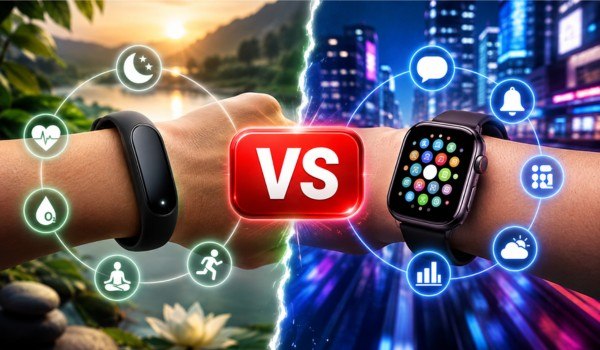
Hume Health Wristband vs Traditional Smartwatch
Hume Health Wristband vs Traditional Smartwatch
A traditional smartwatch attempts to combine fitness, productivity, communication, and entertainment. Hume Band takes a much narrower approach. Its main purpose is continuous physiological monitoring.
A smartwatch may be more appropriate if you want:
- Calls
- Messaging
- GPS maps
- Music
- Apps
- Notifications
- Payments
Hume may be more appropriate if you want:
- Recovery tracking
- Sleep monitoring
- HRV
- Metabolic trends
- Minimal distractions
- Long battery life
The better choice depends largely on how you want to use your wearable.
Hume Health Wristband vs Fitness Tracker
Traditional fitness trackers often emphasize daily activity goals. Common measurements include steps, calories, exercise minutes, distance, and workouts.
Hume still tracks movement, but its main focus is broader. The wristband is designed to help users understand how sleep, activity, strain, and recovery work together.
That may make it more attractive to people who care about overall wellness rather than simply reaching a daily step target.
Who Should Use Hume Health Wristband?
The Hume Health Wristband may be suitable for people who:
- Want continuous wellness tracking
- Want to monitor sleep patterns
- Are interested in HRV
- Want recovery information
- Prefer screen-free wearables
- Want long battery life
- Are interested in metabolic health trends
- Want to monitor personal health patterns
- Prefer fewer digital distractions
- Want basic data without a mandatory subscription
Who Should Consider Another Device?
A different wearable may be more appropriate for people who mainly need:
- Advanced GPS navigation
- Professional running analytics
- Cycling metrics
- On-screen workouts
- Messages
- Phone calls
- Music controls
- Mobile applications
- Medical-grade monitoring
Hume is best understood as a wellness tracker rather than an all-purpose smartwatch.
How to Use Hume Health Wristband
Step 1: Wear the Band Correctly
Position the sensor securely against your wrist. It should remain snug enough to maintain reliable contact without feeling uncomfortable.
Step 2: Connect the Hume Health App
Install the compatible mobile app and connect the Hume Band through Bluetooth. Complete your user profile so that the platform can begin building your baseline.
Step 3: Wear It Regularly
Wearing it consistently gives the system more information. Nighttime wear is particularly important for sleep and recovery measurements.
Step 4: Review Your Trends
Open the app regularly and look for repeated patterns rather than reacting to one unusual measurement.
Step 5: Compare Your Lifestyle With Your Data
Notice how your readings change after:
- Poor sleep
- Intense workouts
- Rest days
- Stress
- Alcohol
- Travel
- Late meals
- Consistent exercise
- Better sleep routines
This can make the wearable more useful as a lifestyle-awareness tool.
Can Hume Health Wristband Detect Health Problems?
The wristband may help users notice unusual changes in their personal wellness patterns. However, it should not be relied upon to diagnose disease.
A wearable may show that your resting heart rate has changed or your sleep patterns have become unusual, but it cannot determine the exact medical reason.
Anyone experiencing symptoms or consistently concerning measurements should contact a qualified healthcare professional. Wearable information can be useful for starting a conversation with your doctor, but it should not replace professional evaluation.
Can Hume Health Wristband Replace a Doctor?
No.
Hume Band can provide useful wellness information between healthcare appointments, but it cannot perform complete medical assessments.
Doctors consider medical history, symptoms, laboratory tests, physical examinations, imaging, medications, and many other factors when making clinical decisions.
A wristband only sees a small part of that larger picture. So the Hume Health Wristband works best as a supplementary wellness tool.
Hume Health Wristband Price
The Hume Band 2.0 is positioned as a premium health wearable. At the time of this review, the device is generally listed around the $249 price range, although promotions and discounts may change.
Users should check the current price before ordering, as wearable pricing can change over time. The company also provides access to the basic Hume Health app, while users can choose optional paid features for more advanced coaching or personalized recommendations.
Is Hume Health Wristband Worth It?
The Hume Health Wristband may be worth considering for users who want continuous wellness tracking without the distractions of a traditional smartwatch.
Its greatest strength is the way it brings multiple health-related measurements together.
Instead of focusing only on steps or workouts, Hume considers sleep, HRV, heart rate, recovery, activity, strain, temperature, and long-term wellness trends.
The screenless design is another important advantage for people who want technology to remain in the background. Long battery potential also makes the band practical for continuous use.
However, expectations should remain realistic. Hume Health Wristband is not a medical diagnostic device, and its proprietary scores should not be treated as clinical measurements.
Users looking for detailed GPS sports tracking, apps, messaging, or smartwatch functionality may find other wearables more suitable.
For people primarily interested in sleep, recovery, metabolic wellness, and long-term personal health patterns, Hume Band 2.0 offers an interesting alternative.
Frequently Asked Questions
What is the Hume Health Wristband?
The Hume Health Wristband is a screenless wearable wellness tracker that monitors heart rate, HRV, sleep, activity, recovery, blood oxygen, skin temperature, and related health trends.
Is Hume Health Wristband the same as Hume Band 2.0?
Yes. Hume Band 2.0 is the current wrist-worn health tracker offered by Hume Health.
Does Hume Band track sleep?
Yes. The device tracks sleep duration and estimates different stages such as light sleep, deep sleep, REM sleep, and awake periods.
Does Hume Band measure heart rate?
Yes. Continuous heart-rate monitoring is one of the main features of the device.
Does Hume Health Wristband track HRV?
Yes. It monitors heart rate variability and uses it as part of Hume’s broader recovery insights.
Does Hume Band measure oxygen levels?
Yes. The device tracks blood oxygen saturation trends through optical sensors.
Does Hume Band measure blood pressure?
Hume Band 2.0 offers blood-pressure-related insights, but wearable blood-pressure information should not replace validated medical blood-pressure equipment.
How long does the Hume Band battery last?
Hume promotes up to about 14 days of battery life, although real-world performance can vary depending on usage.
Is Hume Band waterproof?
The band has an IP68 water-resistance rating, making it suitable for common everyday water exposure under recommended conditions.
Does Hume Band require a monthly subscription?
You don’t need a subscription for access to basic Hume measurements. Optional Premium features are available for users who want deeper analysis and coaching.
Can I wear Hume Band while sleeping?
Yes. Nighttime wear is encouraged because sleep information contributes to recovery and long-term wellness measurements.
Can Hume Health Wristband diagnose a disease?
No. It should be considered a wellness and trend-tracking device, not a substitute for professional diagnosis.
Conclusion
The Hume Health Wristband offers a different approach to wearable technology by focusing less on smartphone features and more on continuous health and wellness information.
Hume Band 2.0 tracks heart rate, HRV, sleep, blood oxygen, skin temperature, activity, recovery, and strain while also providing proprietary measurements designed to simplify long-term wellness trends.
The screen-free format may appeal to users who already feel overwhelmed by constant notifications and digital distractions.
Its extended battery potential, sleep tracking, recovery analysis, and metabolic-health focus also make it an interesting option for people who want a deeper understanding of how everyday habits may affect their bodies.
At the same time, the device has sensible expectations. Measurements such as Biological Age, Metabolic Momentum, and Pace of Aging are wellness indicators, not definitive medical tests.
Overall, the Hume Health Wristband may be a worthwhile option for people who want a simple, continuous, recovery-focused wearable that makes personal wellness trends easier to understand in 2026.
Reference
https://en.wikipedia.org/wiki/Wearable_technology
https://www.webmd.com/fitness-exercise/compare-workout-trackers-devices
https://www.healthline.com/nutrition/best-fitness-tracker
https://mcpress.mayoclinic.org/living-well/benefits-of-a-smart-wearable-for-your-health/
About Us