Sermorelin is a peptide-based medication commonly used under medical supervision to support the body’s natural growth hormone production.
Because sermorelin is a delicate peptide compound, proper storage plays an important role in maintaining its stability, quality, and effectiveness.
One of the most common questions people have after receiving sermorelin is: does sermorelin need to be refrigerated?
The short answer is yes; in most cases, sermorelin should be stored in a refrigerator according to the instructions provided by the prescribing healthcare provider and dispensing pharmacy.
Unlike many traditional medications that can remain stable at room temperature, peptide medications may be more sensitive to temperature changes, light exposure, and improper handling.
Keeping sermorelin stored correctly helps protect the medication from degradation and ensures that each dose maintains the expected quality.
Understanding how to store sermorelin correctly can help prevent common mistakes, especially after the medication has been prepared for use.
Factors such as refrigeration temperature, storage location, travel conditions, and handling habits can all influence the stability of the medication.
This complete guide explains whether sermorelin needs refrigeration, how to store it properly, what happens if it is left out, and the best practices for protecting sermorelin quality.
Does Sermorelin Need to Be Refrigerated?
Yes, sermorelin generally needs to be refrigerated to help maintain its stability. Most sermorelin products are stored in a refrigerator at a controlled temperature recommended by the pharmacy or manufacturer.
Refrigeration helps slow down the natural breakdown process that can occur with peptide medications.
Since sermorelin is made of amino acid chains, exposure to excessive heat or unstable temperatures may affect the structure of the medication over time.
The recommended storage environment usually includes:
- A consistent refrigerator temperature
- Protection from direct light
- Keeping the medication in its original container
- Avoiding unnecessary temperature changes
- Following pharmacy-specific storage instructions
It is important to understand that storage instructions may vary depending on the specific formulation, preparation method, and pharmacy providing the medication.
Patients should always follow the instructions supplied with their prescription.
Proper refrigeration does not make sermorelin stronger or increase its effects. Instead, it helps preserve the medication as intended so that each dose remains consistent.
Why Does Sermorelin Require Refrigeration?
Sermorelin belongs to a category of medications known as peptides. Peptides are biological molecules made from connected amino acids, and many peptide-based medications are sensitive to environmental conditions.
Temperature is one of the biggest factors that can influence peptide stability.
When exposed to improper conditions, peptide medications may experience changes that can reduce their quality.
Heat exposure, repeated warming and cooling cycles, or improper storage may contribute to medication breakdown.
Refrigeration helps by:
➺ Maintaining Peptide Stability
Lower temperatures slow chemical processes that can affect peptide structure. This helps preserve sermorelin during storage before use.
➺ Supporting Medication Quality
Proper storage helps ensure that the medication remains within expected quality standards throughout its intended use period.
➺ Preventing Unnecessary Degradation
Heat and environmental stress may affect delicate compounds. Refrigeration reduces exposure to conditions that could negatively impact stability.
➺ Protecting the Medication Between Doses
Since sermorelin is typically used over an extended period, consistent storage habits help maintain medication quality from the first dose to the last.
Proper storage is an important part of responsible medication handling. Even when a medication is prescribed correctly, improper storage can affect how well it performs.
What Is Sermorelin?
Sermorelin is a synthetic peptide that works by stimulating the body’s natural production and release of growth hormone. It is designed to mimic a naturally occurring hormone called growth hormone-releasing hormone (GHRH).
The body naturally produces GHRH in the hypothalamus, which signals the pituitary gland to release growth hormone. Sermorelin follows a similar pathway by supporting this natural signaling process.
Growth hormone is involved in several important biological functions, including:
- Supporting muscle maintenance
- Helping with tissue repair processes
- Influencing metabolism
- Supporting normal growth and development
As people age, natural growth hormone levels may decline. Some individuals explore sermorelin under medical guidance as part of a hormone-related treatment approach.
Because sermorelin is a peptide medication, maintaining proper storage conditions is an essential part of preserving its quality.
A medication’s effectiveness depends on several factors, including appropriate medical evaluation, correct dosing, proper administration, and correct storage.
How Should Sermorelin Be Stored Before Use?
Before sermorelin is prepared for administration, storage requirements are usually different from after it has been mixed.
Unmixed sermorelin should typically be:
- Stored in a refrigerator
- Kept away from direct sunlight
- Protected from moisture
- Left inside its original packaging
- Handled carefully to prevent contamination
The refrigerator should maintain a stable temperature. Avoid placing sermorelin in areas where temperature changes frequently, such as the refrigerator door.
The refrigerator door is often exposed to repeated temperature fluctuations because it opens and closes frequently throughout the day. A more stable area inside the refrigerator is usually preferred.
It is also important not to place sermorelin directly next to the freezer section or against extremely cold surfaces. Excessive cold conditions may affect some medications.
Always check the specific instructions provided with your prescription because storage requirements can depend on the exact medication preparation.
How Should Sermorelin Be Stored After Reconstitution?
Reconstitution means adding a specific liquid solution to a medication powder to prepare it for use.
After sermorelin has been mixed, storage becomes even more important because the medication may become more sensitive once prepared.
General storage practices after reconstitution include:
➢ Keep It Refrigerated
Prepared sermorelin is usually stored in a refrigerator to maintain stability.
➢ Avoid Temperature Changes
Repeated cycles of warming and cooling may affect medication quality. Remove the medication only when needed and return it promptly after use.
➢ Protect From Light
Many peptide medications should be protected from unnecessary light exposure. Keeping the vial inside its original packaging or a protected storage area can help.
➢ Handle Carefully
Avoid shaking peptide medications aggressively unless specifically instructed. Some medications may be sensitive to physical stress.
➢ Use Within the Recommended Timeframe
Reconstituted medications often have a limited storage period. The pharmacy or healthcare provider should provide guidance on how long the prepared medication remains suitable for use.
Following these practices helps maintain medication quality and reduces the chance of accidental damage.
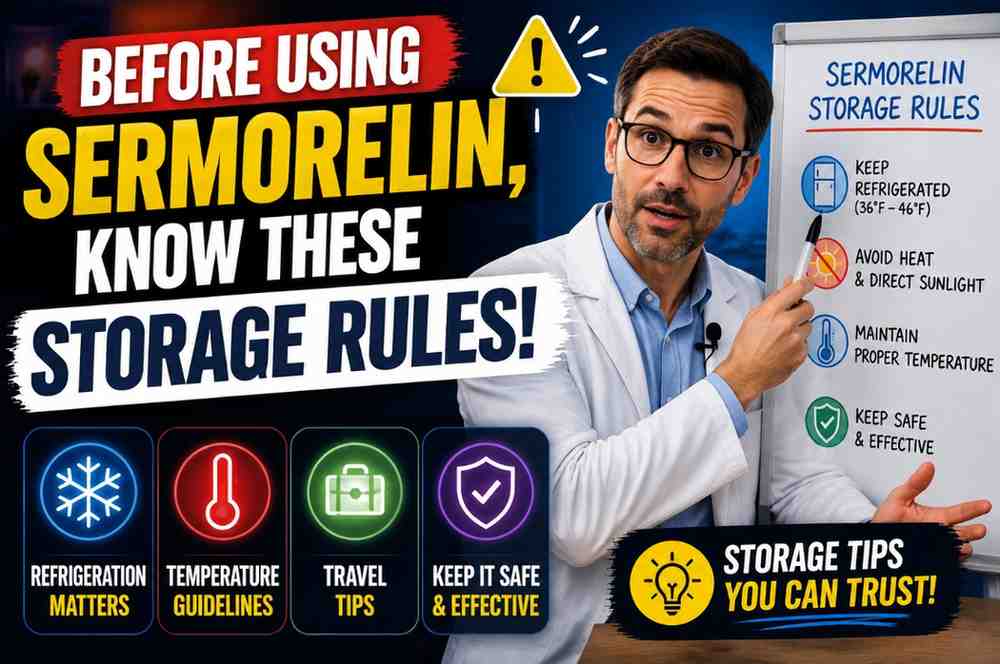
What Temperature Should Sermorelin Be Stored At?
Sermorelin is generally stored under refrigerated conditions, commonly within a standard refrigerator temperature range recommended for medications.
The ideal storage temperature is usually:
Approximately 36°F to 46°F (2°C to 8°C)
However, patients should always follow the exact storage instructions provided with their prescription.
A few important temperature-related tips include:
- Do not store sermorelin in the freezer unless specifically instructed.
- Avoid leaving it near heat sources.
- Do not place it in direct sunlight.
- Avoid storing it in a car.
- Keep it away from areas with frequent temperature changes.
A consistent temperature environment is more important than occasional brief changes. The goal is to minimize exposure to conditions that may affect medication stability.
Where Is the Best Place to Store Sermorelin in a Refrigerator?
Choosing the right refrigerator location can help maintain stable conditions.
The best storage area is usually:
- Inside a refrigerator compartment
- Away from the freezer section
- Away from the refrigerator door
- In a clean, protected area
Avoid storing sermorelin:
- In the refrigerator door shelves
- Near food containers that may cause spills
- In areas exposed to frequent movement
- Near freezing surfaces
Some people use a small medication storage container inside the refrigerator to keep the vial protected and organized.
This can also help prevent accidental damage or confusion with other household items.
What Happens If Sermorelin Is Left Out of the Refrigerator?
One of the most common concerns people have is what happens if they accidentally leave Sermorelin outside the refrigerator.
The effect of being left out depends on several factors, including:
- How long it was exposed to room temperature
- The surrounding temperature
- Whether the medication was mixed or unmixed
- The storage instructions provided by the pharmacy
A brief period outside refrigeration may not always mean the medication is unusable. However, extended exposure to warmer temperatures can increase the risk of medication degradation.
If sermorelin has been accidentally left out:
- Return it to proper refrigerated storage as soon as possible.
- Avoid using it until you confirm it is still suitable.
- Contact your prescribing provider or pharmacy for guidance if you are unsure.
Do not assume the medication is safe or effective based only on appearance. Peptide medications may not show visible changes even when their stability has been affected.
If the medication has been exposed to high temperatures, direct sunlight, or improper conditions for an extended period, professional advice should be obtained before continuing use.
Can Sermorelin Be Stored at Room Temperature?
Sermorelin is generally not intended for long-term storage at room temperature.
Room temperature conditions can vary significantly depending on the environment. A medication stored in a cool indoor room may experience very different conditions compared with medication left in a hot vehicle or near a window.
Factors that can affect room temperature storage include:
- Seasonal temperature changes
- Indoor heating or cooling
- Sunlight exposure
- Humidity levels
- Length of exposure
While some medications may tolerate short periods outside refrigeration, sermorelin should generally be returned to refrigerated conditions promptly after handling.
Following the pharmacy’s storage instructions is the safest approach because different formulations may have specific requirements.
Can Sermorelin Be Frozen?
In most cases, sermorelin should not be frozen unless specifically instructed by the medication provider or manufacturer.
Freezing may create problems for certain peptide medications because ice crystal formation can potentially affect the structure of delicate molecules.
Repeated freezing and thawing cycles may be especially concerning because temperature changes can place additional stress on the medication.
Avoid:
- Placing sermorelin directly in the freezer
- Storing it against frozen items
- Allowing accidental freezing during travel
- Using medication that has been frozen without professional guidance
If sermorelin accidentally freezes, contact the dispensing pharmacy or healthcare provider before using it.
They can provide guidance based on the specific product and storage history.
How to Travel With Sermorelin
Traveling with sermorelin requires planning because maintaining proper storage conditions can become more challenging outside the home.
Whether traveling by car or airplane, the goal is to avoid extreme temperatures and unnecessary exposure.
Travel Storage Tips
➢ Use an Insulated Medical Cooler
A small insulated medication cooler can help maintain a stable temperature during transportation.
Avoid placing medication directly against ice packs because extreme cold may create freezing risks.
➢ Keep Medication Protected
Store sermorelin in its original container whenever possible. This helps protect labeling information and reduces handling errors.
➢ Avoid Hot Environments
Do not leave sermorelin inside:
- A parked vehicle
- Direct sunlight
- Hot luggage compartments
- Outdoor areas with high temperatures
Cars can reach unsafe temperatures quickly, even when outside temperatures seem moderate.
➢ Plan for Longer Trips
For extended travel, speak with your pharmacy or healthcare provider about recommended storage options.
Planning before travel helps reduce the chance of accidental temperature exposure.
Common Sermorelin Storage Mistakes to Avoid
Many storage problems happen because of simple mistakes. Understanding these common errors can help protect medication quality.
➢ Storing Sermorelin in the Refrigerator Door
The refrigerator door experiences frequent temperature changes. Each opening and closing cycle can create fluctuations that may not be ideal for sensitive medications.
A stable interior refrigerator area is generally preferred.
➢ Leaving Sermorelin Near Heat Sources
Avoid storing medication near:
- Kitchen appliances
- Heating vents
- Windows with direct sunlight
- Warm areas of the home
Heat exposure can affect medication stability.
➢ Forgetting to Return It After Use
After preparing a dose, some people accidentally leave the medication outside longer than intended.
Creating a consistent routine can help prevent this mistake.
➢ Exposing It to Direct Light
Light exposure may affect certain medications. Keeping sermorelin protected from unnecessary light helps maintain proper storage conditions.
➢ Shaking the Medication Incorrectly
Some peptide medications require gentle handling. Avoid unnecessary shaking unless specifically directed.
➢ Ignoring Pharmacy Instructions
The pharmacy provides storage instructions based on the specific medication preparation. Those directions should always be followed.
Signs Sermorelin May Have Been Stored Improperly
Sermorelin may not always show visible signs of damage after improper storage. However, some possible indicators include:
- Unexpected changes in appearance
- Cloudiness when it should be clear
- Visible particles
- Unusual discoloration
- Damage to the container
If you notice anything unusual, do not use the medication until you receive guidance from a qualified healthcare professional.
It is important to remember that appearance alone cannot confirm whether a medication remains effective.
When in doubt, the safest option is to contact the dispensing pharmacy.
How to Protect Sermorelin Quality Long Term
Proper storage habits can help maintain sermorelin quality throughout the treatment period.
Here are practical steps:
➢ Maintain a Consistent Storage Routine
Store sermorelin in the same refrigerator location each time. A consistent routine reduces accidental mistakes.
➢ Check Refrigerator Conditions
Make sure your refrigerator maintains a stable temperature. Avoid areas where freezing may occur.
➢ Keep Medication Organized
Using a dedicated storage container can help prevent confusion and protect the medication from accidental damage.
➢ Follow Expiration Dates
Always check the expiration date provided by the pharmacy. Do not use medication beyond the recommended timeframe.
➢ Handle With Clean Hands
Before handling medication containers, wash your hands properly. Clean handling practices help maintain medication safety.
Why Proper Sermorelin Storage Matters for Treatment Success
Medication storage is one part of a larger process that influences treatment quality.
Sermorelin treatment outcomes depend on multiple factors, including:
- Appropriate medical evaluation
- Correct dosing instructions
- Consistent use
- Healthy lifestyle habits
- Proper medication handling
Refrigeration does not increase the strength of sermorelin. Instead, it helps preserve the medication so it remains within expected quality standards.
A carefully stored medication allows patients and providers to maintain confidence in the treatment process.
Expert Tips for Storing Sermorelin Correctly
For easier daily management, follow these simple reminders:
✓ Keep sermorelin refrigerated according to instructions
✓ Store it away from direct light
✓ Avoid freezing the medication
✓ Keep it away from refrigerator temperature fluctuations
✓ Return it to storage promptly after use
✓ Do not use medication with unusual appearance
✓ Ask your pharmacy when uncertain
These habits can help protect sermorelin and support safe medication handling.

Final Thoughts: Does Sermorelin Need to Be Refrigerated?
Yes, sermorelin generally needs to be refrigerated to maintain stability and protect medication quality. Because sermorelin is a peptide-based medication, proper temperature control is an important part of responsible storage.
Keeping sermorelin in a refrigerator, protecting it from heat and light, avoiding freezing, and following pharmacy instructions can help maintain its intended quality throughout use.
Small storage habits can make a significant difference. Avoid common mistakes such as leaving sermorelin in hot areas, storing it in unstable refrigerator locations, or exposing it to unnecessary temperature changes.
Anyone using sermorelin should follow the specific instructions provided by their healthcare provider and dispensing pharmacy. Storage recommendations may vary depending on the formulation and preparation method.
When handled correctly, proper refrigeration helps ensure that sermorelin remains stored under conditions designed to preserve its quality and support a consistent treatment experience.
References
.
About Us