
Gelatin has been used for generations as a versatile ingredient in cooking, food manufacturing, and traditional wellness practices.
In recent years, interest in gelatin has increased because of its connection to collagen, a structural protein that plays an important role in the body’s connective tissues, skin, bones, and joints.
As more people explore collagen-based nutrition, one common question appears: Horse gelatin vs beef gelatin — which one is better?
Both horse gelatin and beef gelatin are derived from collagen-rich animal tissues. They contain similar collagen-related amino acids, including glycine, proline, and hydroxyproline, which are naturally involved in maintaining connective tissue structure.
However, these two types of gelatin differ in their animal source, availability, production methods, cultural acceptance, and common uses.
Beef gelatin is the more widely available option and is commonly used in cooking, food products, and collagen-based products. Horse gelatin, on the other hand, is a less common type of gelatin that is used in specific regions and applications.
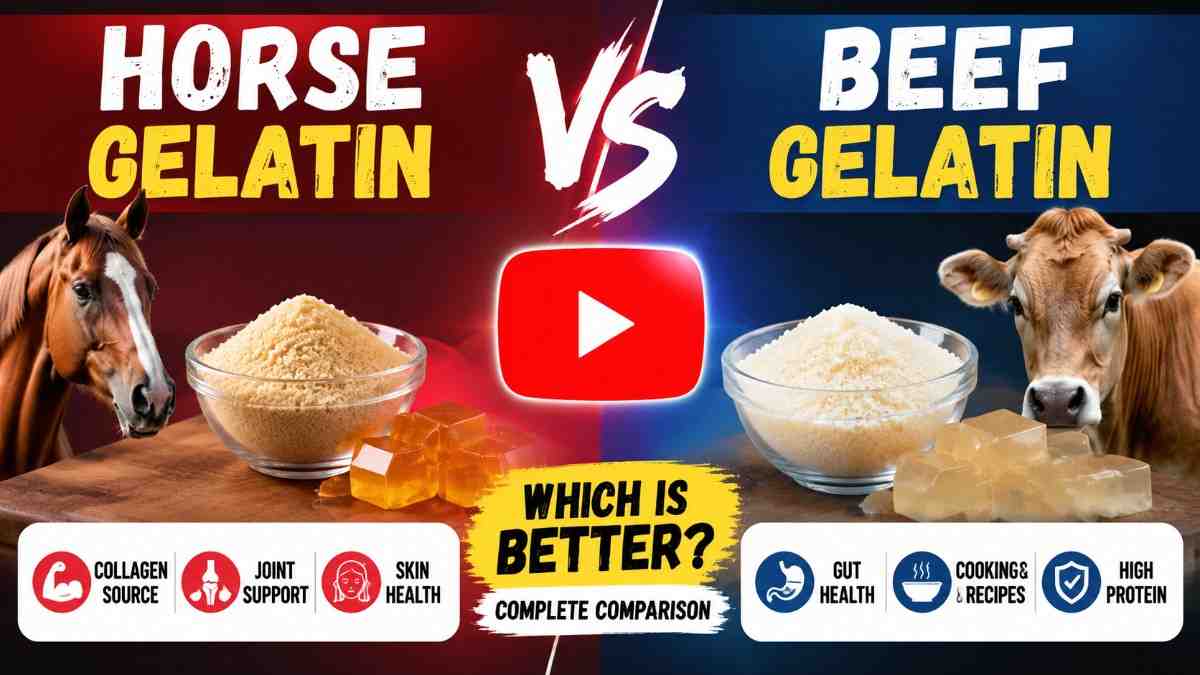

This detailed comparison explains the differences between horse gelatin vs beef gelatin, including their sources, nutritional similarities, potential benefits, uses, safety considerations, and which option may be more suitable for different people.
Horse Gelatin vs Beef Gelatin: Quick Comparison
| Category | Horse Gelatin | Beef Gelatin |
| Source | Derived from horse collagen | Derived from bovine (cattle) collagen |
| Availability | Less common and specialized | Widely available worldwide |
| Main Protein Type | Collagen-derived protein | Collagen-derived protein |
| Key Amino Acids | Glycine, proline, hydroxyproline | Glycine, proline, hydroxyproline |
| Common Uses | Specialty food, research, and industrial applications | Cooking, food products, collagen-based products |
| Consumer Popularity | Limited compared with other gelatin sources | One of the most commonly used gelatin types |
| Accessibility | Harder to find in many markets | Easy to purchase from many retailers |
| Preference | Chosen based on specific needs or cultural preferences | Preferred for convenience and availability |
What Is Gelatin?
Gelatin is a protein-rich substance created from collagen, which is naturally found in animal connective tissues such as skin, bones, cartilage, and ligaments.
During gelatin production, collagen is processed through controlled heating and extraction methods.
This process breaks down collagen’s complex structure and transforms it into a substance that can dissolve in warm liquids and form a gel when cooled.
The unique texture of gelatin comes from its ability to create a flexible protein network. This property makes gelatin valuable in cooking, where it is commonly used to create:
- Jellies and desserts
- Gummies
- Thickened foods
- Culinary recipes
- Food manufacturing products
Beyond its culinary uses, gelatin has gained attention because it provides collagen-derived amino acids. Unlike many complete protein sources, gelatin has a unique amino acid profile that is especially rich in glycine, proline, and hydroxyproline.
These amino acids are important because collagen is one of the primary structural proteins found throughout the human body. Research has examined the role of collagen-derived proteins in areas such as connective tissue maintenance, skin structure, and joint health.
However, gelatin should not be viewed as a replacement for a balanced diet. It is best considered one nutritional source that may complement overall healthy eating habits.
What Is Horse Gelatin?
Horse gelatin is a type of gelatin produced from collagen obtained from horses. Like other forms of gelatin, it is created by extracting collagen from animal tissues and processing it into a usable protein ingredient.
Horse gelatin has been used historically in certain regions and industries. While it is not as common as beef gelatin, it may be selected for specific cultural, manufacturing, or personal reasons.
The production process of horse gelatin follows the same general concept as other gelatin sources:
- Collagen-rich tissues are collected.
- The collagen structure is processed and extracted.
- The extracted material is converted into gelatin.
- The gelatin is dried and prepared for use.
Horse gelatin contains collagen-associated amino acids similar to other gelatin sources, including:
- Glycine
- Proline
- Hydroxyproline
These amino acids contribute to the unique structure of collagen proteins.
Some reasons people may choose horse gelatin include:
- Preference for horse-derived products
- Availability in specific regions
- Interest in alternative gelatin sources
- Specific manufacturing requirements
However, horse gelatin is less commonly available compared with beef gelatin. Consumers may need to search for specialized suppliers and should consider factors such as sourcing transparency and production quality before purchasing.
What Is Beef Gelatin?
Beef gelatin, also called bovine gelatin, is gelatin produced from cattle-derived collagen.
It is one of the most commonly available gelatin types worldwide and is frequently used in food products, recipes, and collagen-related products.
Beef gelatin is typically produced from collagen-rich parts of cattle, including:
- Skin
- Bones
- Connective tissues
Because cattle farming and processing industries are widespread globally, beef gelatin has become a popular choice among consumers.
Many people choose beef gelatin because it offers:
- Easy availability
- Wide product selection
- Familiar sourcing
- Versatility in cooking
- Established manufacturing practices
Beef gelatin is commonly found in powdered form and can be added to foods, beverages, and recipes.
Like horse gelatin, beef gelatin provides collagen-derived amino acids. Its popularity is mainly due to accessibility rather than major nutritional differences.
For many consumers, beef gelatin represents the most practical option because it is affordable, easy to find, and suitable for many everyday uses.
Horse Gelatin vs Beef Gelatin: Are They Nutritionally Different?
One of the biggest questions people ask is whether horse gelatin provides better nutrition compared with beef gelatin.
The answer is that both types share many nutritional similarities because they are both derived from collagen.
Both contain:
➢ Glycine
Glycine is one of the most abundant amino acids found in collagen. It contributes to collagen structure and is involved in many biological processes throughout the body.
➢ Proline
Proline is another important collagen-related amino acid that helps maintain the structure and stability of collagen proteins.
➢ Hydroxyproline
Hydroxyproline is a unique amino acid commonly associated with collagen and helps provide collagen with its strength and stability.
Because both horse gelatin and beef gelatin originate from collagen, their overall nutritional characteristics are often comparable.
The exact nutritional profile can vary depending on:
- The animal tissue used
- Extraction techniques
- Manufacturing methods
- Processing conditions
Therefore, it is not accurate to say that horse gelatin is automatically healthier than beef gelatin or that beef gelatin is always superior.
The quality of the product, sourcing practices, and how it fits into an individual’s dietary needs are often more important factors.
Horse Gelatin vs Beef Gelatin: Benefits Comparison
Both horse gelatin and beef gelatin provide collagen-derived proteins that contain amino acids associated with connective tissue structure.
While gelatin is not a medicine or a replacement for medical treatment, it is often included in diets because of its nutritional properties and versatility.
The potential benefits of gelatin are mainly connected to its collagen-derived amino acids, protein content, and ability to support overall nutritional needs.
1. Support for Skin Health
Collagen is one of the most important structural proteins found in the skin. It helps provide strength, firmness, and structure to skin tissue.
As people age, natural collagen production gradually decreases, which is one reason collagen-based foods and products have become increasingly popular.
Both horse gelatin and beef gelatin provide amino acids that are naturally found in collagen, including glycine, proline, and hydroxyproline.
These amino acids contribute to the formation and maintenance of collagen structures in the body.
However, there is no strong evidence that horse gelatin provides greater skin benefits compared with beef gelatin. The potential effects are more related to the collagen content and overall dietary pattern rather than the specific animal source.
For individuals interested in gelatin for skin-related nutritional support, either option may provide similar collagen-derived nutrients when used as part of a balanced diet.
2. Joint and Connective Tissue Support
Gelatin has traditionally been associated with joint health because collagen is a major component of cartilage, tendons, and ligaments.
Connective tissues require collagen to maintain their structure and flexibility. Providing collagen-derived amino acids through foods such as gelatin may support the body’s natural collagen-building processes.
Both horse gelatin and beef gelatin contain similar collagen-related amino acids that may contribute to connective tissue nutrition.
However, gelatin should not be considered a treatment for joint conditions. People experiencing persistent joint pain or mobility concerns should consult a healthcare professional for proper evaluation.
For general nutritional support, the choice between horse and beef gelatin often comes down to factors such as:
- Availability
- Personal preference
- Product quality
- Dietary choices
3. Protein Support
Gelatin is a concentrated source of protein, making it useful for people who want to increase their protein intake.
Both horse gelatin and beef gelatin provide protein derived from collagen.
However, gelatin is not considered a complete protein because it does not contain all essential amino acids in the amounts needed to fully replace other protein sources.
For this reason, gelatin is best used alongside a varied diet that includes other protein-rich foods.
People may use gelatin in:
- Smoothies
- Soups
- Drinks
- Desserts
- Cooking recipes
The protein content of gelatin can contribute to overall daily nutrition, but it should complement rather than replace other protein sources.
4. Digestive Health Considerations
Gelatin has traditionally been included in many diets because of its gentle texture and easy use in foods.
The amino acid glycine found in gelatin plays several roles in the body, including supporting normal biological processes related to proteins and tissues.
Some people include gelatin as part of a balanced eating approach because it is easy to digest and can be added to various meals.
Both horse gelatin and beef gelatin provide similar collagen-derived nutrients, meaning there is no clear evidence that one type offers superior digestive benefits.
Individual tolerance may vary depending on personal dietary habits and overall health.
5. Culinary Uses and Texture Differences
One of the biggest practical differences between horse gelatin and beef gelatin is how commonly they are used in food preparation.
Beef Gelatin in Cooking
Beef gelatin is widely used in:
- Homemade desserts
- Gummies
- Thickened recipes
- Baking applications
- Protein recipes
Because it is easy to find, many home cooks prefer beef gelatin for everyday use.

Horse Gelatin in Cooking
Horse gelatin may have specialized uses but is much less common in household cooking.
Its availability depends heavily on location and supplier options.
The texture and setting ability of gelatin can vary based on:
- Processing methods
- Gel strength
- Purity
- Manufacturing techniques
Therefore, the final cooking performance may depend more on the quality of the gelatin product rather than whether it comes from horses or cattle.
Horse Gelatin vs Beef Gelatin: Which One Is Better for Collagen Support?
When comparing horse gelatin vs beef gelatin for collagen support, neither option is automatically better.
Both provide:
- Collagen-derived protein
- Glycine
- Proline
- Hydroxyproline
The body uses amino acids from dietary proteins in many different ways, including supporting the creation and maintenance of tissues.
The better choice depends on individual priorities.
Horse Gelatin May Be Preferred By People Who:
- Specifically want horse-derived gelatin
- Have access to a trusted horse gelatin supplier
- Prefer alternative animal sources
Beef Gelatin May Be Preferred By People Who:
- Want a widely available product
- Prefer a more common gelatin source
- Need a convenient option for cooking
- Want more purchasing choices
For most consumers, beef gelatin is usually the easier option because it is more widely produced and available.
Horse Gelatin vs Beef Gelatin: Taste and Flavor Differences
Gelatin itself generally has a mild flavor, especially when used in small amounts or mixed with other ingredients.
However, subtle differences may exist depending on:
- Animal source
- Processing quality
- Purification methods
High-quality gelatin products are typically designed to have minimal taste and odor.
In most recipes, differences between horse gelatin and beef gelatin may not be noticeable because gelatin is often combined with:
- Fruits
- Flavors
- Spices
- Other ingredients
For culinary purposes, texture and setting ability are often more important than flavor differences.
Safety Considerations for Horse Gelatin and Beef Gelatin
Both horse gelatin and beef gelatin are generally considered safe food ingredients when produced according to appropriate quality and safety standards.
However, consumers should consider several factors before choosing a gelatin product.
1. Product Quality
The quality of gelatin depends on:
- Manufacturing practices
- Source transparency
- Storage conditions
- Processing standards
Choosing products from reputable manufacturers can help ensure better quality.
2. Allergies and Sensitivities
Although uncommon, some individuals may experience sensitivity to gelatin products.
Anyone who experiences unusual reactions after consuming gelatin should stop use and consult a healthcare professional.
3. Dietary Preferences
Animal-derived products may not fit every person’s dietary choices.
Consumers should consider:
- Personal beliefs
- Cultural preferences
- Dietary restrictions
The source of gelatin is often the most important deciding factor for many people.
Are There Any Side Effects of Horse Gelatin or Beef Gelatin?
Most people tolerate gelatin well when consumed as part of a normal diet.
However, some individuals may experience mild digestive discomfort depending on their sensitivity and the amount consumed.
Possible concerns may include:
- Bloating
- Digestive discomfort
- Sensitivity reactions in rare cases
Using gelatin appropriately and choosing quality products can help reduce potential concerns.
People with specific medical conditions or dietary concerns should speak with a healthcare provider before making significant changes to their diet.
Horse Gelatin vs Beef Gelatin: Which Is Better for You?
The answer depends on your personal goals and preferences.
Choose Horse Gelatin If:
- You specifically prefer horse-derived gelatin
- It matches your personal or cultural preferences
- You have access to a reliable source
Choose Beef Gelatin If:
- You want easier availability
- You need a versatile cooking ingredient
- You prefer a widely used gelatin option
- You want more product choices
For most people, beef gelatin is likely the more practical choice because it is easier to purchase and has a long history of use in food applications.
However, horse gelatin can still be a suitable option for individuals who specifically prefer it.
How to Choose Between Horse Gelatin and Beef Gelatin
Choosing between horse gelatin vs beef gelatin depends on more than just nutritional differences.
Since both are collagen-derived products with similar amino acid profiles, the right choice usually comes down to your personal needs, preferences, and how you plan to use gelatin.
Before purchasing any gelatin product, consider the following factors:
1. Check the Source and Quality
The quality of gelatin depends greatly on where it comes from and how it is processed.
A high-quality gelatin product should provide clear information about:
- Animal source
- Manufacturing practices
- Processing standards
- Ingredient purity
Transparent sourcing helps consumers understand what they are purchasing and allows them to choose a product that matches their preferences.
2. Consider Your Purpose
The best gelatin choice may depend on how you plan to use it.
For Cooking
If you are looking for gelatin for everyday recipes, beef gelatin is usually easier to find and offers more product options.
It can be used in:
- Desserts
- Homemade gummies
- Soups
- Sauces
- Protein recipes
For Collagen Support
Both horse gelatin and beef gelatin provide collagen-derived amino acids.
Instead of focusing only on the animal source, consider:
- Product quality
- Regular dietary habits
- Overall nutrition
- Personal preference
For Specific Dietary Preferences
Some individuals may choose horse gelatin because they specifically prefer horse-derived products, while others may choose beef gelatin because it is more familiar and widely accepted.
Horse Gelatin vs Beef Gelatin: Which One Has Better Quality?
Quality is often a more important factor than the animal source itself.
A well-produced gelatin product from either horses or cattle can provide collagen-derived nutrients.
Factors that influence gelatin quality include:
- Purity
- Processing methods
- Manufacturing standards
- Storage conditions
- Source transparency
A premium beef gelatin product may be a better choice than a low-quality horse gelatin product, and the opposite may also be true.
Consumers should focus on choosing reputable products rather than assuming one animal source is always superior.

Can You Substitute Horse Gelatin for Beef Gelatin?
In many cases, horse gelatin and beef gelatin can be used similarly in recipes.
Both have similar functions, including:
- Thickening liquids
- Creating gel textures
- Adding protein content
However, the exact performance can depend on:
- Gel strength
- Brand formulation
- Processing method
- Recipe requirements
When substituting one type of gelatin for another, it may be helpful to follow the manufacturer’s recommendations for best results.
Horse Gelatin vs Beef Gelatin for Gummies
Gelatin is commonly used to create homemade and commercial gummies because of its ability to produce a firm but flexible texture.
Both horse gelatin and beef gelatin can potentially be used for gummy recipes.
The final texture depends on:
- Gelatin concentration
- Liquid ratio
- Preparation method
- Additional ingredients
Beef gelatin is generally preferred for gummies because it is easier to find and available in many culinary formats.
Horse gelatin may work similarly but is less commonly used by home consumers.
Horse Gelatin vs Beef Gelatin for Weight Management
Some people include gelatin in their diet while working toward healthy weight goals because it provides protein and may help add nutritional value to meals.
However, gelatin itself is not a weight-loss product.
Successful weight management generally depends on:
- Balanced nutrition
- Regular physical activity
- Healthy lifestyle habits
- Appropriate calorie intake
Whether someone chooses horse gelatin or beef gelatin is unlikely to make a major difference in weight-related outcomes.
The choice should be based on personal preference and how the product fits into an overall healthy eating pattern.
Final Verdict: Horse Gelatin vs Beef Gelatin — Which One Should You Choose?
When comparing horse gelatin vs beef gelatin, both options provide collagen-derived protein and similar amino acids that are naturally associated with collagen structure.
The main difference is not necessarily nutritional superiority but rather the source, availability, and consumer preference.
Beef gelatin is the better choice for most people because it is easier to find, more affordable, widely used, and suitable for many cooking applications.
Horse gelatin may be a suitable option for individuals who specifically prefer horse-derived products or have access to a trusted supplier.
Neither type of gelatin should be considered a miracle ingredient. Instead, gelatin can be viewed as a convenient source of collagen-related amino acids that may complement a balanced diet and healthy lifestyle.
When choosing between horse gelatin and beef gelatin, focus on:
- Quality of the product
- Reliable sourcing
- Personal dietary preferences
- Intended use
For everyday use, cooking, and accessibility, beef gelatin is usually the most practical option. However, horse gelatin remains a valid alternative for those who specifically seek it.
Conclusion
The debate between horse gelatin vs beef gelatin often comes down to personal choice rather than one option being clearly better than the other.
Both types of gelatin are created from collagen-rich animal tissues and contain important collagen-related amino acids such as glycine, proline, and hydroxyproline.
These nutrients make gelatin a popular ingredient among people interested in supporting overall nutrition, connective tissue health, and collagen intake.
Beef gelatin remains the most common choice because of its availability, affordability, and versatility in cooking. It is easy to find and can be used in many everyday recipes.
Horse gelatin, while less common, may appeal to individuals who prefer an alternative gelatin source or have specific personal reasons for choosing it.
The most important factors when selecting gelatin are product quality, sourcing transparency, and how well it fits your individual lifestyle.
Ultimately, both horse gelatin and beef gelatin can be useful collagen-based ingredients. The best option is the one that aligns with your dietary preferences, availability, and personal goals.
References
.
About Us
