
What Happens in the Brain During Vascular Dementia? Guide
What Happens in the Brain During Vascular Dementia?
Introduction
Vascular dementia is one of the most important and complex causes of cognitive decline in older adults. Unlike conditions that primarily damage brain cells gradually, vascular dementia happens.
When blood flow to the brain is disrupted, leading to oxygen and nutrient deprivation in brain tissue. Over time, this lack of circulation causes brain cells to weaken, malfunction, and eventually die.
Understanding what happens inside the brain during vascular dementia is essential because it explains why symptoms such as memory loss, confusion, slowed thinking, and difficulty with planning often appear suddenly or in stages.
In many cases, vascular dementia is closely linked with strokes or “mini-strokes,” making it a condition that directly reflects underlying blood vessel health.
This article explores the biological and neurological changes in the brain that occur in vascular dementia, helping you understand how and why cognitive decline develops.
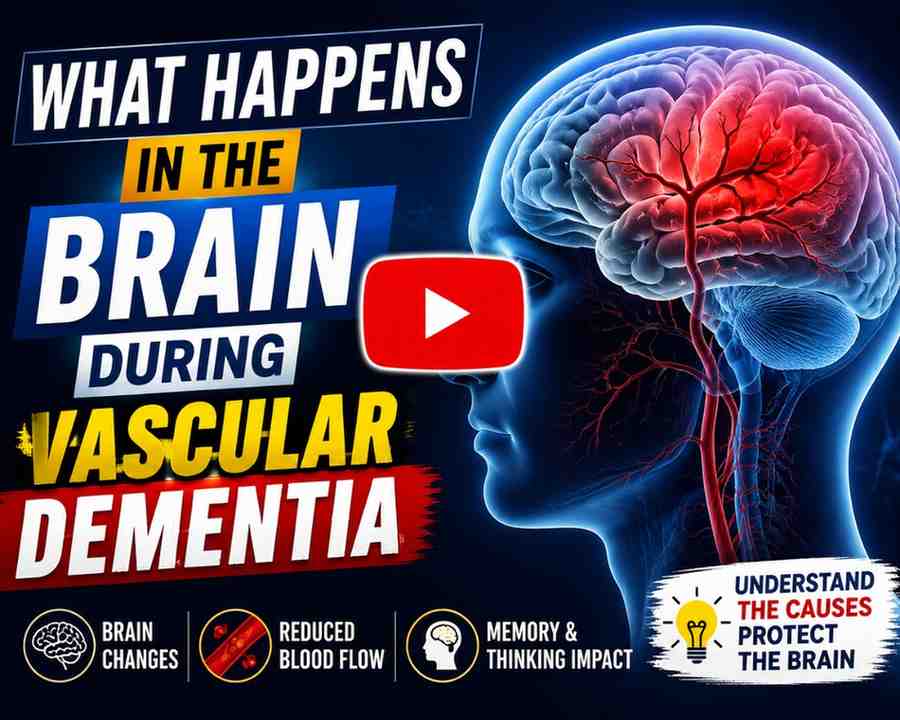

How Does Blood Flow Keep the Brain Healthy?
The brain is one of the most energy-demanding organs in the body. Even though it makes up only a small portion of body weight, it requires a continuous, rich supply of oxygen and glucose carried by the blood.
Healthy blood flow supports:
- Communication between neurons
- Energy production for thinking and memory
- Removal of waste products
- Stability of brain networks responsible for behavior and emotion
When blood vessels are healthy, the brain functions smoothly. But when those vessels are damaged or blocked, the brain begins to lose its ability to function normally. This is the foundation of vascular dementia.
The Core Problem: Interrupted Blood Flow in the Brain
At the heart of vascular dementia is a simple but damaging process: reduced or blocked blood flow (cerebral ischemia).
This interruption can happen in several ways:
- A blood clot blocks a vessel (ischemic stroke)
- A blood vessel ruptures (hemorrhagic stroke)
- Small vessels become narrowed over time (small vessel disease)
- Repeated “silent strokes” gradually accumulate damage
When blood flow drops, brain cells are deprived of oxygen. Without oxygen, neurons cannot generate energy, and they begin to malfunction within minutes. If the lack of oxygen continues, brain cells die permanently.
This damage is often not limited to one area. Instead, it may appear in multiple scattered regions of the brain, especially in areas responsible for thinking, memory, and planning.
How do strokes trigger brain damage?
Many cases of vascular dementia begin after a stroke. A stroke acts like a sudden interruption in the brain’s supply system.
When a stroke occurs:
- Blood flow to a specific brain region stops suddenly
- Brain cells in that region lose oxygen and nutrients
- Cells become damaged or die
- The affected brain area loses function
Depending on the location of the stroke, different abilities may be affected. For example:
- Frontal lobe damage → poor planning and decision-making
- Temporal lobe damage → memory problems
- Parietal lobe damage → difficulty processing information
Unlike some other forms of dementia, vascular dementia may appear suddenly after a stroke or gradually after multiple small strokes.
Small Vessel Disease: The Silent Brain Damage
Not all vascular dementia is caused by large strokes. In many people, the problem develops slowly through small vessel disease.
Small blood vessels deep inside the brain become:
- Narrowed
- Thickened
- Weak
- Partially blocked
This process reduces steady blood flow to white matter regions of the brain.
White matter is crucial because it acts like the brain’s communication network. It connects different brain regions and allows them to work together efficiently.
When these small vessels are damaged:
- Brain communication slows down
- Signals between regions become weak or delayed
- Cognitive processing becomes inefficient
This leads to gradual symptoms such as slower thinking, reduced attention, and difficulty organizing tasks.
Brain Changes in Vascular Dementia
| Brain Area / Structure | What Happens | Resulting Symptoms |
|---|---|---|
| Frontal Lobe | Reduced blood flow and neuron damage | Poor judgment, planning issues |
| White Matter | Loss of nerve fiber integrity | Slower thinking, poor coordination |
| Hippocampus | Indirect oxygen reduction | Memory difficulty |
| Small Blood Vessels | Narrowing and blockage | Silent strokes, gradual decline |
| Cortex Regions | Patchy oxygen deprivation | Confusion, cognitive gaps |
White Matter Damage and Disrupted Brain Networks
One of the most important brain changes in vascular dementia is white matter damage (leukoaraiosis).
White matter contains nerve fibers covered in myelin, which allows electrical signals to travel quickly. When blood flow is reduced:
- Myelin becomes damaged
- Nerve pathways weaken
- Brain communication slows down
This creates a “disconnection syndrome,” where different parts of the brain can no longer communicate properly.
As a result:
- Thoughts become slower
- Memory retrieval becomes difficult
- Decision-making becomes impaired
- Multi-tasking becomes challenging
The brain is still active, but its internal communication system becomes inefficient.

Neuron Damage and Cell Death
When oxygen and glucose are consistently reduced, neurons undergo a process of injury and death.
This includes:
1. Energy failure
Brain cells cannot produce enough energy to function.
2. Cellular stress
Toxic waste products build up inside neurons.
3. Inflammation
The brain activates immune responses that can further damage tissue.
4. Cell death
Eventually, neurons die, leaving permanent gaps in brain networks.
Unlike temporary confusion, this damage is structural and irreversible, which is why vascular dementia is progressive.
Step-Like Decline: Why Symptoms Come and Go
A unique feature of vascular dementia is its stepwise progression.
Instead of slowly worsening every day, symptoms often:
- Suddenly worsens after a stroke
- Stabilize for a period
- Then worsen again after another vascular event
This pattern happens because each new blockage or bleed creates additional brain damage.
So rather than a smooth decline, the brain experiences repeated “drops” in function.
Frontal Lobe: The Most Affected Region
The frontal lobe is often heavily impacted in vascular dementia because it is highly dependent on blood supply.
This region controls:
- Planning
- Decision-making
- Judgment
- Emotional regulation
- Attention and focus
When blood flow is disrupted here, individuals may show:
- Poor organizational skills
- Reduced problem-solving ability
- Personality changes
- Difficulty controlling emotions
This is why vascular dementia often appears as executive dysfunction early on.
Hippocampus and Memory Disruption
Although Alzheimer’s disease is more directly linked with hippocampal damage, vascular dementia can also affect this region indirectly.
When blood flow is reduced:
- Memory encoding becomes weak
- Recall becomes inconsistent
- New learning becomes difficult
However, memory loss in vascular dementia may be less uniform and more dependent on which brain areas are affected by vascular injury.
Brain Shrinkage and Structural Changes
Over time, repeated vascular injury leads to:
- Loss of brain tissue
- Shrinkage (atrophy)
- Enlargement of fluid-filled spaces (ventricles)
These structural changes reflect ongoing cell death and reduced brain density.
Brain imaging often shows:
- Scattered lesions
- White matter damage
- Evidence of past strokes
These findings help doctors confirm vascular-related cognitive decline.

Symptom Progression Based on Brain Damage Stage
| Stage | Brain Activity | Common Symptoms |
|---|---|---|
| Early Stage | Mild vessel narrowing | Slowed thinking, forgetfulness |
| Middle Stage | White matter damage spreads | Confusion, poor planning, and mood changes |
| Advanced Stage | Multiple strokes and tissue loss | Severe memory loss, dependency |
| Late Stage | Widespread brain atrophy | Loss of communication, full-time care needed |
Mixed Dementia: When Multiple Processes Overlap
Many individuals with vascular dementia also have Alzheimer’s disease. This is called mixed dementia.
In such cases:
- Blood flow problems damage brain networks
- Amyloid plaques and tau proteins add further injury
This combination accelerates cognitive decline and makes symptoms more complex.
Why Is Blood Vessel Health So Important?
Vascular dementia is closely linked to overall cardiovascular health. Conditions that damage blood vessels include:
- High blood pressure
- Diabetes
- High cholesterol
- Smoking
- Heart disease
These conditions gradually weaken the brain’s vascular system, making it more vulnerable to strokes and chronic damage.
Early Brain Changes Before Symptoms Appear
In many cases, brain damage begins long before noticeable symptoms appear.
Early changes include:
- Reduced blood flow efficiency
- Mild white matter damage
- Tiny silent strokes
- Early communication disruptions between brain regions
At this stage, the brain may compensate for damage, masking symptoms. But once damage crosses a threshold, cognitive decline becomes visible.
Conclusion
Vascular dementia is a serious neurological condition that develops when reduced or interrupted blood flow causes damage to brain cells and disrupts the brain’s communication network.
As blood supply becomes restricted, oxygen and nutrients cannot reach brain tissue properly, leading to neuron dysfunction, white matter damage, and gradual cognitive decline.
This process often affects important brain regions responsible for memory, planning, decision-making, and emotional control, which explains the wide range of symptoms seen in patients.
Inside the brain, this condition causes:
- Repeated small or large strokes
- White matter damage and broken neural connections
- Neuron death due to oxygen loss
- Stepwise cognitive decline
- Frontal lobe dysfunction affecting planning and judgment
Understanding these changes highlights an important truth: protecting blood vessel health is also protecting brain health.
While vascular dementia cannot be reversed, early awareness, prevention of stroke risk factors, and medical management can significantly slow its progression and improve quality of life.
References
About Us
