
Single Best Exercise to Improve Hip Bone Density?
Bone health becomes increasingly important as we age. Among all skeletal regions, the hip is one of the most vulnerable areas when bone density declines.
Hip fractures are associated with reduced mobility, loss of independence, and serious health complications — especially in older adults.
If you’ve been searching for the single best exercise to improve hip bone density, you’re not alone. Many people want one clear, evidence-backed answer instead of a long list of confusing recommendations.


The single best exercise to improve hip bone density is progressive weight-bearing strength training like squats, which stimulates bone growth and reduces fracture risk.
Understanding Hip Bone Density
Bone density refers to the amount of mineral content (mainly calcium and phosphorus) present in bone tissue. The stronger and denser your bones are, the less likely they are to fracture.
Hip bone density is typically measured using a DEXA scan, often focusing on:
-
Femoral neck
-
Total hip
-
Proximal femur
Low bone density conditions include:
-
Osteopenia
-
Osteoporosis
According to the World Health Organization, osteoporosis significantly increases fracture risk, particularly in the hip, spine, and wrist.
The hip is especially important because hip fractures can dramatically reduce life expectancy and independence.
Why Exercise Is Critical for Hip Bone Density
Bone is living tissue. It constantly remodels itself through a process involving:
-
Osteoclasts (bone breakdown)
-
Osteoblasts (bone building)
When you apply mechanical stress to bone through exercise, your body responds by strengthening that bone.
This principle is known as Wolff’s Law.
Bones adapt to the loads placed on them. If you don’t load them, you lose them.
That’s why sedentary lifestyles accelerate bone loss.
So, What Is the Single Best Exercise?
The Answer: Heavy Progressive Barbell Squats
If we must choose just one, heavy, progressive resistance squats are widely considered the single best exercise to improve hip bone density.
Here’s why.
Why Squats Are So Powerful for Hip Bone Density
1. Direct Mechanical Loading of the Hip
Squats load:
-
Femoral neck
-
Hip joint
-
Pelvis
-
Glutes
-
Quadriceps
The downward force of a barbell creates compressive stress through the hip joint.
This mechanical loading directly stimulates bone formation in the hip region.
2. Multi-Joint, Weight-Bearing Movement
Unlike isolated exercises, squats are:
-
Weight-bearing
-
Compound
-
Functional
Weight-bearing exercises are essential for bone growth. Non-weight-bearing activities like swimming and cycling are excellent for cardiovascular health but do not significantly increase hip bone density.
3. High Ground Reaction Forces
When performing squats:
-
Gravity applies downward force.
-
Your muscles generate opposing force.
-
The hip absorbs high mechanical stress.
Higher ground reaction forces correlate with greater bone stimulation.
4. Progressive Overload = Bone Growth
Bone adapts only when challenged beyond its usual load.
With squats, you can progressively increase:
-
Weight
-
Volume
-
Intensity
Progressive overload is the key driver of bone density improvement.

What Does Research Say?
Multiple studies have shown that high-intensity resistance training improves bone mineral density (BMD) in the hip.
The LIFTMOR trial, conducted by researchers at Griffith University, demonstrated that postmenopausal women performing high-intensity resistance training improved hip and spine bone density safely under supervision.
High-intensity resistance training was found to be more effective than low-intensity programs for increasing bone density.
How to Perform Squats for Maximum Hip Bone Density
Step 1: Master Proper Form
-
Feet shoulder-width apart
-
Neutral spine
-
Hips back and down
-
Knees track over toes
Proper technique is essential to safely load the hips.
Step 2: Choose the Right Variation
Best options:
-
Barbell back squat
-
Front squat
-
Goblet squat (beginner option)
Barbell back squats provide the highest hip loading.
Step 3: Use Heavy Resistance
To stimulate bone growth:
-
70–85% of your one-rep max
-
5–8 repetitions
-
3–5 sets
-
2–3 times per week
Bone responds best to high-load, low-repetition resistance training.
Who Should Be Careful?
If you have:
-
Severe osteoporosis
-
Previous hip fracture
-
Spinal compression fractures
-
Poor balance
You should consult a healthcare provider before starting heavy resistance training.
DEXA scans are often recommended based on screening guidelines from organizations like the National Osteoporosis Foundation.
What If You Can’t Do Heavy Squats?
Not everyone can perform heavy barbell squats. Here are strong alternatives that still load the hip effectively:
1. Weighted Step-Ups
2. Walking Lunges
3. Deadlifts
4. Jump Training (for appropriate individuals)
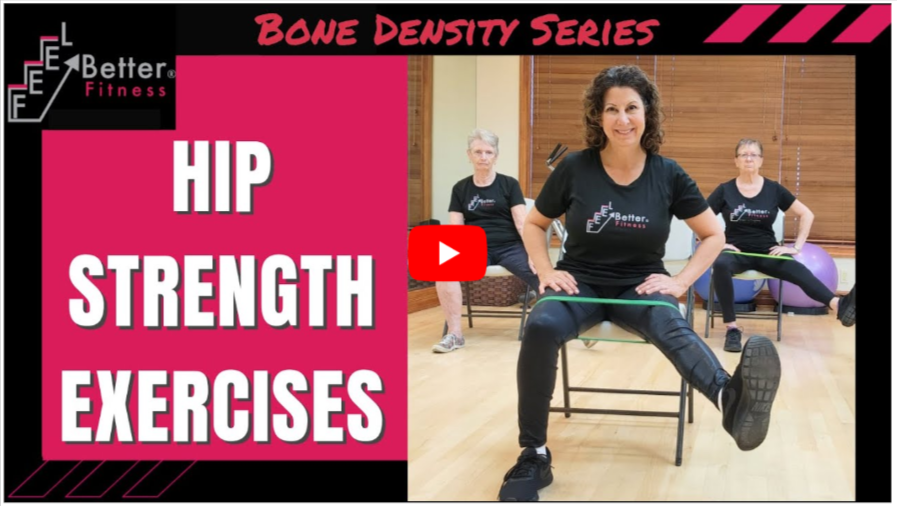
5. Resistance Band Hip Exercises
However:
None match the overall hip loading stimulus of heavy progressive squats.
The Role of Impact Training
Research also supports impact loading exercises like:
-
Jump squats
-
Box jumps
-
Skipping
Impact training increases ground reaction forces, which stimulate bone formation.
However, these should be introduced carefully in older adults.
How Long Does It Take to Improve Hip Bone Density?
Bone remodeling is slow.
Expect:
-
Measurable improvements in 6–12 months
-
Consistent training required
-
Gradual increases in strength
Bone density improvements require patience and consistency.
Nutrition Still Matters
Exercise alone is not enough.
Key nutrients:
-
Calcium
-
Vitamin D
-
Protein
-
Magnesium
Without adequate nutrition, bone formation is limited.
Hormones and Bone Density
Hip bone density is strongly influenced by:
-
Estrogen
-
Parathyroid hormone
Postmenopausal women are at higher risk due to estrogen decline.
This is why resistance training is especially critical after age 40.
Common Myths About Hip Bone Density
Myth 1: Walking Is Enough
Walking is good for general health.
But it is usually not intense enough to significantly increase hip bone density.
Myth 2: Yoga Builds Strong Hip Bones
Yoga improves balance and flexibility.
But it lacks the mechanical loading necessary for major bone stimulation.
Myth 3: Supplements Alone Can Fix Bone Loss
Calcium and Vitamin D support bone health.
But without mechanical stress, bone will not significantly increase in density.
The Bottom Line
If you want one clear answer to the question:
What is the single best exercise to improve hip bone density?
The answer is:
Heavy, progressive barbell squats performed with proper form and supervision when needed.
They:
-
Directly load the hip
-
Provide high mechanical stress
-
Allow progressive overload
-
Stimulate bone-forming cells
-
Improve muscle strength and balance
And most importantly:
They reduce the long-term risk of hip fractures and loss of independence.
Practical Weekly Plan Example
Day 1
-
Barbell Squats – 4×6
-
Lunges – 3×8
-
Core work
Day 3
-
Squats – 5×5
-
Step-ups – 3×10
Day 5
-
Squats – 4×5
-
Deadlifts – 3×6
Progress weight gradually.
Final Takeaway
Bone loss is not inevitable.
With the right stimulus, your body can build stronger hips even later in life.
Strength training is medicine for your bones.
And when choosing just one exercise:
Squats are king for hip bone density..
References Link
- Exercise for Your Bone Health
https://www.niams.nih.gov/health-topics/exercise-your-bone-health
- Exercising with osteoporosis
https://www.mayoclinic.org/diseases-conditions/osteoporosis/in-depth/osteoporosis/art-2004498914
- Exercises for Strengthening and Increasing Mobility in the Hips
https://www.healthline.com/health/hip-exercises
.
About Us
