
Manuka Honey Mask for Wrinkles: Benefits, Risks, and Uses
A Manuka honey mask for wrinkles is a popular natural skincare remedy for improving skin hydration, softness, and overall appearance. Manuka honey is known for its moisturizing properties and naturally occurring compounds that have attracted attention in skincare and dermatology.
Manuka honey comes from bees that collect nectar from the Manuka plant, which is native to New Zealand and parts of Australia. It contains natural sugars and other compounds that contribute to its distinctive properties.
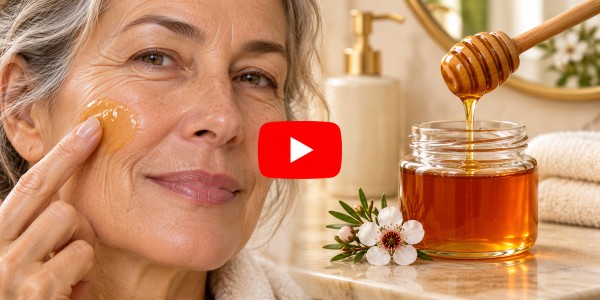
👉 DON’T TRY THIS “MANUKA HONEY MASK FOR WRINKLES” UNTIL YOU SEE THIS
A manuka honey mask for wrinkles may temporarily soften the look of dry fine lines. Learn what the evidence says, how to use it safely, and what works better.
When used as a facial mask, it can help support moisture. Understanding its potential benefits, limitations, and safe application methods can help you decide whether it deserves a place in your skincare routine.
What Is a Manuka Honey Mask?
A Manuka honey mask is a topical skincare treatment made using Manuka honey, either alone or combined with other skin-friendly ingredients.
Unlike ordinary table honey, Manuka honey contains naturally occurring compounds, including methylglyoxal (MGO), which is commonly used as a marker of its antibacterial activity.
In skincare, Manuka honey is primarily appreciated for its:
- Moisture-retaining properties.
- Naturally occurring antioxidant compounds.
- Potential antimicrobial activity.
- Skin-conditioning effects.
- Thick texture, which helps it stay on the skin during application.
A facial mask typically involves applying a thin layer of honey to clean skin and leaving it on briefly before rinsing.
However, cosmetic Manuka honey should not be confused with sterile medical-grade honey used in certain wound-care products. They are not interchangeable.
Can Manuka Honey Help Reduce Wrinkles?
Manuka honey may help improve the appearance of fine lines associated with dryness, but it has not been proven to eliminate wrinkles.
Wrinkles develop through several biological processes, including:
- Natural aging and changes in skin structure.
- Gradual loss of collagen and elastin.
- Repeated facial expressions.
- Ultraviolet (UV) exposure.
- Environmental pollution and oxidative stress.
- Reduced skin moisture and elasticity.
As skin becomes drier, fine lines can appear more noticeable. Applying a moisturizing ingredient may temporarily improve the skin’s surface appearance.
Manuka honey helps by attracting and retaining moisture. Better-hydrated skin may look softer, plumper, and smoother.
The important distinction: Improved hydration can make fine lines less visible temporarily, but it does not necessarily rebuild collagen, restore lost elasticity, or remove deeper wrinkles.
Benefits of Manuka Honey for Facial Skin
Although research specifically examining Manuka honey masks for wrinkles is limited, honey has several properties that may support general skin conditioning.
1. Helps Improve Skin Hydration
One of the most relevant benefits of Manuka honey is its moisture-retaining ability.
Honey contains natural sugars that can attract and hold water. This humectant-like action may help support skin hydration and reduce the dry, tight feeling associated with dehydrated skin.
Well-hydrated skin often looks smoother, making small lines less noticeable.
2. Supports Softer and Smoother-Looking Skin
The thick consistency of Manuka honey allows it to spread across the skin and create a temporary conditioning layer.
After rinsing, some people may notice that their skin feels softer and more comfortable. This effect is primarily cosmetic rather than evidence of permanent wrinkle reduction.
3. Contains Naturally Occurring Antioxidant Compounds
Manuka honey contains various naturally occurring compounds, including phenolic substances and other antioxidants.
Antioxidants are important because oxidative stress, caused partly by environmental factors and UV exposure, contributes to skin aging.
However, the presence of antioxidants in honey does not automatically mean that a facial mask can prevent or reverse wrinkles. More clinical research is needed to establish meaningful anti-aging effects.
4. Has Antimicrobial Properties
Manuka honey is known for its antimicrobial activity, which is associated partly with methylglyoxal (MGO). This property has attracted interest in wound-care research.
However, evidence involving medical-grade Manuka honey should not be interpreted as proof that an ordinary facial mask treats acne, infections, or other skin conditions.
5. May Help Improve the Appearance of Dry Skin
Dry skin can make facial lines more noticeable, particularly around the forehead, eyes, and mouth.
A honey-based mask may temporarily improve the skin’s surface feel by supporting moisture retention.
For people experiencing occasional dryness, this may provide a simple skincare benefit without requiring an elaborate treatment.
What Does Scientific Research Say About Manuka Honey and Wrinkles?
Scientific evidence surrounding honey and skin health is promising but still developing.
A 2025 systematic review of clinical trials examined honey as a moisturizing ingredient in cosmetic formulations. The review included five studies, with some reporting improvements in skin hydration and other outcomes, while others found no significant benefits.
Importantly, the researchers highlighted that results may differ depending on the botanical origin and formulation of honey. The available evidence does not establish that a homemade Manuka honey mask can reliably reduce wrinkles.
Another 2025 study investigated a facial serum containing Manuka honey, royal jelly, and bee venom. Forty women aged 40–55 used the combined serum for eight weeks, and improvements in several skin appearance measures were reported.
However, this research evaluated a multi-ingredient commercial serum, not pure Manuka honey. Its findings cannot establish that Manuka honey alone produced the improvements. The small study also highlights the need for more rigorous research.
Scientific takeaway: Manuka honey has potential as a moisturizing skincare ingredient, but stronger clinical evidence is needed before it can be recommended as a proven wrinkle treatment.

👉 DON’T TRY THIS “MANUKA HONEY MASK FOR WRINKLES” UNTIL YOU SEE THIS
How to Make a Manuka Honey Mask for Wrinkles at Home
A simple Manuka honey facial mask can be prepared using a small amount of pure honey. You don’t need many ingredients to create a basic moisturizing treatment.
Ingredients
- 1 teaspoon of pure Manuka honey.
- A small, clean mixing bowl.
- A clean spoon or cosmetic applicator.
- Lukewarm water for rinsing.
Preparation Method
- Place one teaspoon of Manuka honey into a clean bowl.
- Stir gently until the consistency is easy to spread.
- Make sure your face is clean and free from makeup.
- Apply a thin, even layer over the face.
- Avoid the eyes, lips, nostrils, and any irritated or broken skin.
How Long Should You Leave the Mask On?
For a first application, keep the mask on for approximately 10 minutes. If your skin tolerates it comfortably, you can gradually extend the application to around 15 minutes.
Rinse thoroughly with lukewarm water and gently pat your face dry with a clean towel. Finish with a suitable facial moisturizer.
There is no established clinical schedule for Manuka honey wrinkle masks. Occasional use is a reasonable starting point rather than applying it repeatedly every day.
Other Manuka Honey Mask Combinations for Skin
Some people prefer combining Manuka honey with other skincare ingredients. However, adding more ingredients does not necessarily improve the results.
Here are a few simple combinations and their potential uses.
Manuka Honey and Aloe Vera
Aloe vera gel is commonly used in skincare products because of its soothing and moisturizing properties.
You can mix a small amount of plain aloe vera gel with Manuka honey to create a light facial mask.
This combination may suit people looking for a soothing, moisture-supporting treatment. Choose fragrance-free aloe vera and avoid products containing irritating additives.
Manuka Honey and Oatmeal
Finely ground, plain oatmeal can be combined with Manuka honey to create a thicker mask. Oatmeal is used in skincare formulations for its soothing and skin-conditioning properties.
Avoid rubbing the mixture aggressively across the face. Physical scrubbing can irritate delicate skin and make redness more noticeable.
Manuka Honey and Plain Yogurt
Plain, unsweetened yogurt contains lactic acid, which is an alpha-hydroxy acid (AHA).
Although this combination is popular in homemade skincare routines, yogurt’s acidity may irritate sensitive skin. It is not necessary to add yogurt to obtain the basic moisturizing benefits of honey.
For beginners, using Manuka honey alone is the simpler approach.
How Often Should You Use a Manuka Honey Face Mask?
There is no scientifically established frequency for using Manuka honey as an anti-wrinkle treatment. If you decide to try it, start with once a week and observe how your skin responds.
Consider the following guidelines:
- Dry skin: Focus on gentle cleansing and regular moisturizing alongside occasional mask use.
- Normal skin: An occasional application may help maintain a comfortable skin feel.
- Oily skin: Use a very thin layer and rinse thoroughly.
- Sensitive skin: Be especially cautious and test the ingredient before facial application.
- Combination skin: Avoid applying unnecessary amounts to areas that are already oily.
Remember that using a mask more frequently will not necessarily produce better results.
Is Manuka Honey Good for Different Skin Types?
Manuka honey may be suitable for some people, but individual skin responses vary.
| Skin type | Considerations |
| Dry skin | May temporarily improve skin softness and hydration |
| Normal skin | Can be used as an occasional conditioning mask |
| Oily skin | May feel heavy or sticky |
| Combination skin | Consider applying only to drier areas |
| Sensitive skin | Requires careful testing because irritation is possible |
| Acne-prone skin | Not a proven acne treatment; monitor for irritation |
People with eczema, rosacea, active skin inflammation, or a history of allergic reactions should be particularly cautious.
A dermatologist can help determine whether a particular ingredient is appropriate for an existing skin condition.
👉 DON’T TRY THIS “MANUKA HONEY MASK FOR WRINKLES” UNTIL YOU SEE THIS
Risks and Side Effects of Using Manuka Honey on the Face
Natural ingredients are not automatically safe for everyone.
Although many people tolerate honey-based cosmetic ingredients, topical use can still cause unwanted reactions.
Possible Skin Irritation
Some individuals may experience redness, itching, burning, or discomfort after applying honey. If this happens, rinse the mask off immediately and discontinue use.
Allergic Reactions
People with known allergies to honey, bee-derived products, or related ingredients should avoid experimenting with homemade honey masks. Swelling, hives, or difficulty breathing require immediate medical attention.
Skin Sensitivity
Combining honey with lemon juice, strong exfoliants, or other potentially irritating ingredients can increase the chance of discomfort. Keep homemade skincare mixtures simple.
Clogged Pores or Uncomfortable Residue
Honey has a thick and sticky consistency. Some people may find that it leaves an unpleasant residue or feels too heavy on their skin.
Rinse thoroughly rather than leaving a homemade mask on overnight.
Important Patch-Test Instructions
Before using Manuka honey on your face:
- Apply a small amount to a discreet area of skin.
- Follow the American Academy of Dermatology’s product-testing approach: repeat application twice daily for four to five days.
- Watch for redness, itching, swelling, or irritation.
- Do not proceed with facial application if a reaction develops.
A home test cannot guarantee that an allergic reaction will never occur, but it can help identify some problems before wider use.
Common Myths About Manuka Honey and Wrinkles
There are several popular claims about natural honey-based skincare. Understanding the difference between cosmetic benefits and scientifically established results is important.
Myth 1: Manuka honey removes wrinkles permanently.
Fact: Manuka honey may temporarily improve the appearance of fine lines through hydration, but there is no strong clinical evidence that it permanently removes wrinkles.
Myth 2: Higher MGO means better anti-aging results.
Fact: MGO is associated with Manuka honey’s antibacterial activity. A higher MGO rating does not establish greater wrinkle-reducing effectiveness.
Myth 3: Natural honey is suitable for every skin type.
Fact: Natural ingredients can still cause allergic reactions or irritation. Individual skin tolerance matters.
Myth 4: Leaving a honey mask overnight produces better results.
Fact: There is no reliable evidence supporting overnight application. A short application followed by thorough rinsing is a more sensible approach.
Myth 5: Manuka honey can replace sunscreen.
Fact: Honey does not provide reliable UV protection. Daily sunscreen remains essential for preventing premature skin aging.
👉 DON’T TRY THIS “MANUKA HONEY MASK FOR WRINKLES” UNTIL YOU SEE THIS
Manuka Honey Mask vs. Other Anti-Wrinkle Treatments
Manuka honey is primarily a moisture-supporting ingredient, while other skincare ingredients have more established roles in addressing visible signs of aging.
| Skincare ingredient | Main purpose |
| Manuka honey | Moisture retention and skin conditioning |
| Hyaluronic acid | Skin hydration and temporary plumping |
| Retinol | Improves fine lines and skin texture |
| Vitamin C | Antioxidant protection and uneven skin tone |
| Niacinamide | Supports the skin barrier and improves uneven appearance |
| Peptides | Used in formulations targeting visible signs of aging |
| Sunscreen SPF 30+ | Helps prevent UV-related premature aging |
For people primarily concerned about wrinkles, a consistent skincare routine containing sunscreen and an appropriate moisturizer is generally more useful than relying on homemade masks alone.
The American Academy of Dermatology identifies sunscreen and moisturizer as two of the most effective starting points for an anti-aging skincare routine.
Common Mistakes to Avoid When Using Manuka Honey
To get the most out of a honey-based skincare routine, avoid these common mistakes:
- Applying honey without cleansing the face first.
- Using untested combinations of multiple ingredients.
- Applying the mask to broken or irritated skin.
- Leaving sticky honey on the face overnight.
- Scrubbing the skin aggressively during removal.
- Assuming expensive or high-MGO honey automatically produces better cosmetic results.
- Expecting immediate changes in deep wrinkles.
- Skipping sunscreen because of using natural skincare ingredients.
A gentle approach and consistent skincare habits are more valuable than complicated homemade treatments.
How to Build an Effective Anti-Wrinkle Skincare Routine
If your primary goal is to reduce the appearance of wrinkles, Manuka honey can be considered an optional addition to a broader skincare routine.
Here is a simple approach:
Morning routine
- Cleanse your face with a gentle cleanser.
- Apply a vitamin C or niacinamide product if suitable for your skin.
- Use a moisturizer.
- Finish with broad-spectrum SPF 30 or higher sunscreen.
Evening routine
- Remove makeup and cleanse gently.
- Apply a suitable anti-aging product, such as retinol, if appropriate.
- Finish with a nourishing moisturizer.
Retinol can help improve the appearance of fine lines, but it should be introduced gradually because irritation and dryness are possible. Retinoids should be avoided during pregnancy.
You can occasionally include a Manuka honey mask as an additional moisturizing step, provided your skin tolerates it.
Who Should Consider Trying a Manuka Honey Mask?
A Manuka honey mask may be worth considering for individuals who:
- Experience occasional facial dryness.
- Prefer simple, natural skincare ingredients.
- Want an occasional moisturizing facial treatment.
- Notice that dry skin makes fine lines look more prominent.
- Want to experiment with a gentle, short-duration skincare mask.
However, it may not be the right choice for people with honey allergies, highly reactive skin, or certain existing skin conditions.
Anyone experiencing persistent irritation, unexplained skin changes, or worsening wrinkles should consider professional dermatological advice.
Conclusion
A Manuka honey mask for wrinkles can be a simple addition to a skincare routine, particularly for people interested in improving skin hydration, softness, and overall appearance.
Its naturally occurring sugars help support moisture retention, while other compounds contribute to its interesting skincare properties. These characteristics make Manuka honey a promising ingredient for occasional skin conditioning.
However, it is important to maintain realistic expectations. There is currently insufficient clinical evidence to establish that a homemade Manuka honey mask can eliminate wrinkles, rebuild collagen, or reverse the natural aging process.
For the best long-term approach, combine gentle skincare with daily SPF 30+ sunscreen, regular moisturizing, and evidence-supported ingredients such as retinol when appropriate.
👉 DON’T TRY THIS “MANUKA HONEY MASK FOR WRINKLES” UNTIL YOU SEE THIS
References
https://en.wikipedia.org/wiki/Wrinkle
https://www.healthline.com/nutrition/manuka-honey-uses-benefits
https://www.webmd.com/a-to-z-guides/manuka-honey-medicinal-uses
.
About Us
