
Is Honey Good for the Lungs? What the Research Says
The honey trick for lungs is a home remedy for a cough. People swallow a little honey or stir it into warm water or tea, sometimes with lemon, ginger, or cinnamon.
Honey may temporarily soothe a scratchy throat or ease a cough from a cold. Evidence for those uses does not establish that honey cleans the lungs, removes mucus from deep airways, or improves breathing.
Is honey good for the lungs? Learn when honey may soothe a cough, what research says about lung health, and when breathing symptoms merit prompt medical care.

👉 DON’T TRY THIS “IS HONEY GOOD FOR THE LUNGS” UNTIL YOU SEE THIS
If you have a mild cough and are breathing comfortably, honey may be worth trying for symptom relief. Wheezing, shortness of breath, chest pain, and coughing up blood need a different response. And honey is unsafe for babies under 12 months, even when mixed into food or a drink.
What Is the Honey Trick for Lungs, Exactly?
There is no standard recipe. Some videos call for a spoonful of raw honey before bed. Others recommend a warm drink made with lemon and ginger or advertise Manuka honey as the ingredient that makes the remedy work. These versions share one basic step. You take honey by mouth.
The name can be misleading because coughs can begin in different places. A scratchy throat from a cold can trigger a dry cough.
Cough can also come from irritation or illness in the airways inside the lungs. A soothing drink may make the first kind feel more manageable, but the way a cough sounds or feels cannot reliably tell you what is causing it.
The practical question is whether you are trying to settle a throat tickle or manage a breathing problem. A warm drink is reasonable for the former.
New breathing trouble, especially alongside fever or a cough that is getting worse, deserves medical attention.
Why coughs can feel worse at night
After a cold, mucus from the nose can drain into the back of the throat and trigger coughing, especially when you lie down.
A spoonful of honey might calm some of that irritation. If you also notice a stuffy nose or feel the need to clear your throat, those details can help explain why the cough feels worse in bed.
Coughing at night can also happen with asthma or acid reflux. A pattern that keeps returning after the cold has passed deserves attention.
Make a note of whether you wake up wheezing or whether the cough follows a late meal. That information can help a clinician work out what to check.
How Does Honey Help a Cough?
Why honey can feel soothing
Honey is thick and sweet. Its texture may briefly coat irritated tissue in the mouth and throat, and its sweetness can make swallowing feel less uncomfortable.
These are plausible explanations for the soothing sensation. When you swallow honey, it travels through the esophagus to the stomach. It does not coat the bronchial tubes, where air moves in and out of your lungs.
Warm water or tea can also feel soothing on its own. If honey tea eases a throat tickle, the warmth and the honey may both contribute to how you feel.
Notice what actually changed. Coughing less for part of the evening can make it easier to get comfortable. It tells you little about whether an infection has cleared or how well your lungs are working.
What clinical studies found
A systematic review in BMJ Evidence-Based Medicine examined 14 studies on honey for symptoms of upper respiratory infections. Compared with usual care, honey was associated with less frequent and less severe coughing.
When the researchers pooled two studies that compared honey with a placebo, however, the result for overall symptoms was uncertain, and results varied across the studies. The studies also had a moderate overall risk of bias.
A 2023 systematic review of children with acute cough found low-certainty evidence that honey may ease symptoms or improve sleep.
Many studies focused on short-term outcomes. This matters when a video promises recovery in a set number of days. Fewer coughs overnight and a shorter illness are separate outcomes, and evidence for one does not establish the other.
Research in adults is less straightforward. In a randomized study of adults with uncomplicated acute bronchitis, adding honey to usual care did not shorten the period of moderate to severe coughing.
The study enrolled fewer participants than planned, which limits what it can establish. An adult with a cold may still find honey comforting, but the bronchitis study gives little reason to expect faster recovery.
👉 DON’T TRY THIS “IS HONEY GOOD FOR THE LUNGS” UNTIL YOU SEE THIS
How to Make a Simple Honey Drink for Cough
If you are an adult with a mild cold and can swallow comfortably, start with a warm drink. There is no need to buy a special blend or follow a schedule advertised online.
- Pour a mug of warm water or caffeine-free tea. Let it cool until it is comfortable to sip.
- Stir in one teaspoon of plain honey. A squeeze of lemon is optional. Skip it if it irritates your throat or tends to trigger heartburn.
- Sip slowly. If the drink feels soothing, you can use it when throat irritation bothers you. An adult may also try a small spoonful of plain honey if preferred.
This is a comfort measure. The amount above is a way to prepare a drink, and there is no established therapeutic dose for clearing the lungs.
More honey adds more sugar. If a warm drink without sweetener feels just as good, that is a reasonable choice.
Ginger and cinnamon can add flavor. Clinical research has not established that combining them with honey improves cough relief or clears chest congestion.
Use ingredients you already tolerate. A basic drink makes it easier to leave out anything that worsens reflux or makes your throat sting.
Can children have honey for a cough?
The American Academy of Pediatrics suggests considering 2 to 5 milliliters of honey as needed for children age one and older.
That is roughly half to one teaspoon. If you mix it into a drink for a young child, serve it lukewarm. Use a marked measuring spoon or cup if you want to measure the amount accurately.
Never give honey to a baby under 12 months. Honey can carry bacterial spores that can grow in an infant’s intestine and produce a toxin that causes infant botulism.
This applies to raw and pasteurized honey, honey mixed into liquids, and products made with honey, including honey pacifiers.
Is Raw or Manuka Honey Better for the Lungs?
Raw honey and Manuka honey often appear in videos because they sound more medicinal than ordinary honey.
Human studies have not established that either type gives better cough relief than regular honey or improves lung function when swallowed.
If you are trying a spoonful to ease a cold cough, there is little reason to pay a premium for a high Manuka rating. One reason Manuka honey makes headlines is its antibacterial activity in laboratory studies.
In a 2022 study, researchers tested Manuka honey with the antibiotic amikacin against Mycobacterium abscessus. This bacterium can cause difficult lung infections.
Researchers observed activity under laboratory conditions, including in a model designed to study delivery through a nebulizer.
That study involved laboratory testing, and it cannot tell us whether the mixture is safe or effective for people to inhale. Swallowing Manuka honey is also a completely different route of exposure.
Never put honey, honey water, or a homemade mixture in a nebulizer. Use the solutions prescribed for your device.

👉 DON’T TRY THIS “IS HONEY GOOD FOR THE LUNGS” UNTIL YOU SEE THIS
Does Honey Clear Mucus or Detox the Lungs?
Chest congestion and phlegm
Mucus helps trap particles in the airways. Tiny hairlike structures called cilia move it toward the throat, and coughing helps bring up mucus when it accumulates. Swallowed honey has not been shown to thin mucus inside the lungs or speed up this process.
A warm drink can feel pleasant when coughing has left your throat sore. If you cough up mucus afterward, that does not show that honey pulled anything out of the lungs. Phlegm can change during an ordinary respiratory infection. Watch the overall pattern, including whether your cough is easing, how comfortably you can breathe, and whether you are developing fever or chest pain.
Smoking, vaping, and the lung cleanse claim
There is no clinical evidence that a honey drink removes smoke residue, reverses vaping-related injury, or clears inhaled pollutants from the lungs. A video may describe phlegm as proof that a detox worked. Coughing up mucus cannot confirm that claim, and a smoother feeling in your throat cannot tell you whether lung tissue has recovered.
If you smoke, quitting reduces ongoing exposure. The CDC reports that coughing and shortness of breath generally decrease in the months after quitting. If you vape and develop new shortness of breath or chest pain, get medical advice promptly and mention what you used and when. A drink can wait while the cause of those symptoms is assessed.
Can Honey Help With Bronchitis, Asthma, COPD, or Pneumonia?
Acute bronchitis
Acute bronchitis, often called a chest cold, usually follows a viral infection. It can cause a cough with or without mucus. Honey may feel soothing if frequent coughing irritates your throat.
The adult trial described above found no clear improvement in how long moderate or severe coughing lasted. Bronchitis and pneumonia can share symptoms.
Contact a clinician if your cough comes with difficulty breathing, bloody mucus, or a fever that persists. A cough that repeatedly returns also deserves an assessment. The choice of care depends on what is causing it.
Does honey replace antibiotics?
Most chest colds are caused by viruses, so antibiotics usually do not help. In that situation, rest, fluids, and symptom relief are often enough while you recover.
If a clinician diagnoses a bacterial infection and prescribes antibiotics, take them as directed.
A cough can feel better after a warm drink while the illness that caused it still needs treatment. Whether you need an antibiotic depends on the diagnosis.
Asthma and COPD
Asthma can cause coughing at night, wheezing, and chest tightness. If you have an asthma action plan, follow its instructions for worsening symptoms and use your prescribed medicines as directed.
A honey drink cannot replace a reliever inhaler. Waking often with a cough is worth discussing with your clinician even if the cough settles after you get up.
With COPD, more breathlessness than usual or a change in the amount or color of mucus can signal a flare. Follow your COPD action plan and contact your care team as directed.
Comparing symptoms with your usual baseline helps. A change in how far you can walk or how easily you can speak may matter more than whether a drink briefly quiets your cough.
Pneumonia
Pneumonia is an infection in the lungs. It can cause cough, fever, chills, shortness of breath, and chest pain when breathing or coughing.
A clinician can assess those symptoms and decide whether testing or treatment is needed. Care depends on the cause and severity.
Honey can soothe a sore throat during recovery if it is safe for you, but it cannot treat pneumonia.
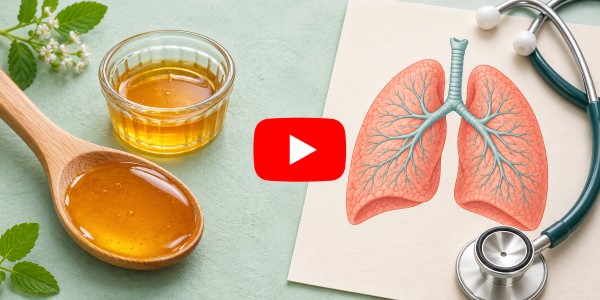
👉 DON’T TRY THIS “IS HONEY GOOD FOR THE LUNGS” UNTIL YOU SEE THIS
Common Mistakes and Safety Tips
- Treating honey as sugar-free. Honey contains sugars and can raise blood glucose. If you have diabetes, count it toward your carbohydrate intake. An unsweetened warm drink is another option for throat comfort.
- Trying honey despite a known allergy. Avoid honey if you have had an allergic reaction to it. Trouble breathing, or swelling of the tongue or throat after eating, needs emergency care.
- Using very hot water. A comfortably warm drink is sufficient. Check the temperature before drinking or serving it to a child.
- Using honey as a nightly habit for a recurring cough. If the cough regularly wakes you, record when it happens and what other symptoms come with it. That information can help a clinician consider causes such as asthma or reflux.
- Using the remedy when swallowing is difficult. If food or liquids often make you choke or cough, seek guidance before trying honey by the spoonful. Tell your clinician that symptoms happen during meals or drinks.
When Should You Get Medical Help for a Cough?
⇒ Call emergency services if you are struggling to breathe, cannot speak normally because of breathlessness, or notice blue or gray lips or skin. Sudden confusion or breathlessness with a tight, heavy chest also needs emergency attention. If you are coughing up blood and having trouble breathing, call emergency services.
⇒ Seek prompt medical care for new or worsening shortness of breath, chest pain when you breathe or cough, any blood in your mucus, or a persistent fever. If you have a chronic lung condition, follow your care plan and contact your care team about changes from your usual symptoms.
⇒ Arrange an appointment if your cough lasts more than three weeks, keeps returning, or is interfering with sleep or normal activities. Tell the clinician when it started, whether it is dry or produces mucus, and whether exercise, lying down, or meals make it worse. Mention wheezing, fever, smoking or vaping, and any new medicines. Those details can help narrow down possible causes.
Conclusion
The honey trick for lungs is a simple way to try to settle a cough. A little plain honey, taken by mouth or mixed into a warm drink, may soothe a throat irritated by a cold.
Short term cough relief is the benefit supported by some human studies, with more encouraging findings for upper respiratory symptoms than for acute bronchitis in adults.
Keep the age limit in mind and never give honey to a baby under 12 months. If you are breathing comfortably and your symptoms are mild, use the drink for comfort if it helps.
If your cough persists, your breathing changes, or you notice chest pain or blood, seek care so the cause can be assessed.
👉 DON’T TRY THIS “IS HONEY GOOD FOR THE LUNGS” UNTIL YOU SEE THIS
References
https://www.healthline.com/nutrition/is-honey-good-for-you
https://en.wikipedia.org/wiki/Respiratory_system
https://www.healthline.com/health/asthma/honey-for-asthma
.
About Us
