
Does Vicks Help Asthma? Benefits, Risks & Safety Explained
Asthma is a chronic respiratory condition that causes airway inflammation and narrowing, leading to coughing, wheezing, chest tightness, and difficulty breathing.
Many people with asthma seek simple home remedies to ease breathing discomfort, especially during respiratory infections, seasonal allergies, and nighttime symptoms.
Vicks VapoRub is a popular topical ointment containing menthol, camphor, and eucalyptus oil, commonly used to temporarily relieve coughing associated with colds.
Does Vicks Help Asthma? explores how menthol, camphor, and eucalyptus affect breathing, potential benefits and risks for sensitive airways, and safer ways to manage asthma symptoms.
👉 DON’T TRY THIS “DOES VICKS HELP ASTHMA? ” UNTIL YOU SEE THIS
Its cooling menthol aroma may create a sensation of easier nasal breathing, but it does not directly open the narrowed airways associated with asthma.
Does Vicks help asthma? Although Vicks may provide temporary comfort during nasal congestion, its strong aromatic ingredients can irritate sensitive airways and worsen symptoms in some people.
Understanding the benefits, potential risks, and limitations of Vicks helps individuals with asthma make safer decisions about respiratory health and effective symptom management.
What Is Vicks VapoRub?
Vicks VapoRub is an over-the-counter topical ointment commonly used to temporarily relieve cough symptoms associated with colds.
It contains aromatic ingredients that produce a cooling sensation when applied to the skin. Its recognizable scent has made it a familiar household product for generations.
The main active ingredients in the standard US formulation include:
-
Menthol: Produces a cooling sensation and influences how airflow is perceived.
-
Camphor: Contributes to the product’s topical cough-relieving action.
-
Eucalyptus Oil: Provides an aromatic scent associated with respiratory comfort.
When applied according to its label, the ointment releases aromatic vapors that can create a sensation of easier breathing.
👉 DON’T TRY THIS “DOES VICKS HELP ASTHMA? ” UNTIL YOU SEE THIS
Does Vicks Help Asthma?
Some people experience a temporary sensation of improved breathing after smelling menthol, particularly when they have nasal congestion caused by a cold.
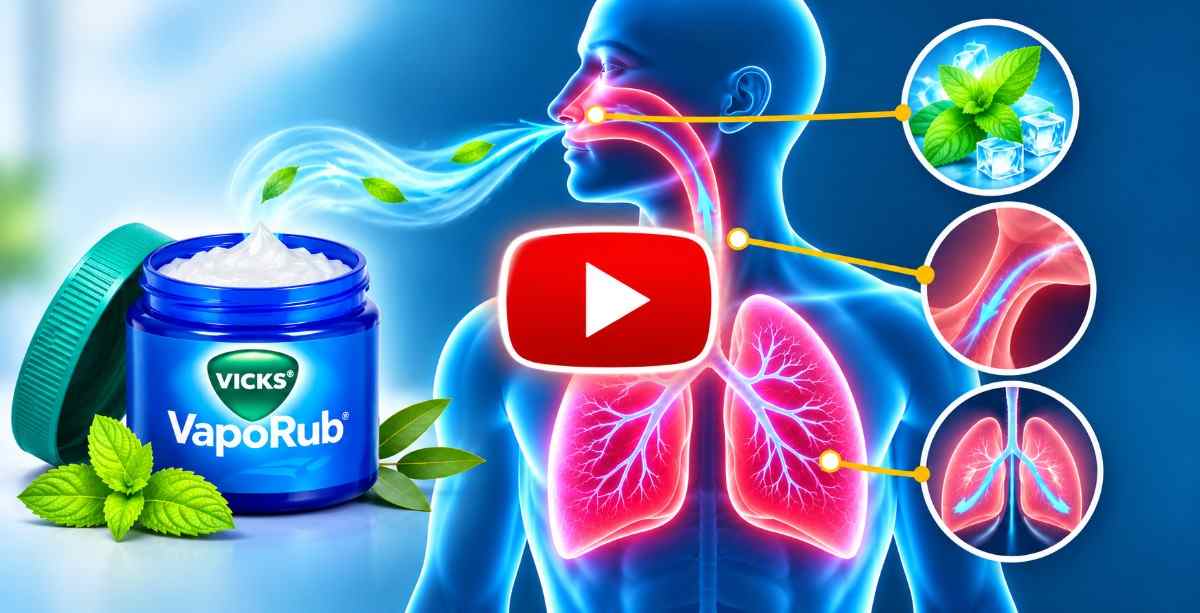
This sensation occurs because menthol stimulates temperature-sensitive sensory receptors, creating a feeling of coolness inside the nose.
feeling that air is moving more freely does not necessarily mean the airways in the lungs have opened.
Asthma involves inflammation, airway sensitivity, and tightening of the muscles surrounding the bronchial tubes.
Vicks does not address these underlying mechanisms and should never replace prescribed asthma medications.
Additionally, strong fragrances and aromatic substances may trigger coughing or breathing discomfort in some individuals with sensitive airways.
How Does Vicks Affect Breathing?
Vicks primarily influences the sensation of breathing rather than directly improving airflow through the lungs.
1. Creates a Cooling Sensation
This produces a refreshing sensation that may make nasal breathing feel easier, even when measurable airflow remains unchanged.
2. Provides Temporary Cough Relief
Vicks is labeled for temporary relief of cough associated with the common cold when used as directed.
However, an asthma-related cough may result from airway inflammation and requires appropriate asthma management.
3. Produces Aromatic Vapors
Some individuals find these vapors comforting, while others may experience irritation, coughing, or increased respiratory sensitivity.
4. Influences Nasal Airflow Perception
Menthol may change how people perceive nasal openness without significantly reducing physical obstruction.
This distinction matters because perceived breathing comfort is not equivalent to improved lung function.
👉 DON’T TRY THIS “DOES VICKS HELP ASTHMA? ” UNTIL YOU SEE THIS
Can Vicks Help Asthma Symptoms?
Asthma symptoms vary in intensity, frequency, and triggers. Understanding how Vicks relates to individual symptoms helps clarify its limitations.
Does Vicks Help Asthma Cough?
Vicks may temporarily relieve coughing associated with a common cold when used according to its label.
Vicks cannot control this inflammation or replace asthma medications prescribed to manage coughing.
Does Vicks Help Asthma Wheezing?
Wheezing occurs when air passes through narrowed airways, creating a whistling sound.
Vicks does not relax the muscles surrounding the bronchial tubes and therefore cannot reliably relieve asthma-related wheezing.
Does Vicks Help Asthma Chest Tightness?
Applying Vicks may create a cooling sensation on the skin, but this does not resolve the underlying respiratory problem.
Asthma-related chest tightness should be managed according to a healthcare professional’s instructions.
Does Vicks Help Asthma Shortness of Breath?
Vicks does not provide the rapid bronchodilation needed to treat shortness of breath caused by asthma.
People experiencing asthma-related breathing difficulty should follow their asthma action plan and use their prescribed reliever medication.
👉 DON’T TRY THIS “DOES VICKS HELP ASTHMA? ” UNTIL YOU SEE THIS
Is Vicks Safe for People With Asthma?
Vicks is not automatically unsafe for every person with asthma, but its suitability depends on individual respiratory sensitivity and existing symptoms.
The product’s labeling advises consulting a doctor before use when coughing is persistent or chronic, including coughing associated with asthma.
1. Strong Fragrances May Trigger Symptoms
People with asthma sometimes react to perfumes, cleaning products, essential oils, and other strongly scented substances.
2. Airway Sensitivity Varies
Others experience coughing, throat irritation, or increased breathing difficulty after exposure to strong aromas.
3. Vicks Cannot Prevent Asthma Attacks
The ointment does not control chronic airway inflammation or prevent sudden bronchospasm. Depending on Vicks instead of prescribed asthma medications could delay necessary treatment.
4. Incorrect Application Creates Additional Risks
Vicks should never be swallowed, placed inside the nostrils, applied to damaged skin, or mixed with hot water.
Can Vicks Make Asthma Worse?
Yes. Vicks may worsen asthma symptoms in people whose airways are sensitive to menthol, eucalyptus fragrances, or other aromatic ingredients.
Asthma causes the bronchial tubes to become unusually responsive to certain environmental exposures.
When a sensitive person encounters a respiratory irritant, the airways may become inflamed or constricted, resulting in coughing, wheezing, or breathlessness.
Potential reactions include:
-
Increased Coughing: Strong aromas may irritate sensitive airways and stimulate coughing.
-
Wheezing: Fragrance exposure can contribute to respiratory symptoms in susceptible individuals.
-
Throat Irritation: Aromatic vapors may cause an uncomfortable sensation in the throat.
-
Breathing Discomfort: Individuals sensitive to fragrances may experience increased chest tightness or shortness of breath.
If Vicks appears to trigger respiratory symptoms, discontinue exposure and follow your asthma action plan.
👉 DON’T TRY THIS “DOES VICKS HELP ASTHMA? ” UNTIL YOU SEE THIS
Can You Put Vicks on Your Chest if You Have Asthma?
Applying Vicks to the chest is an approved method of using the product for temporary relief of cough associated with a cold, but that does not mean it is appropriate for treating asthma.
People with asthma-related chronic coughing should consult a healthcare professional before using Vicks.
Avoid applying it inside the nostrils, near the eyes, or to broken skin. Do not use it on children younger than two years.
Most importantly, applying Vicks to the chest should not delay the use of prescribed asthma medication when symptoms develop.
Does Vicks Help Asthma at Night?
Nighttime asthma symptoms can be particularly uncomfortable because coughing, wheezing, and chest tightness may interrupt sleep.
While the product may temporarily relieve a cold-related cough, it does not treat nighttime asthma symptoms.
Frequent nighttime coughing or waking because of breathlessness may indicate that asthma is not adequately controlled.
A healthcare professional may recommend reviewing inhaler technique, identifying bedroom triggers, or adjusting the asthma management plan.
Keeping the sleeping environment free from smoke, strong fragrances, excessive dust, and other known triggers can also support respiratory comfort.
Vicks vs. Asthma Inhalers: What’s the Difference?
| Feature | Vicks VapoRub | Asthma Inhalers |
|---|---|---|
| Primary purpose | Temporary cold-related cough relief | Asthma symptom relief or control |
| Opens narrowed airways | No | Reliever inhalers can |
| Reduces airway inflammation | No | Certain controller inhalers do |
| Treats asthma attacks | No | Prescribed reliever medication may |
| Prevents asthma symptoms | No | Controller medications help |
| Suitable for asthma management | Not an asthma treatment | Yes, as prescribed |
Some provide rapid relief by relaxing airway muscles, while others reduce inflammation and help prevent future symptoms.
👉 DON’T TRY THIS “DOES VICKS HELP ASTHMA? ” UNTIL YOU SEE THIS
What Helps Asthma Symptoms Better Than Vicks?
Effective asthma management focuses on controlling inflammation, relieving airway narrowing, and reducing exposure to triggers.
1. Prescribed Reliever Inhalers
The appropriate medication depends on the person’s prescribed treatment plan, and some modern plans use an inhaled corticosteroid-containing reliever.
2. Controller Medications
Controller treatments, often containing inhaled corticosteroids, help reduce airway inflammation and lower the risk of asthma flare-ups.
3. Asthma Action Plans
A written asthma action plan explains how to manage daily symptoms, recognize worsening asthma, and respond during an attack.
4. Trigger Management
Reducing exposure to cigarette smoke, dust mites, pollen, mold, strong fragrances, and other personal triggers may help prevent symptoms.
5. Respiratory Health Monitoring
Medical appointments allow healthcare professionals to evaluate symptom frequency, lung function, medication effectiveness, and inhaler technique.

👉 DON’T TRY THIS “DOES VICKS HELP ASTHMA? ” UNTIL YOU SEE THIS
Home Remedies That May Support Asthma Comfort
Certain home practices can complement medical asthma management, particularly when nasal congestion or environmental irritation contributes to discomfort.
Maintain Comfortable Indoor Humidity: Keeping indoor humidity at a moderate level may reduce mold growth and dust mite exposure. Excessive humidity can worsen respiratory conditions.
Stay Hydrated: Drinking adequate fluids supports normal hydration and may improve comfort during respiratory illnesses, though it does not open constricted airways.
Use Saline Nasal Spray: Saline sprays can help relieve nasal dryness and congestion associated with allergies or colds without relying on strong fragrances.
Avoid Smoke and Irritating Vapors: Smoke, aerosol sprays, incense, and heavily fragranced products may trigger respiratory symptoms.
Maintain a Clean Sleeping Environment: Washing bedding regularly and controlling household allergens can support better nighttime asthma management.
When Should You See a Doctor for Asthma?
Medical evaluation is important when asthma symptoms become more frequent, interfere with normal activities, or disrupt sleep.
Contact a healthcare professional if you experience recurring wheezing, frequent coughing, increased reliance on reliever medication, or difficulty completing routine activities.
An asthma review may identify uncontrolled inflammation, incorrect inhaler technique, or environmental triggers.
Seek emergency medical help immediately if breathing becomes severely difficult, you struggle to speak, your lips appear blue or gray, you become confused or unusually drowsy, or your prescribed reliever does not improve severe symptoms.
Never attempt to manage a serious asthma attack using Vicks, steam, essential oils, or other household remedies.
Final Thoughts
Understanding whether Vicks helps asthma begins with recognizing the difference between breathing comfort and actual improvement in respiratory function.
Menthol may make the nose feel clearer, but this sensation does not mean that narrowed bronchial passages have opened.
For people with asthma, identifying personal triggers and following appropriate medical treatment offers a more dependable approach to respiratory wellness.
Maintaining a clean indoor environment, avoiding irritating fragrances, and monitoring symptoms can further support everyday breathing comfort.
👉 DON’T TRY THIS “DOES VICKS HELP ASTHMA? ” UNTIL YOU SEE THIS
.
.
.
References
https://www.lung.org/clean-air/indoor-air/indoor-air-pollutants/fragrances
.
.
About Us
