
How Big Is an Octopus Brain? Size, Intelligence & Facts
Octopuses are among the most intelligent marine creatures, recognized for their remarkable problem-solving abilities, flexible bodies, and extraordinary nervous systems.
Unlike humans, octopuses have a distributed nervous system that allows their eight arms to process sensory information and coordinate complex movements.
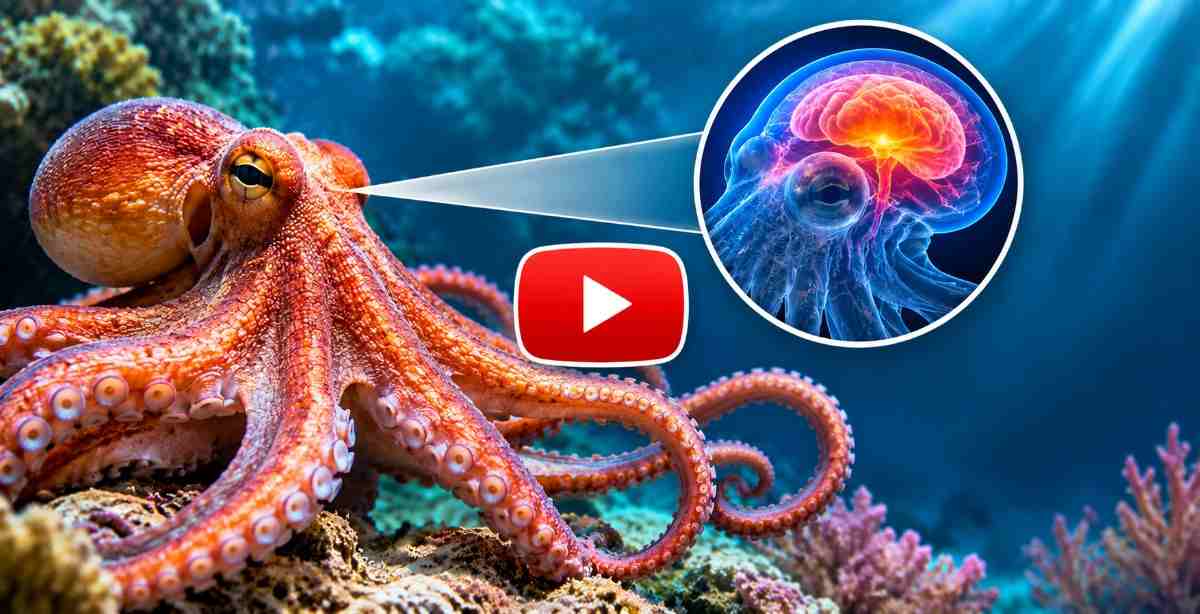
How big is an octopus brain? Despite their impressive intelligence, an octopus’s central brain is relatively small, often compared to the size of a walnut.
How Big Is an Octopus Brain? explores the surprising size, unique structure, and remarkable intelligence of the octopus brain, including its 500 million neurons, memory, problem-solving abilities, and complex nervous system.
👉 DON’T TRY THIS “HOW BIG IS AN OCTOPUS BRAIN? ” UNTIL YOU SEE THIS
Scientists estimate that the common octopus has approximately 500 million neurons, with most distributed throughout its arms and other nervous structures.
This unique brain organization helps octopuses learn from experience, recognize patterns, manipulate objects, and respond quickly to environmental changes.
Understanding octopus brain size reveals fascinating insights into marine intelligence, memory, nervous system evolution, and how complex behaviors develop in nature.
What Is an Octopus Brain?
An octopus brain is a specialized central processing organ that coordinates sensory information, learning, memory, behavior, and communication with the animal’s extensive nervous system.
Unlike the human brain, which is enclosed within a protective skull, an octopus has a compact brain positioned between its eyes and surrounding part of its esophagus.
The octopus brain is organized into numerous interconnected lobes responsible for processing visual information, coordinating movement, supporting learning, and controlling complex behaviors.
One particularly interesting feature is that octopuses have large optic lobes that process information received from their highly developed eyes.
The central brain represents only part of the octopus’s nervous system. Large networks of neurons extend into its eight arms, allowing sophisticated local sensory processing and movement coordination.
This arrangement makes the octopus nervous system fundamentally different from the centralized organization found in humans and most other vertebrates.
👉 DON’T TRY THIS “HOW BIG IS AN OCTOPUS BRAIN? ” UNTIL YOU SEE THIS
How Big Is an Octopus Brain?
The central brain of a typical octopus is relatively small, often described as approximately walnut-sized in larger, commonly studied species.
The brain of a small octopus species may be considerably smaller than a walnut, while larger species possess more substantial nervous structures.
Importantly, scientists distinguish between the central brain and the complete nervous system when discussing octopus brain size.
An octopus’s central brain contains tens of millions of neurons, while additional neurons are distributed throughout its optic lobes, arms, and peripheral nervous system.
These estimates vary across scientific studies and should not be treated as exact counts for every octopus species.
Octopus Brain Size: Quick Overview
| Feature | Details |
|---|---|
| Central brain size | Often approximately walnut-sized in larger species |
| Total neurons | Around 500 million in the commonly studied octopus nervous system |
| Central brain neurons | Approximately 40–45 million |
| Arm neurons | Roughly 300–350 million collectively |
| Number of arms | Eight |
| Brain location | Between the eyes, surrounding the esophagus |
| Main functions | Learning, memory, sensory processing, behavioral coordination |
| Nervous system | Highly distributed |
| Intelligence | Advanced problem-solving and behavioral flexibility |
These figures are approximate and primarily reflect research involving the common octopus rather than every octopus species.
👉 DON’T TRY THIS “HOW BIG IS AN OCTOPUS BRAIN? ” UNTIL YOU SEE THIS
How Does an Octopus Brain Work?
The octopus brain works through a combination of centralized decision-making and distributed neural processing. This organization allows the animal to respond to complex environments while controlling eight highly flexible arms.
1. Processing Sensory Information
Octopuses receive information through their eyes, skin, suckers, and specialized sensory receptors. Their nervous systems interpret visual patterns, textures, chemical signals, and environmental changes.
2. Coordinating Arm Movements
The central brain sends signals to the arms, while local neural networks help coordinate individual movements. This reduces the need for the brain to control every muscular contraction directly.
3. Supporting Learning and Memory
Specialized brain regions help octopuses remember experiences, recognize familiar situations, and modify their behavior.
4. Controlling Defensive Responses
The nervous system coordinates camouflage, rapid swimming, hiding, and other defensive behaviors.
Octopuses can change their appearance remarkably quickly when responding to environmental threats.
5. Making Behavioral Decisions
Octopuses can select different strategies depending on their surroundings. Their ability to explore unfamiliar objects and adjust their actions demonstrates considerable behavioral flexibility.

👉 DON’T TRY THIS “HOW BIG IS AN OCTOPUS BRAIN? ” UNTIL YOU SEE THIS
Why Do Octopuses Have Neurons in Their Arms?
One of the most extraordinary characteristics of octopus anatomy is the large number of neurons located throughout the eight arms.
Approximately two-thirds of an octopus’s neurons are distributed in its arms rather than concentrated in its head.
Each arm contains an extensive network of nerve cells that processes sensory information and coordinates muscular movements.
This arrangement is particularly useful because octopus arms are extremely flexible and capable of bending, twisting, extending, and manipulating objects in numerous directions.
Describing the arms as completely independent brains is misleading. They remain connected to the central nervous system and participate in coordinated behavior.
The distributed nervous system represents an evolutionary adaptation that supports the octopus’s unusual body structure and complex movements.
Does an Octopus Have Nine Brains?
A common misconception suggests that octopuses possess nine separate brains: one central brain and one brain inside each arm.
This description is popular because the arms demonstrate considerable independence during movement and sensory exploration.
Each arm contains nerve cords and clusters of neurons capable of processing local information and coordinating certain movements.
The distinction matters because the octopus’s intelligence emerges from communication and coordination between central and peripheral neural structures.
Its unusual nervous system demonstrates that complex behavior does not always require every decision to originate from a single central location.
👉 DON’T TRY THIS “HOW BIG IS AN OCTOPUS BRAIN? ” UNTIL YOU SEE THIS
How Intelligent Is an Octopus?
Octopuses are widely recognized as some of the most intelligent invertebrates. Their abilities include learning, problem-solving, exploration, memory, and behavioral adaptation.
Problem-Solving Abilities
Octopuses can learn to open containers, navigate obstacles, and manipulate unfamiliar objects to obtain food.
In controlled experiments, some individuals have learned to solve increasingly complicated tasks through repeated experience.
Learning From Experience
Octopuses can modify their behavior based on previous outcomes. When an action produces a useful result, they may become more likely to repeat it.
Memory and Recognition
They can remember visual patterns, distinguish between objects, and retain information relevant to previously encountered situations.
Tool-Related Behavior
Certain octopus species have been observed collecting and carrying coconut shells or other materials for use as shelters.
Such behavior demonstrates planning-like actions and flexible manipulation, though scientists continue to investigate the underlying cognitive processes.
Environmental Adaptation
Octopuses can alter their hunting strategies, select hiding places, and respond differently to unfamiliar situations.
These behaviors suggest that octopus intelligence is not simply a collection of automatic reflexes but involves sophisticated information processing.
What Makes the Octopus Brain Unique?
Distributed Neural Processing: A substantial proportion of neurons operate outside the central brain, particularly within the arms.
Specialized Visual Processing: Large optic lobes help process visual information, supporting navigation, hunting, and environmental awareness.
Advanced Motor Coordination: Neural circuits coordinate complex movements across eight flexible arms containing numerous independently controlled suckers.
Learning and Memory Centers: Specialized brain regions support behavioral adaptation and information retention.
Distinct Evolutionary Development: Octopus intelligence evolved independently from vertebrate intelligence, offering researchers an opportunity to study alternative forms of complex cognition.
These features make octopuses valuable subjects for neuroscience, evolutionary biology, animal behavior, and robotics research.
👉 DON’T TRY THIS “HOW BIG IS AN OCTOPUS BRAIN? ” UNTIL YOU SEE THIS
Can Octopuses Remember Things?
Yes, octopuses can remember information and use previous experiences to guide future behavior. Studies of octopus learning demonstrate their ability to distinguish visual shapes, respond to repeated training, and retain learned associations.
Their vertical lobe system plays an important role in learning and memory, somewhat resembling the functional importance of memory-related structures in vertebrate brain health.
Octopuses can also learn through tactile exploration, using their arms and suckers to gather information about objects.
Memory is particularly valuable for locating food, identifying potentially dangerous situations, and adapting to unfamiliar environments.
Does Brain Size Determine Octopus Intelligence?
Brain size contributes to nervous system capabilities, but it does not independently determine intelligence.
The number of neurons, their distribution, connectivity, specialized functions, and efficiency of communication all influence how an animal processes information.
Octopuses illustrate this principle particularly well because their central brains are relatively small while their complete nervous systems are highly sophisticated.
Evolution has shaped these systems to address challenges such as hunting, avoiding predators, exploring complicated environments, and controlling flexible limbs.
Consequently, evaluating octopus intelligence requires examining behavior and nervous system organization rather than relying exclusively on physical brain measurements.
👉 DON’T TRY THIS “HOW BIG IS AN OCTOPUS BRAIN? ” UNTIL YOU SEE THIS
Why Do Scientists Study Octopus Brains?
Octopus neuroscience offers valuable opportunities to understand how intelligence and complex behavior evolve.
Unlike humans, octopuses belong to the mollusk lineage, meaning their sophisticated nervous systems developed along a very different evolutionary pathway.
Studying these differences helps researchers investigate whether similar cognitive abilities can emerge through distinct biological structures.
Octopus research also contributes to robotics. Engineers study flexible arm control to develop machines capable of manipulating objects without rigid joints.
Scientists are additionally interested in how octopuses process sensory information, learn new tasks, and coordinate distributed neural networks.
Research into octopus behavior may improve our understanding of animal welfare, consciousness-related questions, and the biological foundations of learning.
Final Thoughts
Understanding how big an octopus brain is reveals that intelligence depends on more than physical brain size.
With approximately 500 million neurons distributed throughout their nervous systems, common octopuses demonstrate remarkable abilities involving learning, memory, problem-solving, and sensory processing.
Unlike humans, octopuses have extensive neural networks within their eight arms, allowing them to coordinate complex movements and respond efficiently to environmental changes.
Their extraordinary intelligence, advanced camouflage abilities, and flexible hunting strategies highlight the unique adaptations that help these marine creatures survive in challenging underwater environments.
👉 DON’T TRY THIS “HOW BIG IS AN OCTOPUS BRAIN? ” UNTIL YOU SEE THIS
.
.
.
.
References
https://www.nhm.ac.uk/discover/octopuses-keep-surprising-us-here-are-eight-examples-how.html
https://www.nature.com/articles/laban.615
https://pmc.ncbi.nlm.nih.gov/articles/PMC10792511/
.
.
About Us
