
Ultimate Guide to Sermorelin Therapy: Benefits & Results
Hormones play an essential role in maintaining muscle health, metabolism, physical recovery, sleep patterns, and overall well-being.
Among these hormones, human growth hormone (HGH) is particularly important for supporting normal growth during childhood and helping regulate several physiological processes throughout adulthood.
As people grow older, natural growth hormone secretion generally declines. This age-related change has attracted considerable interest in therapies designed to stimulate the body’s own hormone production.
The Ultimate Guide to Sermorelin Therapy explores how sermorelin stimulates natural growth hormone production, its potential effects on muscle health, physical recovery, sleep quality, metabolism, healthy aging, and overall wellness.

👉 DON’T TRY THIS “ ULTIMATE GUIDE TO SERMORELIN THERAPY” UNTIL YOU SEE THIS
Sermorelin is a synthetic peptide that mimics a portion of growth hormone-releasing hormone (GHRH), a naturally occurring hormone responsible for signaling the pituitary gland to release growth hormone.
This distinction makes sermorelin an interesting subject in endocrinology, although its effectiveness for general anti-aging, weight loss, muscle building, and wellness purposes remains uncertain.
Interest in sermorelin therapy has increased among adults researching hormone-related changes, physical performance, sleep quality, and healthy aging.
What Is Sermorelin Therapy?
Sermorelin therapy involves administering sermorelin acetate, a synthetic peptide that stimulates the body’s natural production of growth hormone.
Sermorelin is an analog of the first 29 amino acids of human growth hormone-releasing hormone. This portion of the hormone is responsible for activating receptors on specialized cells within the pituitary gland.
The pituitary gland is a small endocrine organ located near the base of the brain. It produces several important hormones that regulate growth, metabolism, reproduction, and other essential bodily functions.
When sermorelin binds to growth hormone-releasing hormone receptors, it encourages the pituitary gland to release growth hormone into circulation.
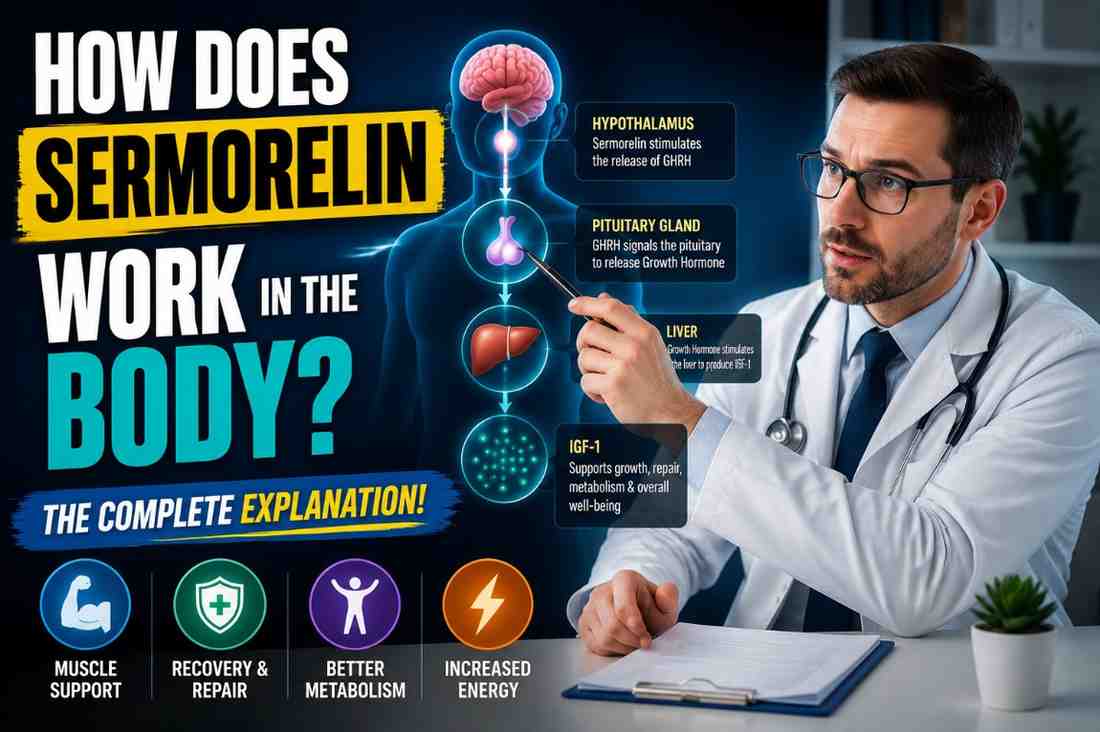
Growth hormone subsequently influences several tissues and stimulates the production of insulin-like growth factor 1 (IGF-1), primarily in the liver.
Historically, sermorelin was used in specific pediatric growth hormone-related conditions and in diagnostic testing of pituitary growth hormone secretion.
The clinical value of treatment depends on an individual’s medical condition, hormone status, pituitary function, and the quality of supporting evidence.
How Does Sermorelin Therapy Work?
Sermorelin therapy works by interacting with the body’s hypothalamic-pituitary growth hormone system.
Under normal circumstances, the hypothalamus produces growth hormone-releasing hormone, which travels to the pituitary gland and stimulates the secretion of growth hormone.
Growth hormone is naturally released in pulses throughout the day, with important secretion occurring during sleep.
Sermorelin mimics the activity of natural growth hormone-releasing hormone, encouraging the pituitary gland to release growth hormone.
👉 DON’T TRY THIS “ ULTIMATE GUIDE TO SERMORELIN THERAPY” UNTIL YOU SEE THIS
The process can be understood through several stages:
Step 1: Stimulating the Pituitary Gland
After administration, sermorelin interacts with growth hormone-releasing hormone receptors located on pituitary cells.
Step 2: Encouraging Growth Hormone Release
The pituitary gland responds by releasing growth hormone into the bloodstream. The response depends on the gland’s ability to produce and secrete growth hormone.
Step 3: Supporting IGF-1 Production
Growth hormone stimulates the production of insulin-like growth factor 1, an important mediator of several growth hormone-related effects.
Step 4: Influencing Metabolic Processes
Growth hormone participates in protein metabolism, fat utilization, and the regulation of several tissues.
Step 5: Clinical Monitoring
When hormone-related treatment is medically appropriate, clinicians may monitor symptoms, IGF-1 levels, glucose regulation, and other relevant health indicators.
Monitoring helps identify potential adverse effects and determine whether treatment is producing a clinically meaningful response.
What Are the Potential Benefits of Sermorelin Therapy?
Sermorelin is frequently promoted for several health and wellness benefits. Some of these claims are based on the known physiological actions of growth hormone, while others have limited direct clinical evidence involving sermorelin.
1. Stimulation of Natural Growth Hormone Secretion
Sermorelin’s principal pharmacological action is stimulating the pituitary gland to release growth hormone.
This mechanism is well understood, although the amount of growth hormone released varies according to pituitary function and other physiological factors.
2. Potential Influence on Muscle Metabolism
Growth hormone and IGF-1 participate in protein metabolism and the maintenance of body tissues. These hormones influence muscle physiology.
3. Possible Effects on Body Composition
Growth hormone influences fat metabolism and can affect the balance between fat mass and lean body mass.
Sermorelin should not be considered a proven weight loss treatment, and changes in hormone levels do not necessarily produce meaningful fat reduction.
4. Interest in Physical Recovery
Growth hormone signaling contributes to tissue maintenance and normal repair processes. These biological functions have generated interest in sermorelin for recovery.
5. Relationship With Sleep and Hormonal Rhythms
Growth hormone secretion is closely associated with sleep, particularly slow-wave sleep. The relationship between growth hormone and sleep does not establish sermorelin as an effective treatment for insomnia or poor sleep quality.
6. Potential Effects on Bone Metabolism
Growth hormone and IGF-1 are involved in normal bone formation and remodeling. Growth hormone deficiency can affect skeletal health; sermorelin has not been established as a treatment for osteoporosis or age-related bone loss.
7. Interest in Age-Related Hormonal Changes
Growth hormone secretion generally declines with age, prompting interest in therapies that stimulate hormone release.
However, this decline is often part of normal aging and does not independently establish a medical need for treatment.
8. Possible Influence on Energy Metabolism
Some wellness marketing connects sermorelin with increased vitality, but convincing evidence that it improves everyday energy or reduces fatigue in healthy adults is lacking.
9. Support for Research Into Pituitary Function
Sermorelin’s ability to stimulate growth hormone secretion has made it relevant to research and historical diagnostic evaluation of pituitary function.
Its clinical significance is therefore broader than the wellness benefits commonly highlighted in promotional material.
10. Potential Role in Individualized Endocrine Evaluation
For people with suspected growth hormone-related disorders, a qualified endocrinologist can evaluate whether additional diagnostic testing or an established treatment is appropriate.
Sermorelin’s mechanism may be relevant to that discussion, but it should not replace evidence-based diagnosis or treatment.
Who May Be a Candidate for Sermorelin Therapy?
Not everyone experiencing fatigue, reduced muscle mass, or age-related physical changes has a growth hormone deficiency.
These symptoms can arise from many conditions, including thyroid disorders, sleep problems, nutritional deficiencies, chronic stress, and other medical issues.
A healthcare professional may consider an endocrine evaluation when a patient has:
-
A documented history of childhood growth hormone deficiency
-
Previous pituitary surgery or radiation treatment
-
A diagnosed pituitary or hypothalamic disorder
-
Multiple pituitary hormone deficiencies
-
Other clinical findings suggesting impaired growth hormone secretion
For adults with confirmed growth hormone deficiency, established medical guidelines generally address treatment with prescription recombinant human growth hormone rather than sermorelin.
Healthy adults interested primarily in anti-aging, bodybuilding, or general wellness should recognize that sermorelin’s long-term benefits and risks for these purposes are not adequately established.
How Is Sermorelin Therapy Administered?
Sermorelin has historically been administered by injection, most commonly into the fatty tissue beneath the skin.
A healthcare professional determines whether treatment is appropriate, which preparation is suitable, and how administration should be managed.
Step 1: Medical Consultation
The process begins with reviewing medical history, symptoms, current medications, and relevant health conditions.
A clinician may recommend laboratory testing or specialist evaluation before considering hormone-related treatment.
Step 2: Individualized Treatment Planning
If a qualified prescriber determines that sermorelin is appropriate, the treatment plan should account for the patient’s medical circumstances, product formulation, and monitoring requirements.
Step 3: Proper Administration
Patients receiving an injectable prescription should receive training on injection technique, equipment handling, hygiene, and disposal of used needles.
Step 4: Follow-Up Monitoring
Follow-up appointments help assess possible adverse reactions, changes in hormone-related laboratory measurements, and whether continued treatment is justified.
How Long Does Sermorelin Therapy Take to Work?
One of the most frequently asked questions is how quickly sermorelin produces noticeable changes. Sermorelin can stimulate growth hormone secretion after administration.
But this immediate hormonal response is different from experiencing meaningful improvements in health or physical performance.
The following timeline describes reasonable clinical monitoring considerations rather than guaranteed treatment results.
Week 1–2: Initial Assessment
During the first two weeks, attention should focus on treatment tolerance, injection-site reactions, and any unexpected symptoms.
Week 3–4: Reviewing Tolerability
A clinician may review medication adherence, side effects, sleep patterns, and other health factors. Subjective changes in energy or sleep cannot automatically be attributed to sermorelin.
Week 5–8: Evaluating Clinical Findings
Follow-up testing may be considered when clinically appropriate. Changes in IGF-1 or other measurements require professional interpretation and do not independently demonstrate improved health.
Month 3: Reassessing Treatment Goals
At approximately three months, the prescriber may reconsider the original treatment goals, reported symptoms, laboratory findings, and possible adverse effects.
Continuing treatment should depend on medical justification rather than an expectation that benefits will eventually appear.
Months 4–6: Reviewing Long-Term Suitability
For patients continuing therapy under supervision, reassessment becomes especially important.
Important: Hormonal changes may occur before any noticeable physical effects, and some patients may experience no meaningful benefit.
👉 DON’T TRY THIS “ ULTIMATE GUIDE TO SERMORELIN THERAPY” UNTIL YOU SEE THIS
Sermorelin Therapy vs. Human Growth Hormone Therapy
Although sermorelin and human growth hormone therapy influence the same hormonal system, they operate differently.
| Feature | Sermorelin Therapy | HGH Therapy |
|---|---|---|
| Treatment type | Growth hormone-releasing hormone analog | Recombinant human growth hormone |
| Primary action | Stimulates pituitary GH release | Supplies growth hormone directly |
| Pituitary function | Requires a responsive pituitary gland | Does not require pituitary GH secretion |
| Adult GH deficiency | Not an established approved treatment | FDA-approved options exist |
| Anti-aging use | Not FDA-approved | Not FDA-approved |
| Administration | Historically administered by injection | Typically administered by injection |
| Evidence for adult GH deficiency | Limited | Supported for appropriately diagnosed patients |
| Monitoring | Individualized medical assessment | Established endocrine monitoring protocols |
For adults with medically confirmed growth hormone deficiency, established treatment guidelines and approved therapies should guide clinical decisions.
What Are the Possible Side Effects of Sermorelin Therapy?
The nature and severity of side effects depend on the formulation, dosage, individual health conditions, and treatment circumstances.
1. Injection-Site Reactions
Redness, swelling, tenderness, itching, or discomfort may occur around the injection site. Persistent or worsening reactions should be evaluated by a healthcare professional.
2. Headaches
Headaches have been reported with sermorelin use. Severe, persistent, or unusual headaches, particularly when accompanied by vision changes, require prompt medical assessment.
3. Flushing
Temporary warmth or flushing may occur after administration. Patients should report persistent flushing or reactions accompanied by breathing difficulties, dizziness, or swelling.
4. Dizziness
Some patients may experience dizziness. Dizziness that interferes with daily activities or occurs alongside fainting should be assessed promptly.
5. Nausea
Nausea or gastrointestinal discomfort may occur. Persistent symptoms should be discussed with the prescribing clinician.
6. Allergic Reactions
Although uncommon, allergic reactions are possible with injectable medications. Symptoms such as facial swelling, difficulty breathing, or throat tightness require emergency medical attention.
Potential Glucose Regulation Changes
Patients with diabetes, prediabetes, or metabolic disorders require particular caution when considering therapies affecting this pathway.
Hormone-Related Concerns
Excessive growth hormone or IGF-1 activity can be associated with fluid retention, joint discomfort, and other metabolic effects.
These concerns are well recognized in growth hormone therapy, although their frequency with sermorelin specifically is not adequately characterized.
Is Sermorelin Therapy Safe?
Sermorelin has a documented pharmacological mechanism and a history of medical use, but that does not mean every modern use is proven safe or effective.
The FDA previously approved sermorelin products under the brand name Geref. Those products were later discontinued.
In 2013, the FDA determined that the discontinuation was not due to safety or effectiveness concerns.
This historical approval should not be confused with approval of sermorelin for current adult wellness, anti-aging, or bodybuilding applications.
Compounded sermorelin products are not FDA-approved. The FDA does not evaluate compounded drugs for safety, effectiveness, or quality before marketing.
Patients considering treatment should verify the prescriber’s qualifications, the pharmacy’s licensing, the product’s legal status, and whether appropriate monitoring is available.
Special caution is warranted for people with active malignancy, diabetes, pituitary abnormalities, or other significant medical conditions.
The long-term safety of sermorelin for otherwise healthy adults seeking age-related wellness benefits remains uncertain.
👉 DON’T TRY THIS “ ULTIMATE GUIDE TO SERMORELIN THERAPY” UNTIL YOU SEE THIS
Sermorelin Therapy for Men and Women
Both men and women naturally produce growth hormone, and its secretion changes throughout life. Hormonal physiology differs according to age, sex, body composition, nutritional status, and other factors.
Sermorelin Therapy for Men
Men researching sermorelin often focus on muscle maintenance, body composition, physical recovery, and energy.
Although growth hormone participates in these processes, evidence does not establish sermorelin as a reliable method for increasing strength, testosterone, sexual performance, or overall vitality.
Men experiencing fatigue or physical changes should receive an appropriate medical evaluation rather than assuming low growth hormone is responsible.
Sermorelin Therapy for Women
Women may encounter sermorelin marketing related to body composition, healthy aging, sleep, and recovery.
Growth hormone physiology is influenced by estrogen and other hormonal factors, making individualized endocrine assessment important.
Pregnant or breastfeeding patients should avoid use unless a qualified clinician determines there is a compelling medical reason and adequate safety information.
Sermorelin Therapy for Weight Loss and Muscle Growth
Sermorelin is frequently promoted as a way to reduce abdominal fat and preserve lean muscle. These claims are often based on the known metabolic functions of growth hormone.
Growth hormone influences lipolysis, the process through which stored fats are broken down, and participates in protein metabolism.
Research on recombinant growth hormone in selected populations cannot be assumed to demonstrate equivalent outcomes with sermorelin.
For adults seeking sustainable changes in body composition, established approaches remain important:
-
Consistent resistance training
-
Adequate dietary protein
-
Balanced calorie intake
-
Regular aerobic activity
-
Sufficient sleep
-
Management of underlying metabolic conditions
Can Sermorelin Therapy Improve Sleep Quality?
A substantial proportion of normal growth hormone secretion occurs during sleep, particularly during periods of deep, slow-wave sleep.
This connection has led to interest in whether stimulating growth hormone release could improve sleep quality.
Research has not adequately demonstrated that sermorelin consistently improves sleep duration, reduces nighttime awakenings, or treats chronic insomnia in otherwise healthy adults.
Sleep problems can result from sleep apnea, anxiety, medications, irregular schedules, hormonal disorders, and other conditions.
Adults experiencing persistent sleep difficulties should consider a sleep-focused medical evaluation rather than relying on hormone-stimulating treatments.
Does Sermorelin Therapy Help With Healthy Aging?
Growth hormone secretion naturally declines with age, and this change has been associated with differences in body composition and metabolic function.
Normal aging involves numerous interacting processes, including cellular changes, inflammation, nutritional factors, physical activity, and genetic influences.
No convincing clinical evidence establishes sermorelin as a treatment that reverses biological aging, extends lifespan, or prevents age-related disease.
Furthermore, increasing growth hormone activity beyond normal physiological needs may introduce unwanted metabolic effects.
Healthy aging is better supported by established practices such as regular physical activity, balanced nutrition, adequate sleep, preventive healthcare, and management of cardiovascular risk factors.

👉 DON’T TRY THIS “ ULTIMATE GUIDE TO SERMORELIN THERAPY” UNTIL YOU SEE THIS
What Tests Are Needed Before Sermorelin Therapy?
A responsible hormone-related evaluation begins with identifying the reason treatment is being considered.
Medical History
Previous pituitary disorders, head injuries, radiation treatment, endocrine conditions, and medication use may influence the evaluation.
IGF-1 Testing
IGF-1 provides information about growth hormone activity. An isolated IGF-1 result cannot reliably diagnose or exclude growth hormone deficiency in every adult.
Growth Hormone Stimulation Testing
When adult growth hormone deficiency is suspected, specialized stimulation tests may be necessary.
Metabolic Health Assessment
Blood glucose, HbA1c, and other metabolic measurements may help identify conditions relevant to treatment safety.
Additional Endocrine Testing
Depending on the patient’s history, clinicians may evaluate thyroid function, adrenal function, and other pituitary hormones.
Testing should be guided by clinical findings rather than performed as an automatic screening package for every healthy adult.
How Much Does Sermorelin Therapy Cost?
The cost of sermorelin therapy varies according to the prescribing clinic, pharmacy, formulation, monitoring requirements, and treatment duration.
Patients may encounter separate charges for medical consultations, laboratory testing, medication preparation, supplies, and follow-up appointments.
Because compounded preparations differ and advertised prices change, there is no single reliable national price for adult sermorelin therapy.
Important questions include whether laboratory testing is included, how frequently follow-up visits are required, and what happens if treatment is discontinued.
A lower advertised price should not outweigh concerns about product quality, medical supervision, or treatment necessity.
How to Support Healthy Growth Hormone Function Naturally
Growth hormone secretion is influenced by several lifestyle and physiological factors.Natural strategies cannot correct every endocrine disorder; healthy daily habits support overall metabolic function.
Maintain Consistent Sleep
Regular sleep schedules and sufficient sleep duration support normal hormonal rhythms. Adults should aim for sleep habits appropriate to their individual health needs.
Exercise Regularly
Resistance training and aerobic exercise support muscle health, cardiovascular fitness, and metabolic well-being. Exercise can also influence growth hormone secretion temporarily.
Follow a Balanced Diet
Adequate protein, essential nutrients, and appropriate energy intake support tissue maintenance and general endocrine health.
Maintain a Healthy Body Composition
Excess body fat can influence growth hormone secretion and metabolic function. Gradual, sustainable lifestyle changes are generally preferable to extreme weight-loss methods.
Manage Chronic Health Conditions
Diabetes, thyroid disorders, sleep apnea, and other medical conditions may contribute to symptoms sometimes incorrectly attributed to low growth hormone.
Final Thoughts
Sermorelin therapy represents an interesting approach to influencing the body’s natural growth hormone system.
By mimicking growth hormone-releasing hormone, sermorelin stimulates the pituitary gland to release growth hormone rather than supplying the hormone directly.
This mechanism has generated interest in several areas, including body composition, metabolism, physical recovery, sleep, and age-related hormonal changes.
While growth hormone has important physiological functions, available research does not establish sermorelin as an effective general anti-aging, weight-loss, muscle-building, or energy-enhancing treatment for otherwise healthy adults.
The strongest evidence-based approach to suspected growth hormone deficiency remains appropriate endocrine testing, accurate diagnosis, and consideration of established therapies.
Patients should also understand that previously approved sermorelin products were discontinued and that currently compounded preparations are not FDA-approved.
👉 DON’T TRY THIS “ ULTIMATE GUIDE TO SERMORELIN THERAPY” UNTIL YOU SEE THIS
.
.
.
.
References
https://pubmed.ncbi.nlm.nih.gov/?term=sermorelin
https://www.endocrine.org/clinical-practice-guidelines/adult-growth-hormone-deficiency
https://www.govinfo.gov/content/pkg/FR-2013-03-04/html/2013-04827.htm
https://medlineplus.gov/ency/article/001176.htm
.
.
.
About Us
