
How to Kill Toenail Fungus: What Actually Works? Expert Guide
The most effective treatment for many confirmed toenail fungal infections is prescription oral terbinafine. Prescription medicines applied directly to the nail can also work, especially for mild infections.
However, no treatment makes a damaged toenail healthy overnight: eliminating the infection and growing a clear nail are separate processes.
Prescription terbinafine often works best for toenail fungus. Nail-specific topical treatments help mild cases, but healthy nail regrowth takes several months.
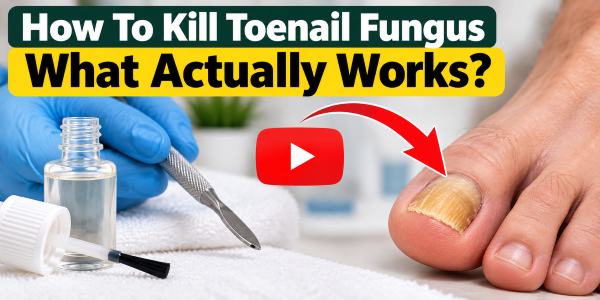
 DON’T TRY THIS “KILL TOENAIL FUNGUS” UNTIL YOU SEE THIS
If you have tried creams, foot soaks, or home remedies without success, you are not alone. Toenail fungus is difficult to treat because the infection can live beneath a hard nail plate that many products cannot penetrate effectively.
The best approach starts with confirming that fungus is actually responsible for the nail changes. From there, treatment depends on how many nails are affected, how deeply the infection extends, your medical history, and which treatment you can use consistently.
This guide explains what works, what has limited evidence, how long recovery takes, and how to reduce the chances of the infection returning.
What Is Toenail Fungus?
Toenail fungus, medically called onychomycosis, is an infection involving the nail plate, nail bed, or other parts of the nail unit. Dermatophytes, a group of fungi that infect keratin-containing tissues, cause many cases. Yeasts and other molds can also be responsible.
An infection may begin as a small discolored patch near the edge of a toenail. Over time, the nail can become thick, brittle, uneven, or difficult to trim.
Common changes include:
- White, yellow, or brown discoloration.
- Crumbling at the nail’s edges.
- Thickening or an irregular surface.
- Debris collecting beneath the nail.
- Separation of the nail from the nail bed.
- Discomfort when wearing shoes.
Appearance alone does not establish the diagnosis. An injured or otherwise abnormal nail can look very similar to an infected one.
Why Is Toenail Fungus So Difficult to Get Rid Of?
Treating an infected toenail is different from treating a fungal rash on the skin.
The nail plate forms a tough barrier. A product may have antifungal activity yet fail to reach the organisms underneath the nail in an effective concentration.
This helps explain why ordinary athlete’s foot creams often disappoint people who apply them to thickened toenails.
The location and extent of the infection also matter. A small area near the nail tip is generally easier to treat with a nail-specific topical medicine than an infection involving much of the nail or its growth area.
Finally, nails grow slowly. Successful treatment does not repair the existing damaged portion. That section needs to move forward and eventually be trimmed away as healthier nail grows behind it.
These challenges make a clear treatment plan more useful than repeatedly switching products.
First, Confirm That Your Nail Changes Are Caused by Fungus
Before committing to months of treatment, arrange an examination with a qualified healthcare professional.
Several conditions can resemble toenail fungus, including:
- Repeated pressure from tight shoes.
- Previous nail injuries.
- Nail psoriasis.
- Inflammatory skin conditions.
- Other nail disorders.
A clinician may take nail clippings or scrape material from beneath the nail. Depending on the circumstances, testing can involve microscopy, fungal culture, special staining, or molecular testing.
Confirmation is particularly important before starting an oral antifungal. Taking a medicine with potential side effects makes little sense if the underlying problem is trauma or psoriasis.
If an initial test is negative but suspicion remains high, your clinician may recommend another sample or a different testing method. A negative result doesn’t always settle the question, especially if the sample is inadequate.
Tell the clinician which nail products or antifungal medicines you have already used, because previous treatment can affect testing.
DON’T TRY THIS “KILL TOENAIL FUNGUS” UNTIL YOU SEE THIS
What Actually Works for Toenail Fungus?
The main evidence-based options are oral antifungal medicines and nail-specific topical treatments. Professional nail care can support treatment, while procedures have a more selective role.
| Treatment | When it may be useful | Main limitation |
|---|---|---|
| Oral terbinafine | Many confirmed dermatophyte infections, particularly more extensive disease | Requires medical assessment and safety monitoring |
| Oral itraconazole | Selected infections or situations where terbinafine is unsuitable | Important interactions and heart-related precautions |
| Prescription nail solutions or lacquer | Mild, limited infection or when oral treatment is unsuitable | Long treatment course and lower complete cure rates |
| Professional trimming or thinning | Thick, uncomfortable nails; support alongside medication | Does not usually eliminate infection by itself |
| Nail removal | Selected severely damaged or painful nails | A procedure with recovery needs; further treatment may be necessary |
| Laser treatment | Sometimes offered for improvement in nail appearance | Evidence for dependable fungal clearance remains limited |
The appropriate choice is the one that matches the infection and your health circumstances.
Oral Terbinafine: Often the First Choice
For many adults with confirmed dermatophyte toenail fungus, oral terbinafine is the preferred treatment.
It interferes with fungal cell membrane production. Because it is taken by mouth, it reaches the nail through the body rather than relying entirely on penetration from the nail’s surface.
A commonly prescribed adult course for toenail infection lasts 12 weeks. The treating clinician determines the exact prescription and follow-up plan.
When Might a Clinician Recommend It?
Oral treatment may be considered when several nails are affected, a substantial part of a nail is involved, or the infection reaches the nail’s growth area. It may also be appropriate when topical treatment has failed.
The choice should account for the confirmed diagnosis, symptoms, other medicines, and your preferences.
Does Finishing the Course Mean the Nail Should Look Normal?
No. The medication course can end well before the damaged nail has fully grown out.
A clearer area developing near the base may be encouraging, while older discoloration remains toward the tip. Your clinician can assess whether that pattern represents recovery.
Don’t extend the course or restart leftover tablets just because the nail still looks abnormal.
Terbinafine Safety: What to Discuss Before Treatment
Oral terbinafine is a prescription medicine with meaningful precautions.
Before prescribing it, a clinician should review your health history and medicines and assess for liver disease. Liver function testing is required before treatment; follow-up monitoring should follow the prescribing guidance and your individual circumstances.
Terbinafine tablets are contraindicated in people with chronic or active liver disease.
Possible side effects include digestive symptoms, headache, rash, and changes in taste or smell. Rarely, serious liver injury or severe skin reactions can occur.
Contact your prescriber promptly if you develop symptoms such as:
- Yellowing skin or eyes.
- Dark urine or unusually pale stools.
- Persistent nausea, loss of appetite, or marked fatigue.
- Pain in the upper right abdomen.
- A severe rash, blistering, or peeling skin.
A pharmacist or prescriber should also check for interactions with your existing medicines. Mention supplements and nonprescription products as well as prescriptions.
Other Oral Antifungal Medicines
Terbinafine is not suitable for every patient or every infection.
A clinician may choose itraconazole as an alternative based on the organism involved and the person’s medical circumstances. It has important drug interactions and heart-related warnings, so it requires careful review.
Fluconazole is sometimes used off-label for nail infection in the United States. Off-label use means that this particular indication is outside the medicine’s FDA-approved labeling; it does not mean the medicine should be used without supervision.
Different fungi can respond differently to treatment. For persistent or unusual infections, identifying the organism may help guide the next prescription.
Don’t assume a higher dose or longer course will fix every unsuccessful treatment. Rechecking the diagnosis and treatment plan is often more useful.
DON’T TRY THIS “KILL TOENAIL FUNGUS” UNTIL YOU SEE THIS
Prescription Topical Treatments: What Can They Do?
Prescription topical antifungals are designed for use on infected nails. Common options in the United States include:
- Efinaconazole solution.
- Tavaborole solution.
- Ciclopirox nail lacquer.
These medicines can be appropriate for limited infection, particularly when the nail’s growth area is unaffected. They may also be considered when oral medicines pose unacceptable risks.
Because they are applied locally, they generally have fewer systemic side effects than oral treatments. However, they can cause irritation around the nail.
The main practical challenge is consistency. Treatment often requires daily application for many months, with many toenail regimens lasting about 48 weeks.
Before choosing a topical treatment, consider whether you can realistically follow its application instructions throughout the course.
DON’T TRY THIS “KILL TOENAIL FUNGUS” UNTIL YOU SEE THIS
How Effective Are Nail Solutions and Lacquers?
Prescription topicals work for some people, but a fully clear, fungus-free nail is not guaranteed.
For example, two pivotal efinaconazole trials reported complete cure in approximately 15% to 18% of treated participants at week 52 after 48 weeks of daily application. Participants had selected mild-to-moderate infections, so those results should not be applied to every type of nail disease.
“Complete cure” is a strict outcome: the target nail appears clear and fungal testing is negative. More people may improve than achieve that endpoint.
When comparing treatments, check what a claimed “success rate” actually measures. Reduced discoloration, negative fungal testing, and complete cure are different results.
Trial percentages also cannot be compared casually when studies use different patients, follow-up periods, and definitions.
Can Over-the-Counter Antifungal Creams Kill Toenail Fungus?
Ordinary antifungal creams can treat fungal skin infections, including athlete’s foot. They generally do not penetrate the nail adequately to treat an established infection beneath it.
This distinction is particularly important with terbinafine:
Oral prescription terbinafine and over-the-counter terbinafine cream are different treatment approaches.
A cream that works well between the toes should not be expected to produce the same result inside a thick toenail.
Some pharmacy products are specifically intended for nails. Their ingredients, evidence, and instructions vary. Ask a pharmacist whether a product is suitable for your suspected infection and when to seek medical assessment.
If you also have athlete’s foot, treating the skin infection remains worthwhile. It addresses a separate problem that can contribute to ongoing fungal exposure.
DON’T TRY THIS “KILL TOENAIL FUNGUS” UNTIL YOU SEE THIS
Do Home Remedies Actually Work?
Home remedies are popular because they are inexpensive and easy to find. Unfortunately, convenience doesn’t prove effectiveness.
A useful question is whether a remedy has been shown to reliably clear a confirmed nail infection in people—not simply whether an ingredient inhibits fungi in a laboratory.
Vicks VapoRub
Small studies have explored Vicks VapoRub for toenail fungus, and some participants have shown improvement. However, the evidence is limited and does not establish it as a dependable substitute for approved antifungal treatment.
An improvement in appearance also does not necessarily mean the infection has cleared.
Tea Tree Oil
Tea tree oil has antifungal activity under some experimental conditions, but convincing clinical evidence for reliable toenail cure is lacking. It can also cause skin irritation or allergic reactions.
Vinegar, Baking Soda, and Hydrogen Peroxide
These household products have not been established as reliable cures for fungal nail infection. Repeated exposure can irritate surrounding skin, and prolonged soaking may leave feet damp.
Bleach and Other Harsh Chemicals
Do not apply household bleach or caustic cleaning products to an infected nail. Chemical injury can create a more serious foot problem without resolving the original infection.
Does Laser Treatment Kill Toenail Fungus?
Laser treatment is often promoted as a quick solution, but its benefits require careful interpretation.
Some devices are cleared for a temporary increase in clear nail. That outcome is different from proving that the fungus has been eradicated or that recurrence has been prevented.
Available studies vary in the devices used, treatment schedules, and definitions of success. Evidence does not support presenting laser treatment as a dependable replacement for established antifungal medicines.
Before paying for a course, ask:
- Is the goal cosmetic improvement or confirmed fungal clearance?
- What published evidence supports this particular device?
- How many sessions are expected?
- Will additional medication be recommended?
- What happens if the treatment does not help?
Request the total estimated cost and a realistic explanation of outcomes before deciding.
Can Trimming or Removing the Nail Help?
Professional trimming and thinning, also called debridement, can reduce bulky nail material and improve comfort. Used alongside medication, it may support treatment.
It is especially useful when a thick nail is difficult to manage safely or presses painfully against footwear.
However, thinning the nail alone usually does not eliminate the organisms responsible for the infection.
In selected cases, a clinician may recommend removing part or all of a severely affected nail. This is a medical procedure, and the plan may still include antifungal treatment afterward.
Avoid digging beneath the nail, cutting into attached tissue, or using sharp tools to scrape out suspected fungus. People with diabetes, reduced sensation, or poor circulation should seek professional guidance before attempting aggressive nail care.
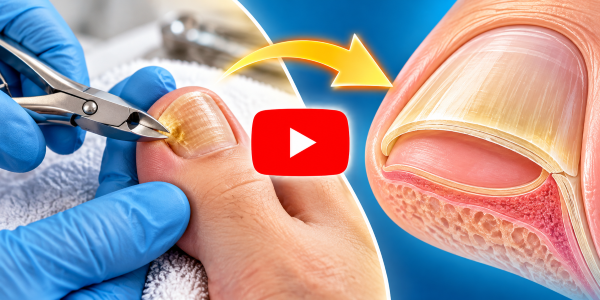
DON’T TRY THIS “KILL TOENAIL FUNGUS” UNTIL YOU SEE THIS
How Long Does Toenail Fungus Take to Clear?
There are two timelines to understand:
- The time needed to treat the fungal infection.
- The time needed for a healthier nail to replace the damaged portion.
A tablet course may last a few months, while a topical course may continue for close to a year. The visible result can take longer than the active treatment period.
A toenail may need 12 to 18 months to grow out fully. Growth rates vary, and a previously damaged nail may not regain a perfectly normal appearance.
For practical monitoring, take a photo about once a month under similar lighting. This can make gradual changes easier to discuss at follow-up.
Daily inspection can be frustrating because meaningful nail growth is hard to see over such short intervals.
How Can You Tell Whether Treatment Is Working?
A growing band of clearer nail near the base can suggest improvement. Less debris, reduced thickening in new growth, or better comfort may also be encouraging.
The older damaged portion can remain visible after successful treatment. Conversely, a nail that looks somewhat better may still contain fungus.
Ask your clinician:
- What change should I expect first?
- When should we reassess?
- Will repeat testing be useful?
- How will we distinguish slow regrowth from treatment failure?
These questions create a clearer plan than deciding on your own that treatment has succeeded or failed.
Why Treatment Sometimes Fails
Persistent nail changes do not always mean the medicine was ineffective.
Possible explanations include:
- The original problem was not a fungal infection.
- The chosen treatment was unsuitable for the extent of the infection.
- Applications or doses were missed.
- The nail has not had enough time to grow out.
- Athlete’s foot or repeated exposure contributed to reinfection.
- A different organism or resistance requires further investigation.
- Previous nail damage continues to affect appearance.
Bring an accurate treatment history to follow-up, including product names, duration, missed doses, and any side effects.
Repeatedly changing remedies makes it harder to assess what helped. A planned reassessment gives you a better chance of choosing a useful next step.
A Practical Treatment Plan
The following sequence can help turn a confusing problem into manageable decisions.
Step 1: Arrange an Assessment
Have the nail examined, particularly if the changes persist, spread, or cause discomfort. Ask whether fungal testing is appropriate before treatment.
Step 2: Discuss Severity and Safety
Review how much of the nail is involved, whether several nails are affected, and whether oral treatment is suitable.
Step 3: Choose a Sustainable Treatment
Consider effectiveness, application demands, monitoring, and total cost. An affordable treatment that you can complete is more practical than one you cannot maintain.
Step 4: Follow the Instructions
Use the prescribed schedule and nail-care directions. Contact the prescriber about side effects or difficulties rather than quietly abandoning treatment.
Step 5: Attend Follow-Up
Allow time for regrowth and reassess at the agreed interval. If progress is disappointing, further testing or a different approach may be needed.
How to Reduce the Risk of Toenail Fungus Returning
Successful treatment does not provide permanent immunity. Ongoing foot care can reduce opportunities for another infection.
Helpful habits include:
- Drying feet carefully after washing, including between the toes.
- Changing damp socks promptly.
- Choosing footwear that fits well and allows moisture to escape.
- Letting shoes dry between uses.
- Wearing sandals in communal showers and changing areas.
- Keeping nails reasonably short.
- Avoiding shared nail clippers, footwear, and towels.
- Cleaning nail-care tools appropriately.
- Treating athlete’s foot when it occurs.
If someone in your household has an active fungal foot infection, avoid sharing personal items.
For recurrent cases, ask whether a clinician-directed maintenance strategy is appropriate. Prevention reduces risk, but it cannot guarantee that fungus will never return.
DON’T TRY THIS “KILL TOENAIL FUNGUS” UNTIL YOU SEE THIS
When Should You Seek Medical Care Promptly?
Toenail fungus often develops gradually, but some symptoms need more immediate attention.
Seek prompt assessment for:
- Increasing redness, warmth, swelling, or pain.
- Pus, drainage, or a wound around the toe.
- Fever or spreading redness.
- Difficulty walking because of toe pain.
- Nail problems alongside diabetes, poor circulation, or a weakened immune system.
These symptoms can indicate complications or a separate problem requiring treatment.
A new or changing dark nail streak, unexplained bleeding, or pigment spreading onto surrounding skin should also be evaluated. Do not automatically attribute every nail color change to fungus.
Does Every Fungal Toenail Need Medication?
Not necessarily.
For an otherwise healthy person with a small, painless infection, observation and appropriate nail care may be reasonable after assessment. Treatment becomes more compelling when the nail hurts, the infection spreads, footwear becomes uncomfortable, or health conditions increase the risk of complications.
Your priorities also matter. Some people mainly want relief from thickening and pressure; others value improved appearance more.
Discuss expected benefits and drawbacks rather than assuming that every abnormal nail requires tablets.
Regardless of whether medication is chosen, remain alert to new pain, skin breakdown, or inflammation.
Conclusion
If you are asking “How to kill toenail fungus—what actually works?”, the strongest answer is to confirm the diagnosis and choose an antifungal treatment suited to the infection.
Prescription oral terbinafine is often the preferred option for confirmed dermatophyte toenail fungus when it is medically appropriate. Prescription nail solutions and lacquers can help selected milder infections, although they require patience and consistent use.
Home remedies have limited evidence, and laser treatment should not be mistaken for a guaranteed cure. Professional nail care can improve comfort and support medication, but it usually cannot clear the infection on its own.
Expect recovery to take months. A clear diagnosis, a realistic treatment schedule, follow-up, and measures to reduce reinfection offer the most dependable path toward healthier toenails.
DON’T TRY THIS “KILL TOENAIL FUNGUS” UNTIL YOU SEE THIS
References
https://www.mayoclinic.org/diseases-conditions/nail-fungus/diagnosis-treatment/drc-20353300
https://www.webmd.com/skin-problems-and-treatments/treat-toenail-fungus
https://www.healthline.com/health/home-remedies-for-toenail-fungus
.
About Us
