
Red Light Therapy for Tinnitus and Hearing Loss: Evidence
Red light therapy, also called photobiomodulation (PBM) or low-level light/laser therapy, is being investigated as a possible treatment for tinnitus and some forms of hearing loss.
The proposed idea is that specific wavelengths of light may influence cellular metabolism, circulation, and inflammatory processes in the tissues involved in hearing.
However, red light therapy is not currently established as a proven cure for tinnitus or hearing loss.
Research is promising in some areas, but inconsistent overall, and long-term benefits remain uncertain.
A 2023 systematic review found generally positive tinnitus outcomes but emphasized the lack of strong evidence for lasting therapeutic benefit.
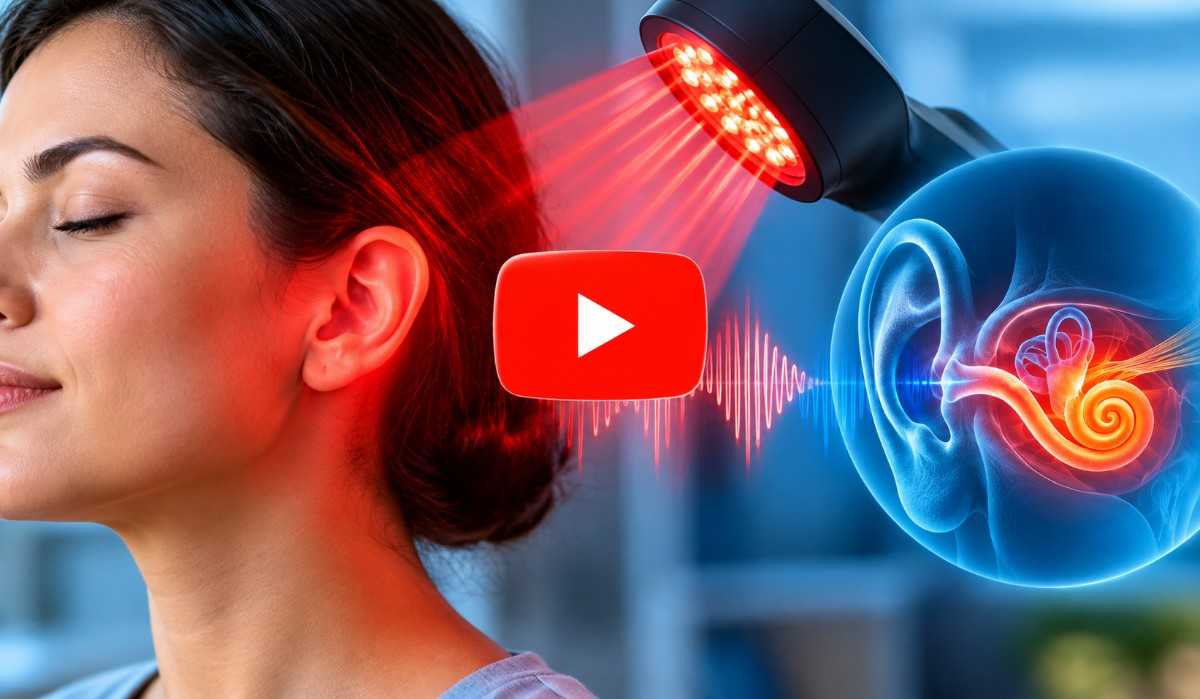

This guide explains what red light therapy may do, what current research says, its limitations, safety concerns, and how it compares with better-established tinnitus and hearing-loss treatments.
What Is Red Light Therapy for Tinnitus?
Red light therapy uses low-intensity red or near-infrared light to interact with biological tissues. In medical research, this approach is generally called photobiomodulation.
Unlike surgical lasers that cut or destroy tissue, PBM uses relatively low-energy light with the goal of producing biological effects without causing significant tissue damage.
For tinnitus, researchers have investigated whether light can be delivered toward the ear or inner-ear region to influence processes involved in tinnitus perception.
The theory is that PBM could potentially affect cellular energy production, blood flow, oxidative stress, or inflammatory pathways. These mechanisms are biologically plausible, but demonstrating a laboratory effect is not the same as proving meaningful improvement in patients.
Can Red Light Therapy Help Tinnitus?
Possibly, but the evidence is not strong enough to call it a proven tinnitus treatment.
Clinical studies have produced mixed findings. Some trials have reported reductions in tinnitus severity after PBM, while others have found little or no meaningful difference compared with placebo.
A systematic review of randomized controlled trials found that most included studies did not demonstrate convincing effectiveness for chronic tinnitus. The researchers concluded that the evidence was still insufficient to recommend PBM routinely.
Another meta-analysis involving 11 studies and 670 patients found no statistically significant overall advantage of low-level laser therapy over placebo for tinnitus severity.
This matters because online advertisements can make red light therapy sound more established than the clinical evidence shows.
How Might Photobiomodulation Affect the Ear?
Researchers are investigating several possible mechanisms.
✅ Cellular Energy
Photobiomodulation may interact with cellular components involved in energy production. The proposed effect could support cellular function under certain conditions.
✅ Blood Circulation
Some researchers have proposed that PBM may influence microcirculation. Because the inner ear depends on a delicate blood supply, improved circulation may be one possible mechanism.
However, this does not mean that increasing circulation automatically reverses hearing damage.
✅ Oxidative Stress and Inflammation
Oxidative stress and inflammatory processes have been studied in several types of inner-ear injury. Researchers are investigating PBM for its potential effects on these pathways.
The challenge is determining whether these biological effects translate into a clinically meaningful improvement in hearing or tinnitus.
Does Red Light Therapy Restore Hearing Loss?
This is where consumers should be particularly cautious.
Strong evidence that ordinary red light therapy can reliably restore permanently damaged hearing is currently lacking.
Hearing loss has many causes. Earwax blockage, middle-ear problems, infections, noise-related damage, aging, medication effects, genetic conditions, and inner-ear disorders can all produce different types of hearing impairment.
For example, sensorineural hearing loss can involve damage to delicate structures within the inner ear. Treatment depends heavily on the underlying cause.
A systematic review examining photobiomodulation and hearing loss found human and animal research, but the evidence remains insufficient to establish PBM as a standard hearing-restoration treatment.
Therefore, claims that red light therapy can “regrow damaged hearing cells” or “restore hearing naturally” should be treated cautiously.
Red Light Therapy and Sudden Hearing Loss
Sudden hearing loss differs from ordinary, gradual age-related hearing loss.
If hearing suddenly decreases, particularly in one ear, it should not be treated as something to experiment with at home.
Recent research has investigated low-level laser therapy and photobiomodulation for tinnitus and sudden sensorineural hearing loss.
A 2025 systematic review reported some short-term improvements in tinnitus and hearing outcomes in selected studies, but also emphasized inconsistent treatment parameters and uncertain long-term effectiveness.
That distinction matters: research interest does not make PBM a replacement for urgent medical evaluation.
Sudden hearing changes require prompt assessment by an appropriate healthcare professional because the timing of conventional treatment can matter.
What Are the Potential Benefits of Red Light Therapy?
The potential benefits being investigated include:
- Reduction in tinnitus intensity or perceived severity
- Possible improvement in tinnitus-related discomfort
- Potential effects on inner-ear cellular activity
- Possible influence on circulation and tissue metabolism
- A non-invasive approach compared with surgical procedures
- Generally favorable short-term tolerability in published studies
The 2023 systematic review identified 28 studies involving 1,483 human participants and reported generally positive tinnitus outcomes.
However, treatment protocols varied considerably, including differences in wavelength, treatment duration, and follow-up periods.
This variability makes it difficult to determine exactly which type of light, dose, treatment schedule, or patient population is most likely to benefit.
Red Light Therapy vs. Hearing Aids for Tinnitus
These approaches are not equivalent.
If tinnitus occurs alongside hearing loss, hearing aids are an established management option. Amplifying environmental sounds can make tinnitus less noticeable for some people and can improve communication.
Healthline notes that research has associated hearing aids with tinnitus relief in many patients who also have hearing loss.
WebMD similarly identifies hearing aids as one treatment option for people who have both tinnitus and hearing impairment.
By comparison, red light therapy remains investigational.
For someone with measurable hearing loss, an appropriate hearing evaluation should generally come before spending money on experimental light devices.
Red Light Therapy vs. Sound Therapy
Sound therapy is another commonly discussed approach for tinnitus.
It may involve:
- White or pink noise
- Nature sounds
- Specialized sound generators
- Hearing-aid-based sound programs
- Customized sound approaches
The objective is generally to make tinnitus less noticeable or help the brain adapt to the perception of the sound.
Red light therapy attempts to influence biological processes, whereas sound therapy primarily works through auditory stimulation and perception.
Neither approach is guaranteed to work for everyone, but sound-based approaches have a longer history of clinical use for tinnitus management.
Does Red Light Therapy Have Side Effects?
Published studies generally describe PBM as relatively well tolerated, but “low risk” does not mean risk-free.
Potential concerns depend on the device, wavelength, intensity, treatment duration, and how the light is delivered.
Consumers should be particularly careful with devices that are marketed for direct use around or inside the ear without clear safety instructions.
Do not assume that a red-light device designed for the skin is automatically appropriate for the eyes, ear canal, or inner-ear region.
Common Mistakes People Make
❌️ Assuming Red Light Therapy Is a Cure
A reduction in tinnitus symptoms in one study does not prove that the underlying cause has been cured.
❌️ Using Any Red Light Device
Different devices have different wavelengths, power levels, treatment areas, and exposure times. A household red-light panel is not necessarily comparable to equipment used in a clinical study.
❌️ Ignoring the Cause of Hearing Loss
Tinnitus can be associated with hearing loss, earwax, medication effects, infections, noise exposure, and other conditions.
Treating the underlying cause may be more important than trying an experimental therapy.
❌️ Delaying a Hearing Test
If tinnitus is accompanied by noticeable hearing difficulty, an audiological evaluation can determine whether hearing loss is actually present and how severe it is.
Viral Claims About Red Light Therapy: Fact vs. Hype
Several claims circulate online that deserve careful interpretation.
Claim: “Red light therapy completely cures tinnitus.”
Insufficient evidence supports this claim.
Claim: “Red light regrows inner-ear hair cells.”
Human clinical evidence does not currently establish that ordinary PBM reliably regenerates damaged hearing cells.
Claim: “More light means better results.”
Not necessarily. PBM depends on specific treatment parameters, and research protocols vary.
Claim: “It works for everyone because it is natural.”
No treatment works universally simply because it is non-drug or non-invasive.
The most responsible interpretation is that PBM is an area of ongoing research, not a guaranteed cure for tinnitus or hearing loss.
When Should You See a Doctor for Tinnitus?
Tinnitus deserves medical evaluation when it is persistent, bothersome, or associated with other symptoms.
Seek prompt medical attention if tinnitus occurs with:
- Sudden hearing loss
- Significant dizziness or vertigo
- New neurological symptoms
- Tinnitus after a significant head injury
- A pulsing sound that matches your heartbeat
- Significant hearing loss in only one ear
NIDCD explains that tinnitus can have different causes and that evaluation may include of ear examination, hearing testing, and additional investigations when appropriate.
What Treatments Have Better Established Roles?
Treatment depends on the cause and the person’s symptoms.
Common management strategies include:
- Treating earwax blockage or infection when present
- Hearing aids when hearing loss is present
- Sound therapy or masking
- Cognitive behavioral therapy for tinnitus-related distress
- Tinnitus counseling and education
- Protecting hearing from excessive noise
- Managing conditions or medications that may contribute to symptoms
No single treatment eliminates tinnitus for everyone. The goal is often to identify treatable causes and reduce how intrusive the tinnitus becomes.
Is Red Light Therapy Worth Trying?
For someone interested in emerging treatments, red light therapy may be worth discussing with an audiologist, ENT specialist, or other qualified hearing professional.
The key is to approach it as an experimental or complementary option, not a replacement for diagnosis and evidence-based care.
If you are considering a device, look for transparent information about wavelength, power, treatment protocol, safety testing, and the evidence supporting that specific device. Be skeptical of products promising guaranteed hearing restoration or permanent tinnitus elimination.
Final Takeaway
Red light therapy for tinnitus and hearing loss is promising but not yet proven as a reliable cure.
Research suggests photobiomodulation may have biological effects that could influence tinnitus and certain hearing-related processes, but clinical results remain inconsistent and long-term benefits are not firmly established.
For tinnitus associated with hearing loss, getting a proper hearing evaluation is a more important first step than purchasing an unverified red-light device.
Established approaches such as hearing aids, sound-based therapies, counseling, and treatment of identifiable underlying causes may provide meaningful symptom management.
The most evidence-based approach is to view red light therapy as an emerging research area, not a miracle treatment, and make decisions based on the cause of the hearing problem, the quality of available evidence, and professional hearing-care advice.
References
- Wikipedia — Tinnitus: https://en.wikipedia.org/wiki/Tinnitus
- WebMD — Tinnitus Overview: https://www.webmd.com/a-to-z-guides/tinnitus-overview
- Healthline — Does Tinnitus Cause Hearing Loss?: https://www.healthline.com/health/does-tinnitus-cause-hearing-loss
About Us
