
How to Maintain a Healthy Prostate After 50: 12 Tips for Men
For men over 50, the best way to maintain a healthy prostate is not to rely on a single food, supplement, or viral “prostate hack.”
A better approach combines regular physical activity, healthy weight management, a nutrient-rich diet, sensible fluid habits, attention to urinary symptoms, and personalized prostate screening.
Prostate enlargement becomes increasingly common with age.
Benign prostatic hyperplasia (BPH) is the most common prostate problem in men over 50, and risk is also associated with factors such as physical inactivity, obesity, diabetes, and cardiovascular disease.
At the same time, social media has created a new wave of prostate-health trends from supplements and “detox” drinks to unusual exercises and hormone-related health hacks.
Some habits are reasonable; others have little evidence. Here is what actually deserves attention after 50.
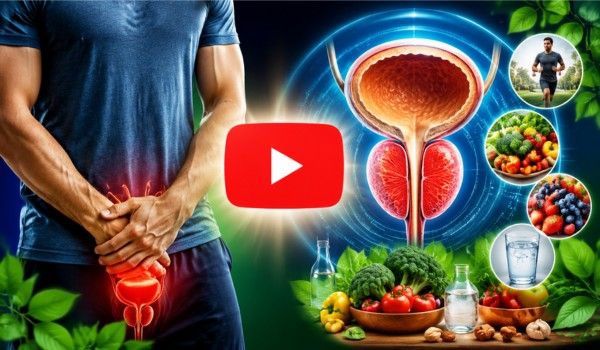

Why Prostate Health Changes After 50
The prostate sits below the bladder and surrounds part of the urethra. As men age, the prostate commonly continues growing.
This does not automatically mean cancer.
BPH can enlarge the prostate and contribute to symptoms such as:
- Weak urine stream
- Frequent urination
- Urgency
- Difficulty starting urination
- Getting up at night to urinate
- Feeling that the bladder has not emptied completely
However, urinary symptoms can have several causes. Assuming that every change is simply “because you’re getting older” can delay appropriate evaluation.
1. Make Physical Activity Your First Prostate Habit
One of the more interesting developments in recent prostate research is the growing attention to physical activity.
A 2026 review examined 19 studies on exercise, physical activity, and BPH. Several studies suggested a protective association, although the researchers emphasized that the evidence remains inconsistent and that better trials are needed.
That distinction matters.
Exercise should not be advertised as a guaranteed way to prevent an enlarged prostate. But staying active is still one of the strongest practical habits for maintaining cardiovascular, metabolic, and general health.
The Simple 30-Minute Rule
Instead of looking for a special “prostate exercise,” build movement into your normal day.
Try:
- Brisk walking
- Cycling
- Swimming
- Resistance training
- Light jogging if appropriate
- Regular movement breaks during prolonged sitting
The best exercise is the one you can maintain consistently.
 DON’T TRY THIS “HEALTHY PROSTATE AFTER 50” UNTIL YOU SEE THIS
2. The New Prostate Strategy: Protect Metabolic Health
A less obvious approach to prostate health is taking care of your waistline, blood sugar, blood pressure, and cardiovascular health.
BPH is associated with several metabolic and cardiovascular conditions, including obesity and type 2 diabetes. (NIDDK)
This creates an important SEO angle: prostate health should not be treated as an isolated problem.
Instead of asking:
“What should I take for my prostate?”
a better question is:
“What lifestyle habits improve my overall health while also supporting urinary health?”
That shift makes the advice more evidence-based.
3. Try the Mediterranean-Style Approach Instead of a “Prostate Diet”
There is no magical prostate food.
However, current nutrition research increasingly supports dietary patterns rather than isolated ingredients.
A 2025 systematic review of prostate-cancer dietary research found that healthier plant-based dietary patterns were generally associated with lower prostate-cancer risk in men without prostate cancer, although the evidence was not uniform and randomized trials produced mixed findings.
Recent research has also investigated the Mediterranean diet specifically in men with lower urinary tract symptoms.
A practical pattern emphasizes:
- Vegetables
- Fruits
- Beans and lentils
- Whole grains
- Nuts and seeds
- Fish
- Unsaturated fats
- Minimally processed foods
This is more useful than promising that one “superfood” will shrink the prostate.
4. What About Tomatoes and Lycopene?
Tomatoes are frequently promoted online as a prostate superfood because they contain lycopene.
It is reasonable to include tomatoes as part of a healthy diet.
But there is an important distinction between:
“Tomatoes are nutritious.”
and
“Eating tomatoes prevents prostate disease.”
The second claim is much stronger and is not established simply because lycopene has biological antioxidant properties.
NCCIH also notes that evidence is insufficient to support lycopene as a treatment for an enlarged prostate.
So keep tomatoes in the diet—but skip exaggerated promises.
5. The Viral Prostate Hacks: What Actually Works?
This is where your article can outperform generic competitors.
Searches for men’s health increasingly overlap with social-media wellness trends. The problem is that viral popularity can make an unsupported remedy appear medically established.
Baking Soda for Prostate Health
Baking soda is sometimes promoted online as a way to “alkalize” the body or improve prostate function.
There is no established clinical basis for using baking soda as a treatment for BPH or as a proven method of preventing prostate cancer.
The body tightly regulates blood chemistry through the lungs and kidneys. Drinking baking soda is therefore not a legitimate substitute for prostate evaluation or treatment.
Apple Cider Vinegar Prostate Hack
Another common online claim is that apple cider vinegar can “clean” or shrink the prostate.
There is no good evidence that drinking apple cider vinegar can physically shrink an enlarged prostate.
It can also irritate the digestive tract and damage tooth enamel when consumed excessively.
Cold Showers and “Hormone Hacks”
Cold exposure, testosterone optimization, fasting, and other “health-maxxing” trends have become popular online.
They may have legitimate discussions around general health, but that does not establish them as prostate treatments.
This distinction is essential:
A general wellness trend is not automatically a prostate-health treatment.
DON’T TRY THIS “HEALTHY PROSTATE AFTER 50” UNTIL YOU SEE THIS
6. Don’t Fall for the “Natural Prostate Supplement” Trap
Prostate supplements are one of the biggest areas of online marketing.
Products commonly contain combinations of ingredients such as saw palmetto, zinc, selenium, lycopene, beta-sitosterol, pumpkin seed compounds, and herbal extracts.
The presence of a familiar ingredient does not prove that the finished supplement works.
Does Saw Palmetto Work?
Saw palmetto is probably the most recognizable prostate supplement.
But the evidence is far less impressive than the marketing.
NCCIH reports that a 2023 review of 27 studies found that saw palmetto alone provided little or no benefit for BPH symptoms.
A 2024 Cochrane review similarly found little to no benefit for urinary symptoms associated with benign prostate enlargement.
That makes this a valuable myth-vs-evidence section rather than another supplement recommendation.

7. Don’t Purposely Dehydrate Yourself to Urinate Less
This is an easy mistake for men dealing with frequent urination.
Reducing excessive evening fluids may help some people with nighttime urination.
But deliberately drinking very little throughout the day is not a prostate treatment.
Instead:
- Drink according to your thirst and individual needs.
- Avoid very large amounts immediately before bed if nocturia is a problem.
- Notice whether caffeine or alcohol worsens your symptoms.
- Discuss persistent symptoms with a healthcare professional.
The goal is smarter hydration, not dehydration.
8. Use the “Nighttime Urination Check”
Waking up once at night does not automatically mean that your prostate is unhealthy.
But repeated nighttime urination can affect sleep and quality of life.
Keep a simple record for several days:
Time: When did you drink?
Amount: Approximately how much?
Urination: How many times?
Symptoms: Urgency, weak flow, difficulty starting?
Night: How many times did you wake?
This information can be surprisingly useful when discussing symptoms with a clinician.
It also helps distinguish a fluid-timing issue from a persistent urinary problem.
DON’T TRY THIS “HEALTHY PROSTATE AFTER 50” UNTIL YOU SEE THIS
9. Don’t Ignore a Weak Urine Stream
A weak or interrupted stream is of symptom men commonly dismiss.
BPH can cause urinary obstruction because an enlarged prostate can interfere with urine leaving the bladder.
But urinary symptoms don’t prove BPH is the cause.
A weak stream can also occur with other urinary conditions.
If the problem persists or worsens, evaluation is more useful than trying another internet remedy.
10. Know the Difference Between BPH and Prostate Cancer
This is one of the most important misconceptions to correct.
BPH is not prostate cancer.
An enlarged prostate can produce urinary symptoms, while prostate cancer may have no symptoms during its early stages.
That is why screening conversations cannot be replaced by judging prostate health based only on how well you urinate.
Current prostate-cancer screening guidance emphasizes individualized decision-making, and PSA remains the primary blood test used in screening.
PSA can also rise for reasons other than cancer, including prostate enlargement and infection.
11. The PSA Conversation After 50 Is Changing
Instead of telling every man:
“You need a PSA test at exactly age 50.”
A more accurate approach is to discuss personal risk.
Factors that can influence screening decisions include:
- Age
- Family history
- Previous PSA results
- Personal risk factors
- Overall health
- Expected benefits and harms of screening
The 2026 AUA/SUO guideline update also reflects continuing developments in prostate-cancer detection, including MRI, biomarkers, biopsy techniques, and risk-based decision-making.
That gives the article a more current angle than simply repeating an old PSA checklist.

12. Build a “Prostate Health Scorecard” Instead of Chasing Hacks
This could be a unique section that makes the article more useful than competitors.
Once a week, ask yourself:
Movement: Am I physically active most days?
Weight: Is my weight or waist circumference moving in an unhealthy direction?
Food: Am I eating mostly minimally processed foods?
Urination: Has my stream, frequency, urgency, or nighttime urination changed?
Hydration: Am I drinking appropriately rather than deliberately restricting fluids?
Medical care: Am I keeping up with appropriate health and screening discussions?
Supplements: Am I taking something because evidence supports it—or because social media recommended it?
This approach turns prostate health from a vague concept into something practical.
What Men Over 50 Should Stop Doing
Some of the best prostate advice is about what not to do.
Stop assuming every urinary symptom is normal aging.
Stop believing that a supplement is effective simply because it says “prostate support” on the label.
Stop using viral detox drinks as substitutes for medical care.
Stop deliberately dehydrating yourself to avoid nighttime urination.
Stop assuming that an enlarged prostate means cancer.
And stop treating one food, herb, or household ingredient as a cure.
DON’T TRY THIS “HEALTHY PROSTATE AFTER 50” UNTIL YOU SEE THIS
A Simple 7-Day Prostate-Friendly Routine
✅ Day 1: Take a brisk walk and review your usual diet.
✅ Day 2: Add another serving of vegetables.
✅ Day 3: Replace one highly processed snack with fruit, nuts, or another minimally processed option.
✅ Day 4: Add resistance exercise if appropriate for your fitness level.
✅ Day 5: Review caffeine and alcohol intake, especially if urinary frequency bothers you.
✅ Day 6: Track nighttime urination and other urinary symptoms.
✅ Day 7: Review your progress and identify one habit you can maintain long-term.
The goal isn’t a seven-day “prostate detox.”
It is creating habits that can continue for years.
When Should You See a Doctor?
Do not rely on lifestyle changes alone if you develop:
- Inability to urinate
- Blood in the urine
- Severe urinary pain
- Fever with urinary symptoms
- Rapidly worsening urinary problems
- Persistent weak urine flow
- Significant difficulty starting urination
- Repeated bladder-emptying problems
Sudden inability to urinate requires prompt medical attention.
The Bottom Line
Maintaining a healthy prostate after 50 is not about discovering a secret ingredient.
The more reliable strategy is regular movement, healthy weight management, a plant-rich eating pattern, appropriate hydration, attention to urinary symptoms, and individualized screening discussions.
The latest research also gives an important reason to avoid oversimplifying the topic. Physical activity appears promising for BPH risk, but researchers still describe the evidence as inconsistent.
Mediterranean-style dietary patterns are being actively studied, while popular supplements such as saw palmetto have not demonstrated the dramatic benefits often claimed online.
And when a viral prostate hack promises to “shrink,” “clean,” or “flush” the prostate, ask one question before trying it:
References
- Wikipedia — Benign Prostatic Hyperplasia (BPH)
https://en.wikipedia.org/wiki/Benign_prostatic_hyperplasia
- WebMD — What Is BPH (Benign Prostatic Hyperplasia)?
https://www.webmd.com/men/prostate-enlargement-bph/what-is-bph
- Healthline — BPH: Causes, Symptoms, Diagnosis & Treatment
https://www.healthline.com/health/enlarged-prostate
About Us
