Is the Horse Trick a Scam? Facts, Claims & Risks
The internet is constantly producing new health trends that promise simple solutions to complicated problems. One of the more unusual examples is the “Horse Trick,” a phrase that has recently appeared in videos, social-media posts, forums, and wellness articles aimed largely at men.
Depending on where you encounter it, the Horse Trick may refer to a gelatin-based drink, a food or beverage mixture, a physical exercise, or another routine promoted for men’s vitality and sexual wellness.
Some versions are presented as a natural way to improve stamina, testosterone, circulation, libido, erection quality, or overall performance. The answer requires some nuance.
The Horse Trick is a viral wellness trend often discussed online for men’s health and vitality. It should be viewed as a general wellness practice rather than a proven medical treatment and considered alongside balanced nutrition, regular exercise, proper hydration, and healthy lifestyle habits.
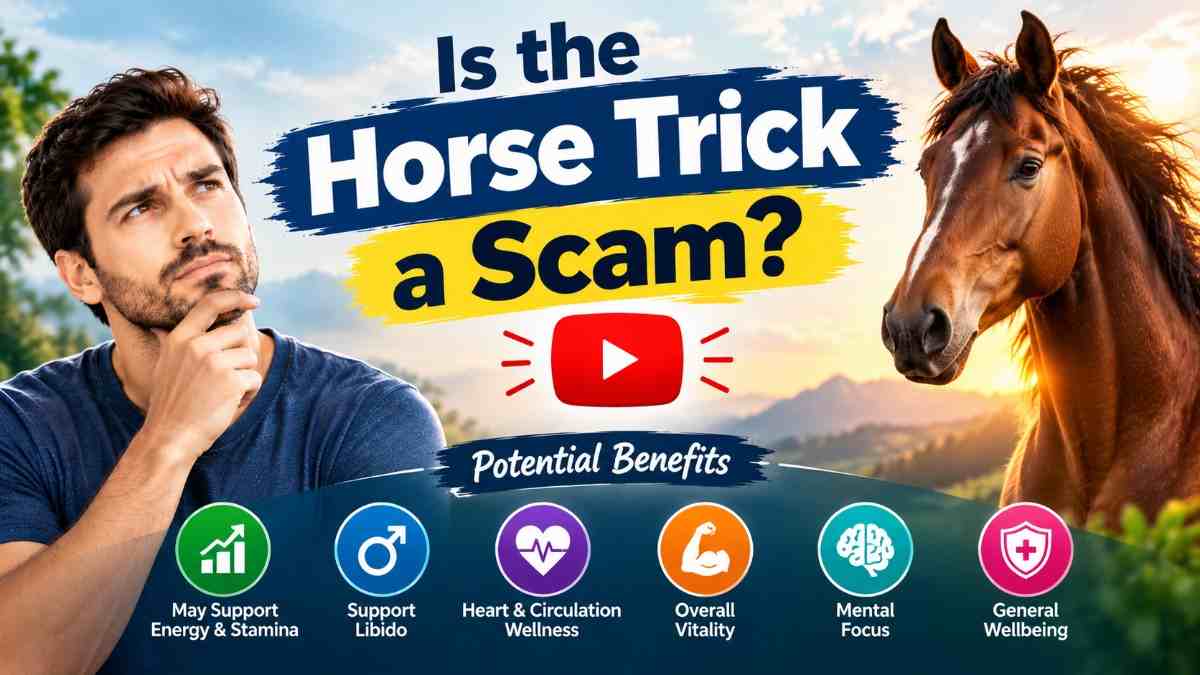

The term itself does not describe one standardized medical treatment or a single commercially regulated product. Therefore, it would be misleading to call every version of the Horse Trick a scam simply because the name is associated with questionable online claims.
At the same time, there is an important difference between an ordinary food-based routine and marketing that promises dramatic sexual-health results without reliable clinical evidence.
This article takes a closer look at what the Horse Trick means, why it became popular, what evidence actually supports the claims, how to recognize potentially misleading marketing, and what men should consider when dealing with persistent sexual-health concerns.
The goal is not to encourage or discourage a particular choice. Instead, it is to separate the viral story from the available evidence so readers can make informed decisions about their health.
What Is the Horse Trick?
The phrase Horse Trick is primarily an internet wellness term rather than the name of a recognized medical treatment.
Online discussions use the expression in different ways. Some versions describe a gelatin-based drink made by dissolving plain gelatin in warm liquid.
Other versions may associate the term with exercise routines, pelvic-floor movements, food combinations, or products advertised specifically toward men.
A legitimate medical treatment generally has a defined formulation, standardized instructions, a specific medical purpose, safety information, and clinical research evaluating its effectiveness. A viral internet “trick” may have none of these characteristics.
Some online discussions also use the expression “horse gelatin trick,” even though the actual product used in recipes may simply be ordinary food-grade gelatin. Gelatin is a protein derived from collagen and is commonly used in foods.
The most important distinction is therefore between what the routine actually contains and what someone claims it can accomplish.
A simple gelatin drink can be considered a food or nutritional preparation. Claims that the same drink dramatically increases testosterone, produces stronger erections within minutes, enlarges the penis, or permanently improves sexual performance require a much higher level of evidence.
 DON’T TRY THIS “HORSE TRICK” UNTIL YOU SEE THIS
Why Has the Horse Trick Become So Popular?
Health trends spread quickly when they combine three things: curiosity, simplicity, and a promise of noticeable results.
Many men are interested in improving energy, stamina, confidence, sexual function, and general wellness.
At the same time, some people prefer inexpensive or home-based approaches instead of immediately discussing sensitive concerns with a healthcare professional.
A video with thousands of views may create the impression that thousands of people have successfully tested a method. But views, likes, comments, testimonials, and shares are not clinical evidence.
Personal experiences can also be difficult to interpret. Someone may begin a new routine and subsequently notice better energy or sexual confidence.
That experience may be completely genuine, but it does not necessarily demonstrate that the routine caused the improvement.
Sleep, physical activity, stress, diet, alcohol consumption, relationship circumstances, medication changes, and normal fluctuations in sexual function can all influence how someone feels.
That is why scientific research attempts to compare an intervention against appropriate controls and measure outcomes systematically.
Is the Horse Trick a Scam?
The most accurate answer is that the phrase “Horse Trick” cannot automatically be classified as a scam because it refers to multiple different things online.
However, specific products, advertisements, or claims associated with the trend can certainly be misleading if they promise results that are not supported by evidence.
For example, there is a major difference between saying:
“This gelatin drink provides protein and can be included in a normal diet.”
and saying:
“This secret trick will dramatically increase testosterone and give you a stronger erection within minutes.”
The first statement concerns ordinary nutrition. The second makes a specific health-performance claim that requires evidence.
Current medical information does not establish a gelatin-based Horse Trick as a proven treatment for erectile dysfunction or as a reliable method for increasing testosterone or sexual performance.
Major health organizations also caution consumers about products marketed for sexual enhancement because some have been found to contain undeclared pharmaceutical ingredients.
Therefore, the biggest concern is not necessarily the existence of a simple food-based routine. The concern is when a viral routine becomes the basis for exaggerated promises, deceptive marketing, or unsafe products.
What Does the Science Say About Gelatin?
It is a protein produced from collagen and is commonly used in foods. It contains amino acids associated with collagen, including glycine and proline.
That nutritional profile explains why gelatin is sometimes discussed in relation to connective tissue, protein intake, and general nutrition.
The fact that a nutrient or food component participates in a biological process does not prove that consuming it will produce a specific medical outcome.
For example, a food can contain protein without being a treatment for erectile dysfunction. Likewise, the presence of collagen-related amino acids does not establish that a gelatin drink can raise testosterone or produce immediate changes in erectile function.
Does the Horse Trick Increase Testosterone?
There is no established evidence that a simple gelatin-based Horse Trick reliably increases testosterone in men.
A person’s age, sleep, body composition, physical activity, certain health conditions, medications, and other factors can influence hormone levels.
A viral recipe should not be treated as a substitute for proper evaluation when someone is concerned about low testosterone.
If symptoms suggest a possible hormone problem, a healthcare professional can determine whether testing is appropriate and interpret laboratory results in the context of the individual’s overall health.
The important point is that a claim appearing repeatedly online does not become scientifically established simply through repetition.
Does the Horse Trick Improve Erectile Function?
This is one of the most common reasons people search for the Horse Trick. However, erectile function is considerably more complicated than a single food or drink.
An erection involves blood vessels, nerves, hormones, psychological factors, and overall physical health. Conditions affecting blood vessels, diabetes, high blood pressure, certain medications, nerve disorders, and other health issues can contribute to erectile difficulties.
There is also a practical issue: if someone experiences persistent erectile difficulties, relying exclusively on a viral internet trick could delay an appropriate medical evaluation.
Erectile dysfunction can sometimes be an early sign of an underlying health problem, which makes persistent symptoms worth discussing with a qualified healthcare professional.
What About Claims of Immediate Results?
Statements suggesting that a particular drink or technique will produce dramatic sexual changes within a few minutes are difficult to reconcile with the complexity of sexual physiology.
Some social-media content uses phrases such as “instant,” “secret,” “overnight,” or “works in minutes” because these phrases attract attention.
When evaluating a health claim, consider whether the claim explains:
- What exactly is being used
- How much is being used
- Who has studied it
- How many people were studied
- What outcome was measured
- How long the study lasted
- Whether there was a comparison group
- Whether the findings were independently replicated
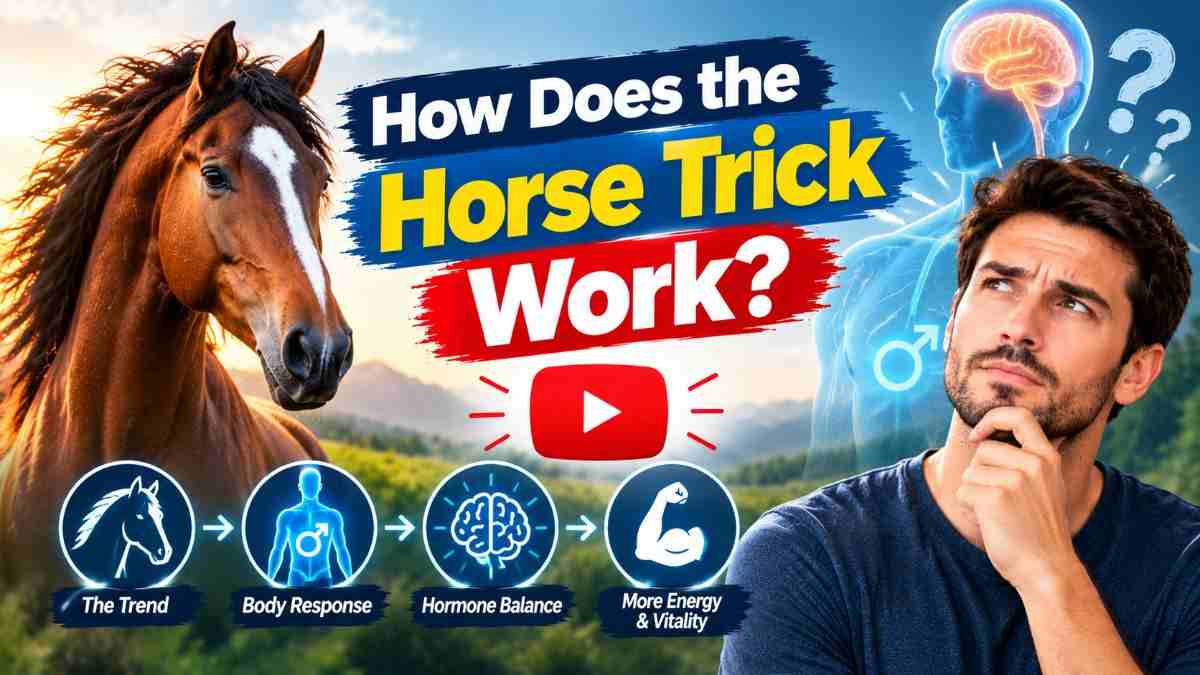
Why Testimonials Are Not Enough
A video may show someone claiming that a particular method transformed his stamina or sexual performance. Another post may feature before-and-after statements. A website may display dozens of positive comments.
A person may experience improvement because of many simultaneous changes. They may have changed their diet, started exercising, slept better, reduced stress, stopped drinking alcohol, or simply experienced normal variation.
There is also a selection issue. People who believe a trend worked for them may be more motivated to post about it than people who noticed no change.
That does not mean every testimonial is fake. It means individual experience and scientific evidence answer different questions.
Red Flags That May Indicate Misleading Horse Trick Marketing
Consumers should pay close attention to how a Horse Trick is presented.
1. Guaranteed Results
Health outcomes vary from person to person. A promise that everyone will experience the same dramatic result should be treated cautiously.
2. Extremely Fast Claims
Statements promising major changes within minutes or hours deserve additional scrutiny.
3. “Secret Doctors Don’t Want You to Know”
This type of language attempts to create distrust of conventional healthcare rather than providing evidence.
4. No Clear Product Information
If a commercial product does not clearly identify what it contains, how much is included, who manufactures it, or how it should be used, caution is appropriate.
5. Excessive Testimonials
A long page of enthusiastic reviews does not substitute for controlled clinical research.
6. Pressure to Buy Immediately
Countdown timers, limited-stock warnings, and aggressive sales messages can encourage people to purchase before they have evaluated the claim.
7. Claims to Treat Erectile Dysfunction
Erectile dysfunction is a medical condition with multiple possible causes. A food or supplement should not automatically be presented as a proven treatment.
8. “All Natural” as Proof of Safety
Natural does not automatically mean safe or effective.
9. Claims That One Method Solves Multiple Problems
A single trick claiming to improve testosterone, libido, erections, circulation, energy, weight, prostate health, and overall performance simultaneously should be examined carefully.
Can the Horse Trick Be Dangerous?
A normal food containing gelatin is not automatically dangerous simply because the internet calls it a “Horse Trick.” However, commercially marketed sexual-enhancement products can present different concerns.
The FDA warns that some products promoted for sexual enhancement have contained undeclared drug ingredients. These hidden substances can create serious risks, particularly when they interact with prescription medications.
For example, certain hidden erectile-dysfunction drug ingredients can dangerously lower blood pressure when combined with nitrate medications.
This is why consumers should not assume that an “all-natural” or “herbal” sexual-enhancement product is automatically safe.
The risk is particularly relevant when a product is sold as a supplement but makes unusually strong claims about sexual performance.
DON’T TRY THIS “HORSE TRICK” UNTIL YOU SEE THIS
What Should You Check Before Trying a Horse Trick Product?
If you encounter a commercial product associated with the Horse Trick, take a few minutes to investigate it.
Look for a complete list of ingredients, serving size, manufacturer information, contact information, and appropriate warnings.
Be cautious if the product has vague labeling or makes claims that sound substantially stronger than the available evidence.
Also consider whether the seller provides transparent information about what the product actually is. Remember that dietary supplements are regulated differently from prescription medicines.
They are not required to go through the same FDA premarket approval process for safety and effectiveness as prescription drugs.
That does not mean every supplement is unsafe. It means consumers need to evaluate products carefully rather than interpreting the word “supplement” as evidence that a product has been clinically proven.
Is the Homemade Version Different From a Commercial Product?
A homemade recipe containing ordinary food-grade gelatin is fundamentally different from a capsule, powder, honey product, chocolate, or supplement sold specifically as a sexual-enhancement product.
With a simple food recipe, the primary question is nutritional: what does the food contain, and is it appropriate for the individual?
With a commercial sexual-enhancement product, additional questions arise:
What exactly is in the product?
Is the label accurate?
Has the product been tested?
Does it contain undeclared substances?
Are the advertised health claims supported by reliable evidence?
What If Someone Claims the Horse Trick Worked for Them?
It is possible for someone to genuinely feel better after trying a new routine. That experience should not automatically be dismissed.
At the same time, it should not automatically be interpreted as proof that the Horse Trick caused the improvement.
A useful approach is to consider the entire context.
Did the person sleep better?
Did they exercise more?
Did they lose weight?
Did they reduce alcohol?
Did stress decrease?
Did they begin taking prescribed medication?
Did their relationship circumstances change?
Did they simply experience a temporary fluctuation?
These questions help explain why personal testimonials can be meaningful to the individual while still being insufficient evidence for a general medical claim.
What Can Actually Support Men’s Sexual Wellness?
Rather than searching for a single “secret trick,” it can be more useful to focus on established lifestyle fundamentals.
Regular Physical Activity
Physical activity supports cardiovascular health and overall fitness. Because healthy blood vessels are important for normal erectile function, maintaining physical activity can be an important part of general men’s wellness.
Healthy Eating
A balanced dietary pattern can support cardiovascular and metabolic health. Eating a variety of vegetables, fruits, whole grains, lean protein sources, and healthy fats provides a foundation for overall well-being.
Healthy Weight Management
Excess body weight can be associated with several conditions that also affect sexual health. Maintaining a healthy weight can support broader physical health.
Quality Sleep
Sleep affects energy, mood, stress, and numerous biological processes. Consistently poor sleep can contribute to feeling tired and may negatively affect overall well-being.
Stress Management
Stress and anxiety can influence sexual interest and performance. Relaxation practices, exercise, sufficient sleep, social support, and professional counseling when appropriate can all play a role.
Avoiding Tobacco
Smoking can negatively affect cardiovascular and vascular health. Avoiding tobacco is therefore an important component of general health.
Limiting Excessive Alcohol
Heavy alcohol consumption can interfere with several aspects of physical and sexual health. Moderation can be part of a healthier lifestyle.
DON’T TRY THIS “HORSE TRICK” UNTIL YOU SEE THIS
When Should You Talk to a Doctor?
If someone regularly has difficulty achieving or maintaining an erection, experiences a significant change in sexual function, or has other concerning symptoms, discussing the issue with a healthcare professional can be useful.
This is not because every episode represents a serious medical problem. Sexual performance can naturally vary.
The reason for professional evaluation is that persistent erectile difficulties can sometimes be associated with cardiovascular, metabolic, hormonal, neurological, medication-related, or psychological factors.
A healthcare professional can review medical history, medications, lifestyle factors, and symptoms and determine whether further evaluation is appropriate.
How to Evaluate Any Viral Health Trend
The Horse Trick provides a useful example of a broader lesson. Whenever a health trend becomes popular, ask five basic questions.
What exactly is the intervention?
A catchy name may hide the fact that different websites are describing completely different methods.
What outcome is being promised?
“Supports general wellness” is very different from “treats erectile dysfunction.”
Is there human clinical research?
Evidence from laboratory experiments, animal studies, testimonials, or theoretical explanations is not equivalent to well-designed human clinical research.
Who is selling it?
If the person making the health claim also profits directly from selling the product, consumers should independently verify the evidence.
What are the risks of doing nothing?
This final question is often overlooked. If someone has a persistent health concern, spending months experimenting with internet remedies could delay appropriate evaluation.
Horse Trick Scam vs. Horse Trick Trend: Understanding the Difference
A trend is simply something that becomes popular. A trend may be harmless, useful, ineffective, or misunderstood.
Therefore, calling the entire Horse Trick a scam without examining the specific version would be too broad.
A more accurate approach is to evaluate each claim and product individually. If someone sells ordinary food-grade gelatin as ordinary gelatin, that is one situation.
If someone sells a product while falsely claiming it contains special ingredients, guarantees dramatic medical results, hides important information, or contains undisclosed pharmaceutical substances, that raises much more serious concerns.
This distinction helps consumers avoid both extremes: believing every viral claim and dismissing every food-based routine as fraudulent.
What Is the Most Reasonable Way to View the Horse Trick?
Based on the available information, the Horse Trick is better understood as an internet wellness trend with multiple interpretations, rather than as an established medical treatment.
A gelatin-based drink can provide protein and can be incorporated into a normal diet. But that nutritional fact does not demonstrate that it treats erectile dysfunction, significantly increases testosterone, or produces immediate sexual enhancement.
Similarly, a physical exercise associated with the term should be evaluated based on the evidence for that specific exercise—not simply because someone calls it the Horse Trick.
The strongest caution applies to products making aggressive sexual-enhancement promises. Consumers should be especially careful with products that have vague labels, extraordinary claims, pressure-based sales tactics, or unclear manufacturing information.
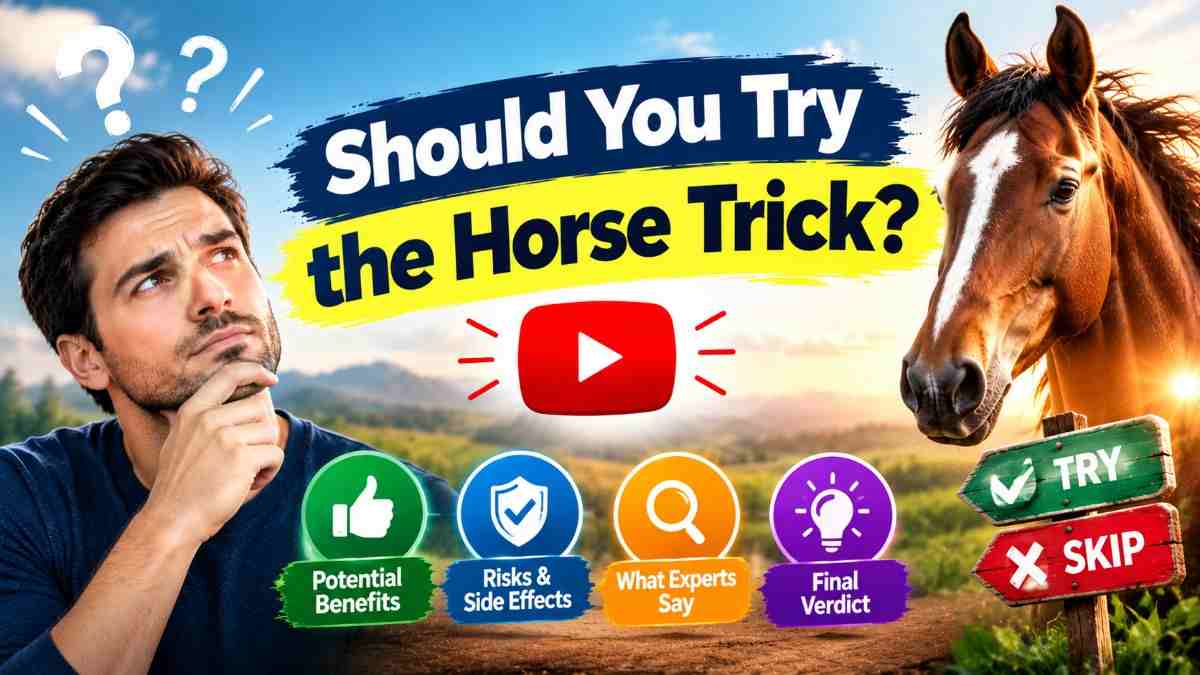
Final Thoughts: Is the Horse Trick a Scam?
So, is the Horse Trick a scam?
There is no single answer for every version because “Horse Trick” is not a standardized medical treatment or one specific product.
What can be said more clearly is that there is no reliable clinical evidence establishing a generic Horse Trick as a proven method for dramatically increasing testosterone, treating erectile dysfunction, or producing instant sexual enhancement.
A simple food-based preparation should not automatically be treated as fraudulent. However, extraordinary claims surrounding the trend should be separated from what the underlying food or exercise can actually do.
Consumers should also be cautious about commercial sexual-enhancement products. Government health agencies have repeatedly warned that some products in this category can contain hidden pharmaceutical ingredients or other substances that are not listed on their labels.
The safest approach is to look beyond viral videos and testimonials. Check what the method actually contains, examine the evidence behind its specific claims, understand potential risks, and consider professional medical advice when persistent symptoms are involved.
Most importantly, men’s health is rarely determined by one secret trick. Regular physical activity, nutritious eating, healthy sleep, stress management, avoiding tobacco, moderating alcohol, and appropriate medical care provide a much broader foundation for long-term wellness.
The Horse Trick may remain an interesting internet trend, but its popularity should not be confused with scientific proof.
DON’T TRY THIS “HORSE TRICK” UNTIL YOU SEE THIS
Medical Disclaimer
This article is intended for general educational and informational purposes only. It is not intended to diagnose, treat, cure, or prevent any disease or medical condition.
The information presented here should not replace advice from a qualified healthcare professional. Anyone experiencing persistent sexual-health symptoms or considering a supplement or sexual-enhancement product should discuss the situation with an appropriate healthcare provider.
.
.
References
Men’s Health
https://www.nccih.nih.gov/health/mens-health
Dietary Supplements
https://www.fda.gov/food/buy-store-serve-safe-food/dietary-supplements
Erectile Dysfunction
https://www.niddk.nih.gov/health-information/urologic-diseases/erectile-dysfunction
Erectile Dysfunction
https://medlineplus.gov/erectiledysfunction.html
About Us