Parkinson’s Disease Explained: Signs, Symptoms & Treatment
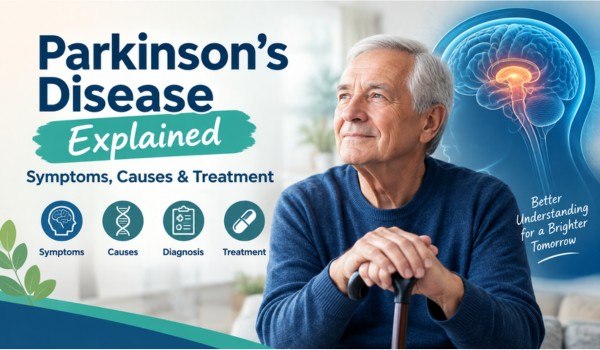
Parkinson’s disease is a progressive neurological condition that can affect movement, balance, sleep, mood, and daily activities.
Understanding its symptoms, possible causes, diagnosis, and treatment options can help people take informed steps to manage their health.
Common symptoms may include tremors, stiffness, slower movement, and changes in walking, while some people also experience sleep or digestive changes.
Parkinson’s disease explained: learn about symptoms, causes, diagnosis, treatment options, and ways to support daily health and quality of life.

Early medical evaluation can support personalized care and symptom management. Treatments may include medications, physical therapy, exercise, speech therapy, occupational therapy, and other supportive approaches.
With appropriate care, regular monitoring, healthy routines, and professional guidance, many people can continue meaningful activities and maintain their quality of life.
What Is Parkinson’s Disease?
Parkinson’s disease is a long-term disorder of the nervous system in which certain brain cells gradually become damaged or die, particularly dopamine-producing neurons in an area called the substantia nigra.
The resulting reduction in dopamine affects the brain circuits responsible for smooth and coordinated movement, which can lead to tremors, stiffness, slowed movement, balance difficulties, and other symptoms.
⬩➤ Key Points About Parkinson’s
- Parkinson’s is a progressive brain disorder.
- Dopamine-producing cells are gradually lost.
- Symptoms vary considerably between people.
- Movement and non-movement symptoms can occur.
- There is currently no cure.
How Does Parkinson’s Disease Affect the Brain?
The substantia nigra contains neurons that produce dopamine, a chemical messenger that helps different areas of the brain communicate when controlling movement.
As these neurons become damaged, dopamine levels decrease, and movement-control circuits become less effective, making ordinary actions such as walking, writing, turning, speaking, or standing increasingly difficult for some people.
Parkinson’s disease does not affect only one simple movement pathway; however, changes involving other brain chemicals and nervous-system functions can contribute to sleep problems, mood changes, blood-pressure changes, digestive symptoms, and cognitive difficulties.
👉 DON’T TRY THIS “PARKINSON’S DISEASE EXPLAINED” UNTIL YOU SEE THIS
What Causes Parkinson’s Disease?
The exact cause of Parkinson’s disease is not fully understood, and researchers believe that several genetic and environmental factors may interact to influence whether a person develops the condition.
Some genetic changes are associated with Parkinson’s disease, while exposure to certain environmental factors has also been investigated, but having a possible risk factor does not mean that someone will definitely develop Parkinson’s.
⬩➤ Factors Associated With Risk
- Increasing age raises the risk.
- Family history can increase risk.
- Some genetic variants are associated.
- Certain environmental exposures are studied.
- Parkinson’s is more common in men.
Who Can Develop Parkinson’s Disease?
Parkinson’s disease can occur in adults of different ages, although the risk generally increases with age and most cases develop later in life.
Young-onset Parkinson’s can occur before older adulthood, and some cases have stronger genetic associations, while the majority of Parkinson’s cases do not follow a simple inherited pattern.
Early Signs of Parkinson’s Disease
Early Parkinson’s symptoms can be subtle and may develop gradually, which means a person may initially attribute changes to normal aging, stress, tiredness, or another health condition.
A small tremor in one hand, smaller handwriting, reduced facial expression, softer speech, changes in walking, stiffness, reduced sense of smell, constipation, or sleep disturbances can sometimes appear before more recognizable movement problems.
⬩➤ Possible Early Warning Signs
- Slight resting hand tremor.
- Smaller or cramped handwriting.
- Reduced sense of smell.
- Softer or changing speech.
- Stiffness on one side.
- Changes in walking pattern.
- Reduced facial expression.
- Sleep behavior changes.
Having one of these symptoms does not establish that someone has Parkinson’s disease because many other conditions can produce similar changes.
Common Motor Symptoms
The three classic movement symptoms associated with Parkinson’s disease are tremor, bradykinesia, and rigidity, although not everyone develops all three symptoms or experiences them with the same severity.
Bradykinesia means slowed movement and can make everyday activities such as dressing, buttoning clothes, writing, eating, getting out of a chair, or walking take longer than before.
⬩➤ Tremor
Parkinson’s tremor often appears when a limb is relaxed or resting and may begin on one side of the body before becoming more widespread.
The shaking can involve a hand, finger, foot, jaw, or another area, although tremor is not present in every person with Parkinson’s disease.
⬩➤ Bradykinesia
Bradykinesia describes unusually slow movement and can also involve reduced spontaneous movements.
A person may notice smaller steps, slower dressing, difficulty initiating movement, reduced arm swing, or changes in handwriting as everyday activities gradually become less automatic.
⬩➤ Muscle Rigidity
Rigidity causes muscles to feel stiff, tight, or resistant to movement and may affect the arms, legs, neck, or trunk.
Muscle stiffness can contribute to discomfort, reduced range of motion, changes in posture, and difficulty performing ordinary physical activities.
⬩➤ Balance and Walking Problems
Balance difficulties can develop as Parkinson’s progresses and may increase the risk of falls. Walking may become slower or involve shorter, shuffling steps, while turning, starting to walk, or changing direction can become more challenging.
Non-Motor Symptoms of Parkinson’s Disease
Parkinson’s disease can cause many symptoms that are not directly related to movement, and these symptoms may sometimes appear before obvious motor changes.
Common non-motor concerns include constipation, sleep disturbances, reduced sense of smell, fatigue, depression, anxiety, urinary symptoms, blood-pressure changes, pain, and cognitive changes.
⬩➤ Non-Motor Symptoms Can Include
- Constipation and digestive changes.
- Sleep disturbances.
- Depression or anxiety.
- Reduced sense of smell.
- Fatigue and low energy.
- Blood-pressure changes.
- Urinary difficulties.
- Thinking or memory changes.
Parkinson’s Disease and Sleep
Sleep problems are common in Parkinson’s disease and can include difficulty falling asleep, waking frequently, excessive daytime sleepiness, or unusual movements during dreams.
Some people may experience rapid-eye-movement sleep behavior disorder, in which they physically act out dreams, and discussing persistent sleep changes with a healthcare professional can help identify appropriate treatment options.
Parkinson’s Disease and Mood
Changes in mood can occur alongside the physical symptoms of Parkinson’s disease, with depression and anxiety among the commonly reported non-motor symptoms.
These symptoms can affect motivation, sleep, social interaction, and everyday quality of life, so they deserve attention as part of comprehensive Parkinson’s care rather than being treated as unrelated concerns.
Parkinson’s Disease and Thinking
Some people with Parkinson’s disease experience changes in attention, planning, memory, or other aspects of thinking, particularly as the condition progresses.
Cognitive symptoms vary substantially between individuals, and more significant cognitive impairment or dementia can occur in some people, making regular medical assessment important when noticeable changes develop.
How Is Parkinson’s Disease Diagnosed?
There is currently no single blood test or standalone test that can definitively diagnose Parkinson’s disease, so doctors generally rely on the person’s medical history, symptom pattern, and neurological examination.
Doctors may also use additional tests or brain imaging to exclude other conditions or provide supporting information, but the diagnosis remains primarily clinical.
⬩➤ Diagnosis May Involve
- Detailed medical history.
- Neurological examination.
- Movement assessment.
- Medication review.
- Tests to rule out other conditions.
- Imaging when clinically appropriate.
Why Early Medical Evaluation Matters
A tremor, stiffness, balance problem, or change in handwriting does not automatically mean Parkinson’s disease, because several neurological, medication-related, and other medical conditions can produce similar symptoms.
Seeking medical evaluation when symptoms persist or progress allows a healthcare professional to investigate possible causes and determine whether referral to a neurologist or movement-disorder specialist is appropriate.
Parkinson’s Disease Stages
Parkinson’s disease is progressive, but its course is different for every person, and symptoms do not necessarily advance at the same speed.
Healthcare professionals may use staging systems such as the Hoehn and Yahr scale to describe the general severity of movement-related disability, although staging does not capture every non-motor symptom or predict exactly how an individual’s condition will develop.
⬩➤ General Progression Pattern
- Early symptoms may be mild.
- Symptoms may begin on one side.
- Movement difficulties can increase.
- Balance problems may develop.
- Daily assistance may eventually be needed.
Treatment for Parkinson’s Disease
There is currently no cure for Parkinson’s disease, but treatment can reduce symptoms, improve movement, support independence, and help people maintain quality of life.
Treatment is individualized because symptoms, age, other medical conditions, medication responses, and personal needs differ from person to person, so a healthcare professional should guide medication and therapy decisions.
⬩➤ Levodopa and Carbidopa
Levodopa is one of the most important medicines used to manage Parkinson’s movement symptoms because the brain can convert levodopa into dopamine.
It is commonly combined with carbidopa, which helps more levodopa reach the brain and can reduce some unwanted effects caused by conversion outside the brain.

Other Parkinson’s Medications
Depending on symptoms and treatment needs, doctors may consider dopamine agonists, monoamine oxidase-B inhibitors, catechol-O-methyltransferase inhibitors, amantadine, or other medicines.
Medication choices require individualized medical guidance because different medicines have different benefits, limitations, interactions, and potential adverse effects.
Physical Therapy and Exercise
Physical activity and physical therapy can support mobility, balance, flexibility, strength, and functional independence for people living with Parkinson’s disease.
Exercise plans should match the person’s abilities and safety needs, while physical therapists can help develop movement strategies that address walking, balance, stretching, strength, and everyday mobility.
⬩➤ Helpful Lifestyle Areas
- Regular physical activity.
- Balanced nutritional habits.
- Adequate sleep.
- Fall-prevention strategies.
- Regular medical follow-up.
Speech and Occupational Therapy
Speech therapy can help address changes in voice, communication, and swallowing, while occupational therapy can focus on maintaining independence during everyday tasks.
These therapies can be especially useful when Parkinson’s symptoms begin affecting eating, dressing, writing, communication, household activities, or workplace responsibilities.
Deep Brain Stimulation
Deep brain stimulation is a surgical treatment that uses implanted electrodes and a pulse generator to deliver electrical stimulation to specific brain regions involved in movement.
It may reduce certain Parkinson’s symptoms for appropriately selected patients, but it does not cure the disease and is not suitable for everyone.
👉 DON’T TRY THIS “PARKINSON’S DISEASE EXPLAINED” UNTIL YOU SEE THIS
Nutrition and Parkinson’s Disease
A balanced diet can help support general health, energy, bowel regularity, bone health, and overall well-being while living with Parkinson’s disease.
Nutrition needs may become more complicated with swallowing problems, constipation, medication timing, weight loss, or other symptoms, so individualized advice from a physician or registered dietitian can be useful.
Living With Parkinson’s Disease
Living with Parkinson’s disease often involves adjusting routines while continuing activities that provide physical, social, and emotional benefits.
Planning ahead, using appropriate mobility strategies, maintaining medical appointments, involving caregivers when needed, and addressing symptoms early can help support independence and daily functioning.
Supporting a Person With Parkinson’s
Family members and caregivers can provide practical support while also encouraging the person with Parkinson’s to remain involved in decisions about daily routines and medical care.
Useful support may include helping with appointments, medication organization, safe movement, household activities, transportation, communication, and emotional encouragement without unnecessarily taking away independence.
When Should You See a Doctor?
A healthcare professional should evaluate persistent tremor, unexplained stiffness, progressively slower movement, balance changes, repeated falls, significant changes in walking, or other concerning neurological symptoms.
Prompt assessment is particularly important when symptoms are worsening or interfering with ordinary activities because several different conditions can produce Parkinson-like symptoms and require different treatments.
Can Parkinson’s Disease Be Prevented?
There is no proven method that completely prevents Parkinson’s disease because its exact cause remains uncertain.
Researchers continue studying genetic factors, environmental exposures, physical activity, nutrition, and other potential influences, but findings about possible protective factors should not be interpreted as guaranteed prevention strategies.
Parkinson’s Disease Explained in Simple Terms
Parkinson’s disease develops when important nerve cells involved in dopamine production gradually become damaged, reducing the brain’s ability to control movement smoothly.
This can produce tremors, stiffness, slowed movement, walking difficulties, and balance problems while also affecting sleep, mood, digestion, smell, speech, and thinking in some people.
Final Thoughts
Parkinson’s disease is a complex neurological condition that affects people differently, but understanding its symptoms, causes, diagnosis, and treatment options can make the condition easier to recognize and manage.
Although there is currently no cure, modern treatment approaches can help control symptoms and may include medication, physical therapy, exercise, speech therapy, occupational therapy, supportive care, and selected surgical procedures.
Anyone experiencing persistent or progressive symptoms should speak with a qualified healthcare professional rather than attempting to diagnose Parkinson’s disease independently, because early evaluation can help identify the cause and establish an appropriate care plan.
👉 DON’T TRY THIS “PARKINSON’S DISEASE EXPLAINED” UNTIL YOU SEE THIS
Frequently Asked Questions
Is Parkinson’s Disease Curable?
There is currently no cure for Parkinson’s disease, but medications, rehabilitation therapies, exercise, supportive care, and selected procedures can help manage symptoms.
What Is the First Sign of Parkinson’s Disease?
An early sign may be a subtle resting tremor, but Parkinson’s can also begin with stiffness, slowed movement, reduced smell, handwriting changes, sleep problems, or voice changes.
Does Everyone With Parkinson’s Have Tremors?
No, tremor is common but does not occur in every person with Parkinson’s disease, and other symptoms such as bradykinesia and rigidity may be more prominent.
Can Parkinson’s Disease Affect Memory?
Yes, some people experience changes in attention, planning, memory, or thinking, particularly as the disease progresses.
Can Exercise Help Parkinson’s Disease?
Regular physical activity can support mobility, strength, balance, flexibility, and overall function, although exercise should be adapted to individual abilities and safety needs.
Is Parkinson’s Disease Hereditary?
Some cases are associated with genetic changes, but most Parkinson’s disease does not follow a simple inherited pattern.
What Doctor Treats Parkinson’s Disease?
A neurologist, particularly a movement-disorder specialist, may evaluate and manage Parkinson’s disease along with other healthcare professionals.
What Medication Is Commonly Used?
Levodopa combined with carbidopa is a commonly used treatment for Parkinson’s movement symptoms, although treatment varies by individual.
Can Parkinson’s Affect Sleep?
Yes, Parkinson’s can be associated with insomnia, daytime sleepiness, unusual dream-related movements, and other sleep disturbances.
Why Is Parkinson’s Difficult to Diagnose?
No single definitive diagnostic test exists, so doctors diagnose it using symptoms, medical history, neurological examination, and selected tests.
References
https://en.wikipedia.org/wiki/Parkinson%27s_disease
https://www.webmd.com/parkinsons-disease/parkinsons-overview
https://www.healthline.com/health/parkinsons
About Us