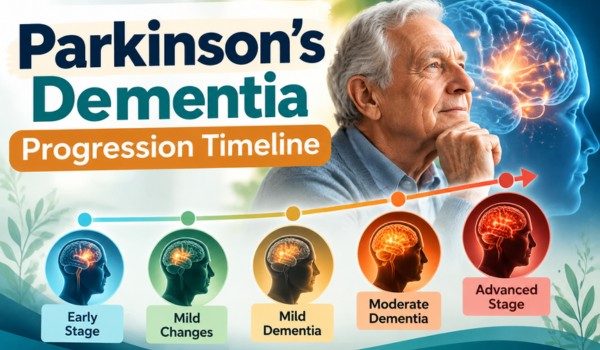
Parkinson’s dementia progression timeline explains how cognitive changes may develop over time in people living with Parkinson’s disease and how symptoms can gradually affect thinking, memory, behavior, and daily activities.
Parkinson’s disease primarily affects movement, but some people may experience cognitive changes as the condition advances.
Parkinson’s disease dementia (PDD) usually appears after several years of Parkinson’s motor symptoms, although the timeline can vary significantly from person to person.
Understanding the progression timeline can help patients, caregivers, and families recognize possible changes early and prepare for future care needs.
Parkinson’s dementia progression timeline explains the stages, symptoms, and changes that may occur over time, helping families understand future care needs.
What Is Parkinson’s Dementia?
Parkinson’s dementia is a type of cognitive decline associated with Parkinson’s disease that affects memory, attention, problem-solving, judgment, and everyday thinking abilities.
Unlike normal aging-related forgetfulness, Parkinson’s dementia can interfere with daily tasks, communication, relationships, and independence.
❖ Common cognitive changes may include:
- Difficulty focusing on tasks
- Slower thinking speed
- Problems with planning activities
- Changes in mood or behavior
- Trouble understanding information
Parkinson’s dementia develops when changes related to Parkinson’s disease begin affecting areas of the brain responsible for cognitive functions.
The condition is linked to changes in brain cells and abnormal protein accumulation, including Lewy bodies, which are also associated with other forms of dementia.
Parkinson’s Dementia Progression Timeline Overview
Every person experiences Parkinson’s disease differently, and there is no fixed timeline that applies to everyone. Some individuals may develop cognitive symptoms earlier, while others may live many years with Parkinson’s disease before noticeable dementia symptoms appear.
| Timeline Period | Possible Changes |
|---|---|
| Early Parkinson’s Years | Movement symptoms appear |
| Middle Years | Mild thinking changes may begin |
| Later Years | Cognitive symptoms become noticeable |
| Advanced Stage | Greater daily support may be needed |
Early Stage: Before Parkinson’s Dementia Develops
The early stage often begins when Parkinson’s disease symptoms first appear, such as tremors, stiffness, or slower movement. During this period, many people maintain normal thinking abilities and continue managing daily activities independently.
❖ Common early Parkinson’s symptoms include:
- Mild hand tremors
- Muscle stiffness
- Slower movements
- Reduced facial expressions
- Balance changes
At this stage, dementia symptoms are usually not present, although some individuals may notice subtle non-movement changes.
❖ Possible early changes include:
- Sleep disturbances
- Mood changes
- Reduced concentration
- Mild anxiety symptoms
These early signs do not always mean dementia will develop, but they can be part of the broader Parkinson’s disease experience.
Years 1–5 After Parkinson’s Diagnosis
During the first several years after diagnosis, movement symptoms are often the main focus of treatment and management. Many people respond well to medications and lifestyle approaches designed to improve movement-related symptoms.
The brain changes associated with Parkinson’s may continue gradually even when symptoms are controlled.
❖ Possible experiences during this period include:
- Improved movement control
- Occasional attention problems
- Mild emotional changes
- Sleep-related difficulties
Most people at this stage can still perform daily activities with limited assistance.
Years 5–10: Early Cognitive Changes May Appear
For some people, mild cognitive changes may begin several years after Parkinson’s symptoms start. These changes may not always represent dementia but can involve difficulties with certain mental tasks.
❖ Common early cognitive changes include:
- Reduced attention span
- Slower decision-making
- Trouble multitasking
- Forgetting appointments
- Difficulty organizing tasks
Many individuals notice changes in executive functions, which involve planning, organizing, and completing activities. During this stage, healthcare providers may monitor cognitive abilities through discussions, assessments, and regular evaluations.
Mild Parkinson’s Dementia Stage
When Parkinson’s dementia begins, symptoms are often subtle and may develop slowly. The person may still remain independent but require additional reminders or support for complex activities.
❖ Early dementia symptoms may include:
- Forgetting recent information
- Difficulty concentrating
- Losing track of conversations
- Trouble managing finances
- Reduced problem-solving ability
Family members may notice changes before the person recognizes them.
❖ Examples include:
- Repeating questions frequently
- Taking longer to complete tasks
- Avoiding complicated activities
Early recognition allows families to discuss care planning and available support options.

Moderate Parkinson’s Dementia Stage
As Parkinson’s dementia progresses, cognitive changes become more noticeable and may affect everyday independence. People may need more assistance with routine activities and decision-making.
❖ Common moderate-stage symptoms include:
- Increased memory problems
- Confusion about situations
- Difficulty following instructions
- Changes in personality
- Reduced social interaction
Behavioral symptoms may also become more noticeable.
❖ Some individuals experience:
- Increased frustration
- Anxiety episodes
- Sleep changes
- Hallucinations
Caregiver involvement often becomes more important during this stage because safety and daily support needs increase.
Advanced Parkinson’s Dementia Stage
In advanced stages, cognitive and physical symptoms may significantly affect daily living. People may need ongoing help with personal care, communication, and mobility.
❖ Possible advanced symptoms include:
- Severe memory impairment
- Limited communication ability
- Increased dependence
- Greater movement difficulty
- Swallowing challenges
Supportive care focuses on comfort, safety, and maintaining quality of life. Healthcare teams may combine medication management, therapy approaches, and caregiver support based on individual needs.
Parkinson’s Dementia Progression Timeline: Stage-by-Stage Changes
The progression of Parkinson’s dementia can be different for every person, but understanding common stages can help families recognize changes and plan appropriate support.
| Stage | Approximate Timeline | Common Changes |
|---|---|---|
| Early Parkinson’s Stage | First years after diagnosis | Movement symptoms are more noticeable than cognitive changes |
| Mild Cognitive Changes | Around 5+ years for some people | Attention, planning, and memory difficulties may appear |
| Mild Parkinson’s Dementia | Variable timeline | Problems with daily tasks and decision-making become clearer |
| Moderate Dementia Stage | Later progression | Increased support is needed for routines and safety |
| Advanced Dementia Stage | Advanced years | Continuous care may become necessary |
The timeline is not predictable because Parkinson’s disease affects each person differently, and some individuals may experience slower or faster progression.
How Parkinson’s Dementia Symptoms Progress Over Time
Parkinson’s dementia usually develops gradually rather than appearing suddenly. Early symptoms often involve thinking speed and organization, while later stages may involve memory, communication, and independence.
⬩➤ Early Cognitive Changes
The earliest cognitive changes may be hard to notice because they can look like normal aging or occasional forgetfulness.
❖ Common early changes include:
- Slower information processing
- Difficulty switching between tasks
- Reduced attention during activities
- Trouble organizing daily plans
- Mild memory difficulties
Many people can continue their normal routines during this stage with minor adjustments.
Middle Stage Parkinson’s Dementia Symptoms
During the middle stage, cognitive changes become more noticeable and may interfere with daily responsibilities. Individuals may have more difficulty with complex activities.
❖ Common middle-stage symptoms include:
- Difficulty managing medications
- Problems handling finances
- Increased confusion
- Reduced judgment skills
- Trouble remembering instructions
Caregivers may need to provide more help with household activities and planning.
Late-Stage Parkinson’s Dementia Symptoms
The late stage involves more significant cognitive and physical challenges. A person may require extensive support for daily needs and personal care.
❖ Possible symptoms include:
- Severe memory difficulties
- Limited communication
- Increased dependence
- Changes in awareness
- Difficulty with movement
Care focuses on comfort, safety, emotional support, and maintaining dignity.

Factors That May Affect Parkinson’s Dementia Progression
Several factors may influence how quickly cognitive symptoms develop. The rate of progression can depend on individual health, age, Parkinson’s symptoms, and overall brain health.
Important factors include:
⬩➤ Age at Parkinson’s Diagnosis
Older age at diagnosis may be associated with a higher likelihood of developing cognitive changes over time.
⬩➤ Duration of Parkinson’s Disease
People who have lived with Parkinson’s disease for many years may have increased chances of experiencing cognitive symptoms.
⬩➤ Movement Symptom Severity
Changes in balance, mobility, and daily movement abilities may influence overall independence.
⬩➤ Sleep Problems
Sleep disturbances can affect concentration, mood, and daytime functioning.
⬩➤ Mental Health Changes
Depression, anxiety, and emotional changes may affect cognitive well-being.
⬩➤ Overall Health Conditions
Other health concerns may influence brain function and daily abilities.
Parkinson’s Dementia vs Normal Aging
Many people wonder how Parkinson’s dementia differs from typical age-related memory changes. Normal aging may involve occasional forgetfulness, but people usually remain independent in daily life. Parkinson’s dementia involves cognitive changes that interfere with regular activities.
| Normal Aging | Parkinson’s Dementia |
|---|---|
| Occasional forgetfulness | Frequent memory difficulties |
| Remembers information later | May forget important details |
| Maintains daily independence | Requires increasing support |
| Minor concentration changes | Problems with planning and judgment |
Recognizing these differences can help families seek professional guidance when needed.
Diagnosis and Monitoring of Parkinson’s Dementia
Doctors evaluate Parkinson’s dementia through different assessments and discussions about symptoms. The evaluation usually considers memory, thinking abilities, behavior changes, and daily functioning.
❖ Assessment may include:
- Medical history review
- Cognitive testing
- Medication review
- Family observations
- Daily activity evaluation
Early monitoring can help healthcare providers create a personalized care approach.
Treatment and Management Options
There is currently no cure for Parkinson’s dementia, but several approaches may help manage symptoms and improve quality of life. Treatment plans are usually personalized based on symptoms, health status, and individual needs.
⬩➤ Medication Support
Doctors may recommend medications that support cognitive symptoms or help manage Parkinson’s-related challenges. Medication decisions depend on each person’s condition and medical history.
⬩➤ Physical Therapy
Physical therapy may help maintain movement abilities, balance, and confidence during daily activities.
❖ Benefits may include:
- Better mobility support
- Improved balance strategies
- Safer movement patterns
⬩➤ Occupational Therapy
Occupational therapy helps people complete daily activities more safely.
❖ Support may include:
- Home safety suggestions
- Routine adjustments
- Activity planning
⬩➤ Speech and Communication Support
Speech therapy may assist individuals experiencing communication or swallowing difficulties.
❖ Support can include:
- Communication strategies
- Voice exercises
- Swallowing guidance
⬩➤ Caregiver Assistance
Caregivers play an important role as symptoms progress.
❖ Support may involve:
- Helping with routines
- Providing reminders
- Creating safer environments

Lifestyle Support for Parkinson’s Dementia
Healthy lifestyle habits may support overall wellness and help individuals maintain better daily functioning. Lifestyle approaches should complement medical care and professional guidance.
⬩➤ Regular Physical Activity
Movement-based activities may support strength, flexibility, and overall health.
❖ Examples include:
- Walking regularly
- Gentle stretching
- Balance exercises
⬩➤ Brain-Stimulating Activities
Mental activities may encourage continued engagement and cognitive activity.
❖ Examples include:
- Reading books
- Playing puzzles
- Learning new skills
⬩➤ Balanced Nutrition
A nutritious diet supports overall health and energy levels.
❖ Helpful habits include:
- Eating varied foods
- Staying hydrated
- Choosing nutrient-rich meals
⬩➤ Quality Sleep Routine
Good sleep habits may support mood, energy, and concentration.
❖ Helpful steps include:
- Maintaining sleep schedules
- Creating calm evenings
- Limiting disruptions
Supporting Families and Caregivers
Parkinson’s dementia affects not only the individual but also family members and caregivers. Understanding the condition can help families provide better emotional and practical support.
❖ Helpful caregiver approaches include:
- Maintaining daily routines
- Offering simple instructions
- Encouraging independence
- Creating safe surroundings
- Seeking support when needed
Caregivers should also prioritize their own health and emotional well-being.
When to Seek Medical Advice
Families should consider discussing changes with a healthcare professional when cognitive symptoms begin affecting daily life.
❖ Possible warning signs include:
- Frequent confusion episodes
- Increased safety concerns
- Major personality changes
- Difficulty completing routines
- New behavioral symptoms
Early conversations can support better planning and symptom management.
Conclusion
Understanding the Parkinson’s dementia progression timeline can help individuals and families recognize possible changes and prepare for future needs.
The condition develops differently for everyone, and symptoms may progress gradually through different stages. Early awareness, regular medical support, and healthy lifestyle habits are important.
Strong caregiver support can improve daily management and quality of life. Working with healthcare professionals helps individuals receive care strategies based on their symptoms and needs.

.
References
https://en.wikipedia.org/wiki/Parkinson%27s_disease
https://www.webmd.com/parkinsons-disease/parkinsons-disease-dementia
https://www.healthline.com/health/parkinsons-disease-dementia
https://www.mayoclinic.org/diseases-conditions/parkinsons-disease/
About Us